
Miditech Mini MIDI Sound Module Review: Portable Convenience Meets Vintage General MIDI Tones
As musicians, producers, and live performers, we have all experienced the frustration of setting up a practice station. You carry a lightweight USB keyboard controller into a room, only to realize that playing a single note requires booting up a computer, launching a heavy digital audio workstation (DAW), routing audio drivers, and setting buffer sizes to combat latency. When creative inspiration strikes, spending ten minutes troubleshooting software settings destroys the moment. We wanted a lightweight, hassle-free hardware sound generator that could sit directly on top of a controller, draw power, and produce instant sound with zero noticeable latency.
This exact scenario leads many back to modern hardware synth modules, but finding a truly portable, self-powered unit under a modest budget is notoriously tricky. That is where the Miditech Mini MIDI Sound Module enters the picture. Promising a built-in battery, host capability to power external USB controllers, and a full General MIDI voice engine, it claims to offer complete untethered freedom. In this exhaustive review, we will test whether this pocket-sized unit lives up to its performance promises or falls victim to legacy sound compromises.

- The PianoBox Mini is a great way to add sound to your controller keyboard or eliminate latency when working with your computer. With a built in battery, the PianoBox Mini is the perfect portable...
- Want to use your USB MIDI keyboard without turning on your computer? The PianoBox Mini is the solution.
What to Consider Before Buying a Hardware Sound Module
A sound module is more than just an item; it’s a key solution for turning silent MIDI controllers into playable stand-alone instruments without relying on bulky computers or external laptops. Whether you are a busker needing a compact portable setup, a music educator setting up student practice keys, or a desktop arranger composing quick MIDI arrangements via hardware sequencers, a sound module delivers immediate tactile access to sound banks without driver hassles.
The ideal customer for this type of product is someone facing space constraints, needing low-latency practice rigs, or searching for a simplified, instant plug-and-play setup for live rehearsal. It is perfect for casual players, accordionists with MIDI outputs, and controller owners who want computer-free operation. Conversely, it might not be suitable for modern music producers who expect ultra-realistic multi-velocity acoustic piano sampling, deep synthesis editing, modern orchestral soundscapes, or studio-grade headphone output power. Those seeking cinematic sound design will likely require modern VST software instruments or premium rackmount sound modules.
Before investing, consider these crucial points in detail:
- Dimensions & Space: Consider where the module will rest during your performances. Ultra-compact dimensions allow a unit to mount directly on top of your keyboard casing using Velcro or tape, keeping your rig organized without needing extra hardware tables or heavy rack cases.
- Capacity/Performance: Examine the internal voice polyphony, sample rate, and filter architecture. A minimum of 64-note polyphony is essential for sustaining complex chords or layered sequences without dropouts, while high-resolution samples prevent unwanted digital aliasing during sustained passages.
- Materials & Durability: Look for robust housing, smooth rotary dials, and protected ports. Since portable modules are designed for gig bags and mobile setups, durable plastics, reinforced connector jacks, and stable control encoders ensure the unit survives frequent transportation.
- Ease of Use & Maintenance: Evaluate menu navigation, screen readability, and power management. An intuitive integrated screen paired with an easy-to-use control knob prevents frustrating sub-menu searches during live shows, while USB-rechargeable batteries eliminate the need for wall-wart power supplies.
Understanding these critical features makes selecting the right portable gear much easier. To evaluate how these criteria apply across different setups, you can explore detailed comparisons before making your purchase decision.
While the Miditech Mini MIDI Sound Module is an excellent choice, it’s always wise to see how it stacks up against the competition. For a broader look at all the top models, we highly recommend checking out our complete, in-depth guide:

- 8M MEMORY CAPACITY: Features 8 megabytes of storage space allowing you to record up to 10 minutes of personalized audio messages, music, or voice greetings for your DIY projects

- 16-Minute Recording Module :This 16-minute recording sound module is nice for personalizing greeting cards, music boxes, or other creative presents. Embed it in a greeting card to bring your wishes...
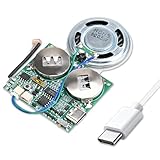
- 【DIY Greeting Card】DIY light sensor sound module is equipped with a 0.5W speaker and a 3.7V battery. The sound module is an ideal choice for mother's day and father's day DIY recordable greeting...
Unboxing and First Impressions of the Miditech Mini MIDI Sound Module
Unboxing the Miditech Mini MIDI Sound Module reveals a device that prioritizes extreme portability above all else. Measuring just 4.21 by 3.15 inches and coming in at under half a pound (7 ounces), it easily fits into the palm of your hand or a jacket pocket. The housing is crafted from lightweight black plastic, featuring a straightforward LED numerical display, a single large clickable rotary encoder knob, and clear input/output labeling along its perimeter.
In the box, you receive the module itself, a Micro-USB charging cable, and a 3.5mm TS to standard 5-pin DIN MIDI adapter cable. Charging the internal lithium battery takes roughly three hours, after which the unit promises up to five hours of continuous playback. Connecting a standard USB keyboard controller directly to the module’s USB host port worked immediately without additional driver installation. The overall build quality reflects its ultra-budget price tag—it is functional and lightweight, though taking care during road travel is recommended.
Key Benefits
- Powers external USB MIDI keyboards directly up to 500 mA
- Built-in rechargeable battery offers up to 5 hours of portable play
- True zero-latency audio response when triggered via MIDI
- Full 128 General MIDI sound set with 64-note polyphony
Drawbacks
- Acoustic piano sounds feature vintage 1980s synth-style timbres
- Headphone audio output gain is quite low and requires external amplification
In-Depth Performance Analysis: Hands-On Testing
To truly understand what the Miditech Mini MIDI Sound Module delivers, we put it through extensive practical testing in our studio setup. We tested it with multiple USB controller keyboards, standard 5-pin DIN MIDI hardware sequencers, dynamic drum pads, and various audio monitoring systems.
1. Connectivity, USB Host Capabilities, and Battery Performance
The headline feature of the Miditech Mini MIDI Sound Module is undoubtedly its built-in USB host functionality combined with internal battery power. Traditional portable sound modules usually require a computer to act as the USB host or demand an external wall outlet power supply. The Miditech module breaks this barrier by acting as a true USB host port capable of supplying up to 500 mA of bus power directly to an attached USB keyboard controller.
During our hands-on evaluation, we plugged a standard 49-key USB controller into the module’s primary USB port. The module powered the keyboard’s lights and screen effortlessly while drawing from its internal rechargeable battery. For outdoor practice, street busking, or couch jamming, this cable-free simplicity is fantastic. Furthermore, the inclusion of a 3.5mm to standard 5-pin MIDI input jack means you can easily trigger the module using traditional hardware sequencers, vintage synth controllers, or MIDI wind instruments. You can check the latest price and availability to see if this compact utility fits your mobile setup.
2. Sound Engine Architecture and Voice Library Quality
At the core of the Miditech Mini MIDI Sound Module is a 16-bit, 48kHz sample engine featuring 24 dB digital filtering and a standard 128 General MIDI (GM) program instrument list. It provides 64 notes of polyphony, which is ample headroom for complex two-handed keyboard parts, sustained pad chords, or full GM multi-timbral MIDI backing tracks without voice stealing.
When assessing sound quality, setting realistic expectations is crucial. The instrument sounds closely resemble early-1990s desktop soundcards or classic Casio/Yamaha home keyboards from the 16-bit era. The default Grand Piano (Program 0) exhibits a bright, somewhat synthetic attack phase with noticeable twang and vibrato decay on long sustained notes rather than the warm resonance of a modern multi-sampled acoustic grand. However, electric pianos (such as Rhodes and FM EP patches), organs, synth leads, brass stabs, and General MIDI drum kits sound punchy, retro, and surprisingly fun. If you appreciate vintage digital synth textures or simply need basic reference tones for practice, the module performs its role well. You can see its full feature set and user reviews to determine if its sound set aligns with your genre demands.
3. Latency, MIDI Tracking, and Expressive Velocity Response
One of the strongest arguments for using dedicated hardware over software soft-synths is speed. Because the Miditech Mini MIDI Sound Module processes incoming MIDI signals directly through dedicated onboard hardware, latency is completely imperceptible. The instant you strike a key on your controller, sound emanates from the audio output jack. For fast synth runs, rapid drum rolls, or precise timing exercises, this zero-latency performance is a huge asset.
Regarding expressive response, the module reads standard MIDI velocity values (0 to 127) to control overall sound volume. However, users should note that the internal sound engine relies primarily on single-layer samples. Striking a key harder makes the sound louder, but it does not shift the timbre or introduce velocity-layered tonal characteristics (such as the bite of a hard-driven tine on an electric piano). For simple note entry, melodic practice, and chord tracking, it performs reliably, though modern expressive pianists might find the dynamic sound engine somewhat uniform.
4. Audio Output Gain, Display Interface, and Integrated Reverb
The top panel of the module features a crisp LED digital display alongside a multi-function push-encoder knob. Navigating through the 128 GM instruments is straightforward: turning the knob scrolls through patch numbers, while pressing it toggles between program selection, main master volume control, and built-in digital reverb levels. The reverb effect adds helpful depth to dry synth patches, turning sterile notes into much fuller ambient sounds.
The primary area where buyers need to plan ahead is the analog audio output stage. Outputting sound via a standard 3.5mm stereo jack, the signal level is tailored primarily for instrument line inputs rather than high-impedance studio headphones. When plugging high-end headphones directly into the jack, the maximum volume output can feel quiet or lacking punch. Connecting the module’s 3.5mm output into a powered desktop speaker, an external keyboard amplifier, or a portable Bluetooth speaker’s AUX input instantly solves this gain issue, producing clean, loud audio without signal distortion. Integrating a small external amplifier is a setup tweak that really sets it apart in daily use.
What Other Users Are Saying
Real-world user experiences with the Miditech Mini MIDI Sound Module highlight its unique position as a hyper-niche product. Musicians seeking pure utility consistently praise the unit for its plug-and-play convenience. Many users report loving the ability to power their wives’ or children’s USB controllers directly from the module, connecting an auxiliary cable straight into a portable wireless speaker for instant daily piano practice without touching a laptop.
On the other hand, critical feedback focuses on sound quality expectations and hardware gain output. Multiple reviewers point out that the grand piano sound sounds heavily stylized and retro—comparable to late-80s sound modules or early budget keyboards—rather than modern high-definition acoustic pianos. Other users highlight that headphone volume can feel underwhelming unless routed through an external amplifier or active speaker system. Documentation is also minimal, so buyers setting up complex multi-channel MIDI routing software may need a basic understanding of MIDI gear to get everything configured seamlessly.
Comparing the Miditech Mini MIDI Sound Module to Alternatives
While the Miditech Mini MIDI Sound Module serves musicians looking for a complete 128-tone General MIDI hardware module, the broader “sound module” product category also includes compact DIY, voice playback, and craft audio modules used for specialized interactive audio projects. Below, we compare the Miditech module against three popular audio playback modules to show how they differ in functionality.
1. EZSound Rerecordable Play Button
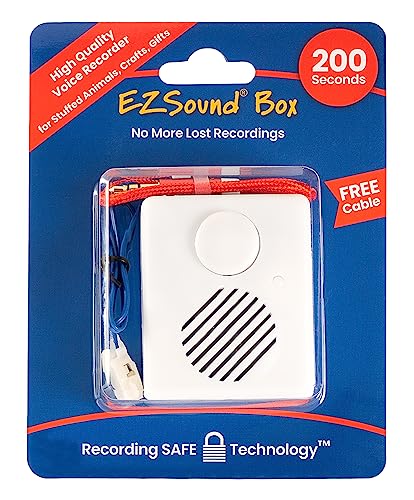
- ✅ [RECORDING SAFE TECHNOLOGY] Whether you are using our sound recorder as teddy bear voice recorder or as sound module for toys or for any other recording purpose, we know that your recordings are...
- Recordable Sound Box is ideal for adding sound effect to plush toys, stuffed animals, interactive school projects, photo frames, personalized gifts, kid activities, paints, hobbies, craft projects...
The EZSound Rerecordable Play Button is designed for custom audio projects, plush toys, photo frames, and craft displays rather than live musical instrument performance. Unlike the Miditech Mini MIDI Sound Module—which synthesizes 128 dynamic musical instruments in real time via live MIDI input—the EZSound unit holds up to 200 seconds of pre-recorded audio transferred via a standard 3.5mm audio cable. It features an integrated speaker and extension push-button. If you need to trigger a pre-recorded voice message or custom sound effect in a hobby project, the EZSound button is an affordable, self-contained playback solution. However, keyboard players requiring real-time playable synth tones must choose the full MIDI capability of the Miditech unit.
2. Talking Products Personalised Gift Module

- Ideal for creating your own talking gifts, cards and crafts. Perfect for adding sound effects to train sets, models, photo frames and Cosplay Accessories
- Download your own MP3 files via the USB socket. Add speech, music or sound effects
The Talking Products Personalised Gift Module is an MP3-based audio playback box featuring 4MB of onboard memory and an external battery compartment. It allows makers, cosplayers, and gift designers to upload custom MP3 audio files via USB connection, playing them back with a simple push-button trigger. While it shares USB connectivity with portable devices, it lacks any MIDI interpreter, synth sound engine, or real-time performance capabilities. For non-musicians wanting to add specific recorded sound effects, voiceovers, or background music cues to a costume or display, Talking Products provides a simple drop-in solution. Musician keyboardists, however, need the active 64-note polyphony sound engine provided by Miditech.
3. XLW Voice Recorder Sound Box

- 16-Minute Recording Module :This 16-minute recording sound module is nice for personalizing greeting cards, music boxes, or other creative presents. Embed it in a greeting card to bring your wishes...
- Download and Record and Delete Music :Long press the button for 3 seconds to start recording, and release the button to stop automatically. The maximum recording time is 16 minutes. Can download...
The XLW Voice Recorder Sound Box is a compact, battery-powered recordable module tailored for stuffed animals, personalized pillows, and customized holiday gifts. It offers direct voice recording via an integrated microphone, letting users capture personal vocal notes or short audio clips at the touch of a button. It is purely an analog voice recorder for craft applications, devoid of MIDI jacks, polyphonic synthesis, or line-level audio outputs. For DIY gift builders, the XLW box is ideal; but for musicians seeking a hardware tone generator to turn a silent controller keyboard into a functional piano, the Miditech Mini MIDI Sound Module remains the proper piece of gear.
Final Verdict: Should You Buy the Miditech Mini MIDI Sound Module?
The Miditech Mini MIDI Sound Module fills a specific and essential spot in the portable music hardware space. If you go into this purchase expecting the multi-gigabyte, hyper-realistic acoustic sampling of modern computer VST plugins, you will likely find its 16-bit 1990s-era sound set underwhelming. However, judging this device by modern studio standards misses its core design purpose.
This module shines as an ultra-portable practice companion, busking power source, and reliable hardware backup. Its ability to supply USB bus power to a controller keyboard while running on its internal rechargeable battery for five hours makes it an incredibly convenient tool. Combined with zero-latency response, a simple interface, and standard General MIDI flexibility, it easily turns any dummy controller into a functional instrument anywhere. If you want a quick, hassle-free way to play music without turning on a computer, we recommend grabbing one for your mobile gig bag. You can order your Miditech Mini MIDI Sound Module here today and enjoy ultimate setup freedom.
Last update on 2026-10-19 / Affiliate links / Images from Amazon Product Advertising API