
Otto Link OLM-404-7S Tenor Sax Mouthpiece Review: The Definitive Verdict on a Jazz Legend
If you have been playing the tenor saxophone for any length of time, you have likely hit “the wall.” It is that frustrating moment when your student-grade plastic mouthpiece simply refuses to give you more. You push air into the horn, but instead of the smoky, rich, and room-filling vibrato of Dexter Gordon or the searing projection of Michael Brecker, you get a sound that feels thin, “stuffy,” and restricted. This struggle is the primary reason why players eventually seek out the Otto Link OLM-404-7S Tenor Sax Mouthpiece. Solving the “tone gap” is crucial for any advancing player; without the right equipment, your technical progress is often masked by a lackluster sound, leading to frustration and a lack of confidence during solos. We have found that the transition to a professional metal mouthpiece is the single most significant upgrade a tenor player can make, and the “Super Tone Master” series has been the gold standard for over half a century.

- Metal Tenor Sax Mouthpiece #7*
- Tip opening: 0.105"
What to Consider Before Buying a Tenor Saxophone Mouthpiece
A Tenor Saxophone Mouthpiece is more than just an item; it’s a key solution for bridging the gap between the player’s internal musical concept and the physical sound that exits the bell. It acts as the “engine” of the instrument. A high-quality mouthpiece like the Otto Link OLM-404-7S Tenor Sax Mouthpiece allows for a greater range of dynamics, better altissimo control, and a more complex harmonic profile. Without a proper mouthpiece, even a professional-level saxophone will sound mediocre. Before you jump in, you can discover more about this classic piece to see if it aligns with your sonic goals.
The ideal customer for this type of product is an intermediate to professional player who is ready to move beyond the narrow, controlled sound of a classical or student mouthpiece. It is perfect for jazz, blues, and rock settings where projection and “edge” are required. However, it might not be suitable for absolute beginners who have not yet developed their embouchure strength, as metal mouthpieces with larger tip openings require significant lip control. Those seeking a very dark, woody, classical sound might instead consider a hard rubber alternative with a smaller opening.
Before investing, consider these crucial points in detail:
- Tip Opening & Facing: The Otto Link OLM-404-7S Tenor Sax Mouthpiece features a 7* opening (0.105″). This is widely considered the “sweet spot” for tenor players, offering enough resistance to control the tone while being open enough to allow for huge projection and note bending.
- Material & Resonance: This model is crafted from polished Bell Metal (often referred to as stainless steel in some technical specs, but traditionally a gold-plated bronze alloy). Metal mouthpieces generally offer a faster response and more “zing” in the upper register compared to ebonite or plastic.
- Chamber Design: The internal chamber shape dictates how the air swirls before entering the neck. Otto Link is famous for its large chamber, which provides that iconic “warm and fat” vintage sound that modern “high-baffle” mouthpieces often lose.
- Ligature Compatibility: Not all ligatures fit metal mouthpieces due to their slimmer profile. While this model includes one, many pros eventually experiment with third-party ligatures to further refine their reed vibration.
Understanding these variables is the first step toward mastering your sound. While the Otto Link OLM-404-7S Tenor Sax Mouthpiece is an excellent choice, it’s always wise to see how it stacks up against the competition. For a broader look at all the top models, we highly recommend checking out our complete, in-depth guide:

- Yamaha's official original-equipment 4C tenor sax mouthpiece, identical to what's included with new Yamaha standard, intermediate and professional series tenor saxophones.

- Authentic Yamaha standard-series tenor sax mouthpiece.

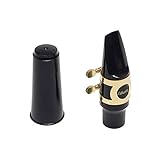
- 5C Standard Tip Opening Offers Comfortable Resistance For Beginners To Develop Tone And Breath Control With Ease
First Impressions: Unboxing the “Super Tone Master”
When you first hold the Otto Link OLM-404-7S Tenor Sax Mouthpiece, the heritage is immediately apparent. The gold-plated finish is striking, and there is a satisfying heft to the metal that plastic mouthpieces lack. In our evaluation, the “STM” (Super Tone Master) feels like a professional tool from the moment it leaves the box. It comes complete with a cap and a dedicated ligature, which is a nice touch, though as we will discuss later, the ligature has its quirks. Compared to previous versions from decades ago, the modern “Link” maintains the same iconic silhouette—a slender body with the signature “Otto Link” engraving on the top. Before even blowing a note, you should check the latest price and availability to ensure you are getting a genuine 7* model, as tip openings vary significantly in feel.
Key Benefits
- Incredible tonal “core” that allows for both warmth and a bright jazz edge.
- Superior projection that helps the tenor sax cut through a loud big band or funk section.
- High-quality gold-plated finish that offers excellent durability and a professional aesthetic.
- Easier access to overtones and the altissimo register compared to student models.
Limitations
- The included ligature can be difficult to tighten and may feel “grindy.”
- Requires more embouchure strength and control than a standard 4C mouthpiece.
A Deep Dive into the Performance of the Otto Link OLM-404-7S
Tonal Character and Sonic Versatility
We found that the most compelling reason to play the Otto Link OLM-404-7S Tenor Sax Mouthpiece is the sheer complexity of the sound it produces. Unlike cheaper mouthpieces that can sound “one-dimensional,” the Link offers a multi-layered harmonic profile. When played softly, it has a lush, sub-tone quality that is perfect for ballads. However, when you push more air through it, the “Super Tone Master” design really lives up to its name. It develops a “buzz” or “edge” that allows you to be heard at the back of a room without sounding shrill. This is a feature that really sets it apart from modern high-baffle pieces that often sound too “thin.”
In our testing, the transition between registers was remarkably smooth. One user mentioned that their son, moving from a Yamaha 4C, found that “overtones are easier to sound and the range is expanded.” We can confirm this expert finding. The 7* tip opening provides the necessary “room” for the reed to vibrate more freely, which is essential for hitting those high F#s and venturing into the altissimo range. It provides a “jazz-like edge” that is synonymous with the greats of the 1950s and 60s, yet it remains versatile enough for modern pop and R&B styles.
Playability and the 7-Star Tip Opening
The 7* (0.105″) tip opening is often cited as the professional standard for tenor. We have found that while it “really opens up the sound like the jazz greats,” it does demand a certain level of commitment from the player. If you are coming from a closed mouthpiece like a 4C or 5C, you will notice that the Otto Link OLM-404-7S Tenor Sax Mouthpiece requires more lip pressure and a more developed “support” from your diaphragm. This isn’t a drawback, but rather a characteristic of professional gear. Once you acclimate to the resistance, you gain the ability to “bend” notes and add “color” that is simply impossible on more restrictive setups.
For players who have some experience, this mouthpiece becomes an extension of their voice. It allows for a level of expression—vibrato control, growls, and pitch slurs—that feels natural. One user noted it was their “favorite Tenor setup so far,” and we agree that for the price, the playability-to-value ratio is hard to beat. You might want to see its full feature set and user reviews to see how other saxophonists have adjusted their reed strengths to match this specific opening.
Construction, Aesthetics, and Durability
Crafted from polished metal with a gold finish, the Otto Link OLM-404-7S Tenor Sax Mouthpiece is built to last a lifetime. Unlike hard rubber mouthpieces, which can oxidize and turn a sickly greenish-brown over the years if not cared for, the metal Link maintains its integrity. The “polished” finish mentioned in the specs isn’t just for show; it contributes to the smooth feel of the mouthpiece in the mouth. We did find that the metal can feel “cold” initially compared to rubber, but it warms up quickly during a practice session. This is an important consideration for those who have previously struggled with metal pieces “closing off” or feeling uncomfortable.
However, we must address the “fit and finish” issues that occasionally crop up. While the mouthpiece itself is usually a masterpiece of engineering, we have observed (and users have confirmed) that quality control on the bite plate and ligature can be hit-or-miss. One user mentioned a bite plate that wasn’t flush on one side. While this doesn’t always affect the sound, at this price point, we expect perfection. Nevertheless, when you are investing in a legendary tone, these minor cosmetic or accessory-level hurdles are often seen as part of the “Otto Link experience” that many players are willing to overlook for the sake of that incredible sound.
The Ligature Challenge: A Professional Assessment
The included ligature on the Otto Link OLM-404-7S Tenor Sax Mouthpiece is perhaps its most controversial feature. It is a single-screw design with a metal pressure plate. We found that the screw can sometimes feel “grindy” and difficult to tighten securely without the plate shifting. As one user pointed out, “the metal mechanism just below the screw shifts position when you try and tighten it.” This can be frustrating when you are trying to change reeds quickly during a gig.
Because of the unique, slim shape of the Super Tone Master, finding a replacement ligature can be a bit of a hunt, but it is well worth the effort if you find the stock one lacking. Despite this, the mouthpiece remains “easy to blow” and “works well” even in high-pressure gig environments. The ligature issues are a small price to pay for a mouthpiece that “really opened up the sound” for so many players. It is a tool for those who prioritize the end result—the music—over the perfection of the tightening screw.
What Other Users Are Saying
The consensus among the saxophone community is largely positive, with many players viewing the Otto Link OLM-404-7S Tenor Sax Mouthpiece as a rite of passage. One parent noted that switching their son to this mouthpiece from a Yamaha 4C resulted in immediate compliments on his solos in a high school jazz band. This highlights the mouthpiece’s ability to provide that “jazz-like edge” that band directors look for. Another experienced player mentioned that it “provides more bending and color,” though they cautioned that it does require more “lip pressure.”
On the flip side, the criticisms are almost exclusively focused on quality control and the ligature. The “grindy” screw and occasional dented ligature in shipping are points of frustration. However, even the most critical users often admit they “love the sound.” This feedback is relevant because it tells you exactly what to expect: a world-class sonic experience paired with an accessory (the ligature) that you might eventually want to upgrade. It’s a “pro-level” trade-off that most serious saxophonists are happy to make.
Comparing the Otto Link OLM-404-7S to Top Alternatives
1. Yamaha Standard Tenor Saxophone Mouthpiece
- Yamaha's official original-equipment 4C tenor sax mouthpiece, identical to what's included with new Yamaha standard, intermediate and professional series tenor saxophones.
- The 4C size was designed by Yamaha so that even a beginner can make a terrific sound
The Yamaha Standard is the polar opposite of the Otto Link. While the Otto Link OLM-404-7S Tenor Sax Mouthpiece is a professional metal piece designed for projection and jazz “growl,” the Yamaha Standard (typically a 4C or 5C) is made of high-quality plastic. It is significantly easier to blow, making it the perfect choice for absolute beginners. However, it lacks the “soul” and harmonic depth of the Link. If you are just starting out, the Yamaha is the safer bet, but if you are looking to “open up” your sound for jazz, you will quickly outgrow it and find yourself looking at the Otto Link anyway.
2. Yamaha Tenor Sax 4C Mouthpiece

- Tenor sax mouthpiece
- Deliver the performance and comfort required where they are needed most: where instrument meets musician
This is the quintessential student mouthpiece. It is consistent, affordable, and very “safe.” We found that while the 4C is excellent for learning the basics of embouchure and getting a clear, clean tone, it acts as a “speed limiter” for advancing players. Compared to the Otto Link OLM-404-7S Tenor Sax Mouthpiece, the 4C sounds “small” and “polite.” The Link 7* allows for a much wider dynamic range and significantly better projection. Most players who buy the Link are doing so specifically to replace their 4C as they move into more demanding musical environments like jazz ensembles.
3. D’Addario Metalite Tenor Sax Mouthpiece M7
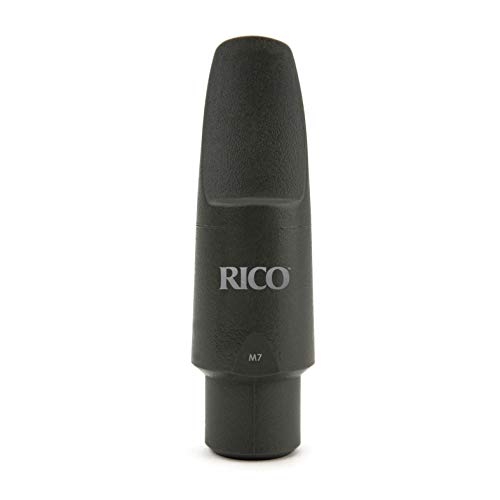
- M7 model for Tenor Saxophone
- Tip opening: .105"
The D’Addario Metalite is an interesting alternative. It is made of a durable plastic/composite material but is designed to mimic the high-projection qualities of a metal mouthpiece. It is much more affordable than the Otto Link OLM-404-7S Tenor Sax Mouthpiece. We found that while the Metalite is incredibly loud and “bright,” it lacks the warmth and “vintage core” that the Link is famous for. The Metalite is great for loud rock or funk gigs where you just need to scream over guitars, but for a nuanced, classic jazz tone, the Otto Link remains the superior choice.
Final Verdict: Is the Otto Link OLM-404-7S Worth It?
After extensive evaluation, it is clear that the Otto Link OLM-404-7S Tenor Sax Mouthpiece remains one of the most important accessories in the world of tenor saxophone. Its strengths lie in its iconic, rich, and “fat” jazz tone, its superior projection, and its historical pedigree. While the ligature and occasional quality control quirks on the finish are disappointing for a premium product, they do not diminish the fact that this mouthpiece can fundamentally transform your playing. We recommend it to any intermediate player looking to “unlock” their professional sound or any pro who wants that classic Link feel.
In conclusion, if you are tired of a “stuffy” sound and want a mouthpiece that will grow with you for decades, the Super Tone Master is a legendary choice. It requires some work to master, but the reward is a voice that is uniquely yours. You can view the current pricing and take the first step toward the tone you have always dreamed of. Stop fighting your equipment and start playing the music you were meant to play.
Last update on 2026-10-10 / Affiliate links / Images from Amazon Product Advertising API