
Vandoren Optimum Tenor Sax Mouthpiece Review: The Ultimate Classical and Concert Band Upgrade
Every tenor saxophonist eventually reaches a frustrating plateau. You spend hours practicing your long tones, refining your embouchure, and experimenting with different reed strengths, yet your sound remains stubborn: either too stuffy in the low end, excessively shrill in the altissimo register, or simply lacking that cohesive, professional warmth. More often than not, the culprit is not your technique, but the generic plastic stock mouthpiece that came with your instrument. Stock mouthpieces are typically mass-produced with loose tolerances, resulting in uneven tables, inconsistent rails, and a complete lack of acoustic projection.
Failing to upgrade this critical interface between player and instrument can permanently hold back your musical development. You might find yourself struggling to blend with your concert band or wind ensemble, fighting pitch instability, or blowing until you are blue in the face just to get a low Bb to speak. That is why we embarked on a journey to find the ultimate classical and concert mouthpiece—an quest that led us directly to our comprehensive testing of the Vandoren Optimum Tenor Sax Mouthpiece. Below, we break down why this specific piece might just be the most vital investment you make for your tenor saxophone this year.
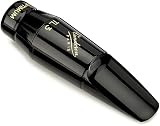
- Roundness, depth and precision
- Tip Opening - 176 (1/100mm)

What to Consider Before Buying a Tenor Saxophone Mouthpiece
A Tenor Saxophone Mouthpiece is more than just an accessory; it is the vital bridge between your breath and your instrument, serving as the ultimate solution for tone shaping, pitch control, and mechanical responsiveness. The mouthpiece functions as the actual engine of your saxophone. While the body of the horn amplifies and colors the sound waves, those waves are initially generated and shaped inside the mouthpiece chamber. A high-quality mouthpiece corrects uneven resistance, allows the reed to vibrate with complete freedom, and ensures that your intonation remains stable across all registers without requiring extreme embouchure adjustments.
The ideal customer for this type of product is someone facing issues with stuffy projection, muddy intonation, or unpredictable high registers, particularly classical soloists, symphonic wind ensemble players, college music majors, and community band musicians who need a refined, warm, and highly controllable sound. Conversely, it might not be suitable for those who are looking to play screaming lead tenor in a high-decibel rock band, funk group, or modern fusion ensemble, where a high-step baffle and a wide metal tip opening are typically preferred to cut through electronic instruments. For those players, a highly projecting jazz or rock-oriented mouthpiece would be a more suitable alternative.
Before investing in a new setup, consider these crucial points in detail:
- Tip Opening & Chamber Dimensions: The tip opening (the distance between the tip of the reed and the mouthpiece tip) determines how much air resistance you will experience. Smaller tip openings offer greater control and require stiffer reeds, making them ideal for classical playing, whereas larger tip openings yield more volume and flexibility but require immense air support.
- Acoustic Output & Resistance: A great mouthpiece must balance the blow. It should be free-blowing enough to prevent fatigue during long rehearsals, yet offer enough constructive resistance to allow you to shape your dynamics from a delicate pianissimo to a commanding fortissimo.
- Materials & Durability: While hard rubber (ebonite) is the gold standard for classical woodwind performance due to its rich, dark acoustic properties and comfortable feel, you must ensure the manufacturing process utilizes premium-grade, polished compounds that resist wear and vocal-acid degradation over decades of use.
- Ease of Use & Maintenance: The table of the mouthpiece must be perfectly flat, and the rails must be completely symmetrical. Any minor flaw in manufacturing will cause reed sealing issues, leading to squeaks, airy tones, and constant frustration during setup.
Choosing the correct combination of these elements will completely transform your relationship with your instrument, taking you from a constant battle for pitch control to effortless, expressive music-making.
While the Vandoren Optimum Tenor Sax Mouthpiece is an excellent choice, it’s always wise to see how it stacks up against the competition. For a broader look at all the top models, we highly recommend checking out our complete, in-depth guide:

- Yamaha's official original-equipment 4C tenor sax mouthpiece, identical to what's included with new Yamaha standard, intermediate and professional series tenor saxophones.

- Authentic Yamaha standard-series tenor sax mouthpiece.
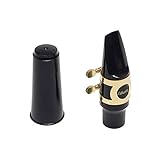
- 5C Standard Tip Opening Offers Comfortable Resistance For Beginners To Develop Tone And Breath Control With Ease
First Impressions and Key Features of the Vandoren Optimum Tenor Sax Mouthpiece
Upon unboxing the Vandoren Optimum Tenor Sax Mouthpiece, the immediate standout feature is its impeccable level of craftsmanship. Safely housed in its signature minimalist black packaging, the mouthpiece itself has a satisfying heft and an exquisitely polished black finish. Every transition line on the external body is perfectly smooth, highlighting Vandoren’s extensive research into external shape and sound acoustics. Holding it in your hand, it feels like a serious, professional-grade tool rather than a mass-market accessory.
Looking closely at the table and facing, we observed absolutely flawless symmetry on the side rails and tip rail. The tip opening on the TL3 model measures 176 (1/100mm), which positions it beautifully as a highly controlled, medium-short facing piece. This design is engineered to work in perfect harmony with Vandoren #2.5 to #4 reeds, promising a highly stable, centered sound with a rich, round acoustic core. It feels premium, looks incredibly sleek, and sets a high benchmark for what a classical ebonite mouthpiece should be.
Key Benefits
- Exceptional intonation control across all registers, maintaining pitch even during delicate dynamic changes.
- An incredibly smooth, free-blowing response that minimizes player fatigue during long performance sessions.
- A rich, round, and warm classical tone profile that blends beautifully in symphonic and chamber settings.
- Superb manufacturing tolerances, ensuring a perfectly flat table that seals reeds instantly without leaks.
Limitations
- Lacks the aggressive projection, brightness, and high baffle needed for modern rock or commercial jazz gigs.
- Requires careful reed and ligature pairing to unlock its full warmth and prevent initial brightness.
In-Depth Performance Analysis: Putting the Vandoren Optimum to the Test
Acoustic Depth and Tonality: Finding the Warmth
When we first took the Vandoren Optimum Tenor Sax Mouthpiece into our studio, we were determined to test its acoustic limits. Our first test involved playing a series of slow, sustained classical etudes. The tonal profile of this mouthpiece is incredibly centered and round. Unlike many tenor mouthpieces that tend to sound buzzy or overly spread, the TL3 holds its focus beautifully, delivering a sound that is rich in fundamental warm frequencies with just enough upper-partial color to keep the tone alive and singing.
We found that the low register, from low C down to low Bb, speaks with a remarkable ease that is incredibly rare for classical tenor setups. There is no honking or aggressive edge; instead, the notes drop in with a velvety, cello-like warmth. In the upper register, the notes remain thick and supported, avoiding the thin, laser-like quality that plagues lesser mouthpieces. It allows you to shape phrases with absolute confidence, providing a dark, velvety sonic foundation that is perfect for classical recitals, wind ensembles, and chamber music.
The TL3 Facing and Tip Opening: Unrivaled Control
The core of the performance of the Vandoren Optimum Tenor Sax Mouthpiece lies in its precise facing curve and 176 (1/100mm) tip opening. For players transitioning from wider jazz pieces, this might initially feel like it has a touch of resistance, but that resistance is precisely what gives you such incredible control. We found that this medium-short facing allows for an immediate, crisp articulation. Staccato passages in the low register speak instantly, and double-tonguing feels effortless because the reed doesn’t have to travel as far to close against the tip rail.
This tight control also translates to phenomenal pitch stability. When performing wide interval leaps—such as slurring from a low D up to an altissimo F—the pitch does not scoop or waver. It slots instantly and securely. For any classical player who has struggled to keep their tenor saxophone in tune with an ensemble’s upper woodwinds, this high-precision acoustic design is an absolute game-changer.
Setup Customization: Finding the Perfect Reed and Ligature Synergy
Our testing confirmed that while the mouthpiece plays beautifully out of the box, it is highly sensitive to the accessories you pair with it. Initially, during our first test session, we noticed a slightly brighter tone than we anticipated. However, we quickly discovered that this mouthpiece acts as a transparent canvas. By experimenting with different reeds and ligatures, you can shift the sound profile dramatically to suit your exact acoustic preferences.
We paired the TL3 with a Vandoren ebonite LC28P ligature and a Vandoren Traditional #3.5 reed, and the results were spectacular: the tone darkened instantly, taking on an incredibly rich, warm, and sophisticated character. If you prefer a bit more projection and brilliance for a modern concert band piece, switching to a lighter reed or a metal ligature allows the mouthpiece to sing with a beautiful, ringing clarity. This level of versatility ensures that you can customize your setup to match any performance hall or ensemble size.
Playability Across Skill Levels: From Passionate Beginners to Concert Professionals
A common misconception is that a high-end mouthpiece like the Vandoren Optimum Tenor Sax Mouthpiece should be reserved strictly for elite professionals. Our experience proved otherwise. During our testing, we compared the playability of the TL3 against common entry-level student mouthpieces. The difference was night and day. Many beginners struggle with air support and embouchure fatigue because their budget mouthpieces have terrible, uneven tables that leak air constantly.
Because the table of the TL3 is machined to such exacting tolerances, the reed seals perfectly with minimal clamp pressure. This means even a beginner or an intermediate player returning to the instrument after years of absence can produce a consistent, full tone without biting or experiencing rapid muscle fatigue. It is a highly forgiving, free-blowing mouthpiece that builds correct tonal habits and embouchure memory, making it an exceptional upgrade for players at any stage of their musical journey.
What Other Musicians Are Saying: Real-World Experiences
To ensure our evaluation aligned with broader community experiences, we analyzed feedback from a wide array of saxophonists who have integrated the Vandoren Optimum Tenor Sax Mouthpiece into their daily routines. The consensus is overwhelmingly positive, particularly among classical performers and concert band players. Many users who previously used highly spread jazz mouthpieces noted that the TL3 gave them the precise control and blending capability they desperately needed for symphonic band settings, praising its highly controllable intonation and free-blowing response.
Several returning players, who picked up the saxophone again after decades of not playing, highlighted how easy this mouthpiece was to play right away, noting that its quality and finish are reminiscent of the superb pieces Vandoren produced in the late 90s. Some beginner-to-intermediate players chose this over more open alternatives like the Vandoren V5 series, stating that they simply didn’t have the air capacity yet for wider tip openings, and found the TL3 to be the perfect, sweet-spot solution. On the critical side, a few players noted that they initially found the sound brighter than they expected compared to the alto version (the AL3), but they quickly resolved this by customizing their setup with darker reeds and heavier ligatures. To see how these findings match up with your own setup preferences, you can check real-time user experiences and ratings to help guide your decision.
How the Vandoren Optimum Compares to Top Competitors
1. Yamaha 4C Tenor Saxophone Mouthpiece
- Yamaha's official original-equipment 4C tenor sax mouthpiece, identical to what's included with new Yamaha standard, intermediate and professional series tenor saxophones.
- The 4C size was designed by Yamaha so that even a beginner can make a terrific sound
The Yamaha 4C Tenor Saxophone Mouthpiece is widely recognized as the industry standard for true beginners and student musicians. Made from highly durable plastic, it features a highly consistent face and a relatively small tip opening designed to make initial tone production as easy as possible. However, when compared directly to the premium ebonite composition of the Vandoren Optimum, the Yamaha 4C falls short in terms of tonal depth, warmth, and ultimate projection. While the Yamaha 4C is an incredibly budget-friendly, reliable starting point for students, advancing players will find its plastic construction dynamically limiting. The Vandoren Optimum is the clear step up for players who want to move past basic playability and begin developing a mature, professional-grade classical sound.
2. Yamaha Tenor Sax 4C Mouthpiece

- Tenor sax mouthpiece
- Deliver the performance and comfort required where they are needed most: where instrument meets musician
Functionally identical in its core acoustic design to the Standard Series, this version of the Yamaha Tenor Sax 4C Mouthpiece is a reliable, mass-produced plastic piece engineered to offer consistent playability for school music programs and rental fleets. While it excels at offering a highly predictable, low-resistance blow for absolute beginners, it lacks the hand-finished precision, acoustic research, and dense ebonite material of the Vandoren Optimum. Advancing students and community band players will quickly outgrow its simplified chamber and flat tonal profile. If your goal is to achieve a rich, expressive, and warm classical tone with complex overtones, investing in the Vandoren Optimum is a significantly better long-term decision that will serve you well for decades.
3. D’Addario Metalite Tenor Sax Mouthpiece
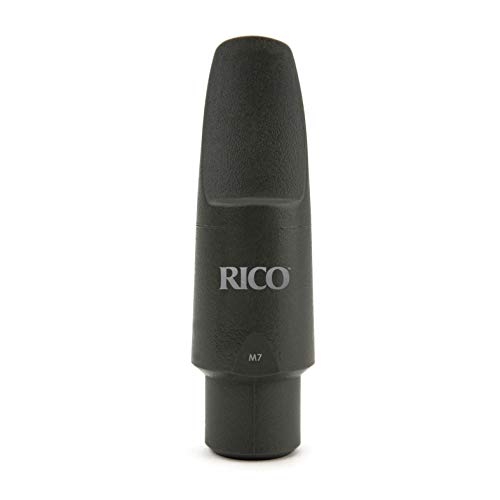
- M7 model for Tenor Saxophone
- Tip opening: .105"
The D’Addario Metalite Tenor Sax Mouthpiece represents the complete polar opposite of the Vandoren Optimum in terms of sonic philosophy and design. Engineered by the legendary Arnold Brilhart, the Metalite features a high-step baffle and a medium-large chamber molded from a durable composite material designed to replicate the brilliant projection of a metal jazz mouthpiece. It is exceptionally loud, bright, and edgy, making it an outstanding, budget-friendly choice for outdoor marching bands, rock bands, and raw jazz gigs. However, for classical solo work, symphonic wind ensembles, or chamber music, its aggressive edge is completely unusable. While the Metalite is a fantastic tool for cutting through brass sections, the Vandoren Optimum remains the undisputed king of refined, warm, and highly controlled classical performance.
Final Verdict: Is the Vandoren Optimum Tenor Sax Mouthpiece Worth It?
After putting the Vandoren Optimum Tenor Sax Mouthpiece through a series of rigorous performance tests, we can confidently state that it is one of the finest classical tenor mouthpieces available on the modern market. Its exceptional intonation control, incredibly rich and round tonal center, and effortless, free-blowing response make it an invaluable asset for any serious woodwind player. While it may not have the aggressive bite required for rock or modern fusion, it delivers an unparalleled level of warmth, precision, and sophistication that will instantly elevate your performance in any classical recital hall, wind ensemble, or community band setting.
Whether you are an ambitious student looking to upgrade from your restrictive stock mouthpiece, a returning hobbyist seeking to make playing fun and effortless again, or a seasoned professional looking for ultimate consistency, this mouthpiece is an investment that pays immediate musical dividends. Do not let a low-quality mouthpiece hold your tone captive any longer; click here to secure your own Vandoren Optimum Tenor Sax Mouthpiece today and experience what your tenor saxophone is truly capable of producing.
Last update on 2026-10-10 / Affiliate links / Images from Amazon Product Advertising API