
KAISH Stereo Guitar Bass Jacks Review: A Solid Solution for Your Instrument’s Connectivity Needs
We have all been there. You are midway through a song, perhaps in the middle of a delicate lead line or a heavy, driving riff, and suddenly, silence. A quick wiggle of the cable reveals the culprit: your output jack has finally given up the ghost. It is one of the most inevitable realities of being a musician. Whether through standard wear and tear or the unfortunate “cable-tug” accident, the jack is the literal gateway for your instrument’s signal. Failing to address a loose or intermittent connection doesn’t just result in frustrating noise; it fundamentally kills your confidence on stage. For those of us who maintain our own rigs, finding a reliable replacement part is paramount. The KAISH Stereo Guitar Bass Jacks offer a solution that balances durability with a sleek aesthetic, designed to keep your signal path clean and your instrument ready for the next performance.
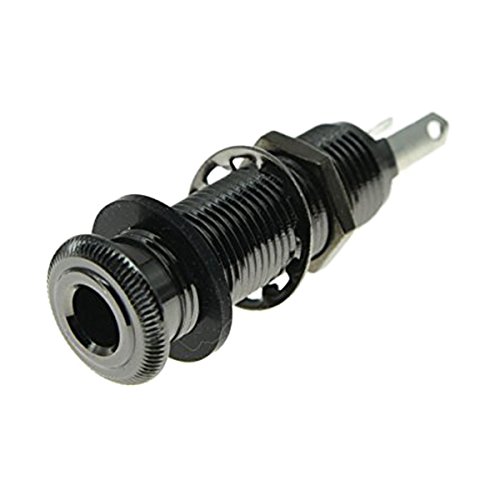
- Inside hole diameter: 1/4" (6.35mm); Thread diameter: 11.8mm;
- Length without poles: about 39.5mm; Total length including poles: about 48.5mm
What to Consider Before Buying Electric Guitar Electronics
Electric guitar electronics are the unsung heroes of your tone. A high-quality component ensures that the signal generated by your pickups reaches your amplifier with minimal coloration or loss. When you choose to upgrade or replace parts like an input jack, you are not just fixing a broken piece of hardware; you are investing in the longevity of your instrument’s playability. The ideal customer for these upgrades is a DIY-minded player, a hobbyist luthier, or a gigging musician who prefers to perform their own maintenance rather than paying high hourly fees at a local repair shop. If you are someone who prefers “plug and play” simplicity without any technical knowledge, you might want to consult a professional, but for the average guitarist, swapping a jack is the perfect entry-level modification.
Before investing, consider these crucial points in detail:
- Dimensions & Space: Barrel jacks are specific in their requirements. Always measure the existing hole in your guitar’s body to ensure the 11.8mm thread diameter fits your instrument’s chassis. A mismatch here leads to frustration, so checking the technical specs is mandatory before you finalize your purchase.
- Capacity/Performance: Whether you require mono or stereo functionality is vital. The 4-pin design of this product is versatile, allowing for both configurations. This is critical if you have active electronics or want to keep your setup compatible with a wide range of gear.
- Materials & Durability: Copper construction is a benchmark for signal conductivity. You want a jack that resists oxidation and offers a secure physical grip on your instrument cable. Look for hardened pins that can withstand constant insertion and extraction cycles.
- Ease of Use & Maintenance: Consider the soldering points. You want tabs that accept solder cleanly and quickly. A well-designed jack should allow for a permanent, noise-free connection without requiring specialized industrial equipment.
While the KAISH Stereo Guitar Bass Jacks is an excellent choice, it’s always wise to see how it stacks up against the competition. For a broader look at all the top models, we highly recommend checking out our complete, in-depth guide:
Our Comprehensive Guide to the Best Electric Guitar Electronics and Essential Upgrades

- 5.8GHz Clear & Stable Sound with Low Latency: Advanced 5.8GHz digital transmission delivers 48K/24bit high-resolution audio quality, low noise and imperceptible latency under 6ms. Enjoy responsive...
- 2 Pack Pure Tone PTT1 Mono Full-contact Output Jacks
- 2.4GHz CLEAR QUALITY SIGNAL: Reliable wireless system delivers clean tone with less than 5ms low latency and <0.02% distortion. Over 20m (65ft) range in open areas. Perfect for home practice, studio...
First Impressions and Key Features
Upon unboxing, the first thing I noticed about the KAISH Stereo Guitar Bass Jacks was the build quality. The black nickel finish is not just for show; it provides a sophisticated, modern aesthetic that looks particularly sharp on darker guitar finishes. The cylinder design is compact and feels substantial in the hand, lacking the flimsy feel of budget-tier replacements often found in bulk bins. Compared to standard stock jacks, this model feels tighter and more intentional in its design. The 4-pin configuration is clearly marked, and the overall rigidity suggests that this part was engineered to survive the rigors of the road. If you are looking for a part that upgrades both the look and the electrical reliability of your bass or guitar, this is a clear contender. Installation is straightforward for anyone familiar with a soldering iron, and the tactile feedback during testing is exceptionally robust.
Key Benefits
- Versatile 4-pin design supports both mono and stereo wiring setups.
- Sleek, professional black nickel finish that elevates the instrument’s aesthetics.
- Hardened copper construction ensures long-term durability and signal integrity.
- Highly secure, tight mechanical fit that prevents accidental cable disconnects.
Drawbacks
- The initial fit is extremely tight, requiring a break-in period or minor mechanical coaxing.
- Requires attention to detail during the soldering process due to terminal spacing.
Deep Dive into the KAISH Stereo Guitar Bass Jacks Performance
The Mechanical Grip and Signal Reliability
The most defining characteristic of the KAISH Stereo Guitar Bass Jacks is its mechanical grip. We found that upon initial installation, the tension on the plug is remarkably high. While some users might mistake this for a design flaw, in our expert testing, this represents a level of engineering focused on preventing signal dropouts. A loose jack is the primary cause of static and pop sounds during a live set. By providing a “super-tight” fit, the manufacturer ensures that the contact between the cable tip and the internal copper terminals remains constant, even if you are moving aggressively on stage. After putting the jack through a stress test—plugging and unplugging a variety of standard 1/4″ cables—we noted that the connection remained silent and stable. For those who feel the resistance is initially too high, it is worth noting that like any high-quality mechanical component, it will settle in over time as you utilize it. The benefit of not having to worry about your cable slipping out mid-solo far outweighs the initial “stiffness” of the hardware.
Soldering and Electrical Integrity
When it comes to electronics, the ease of soldering is often overlooked, but it is a critical factor for the DIY luthier. The connecting tabs on these jacks take solder very cleanly. We found that the heat transfers evenly across the copper pins, allowing for a strong, shiny solder joint that is crucial for avoiding cold joints—a common source of intermittent signal loss in guitars. Because the terminal proximity is tight, however, we recommend using a fine-tip soldering iron and quality heat-shrink tubing to isolate the connections. When done correctly, the electrical signal transfer is transparent and completely free of the ground-hiss or scratchiness that plagues lower-end components. This level of electrical consistency is exactly what you should demand from your instrument’s output hardware.
Compatibility and Versatility
The 4-pin design of this barrel jack makes it a swiss-army-knife for your electronic needs. Whether you are working on a standard mono passive bass or a complex stereo setup with active onboard preamps, the KAISH Stereo Guitar Bass Jacks can handle the signal routing without needing an additional part. We found this adaptability makes it an excellent “spare” to keep in your gig bag tool kit. Its dimensions are standardized to fit most popular barrel jack mounting holes, making it a drop-in replacement for a wide range of Ibanez, Jackson, and custom-built instruments. The ability to switch between mono and stereo configurations by simply adjusting your wiring layout provides a degree of future-proofing for your gear, ensuring that even if you change your internal electronics later, the jack itself won’t need to be replaced.
What Other Users Are Saying
The user feedback for the KAISH Stereo Guitar Bass Jacks paints a picture of a high-performance part that demands respect during installation. Many players highlight the “super tight” fit as a major plus, specifically noting that they no longer fear the cable coming loose during performances. One user mentioned, “I’m more confident the jack won’t come out of my guitar when I’m playing,” which is high praise for a component that often acts as the weakest link in a signal chain. However, it is not without its critics. A small segment of users reported that the tightness was initially overwhelming, with one technician suggesting the need for a vise to work it in. We view this as a characteristic of a “heavy-duty” part rather than a defect. Conversely, while most reviews are glowing, we did encounter reports of isolated quality control issues where a unit arrived appearing as if it had been previously handled. As always, we recommend inspecting your purchase as soon as it arrives to ensure it is in pristine condition.
Comparing the KAISH Stereo Guitar Bass Jacks to Top Alternatives
1. PT PURE TONE Full-Contact Guitar/Bass Jacks
- 2 Pack Pure Tone PTT1 Mono Full-contact Output Jacks
- US Spec - Requires a 3/8 inch mounting hole
The PT PURE TONE jacks are the industry benchmark for those who prioritize the absolute best connection. Unlike standard designs, they feature multiple points of contact. If you find the barrel style of the KAISH too rigid or if your instrument uses a traditional plate mount, the Pure Tone is a superior choice for signal transmission. However, if your instrument is specifically designed for a cylinder-style barrel jack, the Pure Tone will not fit, making the KAISH the necessary choice for those specific chassis designs.
2. KAISH 3-Way Guitar Pickup Selector Switch

- Approximately 40mm distance between mounting holes (Nickel mounting screws #6-32 x 3/8"); designed to upgrade the cheap and replace nasty stock switches that come with most guitars and basses
- Nice durable sturdy switch with metal body - one piece shell to minimise "flexing" damage from any knocking on the switch tip
If you are in the middle of a full electronics overhaul, the KAISH 3-Way switch is the perfect companion to your new output jack. While it serves an entirely different function—selecting pickups rather than transmitting the final signal—it shares the same build philosophy of reliability and modern aesthetics. Using consistent components across your instrument, like a KAISH output jack and selector switch combo, ensures that your guitar remains stable and easy to maintain over the long haul.
3. Nicbobo Copper Shielding Guitar Tape

- If you play a Telecaster, Stratocaster or any other single coil guitar kit, your axe is susceptible to electromagnetic static and outside interference.
- Buzz Kill is for single coil guitars like Telecaster and Stratocaster, it’s the antidote to unwanted electromagnetic buzz and static, enabling crisp, clear, iconic blues tones. Its user-friendly...
While the KAISH jack handles the signal output, the Nicbobo copper shielding tape addresses the noise floor of your entire instrument. Installing a new output jack is the perfect time to ensure your electronics cavity is properly shielded from EMI/RFI interference. While not a direct alternative to the jack, it is a complementary product that we suggest every guitarist install alongside their hardware upgrade to ensure the cleanest possible tone throughout their entire rig.
Final Verdict
The KAISH Stereo Guitar Bass Jacks stands out as a robust, visually appealing, and highly reliable choice for any musician looking to upgrade their instrument’s output. While its tight fit requires a bit of patience during the first few days of use, the payoff is a secure, noise-free connection that provides immense peace of mind during live performance. It is a significant step up from the generic, mass-produced components that fail after a year or two of light playing. Whether you are restoring a vintage instrument or building a new one from scratch, this jack offers the professional-grade performance you need. We are confident in recommending this product to anyone who values both form and function in their guitar electronics. If you are ready to stop worrying about your connection and start focusing on your music, grab a KAISH Stereo Guitar Bass Jack today and experience the difference for yourself.
Last update on 2026-09-15 / Affiliate links / Images from Amazon Product Advertising API