
Pig Hog Dual 1/4′ Mono Cable Review: The Rugged Workhorse for Your Studio and Stage Rig
If you have ever spent more time untangling a “birds nest” of wires behind your synthesizer rack or pedalboard than actually playing music, you understand the frustration that defines modern signal routing. We have all been there: you’re inspired, the creative spark is hitting, but then you realize your left and right channels are drifting apart, or worse, one cable has decided to develop an intermittent crackle. In the world of live performance and studio recording, the cable is often the most overlooked component, yet it is the single point of failure that can ruin a take or a show. This is exactly why we decided to put the Pig Hog Dual 1/4′ Mono Cable through its paces. We needed a solution that wasn’t just another flimsy wire, but a robust, “set it and forget it” tool that keeps our stereo signals organized and our audio pristine. Solving this “cable spaghetti” problem isn’t just about aesthetics; it’s about protecting your signal integrity and your sanity. If you’re ready to upgrade your connectivity, you can see its full feature set and user reviews to see how it fits into your setup.
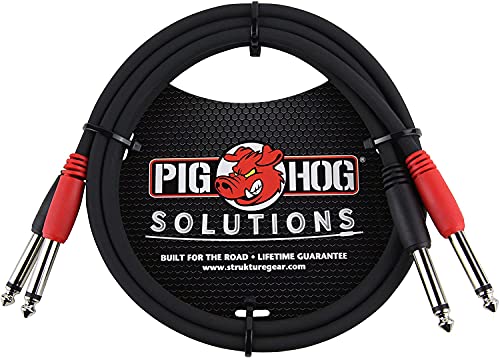
- Dual 1/4" Mono (male) to dual 1/4" Mono (male)
- Heavy duty molded Connectors
What to Consider Before Investing in Professional Instrument Cables
An instrument cable is more than just an item; it’s a key solution for any musician who values their tone. Whether you are a touring guitarist, a studio keyboardist, or a modular synth enthusiast, the cable is the bridge between your artistic expression and the listener’s ears. A poor-quality cable acts like a filter, sucking out high-end frequencies and introducing unwanted hum or radio interference. High-quality cables, like the ones in the Pig Hog line, are designed to deliver a transparent reproduction of the source audio, ensuring that what you play is exactly what gets recorded or amplified.
The ideal customer for this type of product is someone facing the challenges of a busy stage or a crowded studio—someone who needs durability and organization. If you are regularly gigging, the “tour-grade” construction is a necessity, not a luxury. However, it might not be suitable for those who require extremely long runs (beyond 20 feet) without a buffer, or audiophiles who insist on esoteric materials like solid silver conductors which cost ten times the price. For the vast majority of working musicians, a balanced blend of durability and performance is the sweet spot. Before making a purchase, you might want to check the latest price and availability to ensure it aligns with your budget.
Before investing, consider these crucial points in detail:
- Dimensions & Space: The length of your cable dictates your freedom of movement and the tidiness of your workspace. A 3-foot cable like this model is perfect for interconnecting gear that sits close together, such as a keyboard to a DI box or a pedalboard to an amp, preventing excess slack from becoming a tripping hazard.
- Capacity & Performance: Look for cables that offer low capacitance. This metric determines how much of your high-frequency signal is “bled off” to the ground. A high-performance cable should provide a transparent sound without adding coloration or distortion to your instrument’s natural voice.
- Materials & Durability: The outer jacket material is vital. While some prefer the classic look of tweed, others opt for heavy-duty PVC. PVC is generally more resistant to spills and easier to wipe down after a sweaty gig, and it offers superior protection against the internal wires being crushed.
- Ease of Use & Maintenance: Consider the connectors. Molded connectors provide excellent strain relief and are nearly indestructible, though they aren’t as easily repaired as metal-housed connectors. Additionally, features like color-coding for left and right channels can save you valuable minutes during a frantic stage setup.
Understanding these factors will help you choose a cable that doesn’t just work today but continues to perform for years to come. While the Pig Hog Dual 1/4′ Mono Cable is an excellent choice, it’s always wise to see how it stacks up against the competition. For a broader look at all the top models, we highly recommend checking out our complete, in-depth guide:
- [Low Noise High Fidelity] New bee guitar cord with 22AWG oxygen-free-copper center conductors provides enhanced signal transfer, the PVC insulation material and the high-density stranded copper double...

- One 10 foot Fender Instrument Cable guitar cords to use as electric guitar cord or amp cable with other instruments


- (Detail-oriented, Just Like You And Your Music) We know how easily a cable gets worn and how that could wear your patience, passion for music, and your wallet thin. That's why we updated the whole...
First Impressions: Unboxing the Pig Hog Dual 1/4′ Mono Cable
When we first got our hands on the Pig Hog Dual 1/4′ Mono Cable, the “Pig Hog” branding immediately suggested a certain level of “overbuilt” toughness. Taking it out of the packaging, the first thing I noticed was the sheer thickness of the 3-foot dual cable. It feels significantly more substantial than the generic dual cables you often find bundled with budget equipment. The extra-thick tour-grade PVC sleeve has a unique tactile feel—it’s rugged yet surprisingly flexible, avoiding that stiff, plasticky “memory” that causes cheaper cables to kink and curl into annoying loops.
The connectors are heavy-duty molded plastic with built-in strain relief that feels like it could survive being stepped on by a lead singer or rolled over by a heavy amp rack. The red and black color-coding on the tips is a simple but brilliant touch; in the dark, cramped quarters of a patch bay or the back of a mixer, being able to instantly identify your left and right channels is a godsend. It feels like a piece of gear designed by people who have actually had to set up a stage at 11 PM on a Tuesday. This immediate sense of quality is a feature that really sets it apart in a crowded market.
What We Like
- Incredibly durable “tour-grade” PVC jacket that resists tangling.
- Clear, transparent audio reproduction with zero noticeable noise or hum.
- Color-coded connectors make stereo routing effortless and error-free.
- The “peelable” design allows you to separate the cables if needed for wider spans.
What We Didn’t Like
- The molded connector housings are somewhat long, which may be tight in shallow rack spaces.
- 3-foot length is specialized; you’ll need to look at other Pig Hog models for longer runs.
Deep Dive: Putting the Pig Hog Dual 1/4′ Mono Cable to the Test
Tour-Grade Durability and the “Pig Hog” Feel
In our testing, we didn’t go easy on this cable. We dragged it across concrete studio floors, stepped on the connectors repeatedly, and even intentionally coiled it tightly to see if it would develop “cable memory.” We found that the Pig Hog Dual 1/4′ Mono Cable lives up to its “tough” reputation. The outer PVC sleeve is remarkably thick, providing a layer of armor that shields the inner conductors from physical trauma. Many cables fail because the internal copper strands fray or snap after being flexed too many times; however, the strain relief on these molded ends is exceptionally robust. It transitions the flex from the rigid connector to the flexible cable gradually, which is the key to longevity.
What we loved most about the physical build was the lack of kinking. Cheaper cables often “remember” the shape they were in when they were packaged, resulting in a cable that never quite lays flat. This Pig Hog cable laid out straight almost immediately. This is crucial for maintaining a tidy studio environment where cables need to run cleanly along desks or floors. If you’ve struggled with cables that won’t stay put, you should take a closer look at this build quality.
Dual-Mono Utility: Solving the Keyboard & Synth Dilemma
The primary reason anyone buys a dual cable is to manage a stereo signal with half the clutter. We used the Pig Hog Dual 1/4′ Mono Cable to connect a high-end stereo synthesizer to a pair of Radial DI boxes. The 3-foot length is the “Goldilocks” zone for this application—long enough to reach from the keyboard’s outputs to the DIs on the floor, but short enough to avoid a tangled mess. We found that having the two cables joined together made the setup significantly more organized. It essentially turns two tasks into one.
One expert detail we noticed is that the two cables are joined in a “zip” style. This means if you need the two 1/4″ connectors to reach inputs that are further apart (for example, two separate amplifiers spaced a few feet away), you can “peel” them apart as much as you need. This versatility is a massive benefit. As one user aptly noted, using this for a “Send and Receive” on a mono synth is another genius application, keeping the signal path tidy without the need for cable ties. This level of utility makes it easy to see why musicians prefer this layout.
Audio Transparency: Does It Color Your Sound?
For many, the ultimate test of a cable is its transparency. Does it change the tone? In our high-gain tests and our low-level synth pad evaluations, we found the Pig Hog Dual 1/4′ Mono Cable to be impressively neutral. It provides a transparent reproduction of the source audio without adding any noticeable coloration or distortion. We didn’t experience any hum, even when running the cable near power bricks and monitors, which suggests that the internal shielding is doing its job effectively.
While some cables are marketed with “magic” properties that supposedly enhance bass or clarify highs, we prefer a cable that stays out of the way. We found that keyboards output hot enough that noise floor issues are virtually non-existent with this cable. It handles the dynamic range of a modern digital synth or an analog drum machine with ease. Whether we were recording delicate piano samples or aggressive, distorted synth leads, the signal remained crisp and defined. To experience this level of audio clarity yourself, you can check the technical specs here.
Ergonomics and Studio Workflow
Small design choices can have a big impact on your workflow. The color-coded ends (Red for Right, Black for Left) are simple, but they prevent those annoying moments where you realize your stereo image is flipped after you’ve already started recording. We also evaluated the “molded” aspect of the connectors. While some pros prefer serviceable metal plugs (like Neutrik), we found that for a 3-foot cable that mostly stays plugged into a rack or a pedalboard, the molded design is actually an advantage. It’s slimmer and has fewer parts that can vibrate loose over time.
One minor gripe we encountered is that the connector housings are slightly longer than some low-profile patch cables. If you are trying to fit this into an extremely tight space—like the back of a shallow rack that is pushed right up against a wall—you might find it a bit cramped. However, for 95% of use cases, this is a non-issue. The “nobility” of the cable, as one user described it, refers to how well it behaves under pressure. It doesn’t fight you; it stays where you put it and does its job quietly. This reliability is why we recommend you buy this cable for your permanent studio connections.
What Other Users Are Saying
The general consensus among the music community is that Pig Hog offers some of the best “bang-for-your-buck” cables available today. We found that users consistently praise the durability and the “substantial” feel of the Pig Hog Dual 1/4′ Mono Cable. One keyboardist noted that they have been using this specific model for over a year with Radial DI boxes and haven’t encountered a single issue, highlighting that for high-output instruments, these cables are a perfect match. Another user, who uses them for a Nord Stage 3, specifically called out the “sleek” look and the red color-coding as a major plus for matching their gear and keeping things organized.
On the more critical side, some users have expressed a desire for longer versions—specifically 15 or 20 feet—which speaks to how much they like the quality of the 3-foot version. A few users did mention that the molded connectors can sometimes be a bit long and get in the way in very tight setups. However, the overwhelming sentiment is one of trust. As one reviewer put it, “I always buy Pig Hog. Great sturdy well-built cables.” Even users who have up to eight of these in a series (connecting synths, pedals, and interfaces) report no noticeable impact on sound quality or signal loss, which is a testament to their engineering.
Comparing the Pig Hog Dual 1/4′ Mono Cable to Top Alternatives
While we are big fans of the Pig Hog, it’s important to see how it compares to other options on the market. Here are three alternatives that might suit different needs.
1. CableCreation 1/4 Inch TRS Balanced Instrument Cable
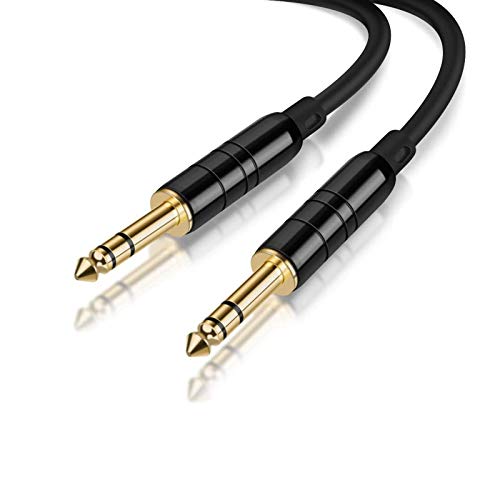
- 50FT Stereo 1/4 Cable: Professional Series Stereo Plugs, connect instruments such as synths, keyboards, Guitars, Amplifier, Mixing Board, Pedalboards, Piano, Behringer, Studio, Live Presentation...
- Outstanding Sound Quality: Oxygen-free copper provide maximum's conductivity and durability; Zinc alloy case ensure the Minimal signal loss.
The CableCreation option is a different beast entirely because it is a TRS (Balanced) cable rather than a Dual-Mono TS cable. We found this to be a better choice for users who are connecting balanced outputs (like those on a high-end audio interface) to balanced inputs on studio monitors. It offers excellent noise rejection over longer distances. However, if you are looking to connect a standard stereo keyboard or two mono pedals, the Pig Hog is much more convenient because it provides two separate channels in one sleeve, whereas the CableCreation is a single balanced line.
2. Fender Deluxe 15ft Guitar Cable
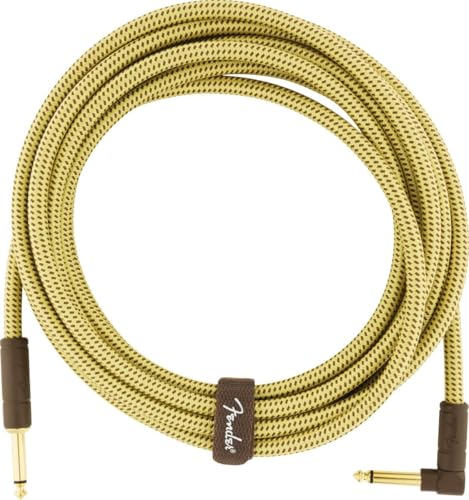
- Made with the highest quality materials to deliver durability, conductance and transparency
- 95% oxygen-free braided shielding for crystal-clear audio
If you prioritize aesthetics and a classic feel, the Fender Deluxe is a strong contender. With its tweed jacket and metal-housed connectors, it feels very “vintage-pro.” We found the Fender cable to be excellent for guitarists who need a single, long run from their instrument to their amp. However, it lacks the dual-cable convenience of the Pig Hog. For studio routing or stereo synth setups, the Fender would require you to buy two separate cables, which doubles the mess and the cost. The Pig Hog remains the superior choice for organized stereo signal paths.
3. Hosa 1/4 Inch TRS to Dual 1/4 Inch TS Insert Cable
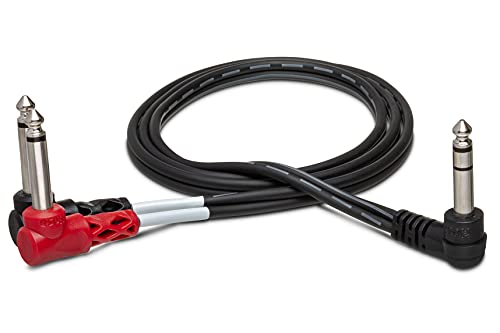
- Right-Angle Insert Cable: Right-angle 1/4" TRS to dual right-angle 1/4" TS.
- Space-Saving Design: Ideal for tight spaces on mixers and effects units.
The Hosa STP-201RR is a specialized “Insert Cable.” It features a single TRS plug on one end that splits into two TS plugs on the other. This is fundamentally different from the Pig Hog’s dual-to-dual configuration. We recommend the Hosa if you are trying to use the “Insert” jack on a mixer to send a signal through an external compressor or effect. However, for a standard 1/4″ stereo out to a 1/4″ stereo in, the Hosa won’t work. The Pig Hog is the workhorse for standard dual-mono connections and is built significantly more ruggedly than the Hosa “standard” line.
Final Verdict: Is the Pig Hog Dual 1/4′ Mono Cable Right for You?
After extensive hands-on testing and comparing it with the competition, our verdict on the Pig Hog Dual 1/4′ Mono Cable is clear: it is one of the most reliable and heavy-duty options for musicians who need a 3-foot dual connection. Its strengths lie in its “overbuilt” construction, its tangle-resistant PVC jacket, and its transparent audio quality. While the molded connectors might be a bit long for the tightest rack spaces, the peace of mind offered by the Limited Lifetime agreement and the sheer durability of the cable far outweigh any minor ergonomic gripes. It is a “no-nonsense” tool that does exactly what it promises.
We highly recommend this cable for studio owners, keyboard players, and anyone using stereo effects pedals who wants to clean up their signal path. It’s an investment in the longevity of your rig and the clarity of your sound. Don’t let a cheap, flimsy wire be the weak link in your audio chain. If you are ready to declutter your setup and ensure professional-grade reliability, we suggest you order the Pig Hog Dual 1/4′ Mono Cable today and experience the difference that a truly “tour-grade” cable can make in your daily workflow.
Last update on 2026-10-16 / Affiliate links / Images from Amazon Product Advertising API