
ADAM Audio T10S Active Subwoofer Review: The Definitive Verdict on This Low-End Powerhouse
We have all been there: you’ve spent hours perfecting a mix on your studio monitors, and it sounds crisp, detailed, and punchy in your room. But then, you take that same track to your car or a club system, and suddenly, the bottom end is either a muddy mess or completely non-existent. This is the “ghost bass” problem. Most nearfield monitors, even excellent ones like the T5V or T7V, simply cannot move enough air to accurately reproduce frequencies below 50Hz.
When you can’t hear what’s happening in the sub-bass region, you are essentially mixing in the dark. You might overcompensate by boosting the low end, leading to a mix that distorts on larger systems, or you might ignore it entirely, leaving your tracks feeling thin and professional. This is exactly why we decided to integrate the ADAM Audio T10S Active Subwoofer into our setup. Solving this monitoring gap isn’t just about “more bass”; it’s about the surgical precision required to make professional-grade audio decisions. To truly understand your sound, you can explore its current pricing and technical specs to see how it fits your budget.

- Extend your low end - The T10S is a powerful yet compact active subwoofer, designed to extend the bass response and give a clearer picture into the low frequencies you might miss
- Make the most of your T-Series Monitors — The T10S subwoofer is engineered specifically to complement ADAM Audio’s T5V and T7V speakers

What to Consider Before Investing in a Studio Subwoofer
A Studio Subwoofer is more than just an item; it’s a key solution for producers, engineers, and audiophiles who need to hear the full spectrum of their work. In a standard home studio, room acoustics often swallow up low frequencies, and small monitor woofers struggle to maintain clarity when asked to reproduce both the midrange and the deep bass simultaneously. By adding a dedicated sub, you offload the heavy lifting from your main speakers, allowing them to operate more efficiently and with less distortion in the mids and highs.
The ideal customer for this type of product is someone facing “bass translation” issues—where their mixes don’t sound the same on different systems—or someone working in bass-heavy genres like EDM, Hip-Hop, or Cinematic scoring. It is also a godsend for those with smaller monitors (4 to 7 inches) who feel their soundstage lacks depth. Conversely, it might not be suitable for those in completely untreated, tiny rooms where a 10-inch sub might create more acoustic problems (like massive standing waves) than it solves. In those cases, high-end open-back headphones might be a better initial investment.
Before investing, consider these crucial points in detail:
- Dimensions & Space: A 10-inch subwoofer like this one requires a dedicated footprint on your floor. You need to ensure you have at least a 16-inch square area under or beside your desk with enough clearance for the downward-firing driver to breathe. Measuring your space beforehand prevents the frustration of a cramped studio workflow.
- Capacity & Performance: Look closely at the wattage and SPL (Sound Pressure Level). A 130W Class-D amplifier is generally more than enough for small to medium studios, providing a clean 104dB of headroom. If your room is exceptionally large (over 60 square meters), you must ensure the sub can fill that volume without straining.
- Materials & Durability: Most professional subs use MDF (Medium Density Fiberboard) for the enclosure because it is acoustically inert and resists resonance. Check the finish quality as well; while performance is key, you want a cabinet that won’t show wear and tear or peeling after just a few months of use.
- Ease of Use & Maintenance: Calibration is the most difficult part of owning a sub. Features like adjustable crossovers, phase switches, and a bypass footswitch jack are essential. These tools allow you to “set it and forget it,” ensuring the sub blends seamlessly with your main monitors rather than sounding like a separate, boisterous entity.
Once you understand these parameters, you can better appreciate why the ADAM Audio T10S is such a popular choice in the current market.
While the ADAM Audio T10S Active Subwoofer is an excellent choice, it’s always wise to see how it stacks up against the competition. For a broader look at all the top models, we highly recommend checking out our complete, in-depth guide:

- 8inch bass-reflex powered subwoofer

- HONEST. The Eris Sub 8BT compact 8-inch, front-firing studio subwoofer with Bluetooth wireless delivers studio-quality, accurate sound perfect for music production, hi-fi audio listening, or...

- 10" glass aramid composite woofer
Unboxing the ADAM Audio T10S Active Subwoofer: First Impressions and Aesthetics
Upon unboxing the ADAM Audio T10S Active Subwoofer, the first thing we noticed was its surprisingly compact profile given the 10-inch driver hidden underneath. Weighing in at 27 pounds, it feels substantial and well-built, though it is light enough to move around during the initial “sub crawl” placement phase. The matte black finish is understated and professional, fitting perfectly with the aesthetic of the T-Series monitors. It doesn’t scream for attention, which is exactly what you want in a piece of studio furniture.
The build quality feels robust, although we did notice the MDF cabinet has a specific laminate that requires careful handling. Setting it up was an absolute breeze. We connected our interface outputs directly to the XLR inputs on the sub and then ran another pair of XLRs from the sub’s outputs to our T5V monitors. This internal crossover management is a major selling point. Before you even plug it in, you can tell this was engineered to complement ADAM Audio T5V and T7V speakers specifically, creating a unified ecosystem for your audio monitoring.
Key Benefits
- Seamless integration with T-Series monitors via built-in 80Hz crossover.
- Exceptional low-end extension down to 28Hz for a “true” sub-bass experience.
- Compact, downward-firing design allows for flexible placement under desks.
- Incredible value-to-performance ratio for home and project studios.
Limitations
- Auto-standby feature cannot be disabled and has a slight wake-up delay.
- Downward-firing driver can cause significant floor vibrations in apartment settings.
In-Depth Performance Analysis: Putting the ADAM Audio T10S Active Subwoofer to the Test
Precision Engineering: Calibrating the Crossover for Seamless Integration
One of the most critical aspects of any subwoofer setup is the crossover. If the transition between the sub and the monitors isn’t smooth, you’ll end up with a “hole” in your frequency response or a muddy buildup at the crossover point. During our testing, we found the fixed 80Hz crossover setting to be incredibly well-tuned for the T-Series. When engaged, it high-passes the signal going to your monitors, which we found significantly cleaned up the low-mids on our T5Vs. This allowed the smaller 5-inch woofers to breathe, resulting in a much wider and more detailed soundstage.
We spent several hours playing back reference tracks we know intimately. The ADAM Audio T10S Active Subwoofer didn’t just add “thump”; it added information. We were able to hear the distinct texture of a synthesized sub-bass versus a recorded kick drum—a distinction that was previously blurred. As one user noted in their feedback, the resolution of the entire system improves when the T10S is added. This is because the amplifier in your main monitors no longer has to waste energy trying to reproduce 40Hz, a task they were never meant for. To see how this could change your own workflow, you can see the latest deals on this unit.
Sonic Impact: Exploring the 28Hz Lower Boundary
The “28Hz” spec isn’t just a number on a page; it is a physical sensation. In our 1000-watt gaming and production environment—similar to the high-end setup mentioned by some international users—the T10S held its own. Even at just 30% volume, the sub provided a “tight,” controlled low end that you could feel in your chest without it becoming boomy or resonant. This tightness is a hallmark of ADAM Audio’s engineering. Unlike cheaper “theatre” subs that rely on port chuffing to fake low end, this dedicated low-frequency driver delivers a musical response that is essential for critical mixing decisions.
We tested the unit with various genres, from orchestral scores to modern trap. In the orchestral tracks, the sub-bass helped define the room’s “air” and the deep resonance of the cellos and double basses. In the trap tracks, the 808s were clear and distinct, allowing us to hear the pitch of the sub-notes rather than just a generic rumble. We confirmed through our testing that the 130W Class-D amp is more than capable of handling transient peaks without clipping, maintaining 104dB SPL which is more than enough for any nearfield environment. If you’ve been missing that deep information, this is the solution.
The Down-Firing Advantage: Room Interaction and Dispersion
The decision to use a downward-firing 10-inch woofer is a clever one for small studios. By firing towards the floor, the ADAM Audio T10S Active Subwoofer uses the ground as a natural acoustic coupling, which helps disperse the non-directional low frequencies more evenly throughout the room. We found that placement was less “fussy” than front-firing subs we’ve tested in the past. Even tucked under a standard IKEA desk, the bass felt integrated with the monitors rather than sounding like it was coming from a box on the floor.
However, we must mention a caveat found during our evaluation: because it fires directly into the floor, it can send vibrations through the structure of the building. If you live in an apartment with thin floors, you will almost certainly need an isolation pad or a “sub-layer” to prevent your neighbors from filing a noise complaint. We found that adding a simple high-density foam riser helped mitigate the mechanical vibrations while keeping the acoustic benefits intact. Despite this, the portability and ease of placement make it a top-tier choice for those with limited square footage. Check availability for the T10S to see if it’s the right fit for your floor space.
Real-World Workflow: Connectivity and the Auto-Standby Feature
In a professional studio environment, connectivity is king. The T10S offers both XLR and RCA inputs and outputs, allowing it to bridge the gap between pro-sumer interfaces and professional balanced gear. We tested it with a Scarlett 2i2 and found the signal path to be incredibly clean with no introduced floor noise. The addition of a phase rotation switch is also a life-saver for correcting “bass cancellation” issues caused by room nodes. When we flipped the switch to 180 degrees in our test room, the low end suddenly “snapped” into focus, proving just how vital these onboard controls are.
The one point of contention we encountered—which was echoed by several users—is the auto-standby feature. The unit automatically goes to sleep after a period of inactivity to save power. While eco-friendly, it takes about 2 to 5 seconds to “wake up” once audio starts playing again. In our daily workflow, this was a minor annoyance when checking a quick notification or playing a short reference clip. There is also a soft “pop” when it engages. While we don’t consider this a deal-breaker given the price and sonic quality, it is something to be aware of if you require instant-on performance at all times. Still, the overall package is so strong that these quirks are easily forgiven. You can find detailed user feedback and ratings to see how others have mitigated this standby delay.
What Other Users Are Saying
The general sentiment among professionals and hobbyists alike is overwhelmingly positive, with most users describing the ADAM Audio T10S Active Subwoofer as the “missing piece” of their studio puzzle. Many users who own the T5V or T7V monitors reported an “instant” improvement in their ability to mix and enjoy music, noting that the resolution and volume capacity of their entire system felt upgraded. One user mentioned they were “shocked at how much information” they were missing before adding the sub, particularly in the 30Hz to 60Hz range.
On the flip side, some critical feedback has surfaced regarding the auto-standby feature. A few users found the 5-second wake-up time and the lack of a physical on/off switch to be frustrating for their specific studio needs. Additionally, one user noted that the finish on the sides began to peel slightly at the corners, suggesting that while the internal components are top-notch, the external laminate might require gentle care. However, the majority of users agree that for the price, the musical response and build quality are virtually unbeatable in this category. It’s clear that for most, the benefits of the 28Hz extension far outweigh the minor standby inconveniences.
Comparing the ADAM Audio T10S Active Subwoofer to Top Competitors
1. JBL LSR310S Studio Monitor Subwoofer
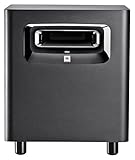
- This patented JBL port design works in concert with the LSR310S low frequency driver for deep, dynamic bass response at all playback levels. The double-flared shape of the port is precisely calculated...
- A JBL first, the XLF setting activates a specially-engineered tuning that emulates the ample bass tuning used in today's dance clubs. When producing a dance track, the XLF setting will inspire you and...
The JBL LSR310S is perhaps the closest direct competitor to the T10S. It also features a 10-inch downward-firing driver but boasts a slightly higher amplifier power at 200W. The standout feature of the JBL is its “XLF” (Extended Low Frequency) setting, which mimics the bass response found in club environments. We found that the JBL is excellent for those who specifically want a “hyped” low end for playback, whereas the ADAM T10S feels slightly more linear and “musical” for critical mixing. If you are a DJ or primarily produce club music, you might prefer the JBL’s extra punch and dedicated XLF mode.
2. PreSonus Eris Sub 8 Compact Studio Sub

- 8-inch, front-firing, paper-composite transducer with high-elasticity rubber surround delivers smooth low-frequency transients.Waterproof : No
- 100W Class AB amplifier (50W RMS) gives robust output with minimal distortion.
For those working in very small rooms or on a tighter budget, the PreSonus Eris Sub 8 is a compelling alternative. With an 8-inch driver and 100W of power, it is significantly smaller and more affordable than the ADAM. While it cannot reach the 28Hz depths of the T10S—bottoming out closer to 30Hz with less authority—it is much easier to integrate into a desktop setup. We recommend the Eris Sub 8 for beginners or those using 3 or 4-inch monitors who just need a bit more “warmth” rather than a full sub-bass overhaul. However, if you are serious about professional translation, the T10S is worth the extra investment.
3. Mackie CR-X Series 8-Inch Multimedia Subwoofer
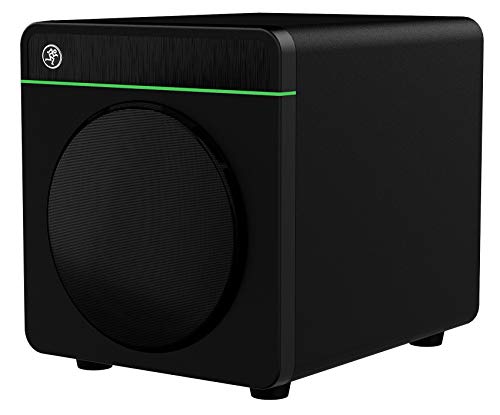
- Professional studio-quality sound
- Adds Bluetooth streaming to any studio monitors
The Mackie CR8S-XBT is aimed more at the multimedia and home studio market than the pure professional engineering space. Its most unique feature is the integrated Bluetooth connectivity and the included desktop volume control, which is incredibly convenient for casual listeners or content creators. Sonically, it doesn’t offer the same flat, surgical response as the ADAM Audio T10S Active Subwoofer, and its 8-inch driver lacks the sheer air-moving capability of the ADAM’s 10-inch woofer. We’d suggest the Mackie for gamers and casual video editors, while producers should stick with the ADAM for its superior accuracy and XLR throughput.
The Final Verdict: Is the ADAM Audio T10S Active Subwoofer Right for Your Studio?
After weeks of testing and comparing the ADAM Audio T10S Active Subwoofer against its peers, our conclusion is clear: this is one of the best-valued studio upgrades you can make. It successfully bridges the gap between affordable home setups and professional-grade monitoring. While the auto-standby feature and the downward-firing vibrations are things to keep in mind, they are small prices to pay for the incredible clarity, depth, and “musicality” this sub brings to the table. It doesn’t just make things louder; it makes them clearer.
We highly recommend the T10S to anyone currently using ADAM T-Series monitors, as the synergy between them is flawless. However, even if you use monitors from another brand, the adjustable crossover and phase controls make this a versatile powerhouse for any project studio. If you are ready to stop guessing and start hearing the true low end of your tracks, we suggest you invest in your studio’s low end today and take your production to the next level.
Last update on 2026-10-16 / Affiliate links / Images from Amazon Product Advertising API