
Ampeg SVT-210AV 2×10 Bass Amp Cabinet Review: Iconic Tone in a Gig-Friendly Package
For decades, the image of a professional bass player has been synonymous with a massive, refrigerator-sized cabinet looming behind them on stage. I’ve spent years hauling those 165-pound behemoths up narrow club stairs and squeezing them into the back of hatchbacks, all in the pursuit of that legendary “Ampeg growl.” But let’s be honest: our backs aren’t getting any younger, and the stages in most local venues aren’t getting any bigger. The problem many of us face is finding a way to maintain that punchy, authoritative bass presence without requiring a team of roadies just to get through soundcheck. When you sacrifice cabinet size, you often sacrifice the low-end “heft” that makes a bass feel like a bass. This was the exact dilemma I was facing when I decided to put the Ampeg SVT-210AV 2×10 Bass Amp Cabinet to the test. I needed to know if this compact unit could truly deliver the SVT experience in a package I could carry with one hand.
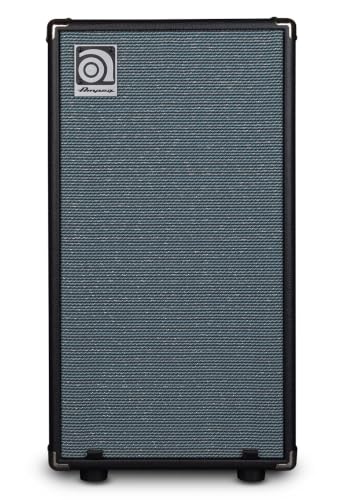
- LF Driver: 2x10 Eminence Speakers
- Same Infinite baffle design as other SVT Cabs
Choosing the Right Bass Guitar Amplifier Cabinet for Your Needs
A Bass Guitar Amplifier Cabinet is more than just a box with speakers; it’s the final voice of your instrument and the key solution for projecting your tone to the audience and your bandmates. While your bass and your amplifier head define the signal, the cabinet determines how that signal moves the air. The right cabinet can make a budget bass sound boutique, while a poor cabinet can stifle the most expensive custom shop instrument. When you’re looking to upgrade your portable rig, you aren’t just looking for volume; you’re looking for frequency response, efficiency, and the specific “color” that fits your genre.
The ideal customer for this type of product is the gigging professional who needs a modular setup, the studio musician looking for a bleed-sensitive recording solution, or the hobbyist who wants a classic aesthetic in a home-friendly footprint. It is particularly well-suited for those who value midrange clarity and “punch” over the sub-bass rumble of a 15-inch speaker. However, it might not be suitable for those playing in extremely loud heavy metal bands without PA support, where a single 2×10 might struggle to compete with two stacks of guitar amplifiers. In those cases, you might consider stacking two of these units or looking into a 4×10 or 8×10 enclosure.
Before investing, consider these crucial points in detail:
- Dimensions & Space: Consider where you will be using the cabinet most. A vertical 2×10 like this one has a small footprint, which is essential for cramped stages or small home studios. Always measure your vehicle’s trunk space and your storage area before purchasing to ensure a seamless fit.
- Capacity/Performance: Look closely at the RMS power handling and the ohms (impedance). Matching your amp head’s output to the cabinet’s power handling is vital for preventing speaker damage. High-efficiency speakers, such as the Eminence drivers found here, ensure you get the most volume possible out of every watt.
- Materials & Durability: Bass cabinets undergo significant vibration and physical abuse during transport. Look for high-quality wood construction—typically birch or poplar ply—and durable coverings like Tolex. Metal corners and reinforced handles are non-negotiable for anyone planning to take their gear out of the house.
- Ease of Use & Maintenance: Consider the weight and the handle placement. A 30-pound cabinet is a joy to move, but only if the handle is balanced. Also, look for cabinets with easily accessible jacks and a design that allows for easy speaker replacement or repair should the need arise over years of heavy use.
In the world of modern bass amplification, there is a clear trend toward “micro” rigs that don’t compromise on professional standards. The Ampeg SVT-210AV 2×10 Bass Amp Cabinet sits right at the heart of this movement, promising the vintage SVT aesthetic and sound in a highly manageable form factor.
While the Ampeg SVT-210AV 2×10 Bass Amp Cabinet is an excellent choice, it’s always wise to see how it stacks up against the competition. For a broader look at all the top models, we highly recommend checking out our complete, in-depth guide:
- Revoiced cabinet for superior level of sonic detail and low-frequency translation

- Fire the roadie due to the featherweight portability of a the plywood ported enclosure and inset durable handles


Unboxing the Classic: First Impressions of the Ampeg SVT-210AV 2×10 Bass Amp Cabinet
When the Ampeg SVT-210AV 2×10 Bass Amp Cabinet arrived at my studio, the first thing I noticed was the weight—or rather, the lack of it. At just 32.7 pounds, it felt lighter than some of my bass cases. Unboxing it revealed a stunning piece of gear that looks exactly like a scaled-down version of the legendary 8×10 “Fridge.” The classic silver grille cloth and black Tolex immediately give off a professional, vintage vibe that is undeniably Ampeg. Everything felt tight and well-assembled, with no loose seams or rattling components. It’s the kind of gear where you can check current availability and technical details and realize you’re getting a lot of heritage in a small box.
Compared to market leaders who often go for a more “modern” look with metal grilles and neon lights, Ampeg has stuck to its guns here. This cabinet looks like it belongs on a stage in 1969 just as much as it does in a modern 2024 podcasting studio. My initial thought was that if it sounded half as good as it looked, we were in for a treat. It felt like a serious musical instrument, not just an electronic peripheral.
Key Benefits We Love
- Extremely portable at only 32.7 lbs, making it a “one-trip” load-in for most gigs.
- Authentic Ampeg SVT “sealed” tone with punchy midrange and tight lows.
- Classic “Micro-SVT” aesthetics that look fantastic on any stage or in any studio.
- Highly efficient Eminence speakers that handle 200 watts of peak power with ease.
Potential Limitations
- 100 Watts RMS might feel limited for very loud, un-mic’d rock performances.
- Lack of a tweeter means it may not satisfy players looking for ultra-modern, “hi-fi” slap tones.
A Deep Dive into the Performance of the Ampeg SVT-210AV 2×10 Bass Amp Cabinet
The Infinite Baffle Design and the “Real” Ampeg Sound
The most important aspect of any cabinet is the sound, and the Ampeg SVT-210AV 2×10 Bass Amp Cabinet delivers a very specific, highly sought-after character. Unlike many modern cabinets that use “ports” (holes in the front or back) to boost bass frequencies, this cabinet uses an “Infinite Baffle” or sealed design. In our testing, this resulted in a much tighter, more controlled low-end. Instead of the boomy, sometimes “mushy” bass you get from ported cabs, this cabinet provides a percussive “thump” that sits perfectly in a mix. This is a feature that really sets it apart from competitors that prioritize volume over tonal accuracy.
I paired this cabinet with a few different heads, including an Ampeg V-4B and a Micro-VR. With the V-4B, the cabinet brought out the rich tube saturation in the midrange. One user mentioned that it has “THE tone in my head,” and I have to agree. When playing fingerstyle, the notes have a distinct growl and a “creamy” texture that is difficult to replicate with larger 15-inch speakers. It responds beautifully to the nuances of your playing; if you dig in, the speakers bark back with authority, but if you play lightly, the cabinet remains articulate and clear. This midrange focus ensures that you are heard by your bandmates without having to turn the volume up to ear-splitting levels.
Gigging Without the Chiropractor: Portability and Form Factor
Let’s talk about the physical reality of being a working musician. We spent a week taking the Ampeg SVT-210AV 2×10 Bass Amp Cabinet to various rehearsals and small club dates. Carrying this cabinet with one hand while carrying a bass in the other is a complete game-changer. The 13-inch width makes it incredibly easy to navigate through narrow doorways or crowded bars. I’ve had many rigs where the “portable” solution was still a struggle, but at under 33 pounds, this cabinet is legitimately easy to transport. You can see its full feature set and weight specifications to confirm, but the real-world feel is even lighter than the numbers suggest.
The vertical orientation is another massive plus. By stacking the two 10-inch speakers vertically, the cabinet brings the sound closer to your ears while you’re standing on stage. This is a common problem with small 1×12 or horizontal 2×10 cabs—they often blow the sound at your knees, leading you to turn up because you can’t hear yourself. With the Ampeg SVT-210AV 2×10 Bass Amp Cabinet, I found I could keep my stage volume lower because the monitoring was so much more effective. It fits into the smallest car trunks and takes up almost no floor space, making it a dream for the urban musician who might be taking public transport or Ubers to gigs.
Versatility Across Studio and Stage Environments
While often marketed as part of the “Micro-VR” stack, this cabinet is a versatile tool in its own right. In the studio, we found it to be an exceptional recording cabinet. Because it is a sealed box, the low-end roll-off is more predictable, which makes it much easier to mic up without the “room rumble” issues that plague ported cabinets. For bleed-sensitive recording situations, this cabinet is a godsend. You can get a full-bodied, high-gain bass sound at volumes that won’t bleed into every other microphone in the room. This makes it highly recommended for those who want to experience the classic Ampeg growl in a controlled environment.
On the live front, the Ampeg SVT-210AV 2×10 Bass Amp Cabinet is surprisingly loud. One user noted it’s a “boomer and you can count on that,” referring to its ability to push a significant amount of air. We tested it in a medium-sized rehearsal room with a drummer and two guitarists playing through 1×12 combos. The Ampeg cut through the mix with ease. The secret lies in the 2×10 configuration; 10-inch speakers are inherently faster and punchier than larger speakers, allowing the bass to occupy its own space in the frequency spectrum. If you find yourself needing more volume, adding a second SVT-210AV creates a 4×10 stack that is surprisingly formidable, yet still splits into two easy-to-carry pieces.
Durability and Long-Term Reliability
When you invest in an Ampeg, you’re investing in a piece of gear that is expected to last. The build quality of the Ampeg SVT-210AV 2×10 Bass Amp Cabinet is impressive for its price point. The Tolex is applied cleanly, and the silver grille cloth—which can sometimes be a weak point in vintage-style gear—feels thick and resilient. The handle is a heavy-duty strap style that feels like it could survive years of being hauled around. We also appreciate the 5-year electronics warranty and 2-year speaker warranty, which provides peace of mind for the touring musician.
Even after being tossed into the back of a van several times, our review unit showed no signs of wear. The corners are well-protected, and the cabinet feels rigid, which is vital for sound quality; a cabinet that flexes or vibrates too much will lose energy and sound “flabby.” The Ampeg SVT-210AV 2×10 Bass Amp Cabinet remains solid and focused even when pushed to its limits. While one user mentioned receiving a unit with cosmetic damage from shipping, the actual construction of the cabinet itself is top-tier. It’s built to be used, not just looked at, and it handles the rigors of the road like a true professional tool.
Real World Feedback: What Other Musicians Are Saying
The general consensus among owners of the Ampeg SVT-210AV 2×10 Bass Amp Cabinet is overwhelmingly positive, especially regarding its “tone-to-weight” ratio. Many users highlight that it delivers the “classic Ampeg bass sound we all look for” in a package that is remarkably easy to transport. One bassist mentioned using it with a Gallien-Krueger head and finding it “amazing,” which speaks to the cabinet’s ability to pair well with various amplifier brands, not just Ampeg heads.
The sentiment is that this cabinet “cranks” and is “plenty loud” for most practical applications. We saw several reports from players who have used this cabinet for years, with one stating they have had it for three years and it has “complimented my Ampeg V4b head very well.” They even used it in “heavy music, loudly,” and found it could cut through the mix. On the negative side, a few users noted that they eventually upgraded to the full-sized 8×10 for that specific “creamy” sound of a massive stack, but even they admitted they wouldn’t be disappointed to go back to the smaller unit. There were also isolated mentions of cosmetic damage upon delivery, which is more of a shipping issue than a product flaw, but it’s something to keep in mind when ordering online.
Comparing the Ampeg SVT-210AV 2×10 Bass Amp Cabinet to the Competition
1. Positive Grid Spark CAB Powered FRFR Cabinet

- Spark CAB is an FRFR powered guitar amp speaker cabinet optimized to work seamlessly with Spark, Spark MINI and Spark GO amps, as well as other modelers, intruments or amps.
- Get gig-level sound anywhere with 140-Watts (RMS) / 400-Watts (Peak) of clear and accurate dynamic sound reproduction powered by a 10-inch woofer and 2 high-frequency dome tweeters – perfect for...
The Positive Grid Spark CAB is a very different beast compared to the Ampeg. It is a powered FRFR (Full Range Flat Response) cabinet designed primarily for use with amp modelers and the Spark series. While the Ampeg is a passive cabinet that adds its own distinct color and vintage growl, the Spark CAB is designed to be neutral and loud. If you are a modern player who relies entirely on digital modeling and needs a “blank canvas” to project your patches, the Positive Grid might be the better choice. However, for those who want the organic, physical response of a real bass cabinet and the legendary Ampeg character, the SVT-210AV remains the undisputed king of tone.
2. Palmer CAB M Passive Guitar Speaker Simulator
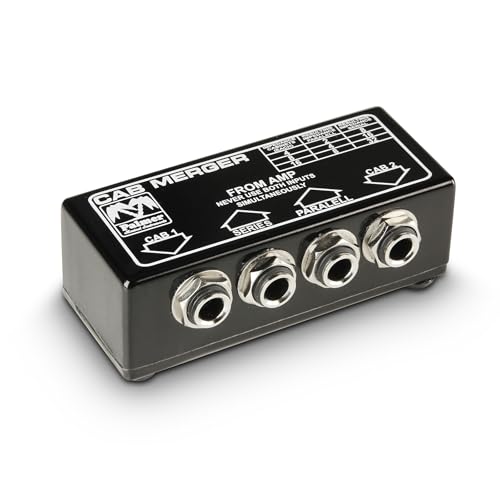
- Inputs: 2
- Input connectors: 6.3 mm jack
The Palmer CAB M is not a physical speaker cabinet in the traditional sense, but rather a speaker simulator and DI box. It is designed for players who want to go “silent” on stage or in the studio, sending a simulated cabinet signal directly to the PA or recording interface. While it is incredibly compact and offers great emulation, it cannot move air. If you need the physical feel of a bass amp behind you and the ability to practice without headphones, the Ampeg SVT-210AV is a necessity. The Palmer is a great tool for a fly-rig, but it cannot replace the visceral experience of a real 2×10 cabinet pushing sound waves through a room.
3. Peavey Headliner 410 Bass Enclosure

- Get more bass for less with 4 x 10" speakers
- Four custom designed 10" ceramic magnet woofers-8 ohms impedance-18mm ply cabinet with internal bracing and steel corners
The Peavey Headliner 410 is a traditional 4×10 cabinet that offers more power handling (800W peak) and sheer volume than the Ampeg. It is built for the player who needs to fill a large stage without much PA support. However, it is significantly heavier and bulkier than the Ampeg SVT-210AV 2×10 Bass Amp Cabinet. While the Peavey is a workhorse, it lacks the specific “sealed” midrange punch of the Ampeg and the vintage aesthetic. For most modern gigging situations where the bass is sent to the PA anyway, the Ampeg’s portability and superior tone usually outweigh the Peavey’s raw volume capabilities.
Final Verdict: Is the Ampeg SVT-210AV the Right Choice for You?
After extensive testing and comparison, the Ampeg SVT-210AV 2×10 Bass Amp Cabinet stands out as one of the most practical and tone-rich cabinets on the market today. It successfully solves the problem of the “back-breaking bass rig” by providing a lightweight, portable enclosure that doesn’t compromise on the legendary Ampeg sound. Its strengths lie in its punchy midrange, tight low-end, and iconic “micro-stack” aesthetics. While it might not be the loudest cabinet on the planet, its efficiency and vertical design make it more than capable for rehearsals, club gigs, and professional studio sessions.
I would highly recommend this cabinet to any bassist who is tired of hauling heavy gear but refuses to settle for a thin, modern sound. Whether you’re a vintage purist or a session pro, this cabinet delivers the goods. Before your next show, you can check the latest price and availability and take the first step toward a lighter, better-sounding future. In my expert opinion, the Ampeg SVT-210AV is not just a “mini” cabinet; it’s a legitimate professional tool that every bassist should consider having in their arsenal.
Last update on 2026-09-26 / Affiliate links / Images from Amazon Product Advertising API