
PJB Compact 4 Bass Cabinet Review: Small Footprint, Massive Professional Tone
As bass players, we’ve all been there. You land a great gig at a small jazz club or a trendy rooftop bar, only to realize the logistics of hauling your traditional 4×10 cabinet up three flights of stairs is a literal back-breaker. For decades, the industry standard dictated that if you wanted “real” bass, you needed massive speakers and even more massive enclosures. Moving these monoliths usually requires a van, a gym membership, and a very patient bandmate. The complication arises when you try to downsize; often, smaller cabinets sound “boxy,” lose the fundamental low-end of your B-string, or simply cannot handle the 400-watt output of a modern head. Finding a solution that offers high-fidelity transparency without the physical footprint of a refrigerator has been the ultimate goal. This is exactly where the PJB Compact 4 Bass Cabinet enters the conversation, promising to solve the portability crisis without compromising an ounce of tonal integrity.

- 4 x 5" Compact Bass Cabinet with Piranha Drivers Ferrite Magnets - Red
- 400-watt
What to Consider Before Investing in Bass Guitar Amplifier Cabinets
A Bass Guitar Amplifier Cabinet is more than just a box with speakers; it’s the final voice of your instrument, a key solution for translating the subtle nuances of your playing into physical air movement. Unlike guitar cabinets, which often color the sound with mid-range distortion, a high-quality bass cabinet needs to handle extreme excursions and provide a wide frequency response. Before you check the latest price and availability for any new gear, you must understand that the cabinet is responsible for the “heft” and “clarity” of your live sound.
The ideal customer for this type of product is the working professional—someone who gigs frequently, values a “Hi-Fi” sound, and needs to fit their entire rig into a sedan. It’s perfect for session players who need a consistent, transparent tone across various genres. However, it might not be suitable for those who strictly play “doom metal” or stadium rock where a wall of 15-inch speakers is part of the aesthetic. If you are looking for vintage speaker breakup, you might consider traditional paper-cone enclosures instead of the modern drivers found in the PJB Compact 4 Bass Cabinet.
Before investing, consider these crucial points in detail:
- Dimensions & Space: Consider where you will be playing and how you will transport the gear. A cabinet that is too large stays in the garage; one that is too small might not project over a loud drummer. Look for designs that maximize internal volume while minimizing external dimensions.
- Capacity/Performance: Always match your amplifier’s wattage and impedance to the cabinet. A 400-watt, 8-ohm cabinet like this one provides a perfect balance for most modern Class-D heads, allowing for safe operation and plenty of headroom.
- Materials & Durability: Not all wood is created equal. Baltic birch plywood is the gold standard because of its density and resonance control. Avoid MDF or particle board, which add weight but lack the structural integrity needed for the road.
- Ease of Use & Maintenance: Look for heavy-duty handles, reinforced corners, and a finish that can withstand the occasional bump. Maintenance usually involves checking for loose screws or rattled-loose connections after months of heavy vibration.
Understanding these variables will help you decide if a boutique, small-format cabinet is the right move for your specific musical journey. While the PJB Compact 4 Bass Cabinet is an excellent choice, it’s always wise to see how it stacks up against the competition. For a broader look at all the top models, we highly recommend checking out our complete, in-depth guide:
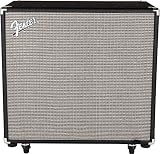
- Revoiced cabinet for superior level of sonic detail and low-frequency translation

- Fire the roadie due to the featherweight portability of a the plywood ported enclosure and inset durable handles


First Impressions: Unboxing the PJB Compact 4 Bass Cabinet
When the PJB Compact 4 Bass Cabinet first arrived in its vibrant red finish, the initial reaction was one of disbelief. How could something this small—standing just over 27 inches tall—actually handle a 400-watt load? The unboxing experience immediately revealed the premium nature of Phil Jones Bass products. The chrome-plated steel corners shimmered against the “Tolex-style” red covering, and the weight, while substantial at 33.4 pounds, felt incredibly solid and well-distributed. There is zero “cheapness” here; the cabinet feels like a precision instrument rather than a piece of furniture.
The integrated heavy-duty carrying handle is perfectly placed for a one-handed carry, which is a game-changer for those used to the “two-man lift” required by older cabinets. Comparing it to previous small-format cabinets I’ve tested, the PJB Compact 4 Bass Cabinet feels denser and more inert, likely due to the ultra-tough internal bracing. Even before plugging it in, you can tell that Phil Jones designed this to be a professional tool. To see its full feature set and user reviews, you can tell that many players are initially skeptical of the 5-inch speakers until they hear the first low-E string ring out.
Key Benefits
- Incredibly portable footprint for easy transport and stacking.
- High-fidelity “Piranha” drivers offer unmatched clarity and speed.
- 400-watt power handling allows it to compete with much larger rigs.
- Stunning Baltic birch construction ensures long-term durability.
Limitations
- 8-ohm impedance means you may need two units to get full power from some amps.
- The modern, transparent tone might not suit players seeking “vintage mud.”
A Deep Dive into the Performance of the PJB Compact 4 Bass Cabinet
The Science of the 5-Inch Piranha Driver
The heart of the PJB Compact 4 Bass Cabinet lies in its four 5-inch “Piranha” drivers. Most bassists are conditioned to believe that 10, 12, or 15-inch speakers are necessary to produce low frequencies. However, we found that Phil Jones has turned this philosophy on its head. By using smaller speakers with massive ferrite magnets and sophisticated motor structures, these drivers move much faster than a heavy 15-inch cone. This results in what we call “transient speed”—the note starts and stops exactly when your finger hits the string, without the sluggish “woof” associated with larger speakers.
In our testing, the high-frequency response was particularly impressive. Because the cones are smaller, they can replicate higher frequencies without the need for a harsh, “clacky” tweeter. Slap bass players will find a crispness that feels organic rather than artificial. When we played a low-B on a five-string bass, the PJB Compact 4 Bass Cabinet didn’t flinch; it reproduced the fundamental with a tightness that actually made it easier to hear the pitch in a crowded mix. This is a feature that really sets it apart from budget-tier cabinets that often struggle with pitch definition in the lower register.
Construction Quality: Baltic Birch and Internal Bracing
A cabinet is only as good as its framework. If the walls of the enclosure vibrate too much, they cancel out the energy of the speakers, leading to a loss of volume and a “mushy” sound. We were thoroughly impressed with the All-Baltic birch framework of the PJB Compact 4 Bass Cabinet. This isn’t just a marketing buzzword; Baltic birch is known for having more layers and fewer voids than standard plywood, providing a stiffness-to-weight ratio that is ideal for acoustic enclosures. We pushed the volume to near-peak levels, and the cabinet remained remarkably inert—no rattles, no buzzing, and no “walking” across the floor.
The dual-ported front design further enhances this performance. By placing the ports on the front, Phil Jones ensures that the bass energy is directed toward the audience (and the player), rather than reflecting off the back wall of a stage, which can cause muddy standing waves. During our evaluation, we noted that this design choice makes the cabinet very forgiving in small rooms or “boomy” venues. You can view the detailed specifications to see the exact port dimensions, but the real-world result is a punchy, focused attack that cuts through a drum kit with ease.
Stacking and Modular Expandability
One of the most brilliant aspects of the PJB Compact 4 Bass Cabinet is its role as a modular component. While a single C4 is a formidable unit for rehearsals and small club dates, its small frame design is specifically engineered for simplified stacking. We tested it in a vertical stack configuration, and the results were transformative. By stacking two C4 cabinets, you bring the speakers closer to your ears, allowing you to hear your articulation without having to crank the volume to dangerous levels. This also drops the total impedance to 4 ohms, allowing your amplifier to output its maximum wattage.
We also explored the synergy between different PJB models. For example, some users prefer the depth of the C4 combined with the mid-range focus of the C2. The footprint is identical, meaning they sit perfectly atop one another. This modularity means you can bring one cab to the coffee shop and two to the outdoor festival, ensuring you always have the right amount of gear for the job. This adaptability makes it an ideal choice for gigging professionals who need their rig to scale with their career.
The Aesthetic and Road-Ready Durability
Finally, we have to talk about the “Red” factor. In a sea of black carpet-covered boxes, the PJB Compact 4 Bass Cabinet stands out with an air of boutique elegance. The ultra-tough internal bracing isn’t just for sound; it protects the internal components from the rigors of the road. The chrome corners are thick enough to take a hit from a load-in ramp without denting, and the grill is rigid enough to protect those precious 5-inch drivers from a stray microphone stand. We found that the finish is remarkably easy to clean—a simple wipe-down after a sweaty gig keeps it looking showroom-new.
In our time with the unit, the “characterful bass tone translation” promised by the manufacturer felt like more than just a tagline. It felt like the cabinet was simply getting out of the way, allowing the true sound of the bass and the amp to shine. Whether we were playing a vintage P-Bass with flatwounds or a modern active boutique bass, the PJB Compact 4 Bass Cabinet stayed true to the source material. It is a level of transparency that is rare in this price bracket.
What Other Users Are Saying
The general sentiment among users is one of pleasant surprise, especially regarding the “size-to-sound” ratio. Many bassists transition to the PJB ecosystem after getting tired of heavy traditional gear, and the feedback is overwhelmingly positive. One user noted, “It is the depth the C2 is missing; it not only goes loud, it sounds big.” This confirms our own findings that while the smaller C2 is great, the PJB Compact 4 Bass Cabinet provides that essential “thump” in the chest that bassists crave. You can read more verified experiences online to see how it performs in different musical contexts.
Another common theme in user feedback is the cabinet’s ability to handle high-output 500-watt heads without distorting. One bassist mentioned that adding a C4 to their existing C2 setup was the “ultimate answer” for reaching the volume levels needed for a loud rock band. While a few users mentioned the price being higher than “budget” brands, they almost universally agreed that the build quality and tonal clarity justified the investment. The consensus is clear: if you value precision and portability, this cabinet is a top-tier contender.
Comparing the PJB Compact 4 Bass Cabinet to Top Alternatives
1. Positive Grid Spark CAB Powered FRFR Cabinet

- Spark CAB is an FRFR powered guitar amp speaker cabinet optimized to work seamlessly with Spark, Spark MINI and Spark GO amps, as well as other modelers, intruments or amps.
- Get gig-level sound anywhere with 140-Watts (RMS) / 400-Watts (Peak) of clear and accurate dynamic sound reproduction powered by a 10-inch woofer and 2 high-frequency dome tweeters – perfect for...
The Positive Grid Spark CAB is a different animal entirely, as it is a powered FRFR (Full Range Flat Response) cabinet. While the PJB Compact 4 Bass Cabinet is a passive cabinet designed for traditional bass heads, the Spark CAB is tailored for those using modelers or the Spark amp series. It features a 140-watt output and a 10-inch woofer. We found that the Spark CAB is excellent for home practice and digital-heavy workflows, but it lacks the raw headroom and “moving air” feel of the PJB’s 400-watt passive design. If you are a traditionalist with a high-powered bass head, the PJB is the winner, but digital modeler fans might prefer the Spark CAB’s integrated power.
2. Palmer CAB M Passive Guitar Speaker Simulator
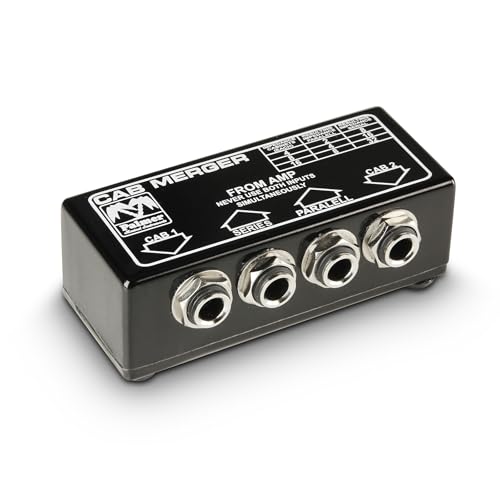
- Inputs: 2
- Input connectors: 6.3 mm jack
The Palmer CAB M is not a speaker cabinet at all, but rather a speaker simulator in a stompbox format. This is an alternative for the bassist who wants to bypass a cabinet entirely and go straight into the PA system. While it offers analog cabinet emulation, it provides zero physical sound on stage. We recommend the Palmer for silent stages or home recording, but it cannot replace the physical experience of the PJB Compact 4 Bass Cabinet. For those who still need to “feel” the bass on stage, the PJB provides the acoustic feedback that a simulator simply cannot replicate.
3. Peavey Headliner 410 Bass Enclosure

- Get more bass for less with 4 x 10" speakers
- Four custom designed 10" ceramic magnet woofers-8 ohms impedance-18mm ply cabinet with internal bracing and steel corners
The Peavey Headliner 410 represents the “old school” approach to bass. It is a traditional 4×10 cabinet that is much larger and significantly heavier than the PJB. While the Peavey offers a classic rock sound and high power handling, it lacks the portability and high-fidelity clarity of the PJB Compact 4 Bass Cabinet. In our comparison, the Peavey is for the bassist on a strict budget who doesn’t mind the heavy lifting, whereas the PJB is for the player who wants a modern, refined sound and a cabinet they can carry with one hand. The PJB’s use of 5-inch drivers provides a much faster response than the Peavey’s 10-inch cones.
Final Verdict: Is the PJB Compact 4 Bass Cabinet Worth It?
After extensive testing and comparison, it is clear that the PJB Compact 4 Bass Cabinet is a masterclass in modern bass engineering. It successfully challenges the notion that “bigger is better” by providing 400 watts of crystal-clear, high-fidelity sound in a package that is small enough for a New York City subway commute. Its strengths lie in its incredible transient speed, its bulletproof Baltic birch construction, and its stunning aesthetic. While the 8-ohm impedance and boutique price tag might give some pause, the sheer joy of hearing your bass with this level of transparency—and the relief of not having to haul a 100-pound rig—makes it an invaluable asset for the working musician.
We highly recommend this cabinet for jazz, funk, session, and musical theater players who need their tone to be as professional as their performance. If you are ready to reclaim your stage space and your lower back health without sacrificing your sound, the PJB is the solution. You can secure yours today and experience the future of bass amplification for yourself.
Last update on 2026-09-26 / Affiliate links / Images from Amazon Product Advertising API