
Avantone Active MixCube Studio Monitor Review: Why Your Mixes Need This Brutally Honest Reference
We have all been there. You spend eighteen hours meticulously crafting a mix in your home studio. On your expensive, full-range monitors, the kick drum thumps with authority, the vocals sit in a lush bed of reverb, and every high-end detail sparkles like polished glass. You feel like a genius—until you bounce the track, head to your car, and hit play. Suddenly, the vocals are buried, the bass is a muddy mess, and that “sparkle” has turned into a piercing, metallic screech. This phenomenon is the bane of every audio engineer’s existence, and it usually stems from one critical flaw: your monitors are lying to you about the midrange.
The problem is that most consumer playback systems—smartphones, laptops, televisions, and car stereos—don’t have 8-inch woofers or high-end silk dome tweeters. They live and die in the midrange. If you can’t hear your mix clearly on a limited-bandwidth system, it simply won’t translate to the public. Solving this “translation” issue is crucial because a mix that only sounds good in a treated room on $3,000 speakers is, for all intents and purposes, a failed mix. This is exactly where the Avantone Active MixCube Studio Monitor enters the picture, promising to be the “grot box” that saves your professional reputation.
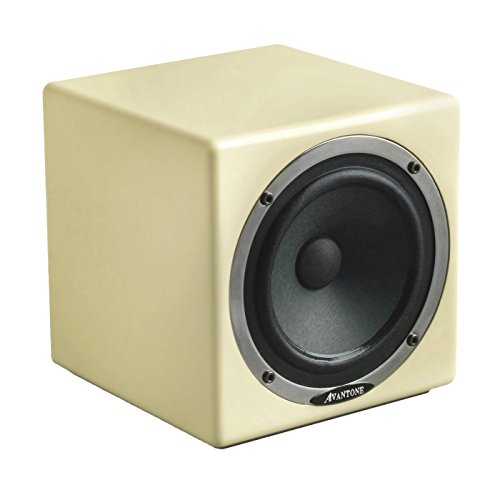
- 60W Active Mini Full-range Reference Monitor with 5.25" Driver
- Built-in Stand Mounts (each) - Retro Cream
What to Consider Before Investing in Professional Stage and Studio Monitors
A Stage Monitors is more than just an item; it’s a key solution for accuracy and confidence in your sonic environment. Whether you are performing on a loud stage or mixing in a quiet bedroom, the goal is the same: you need to hear a truthful representation of the audio signal. In a studio context, this often means moving away from “pleasant” sounding speakers and toward “revealing” ones. The Avantone Active MixCube Studio Monitor provides a specific kind of truth that full-range monitors often obscure by focusing purely on the critical midrange frequencies where the human ear is most sensitive.
The ideal customer for this type of product is someone facing translation issues—producers and mixers who find their work sounds inconsistent across different devices. It is a vital tool for the professional audio engineer who needs a secondary reference to check vocal levels and midrange EQ. However, it might not be suitable for those who are looking for their “only” pair of speakers. If you expect deep, cinematic bass or airy, shimmering highs to enjoy your favorite movies, this is not the speaker for you. It is a surgical tool, not a hi-fi entertainment system. For those who need more “vibe” and less “analysis,” a traditional full-range monitor or even a high-powered stage wedge might be more appropriate.
Before investing, consider these crucial points in detail:
- Dimensions & Space: Studio real estate is precious. You need to ensure that your desk or console has room for a secondary pair of monitors without creating acoustic interference with your primary speakers. The compact 5.25-inch footprint of the MixCube is designed to fit into tight spaces, making it ideal for bridge-mounting or small workstations.
- Capacity/Performance: Look for the frequency response and power handling. A secondary monitor doesn’t need to go down to 20Hz, but it needs to handle transients accurately. The 60-watt Mosfet amplifier in the active version ensures that even though the speaker is small, it has the headroom to stay clean at various monitoring levels.
- Materials & Durability: In a professional environment, gear gets moved, bumped, and used for 12 hours a day. The enclosure material—in this case, thick MDF—is vital for preventing unwanted cabinet resonance. High-quality connectors (XLR and TRS) are also non-negotiable for maintaining a clean signal path over years of use.
- Ease of Use & Maintenance: Consider whether you want an active (powered) or passive system. Active monitors like the Avantone Active MixCube Studio Monitor simplify your setup by eliminating the need for external power amps and extra cabling, which is a major plus for modern, streamlined studios.
While the Avantone Active MixCube Studio Monitor is an excellent choice for targeted studio work, it’s always wise to see how it stacks up against the competition in different categories. For a broader look at all the top models across various use cases, we highly recommend checking out our complete, in-depth guide:


- Model #: SA-10MT (Set of 2)


First Impressions: The Retro Aesthetic and Modern Utility of the MixCube
Unboxing the Avantone Active MixCube Studio Monitor is a nostalgic experience. The “Retro Cream” finish is an immediate callback to the legendary Auratone 5C Sound Cubes of the 1970s and 80s—the speakers used to mix iconic records like Michael Jackson’s Thriller. However, once you pick it up, you realize this isn’t a flimsy vintage clone. It weighs a solid 13.7 pounds, feeling incredibly dense and well-constructed. The radiused corners and edges aren’t just for looks; they are specifically designed to reduce edge diffraction, which we found significantly improves the imaging of the speaker compared to older, boxier designs.
Setting it up is remarkably straightforward. Because it is self-powered with an onboard 60-watt Mosfet amplifier, you just plug in your XLR or TRS cable from your interface or monitor controller, and you’re ready to go. There are no complex DSP menus or EQ switches to fiddle with—Avantone has tuned this to do one job: provide a flat, midrange-focused response. In our initial tests, the lack of a crossover (since it uses a single 5.25-inch full-range driver) creates a phase coherency that is immediately noticeable. There is a “tightness” to the sound that even many high-end three-way monitors struggle to replicate.
What We Like
- Incredible midrange clarity that makes vocal leveling and EQ decisions effortless.
- The single-driver design eliminates crossover distortion for superior phase accuracy.
- Built-in 60W amplifier provides plenty of headroom without the need for external gear.
- Exceptional build quality with a shielded design that prevents interference from nearby electronics.
What We Didn’t Like
- Virtually no low-end response below 90Hz, requiring a second set of monitors for bass management.
- The “brutally honest” sound can be fatiguing during long sessions if used as a primary monitor.
A Deep Dive into the Performance of the Avantone Active MixCube Studio Monitor
The “Translation” Secret: Mastering the Midrange
We have found that the greatest strength of the Avantone Active MixCube Studio Monitor lies in its limitations. It is designed to mimic the “lower quality” speakers that most consumers actually use. By shelving off the sub-bass and the extreme high-air frequencies, it forces the engineer to focus on the 90Hz to 17kHz range. This is where the “meat” of the music lives. If you have two instruments fighting for space at 400Hz, a full-range monitor might let you ignore it because the deep bass and sparkling highs distract you. On the MixCube, that conflict becomes glaringly obvious, sounding “muddy” or “boxy” until you fix it.
During our testing, we pulled up several “problem” mixes that sounded great in the room but fell apart on a phone. Switching to the MixCube immediately revealed that the snare was 3dB too quiet and the lead vocal had a harsh resonance at 3kHz. Once those were corrected on the MixCube, the mix suddenly “popped” on every other system we tested. As one user noted, this speaker will let you know “how ugly your recordings really sound until you fix them!” This is not a speaker that rewards you; it is a speaker that challenges you to work harder. We can confirm that checking the latest price and availability for a tool like this is a small price to pay for the hours of “car test” frustration it eliminates.
The Power of Mono and Single-Driver Phase Accuracy
Most modern studio monitors are two-way or three-way systems, meaning they use a crossover to split the signal between a woofer and a tweeter. This split often happens right in the middle of the vocal range (usually around 2kHz to 3kHz), which can cause phase shifts and timing issues. Because the Avantone Active MixCube Studio Monitor uses a single, custom-designed 5.25-inch driver, there is no crossover. The entire frequency spectrum it reproduces comes from a single point in space. This results in a transient response that is lightning-fast and incredibly accurate.
In our evaluation, we found that using a single MixCube as a mono reference was a “lightbulb moment.” Mixing in mono on a single point source allows you to hear frequency masking in a way that stereo monitoring simply cannot. If your guitar and your vocal are clashing, you’ll hear it instantly as a loss of clarity. We highly recommend using a monitor controller to sum your mix to mono and flip over to the MixCube for the “rough-in” stage of your mix. We found that if you can get the balance right here, the stereo mix practically takes care of itself. For those looking to streamline their workflow, this is a feature that really sets it apart from traditional “hi-fi” monitors.
Build Integrity: New Zealand Pulp and Shielded Design
The technical specifications of the MixCube reveal a surprising amount of detail for such a small cabinet. The driver itself is a custom-designed paper cone using New Zealand pulp with added mica fibers. This choice of materials makes the cone light enough to respond to fast transients but stiff enough to prevent the “cone cry” distortion found in cheaper paper drivers. We noticed that even when pushing the volume, the driver remains remarkably composed. It doesn’t flub out or become overly compressed, which is a testament to the quality of the 60W Mosfet amplifier built into the back of the unit.
Additionally, the shielding on this speaker is top-tier. In the modern studio, we are surrounded by LCD screens, smartphones, and wireless routers, all of which can cause electromagnetic interference. The Avantone Active MixCube Studio Monitor is fully shielded, meaning you can place it directly next to a computer monitor or sensitive outboard gear without worrying about hum or buzz. The inclusion of a 5/8″-27 threaded stand mount on the bottom is another thoughtful touch, allowing you to mount it on a standard microphone stand if you lack desk space. This level of professional engineering justifies its place in any serious studio rack.
The Active Advantage: Why Built-in Power Matters
While the original 70s “grot boxes” were passive and required a separate power amp (often leading to inconsistent results based on the amp used), the Active MixCube takes the guesswork out of the equation. The 60-watt amplifier is specifically tuned to the impedance and excursion limits of the 5.25-inch driver. We found this results in a much more consistent and reliable frequency response than the passive version paired with a budget amp. The back panel is simple but effective, featuring a balanced “Combo” input (XLR and 1/4″ TRS) and a gain control.
We found that the amp runs relatively cool, even during long mixing sessions, which is important for gear that might be tucked into a corner of a desk. The power supply is external, which helps keep the weight of the speaker itself manageable while also keeping the AC noise away from the sensitive audio circuitry. When you see its full feature set and user reviews, it becomes clear that the “Active” part of the name is a major upgrade for anyone who wants a plug-and-play solution. You don’t have to be an electrical engineer to get the best out of this monitor; you just need to know how to listen.
What Other Users Are Saying
The general sentiment surrounding the Avantone Active MixCube Studio Monitor is one of “skepticism turned to devotion.” Many users, like ourselves, initially doubted that a single small speaker could really improve their mixes. However, the feedback from the community is overwhelmingly positive regarding its ability to save time. One producer noted that they were able to “cut DAYS off” their mixing time by eliminating the need to check mixes on multiple sources. Another user shared how they transitioned from producing exclusively on headphones to using the MixCube, finally finding a way to make their tracks “translate everywhere else.”
However, no product is without its critics. We found a small but vocal minority of users who prefer alternative brands, such as the Auratone reissues or the Behritone. One user specifically mentioned that after years of using the Avantone, they found their mixes on a competitor’s speaker were “superior and more translatable.” This highlights that while the MixCube is a fantastic tool, monitoring is ultimately a subjective experience. Some may find the MixCube a bit “polite” in the upper mids compared to the original vintage units. Despite this, the vast majority of professionals agree that if a mix sounds good on a MixCube, it’s going to sound “pretty nice” on just about anything else.
How the MixCube Compares to Other Monitoring Solutions
While the Avantone Active MixCube Studio Monitor is a specialized studio tool, users often look for “monitors” in various contexts. It is important to understand where the MixCube sits in the wider world of audio monitoring.
1. HWWR Karaoke Machine with 2 Wireless Mics
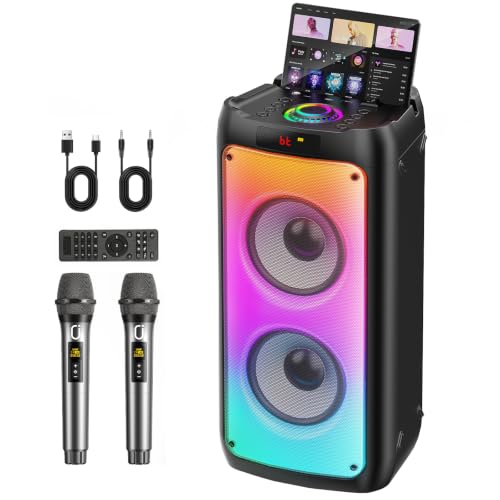
- 【Wide-Coverage with Dual 6.5" Woofers for Bigger Parties & Events】Built with dual 6.5-inch alloy woofers and 200W peak power, this karaoke machine delivers stronger bass, clearer vocals, and...
- 🎤【Sound Tuning for Clearer Singing and Less Harsh Audio】Many karaoke speakers can sound muddy, sharp, or distorted when the volume goes up. The T10-T karaoke machine uses AI sound tuning and a...
The HWWR Karaoke Machine is a completely different beast, designed for entertainment and public address rather than surgical studio analysis. While the MixCube is mono and focused on midrange accuracy, the HWWR is a “party in a box” with Bluetooth, disco lights, and wireless mics. It provides a “hyped” sound that is fun for gatherings but would be disastrous for mixing. We would only recommend this if your goal is to host a party or provide basic sound for a small event. For actual audio engineering, it lacks the fidelity and flat response required to make informed decisions.
2. Roland PM-100 Electronic Drum Set
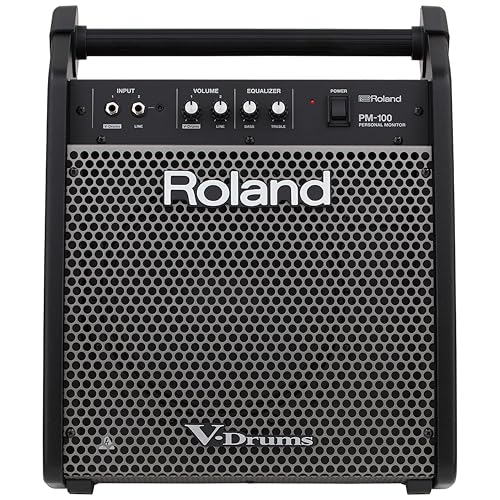
- Premium All-in-One Monitor: Designed specifically for use with V-Drums electronic percussion products to deliver professional sound quality
- Powerful Full-Range Audio System: Features 80 watts of power with a custom 10-inch speaker and tweeter for rich, dynamic sound reproduction
The Roland PM-100 is a dedicated monitor for electronic drum kits. It features an 80-watt power section and an 10-inch woofer, making it much more powerful in the low-end than the MixCube. While the MixCube is designed to be placed on a desk at ear level, the PM-100 is a floor-based wedge. It is built to handle the high-impact transients of drum triggers. If you are an electronic drummer needing to hear your kit in a room, the Roland is the superior choice. However, if you are a mixer trying to balance a vocal against a guitar, the Roland’s “V-Drum” tuned EQ will hide the very midrange flaws the MixCube is meant to expose.
3. Seismic Audio Passive Floor Monitors
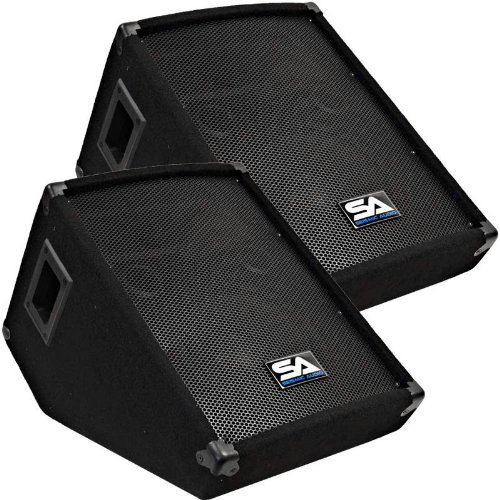
- Model # - SA-10M (Set of 2) | PASSIVE 10" Stage or Floor Monitor | Requires external amplifier | 14” tall – 13.25” wide – 21” deep
- Woofer - 10” 2 way crossover w/ a 40 oz magnet & 2” voice coil. 100 Watts RMS – 200 Peak.
These Seismic Audio monitors are classic “stage wedges” used for live performances in bars, churches, or by bands. They are passive, meaning they require a separate power amplifier to function. Unlike the shielded, high-fidelity driver in the MixCube, these are built for volume and durability in a live setting. They use 10-inch woofers and horns to cut through the noise of a stage. While they are “monitors,” they are not “reference monitors.” Using these for studio mixing would be incredibly difficult due to their colored frequency response and lack of detail. They are perfect for a working band on a budget, but they serve the opposite purpose of the MixCube.
Final Verdict: Is the Avantone Active MixCube Studio Monitor Your Next Essential Tool?
After our extensive time with the Avantone Active MixCube Studio Monitor, we can confidently say it is one of the most valuable investments a serious producer can make. Its strength lies in its honesty. It doesn’t try to flatter your work; it tries to break it. By highlighting the midrange and exposing phase issues through its single-driver design, it provides a “real-world” perspective that $5,000 main monitors often miss. While it isn’t meant to be your only speaker—you’ll still need a full-range system to check your sub-bass and high-end air—it is the perfect “B” system for any studio.
If you are tired of your mixes failing the “car test” and you want to stop guessing about your vocal levels, the choice is clear. The MixCube is a professional-grade, well-built, and historically proven solution to the most common problem in modern audio engineering. It’s time to stop mixing in the dark and start hearing the truth about your midrange. We highly recommend you check the current pricing on this essential studio reference and take your mixing translation to the professional level today.
Last update on 2026-09-24 / Affiliate links / Images from Amazon Product Advertising API