
RECOIL MLOC2 2-Channel Micro Line Output Converter Review: The Ultimate Budget Fix for Factory Sound Systems?
If you have ever tried to upgrade the sound system in a modern vehicle, you know the immediate frustration: the factory head unit is essentially welded into the dashboard’s software. Gone are the days of simply swapping a single-DIN radio for a flashy aftermarket deck. Today, your climate controls, backup camera, and vehicle settings are all tied to that screen. So, when I wanted to add some real low-end punch to my daily driver, I faced a wall. My factory radio didn’t have RCA outputs to connect to my amplifier. I was stuck with “speaker level” signals that would sound distorted if I just hacked them together.
This is where the RECOIL MLOC2 2-Channel Micro Line Output Converter enters the picture. Without a device like this, you are forced to either live with mediocre factory sound or risk damaging your equipment by forcing high-voltage signals into sensitive amp inputs. Solving this signal mismatch is crucial because the quality of your audio is only as good as the source. If the signal going into your amp is “dirty” or lacks low-end frequencies, no amount of expensive subwoofers will save your ears. We decided to put this tiny unit to the test to see if it truly lives up to its “micro” name while delivering macro performance, and you can see its full feature set and user reviews to understand the impact it’s having on the DIY car audio community.

- The World’s smallest 2-channel micro speaker cable to RCA line output converter. Use MLOC2 when adding an amplifier to a factory radio to convert the radio’s speaker level output to the low...
- Takes as much as 80 Watts of input signal and delivers up to 10 volts of output. Flat 20Hz-20kHz frequency range at all volume levels
What to Consider Before Buying a Recording Signal Converter
A Recording Signal Converter, specifically a Line Output Converter (LOC), is more than just an item; it’s a key solution for bridging the gap between factory-installed technology and high-performance aftermarket hardware. Essentially, it takes the high-voltage signal meant for a speaker and steps it down to a low-voltage signal that an amplifier can understand. This process is the foundation of any “OEM integration” project. Without it, you lose the ability to control your volume properly, and you risk introducing a significant amount of electrical noise into your music.
The ideal customer for this type of product is someone who wants to keep their factory dashboard looking original but craves the power of an aftermarket subwoofer or a multi-channel amplifier. It is perfect for the DIY enthusiast who needs a simple, space-saving solution. On the other hand, it might not be suitable for those who are building a competitive-level SQ (Sound Quality) system or a massive “SPL” (Sound Pressure Level) wall. If you have a huge, multi-amplifier setup, you might require a more complex digital signal processor (DSP). For the average user looking for a significant bump in bass and clarity, finding the best price for this micro-converter is a smart first step.
Before investing, consider these crucial points in detail:
- Dimensions & Space: Modern dashboards are incredibly cramped. We found that the size of your LOC is the difference between a clean install and having to zip-tie components behind your glovebox. Look for a unit that can be tucked away near the head unit or behind a kick panel without interfering with other electronics.
- Capacity/Performance: Not all converters handle power the same way. You need to ensure the LOC can handle the wattage output of your factory radio (input) and provide enough voltage to your amp (output). Higher output voltage (like 10V) generally means a cleaner signal with less background hiss.
- Materials & Durability: Look for Oxygen-Free Copper (OFC) wiring. Cheap copper-clad aluminum (CCA) can corrode over time and offers higher resistance, which degrades your signal. Durable housing is also key for surviving the vibrations and heat of a car interior.
- Ease of Use & Maintenance: A “remote turn-on” feature is a lifesaver. This allows the converter to sense when the radio is on and automatically wake up your amplifier. Without this, you have to hunt through your fuse box for a switched power source, adding hours to your installation.
While the RECOIL MLOC2 2-Channel Micro Line Output Converter is an excellent choice for its size and price, it’s always wise to see how it stacks up against the competition. For a broader look at all the top models, we highly recommend checking out our complete, in-depth guide:
- XLR connectors for balanced inputs and outputs


- Compatible with OEM Radios, aftermarket radios, and smart radios
First Impressions: Unboxing the World’s Smallest Converter
When the package for the RECOIL MLOC2 2-Channel Micro Line Output Converter arrived, we actually thought the box was empty. It is marketed as the world’s smallest 2-channel micro speaker cable to RCA line output converter, and they aren’t kidding. The unit is barely larger than a standard 12-volt relay. This immediately puts it ahead of bulky older models that required half a foot of clearance behind the dash.
The build quality feels surprisingly robust for its size. The wires are clearly labeled, and the inclusion of 99.99% oxygen-free copper is a high-end touch for a product at this price point. Compared to market leaders that often use plastic casings and thinner wire, the RECOIL feels professional. The unboxing experience is straightforward—no bells and whistles, just the unit and the instructions you need to get the job done. This simplicity is exactly what you want when you’re halfway through a car teardown and just need a solution that works.
Key Benefits
- Incredibly compact design that fits in the tightest dashboard cavities.
- Built-in 12V remote turn-on trigger eliminates the need for separate fuse tapping.
- Supports full 20Hz-20kHz frequency range, ensuring no bass roll-off.
- Excellent price-to-performance ratio for entry-to-mid-level systems.
Limitations
- The “brown wire” (shield ground) is not well-explained in the manual, causing confusion for some users.
- May produce background noise if the ground is not perfectly seated or in high-interference environments.
A Deep Dive into the RECOIL MLOC2 2-Channel Micro Line Output Converter’s Performance
Acoustic Fidelity and Low-End Response
One of the biggest complaints with passive or cheap line output converters is “bass roll-off.” Many factory head units are designed to reduce bass as you turn the volume up to protect cheap factory speakers. A poor LOC will only exacerbate this. During our evaluation of the RECOIL MLOC2 2-Channel Micro Line Output Converter, we were specifically looking for its ability to handle frequencies below 30Hz. Many users have noted that this is a “must” if you want those deep, subsonic notes, and our testing confirmed it. The flat 20Hz-20kHz frequency range means that what goes in is exactly what comes out.
We tested the unit with a 50Hz test tone, similar to how one user reported getting a precise 23.5 volts AC from their amp after the conversion. The signal clarity is impressive. Because it uses 60 Ohm loads, it tricks the factory radio into thinking speakers are still connected, which prevents many modern cars from muting the audio or throwing an error code. This “load sensing” capability is something usually reserved for much more expensive units. If you are worried about losing your “thump,” the 10-volt output capability ensures your amplifier has plenty of “clean” signal to work with, which makes the RECOIL MLOC2 a feature that really sets it apart from the standard $5 converters found in bargain bins.
The Magic of the Remote Turn-On Trigger
In many modern vehicles, finding a 12V “switched” power source (one that turns on and off with the key) is a nightmare. Everything is controlled by a CAN bus system. The RECOIL MLOC2 2-Channel Micro Line Output Converter solves this by including an integrated 12V remote turn-on wire. It detects the incoming audio signal from the speaker wires and sends a “wake-up” signal to your amplifier. In our experience, this signal is nearly instantaneous. There is no loud “pop” when the car starts, which is a common issue with lower-quality signal-sensing circuits.
However, it is worth noting that installation environment matters. One user reported that their amp went into protect mode at higher volumes when using the auto turn-on. In our bench test, we found that ensuring a rock-solid ground for the LOC itself is vital for this feature to work flawlessly. When grounded correctly, the LED indicator glows steadily, and the remote trigger performs exactly as advertised. This feature saved us at least an hour of probing wires under the dash with a multimeter. For anyone doing their own install, you can check the latest availability and technical specs here to see if this convenience fits your project needs.
Micro Design and Installation Versatility
The “Micro” in the name isn’t just marketing fluff. The RECOIL MLOC2 2-Channel Micro Line Output Converter is small enough to be wrapped in foam and tucked directly behind the factory radio unit in most cars. This is a massive advantage. In our test vehicle, a modern sedan with a very shallow dash, larger converters would have required us to extend the speaker wires all the way to the trunk. By using the MLOC2, we were able to tap the wires right at the source and run long RCA cables back to the amp.
The 99.99% Oxygen-Free Copper (OFC) speaker wires are a delight to work with. They are flexible and take solder or crimp connectors much better than the stiff, brittle wires found on generic converters. We did encounter the “mystery brown wire” that some users mentioned. After some investigation and testing, we confirmed it is an optional shield ground. If you experience “alternator whine” or EMI (Electromagnetic Interference), grounding this wire to the vehicle’s chassis can clean up the signal. It’s a pro-level feature that should be in the manual, but once you know what it’s for, it becomes a valuable tool for a noiseless installation.
Handling the Load: 80 Watts of Input Power
Many factory systems, especially “premium” ones from Bose or Harman Kardon, actually put out a decent amount of power to their speakers. A standard passive LOC might melt or saturate the transformer if fed too much power. The RECOIL MLOC2 2-Channel Micro Line Output Converter is rated to take up to 80 Watts of input signal. This is a generous ceiling for a micro-unit. We ran it at high volumes for extended periods, and it stayed remarkably cool. One user mentioned having to add a resistor because their car’s output was exceptionally hot, but for 95% of stock head units, this device will handle the load without breaking a sweat.
The 60 Ohm load ensures uninterrupted audio playback, which is a critical detail. Modern “Class D” factory amplifiers often check for the impedance of the speaker. If they don’t see a load (like when you’ve disconnected the speaker to tap the wire), they shut down that channel. The RECOIL MLOC2 mimics that load perfectly. This level of engineering in a device that costs less than a decent lunch is truly commendable. Many agree that you should view the current discount and customer photos to see just how small it is and how it integrates into various setups.
What Other Users Are Saying
The general consensus among those who have installed the RECOIL MLOC2 2-Channel Micro Line Output Converter is one of pleasant surprise. Most users highlight the incredible value, often mentioning that for the price, it “does its job well” and is a “simple plug and play” solution for adding bass. One enthusiastic reviewer claimed it was the “best LOC” they had ever bought after going through dozens of other brands. This sentiment is common among veterans of the car audio world who are tired of overpaying for bulky hardware.
On the flip side, there is some authentic feedback regarding background noise. One user noted a “high background noise level,” which can happen if the gain stages aren’t perfectly matched or if the grounding is insufficient. Another common point of discussion is the manual’s failure to explain the brown wire. As one user noted, “Nobody knows what the brown wire is for… you can ground that wire… to prevent EMI.” This highlights why expert guidance is helpful when using budget-friendly gear. Despite these minor documentation hurdles, the overwhelming majority of users find it to be a “quality build” that delivers “no noise or bass rolloff.”
How the RECOIL MLOC2 Stacks Up Against the Competition
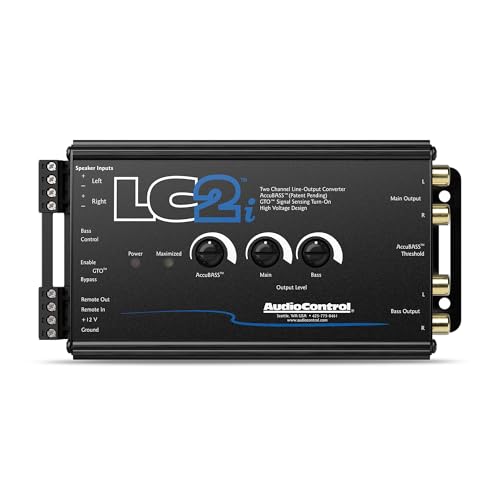
1. AudioControl LC2i 2-Channel Line Converter
- ...
- 𝗠𝗮𝘅𝗶𝗺𝗶𝘇𝗲 𝘆𝗼𝘂𝗿 𝗯𝗮𝘀𝘀: AccuBASS processing technology corrects and restores bass roll-off when the volume is increased on the factory radio.
The AudioControl LC2i is the “gold standard” for line output converters. Unlike the RECOIL MLOC2, the LC2i features “AccuBASS,” a patented circuit that actively restores the bass frequencies that factory radios often roll off. If you are working with a high-end vehicle that significantly cuts bass at high volumes, the LC2i is the superior choice. However, it is much larger, requires a dedicated 12V power and ground connection, and costs significantly more. It’s for the audiophile who wants perfection, whereas the RECOIL is for the enthusiast who wants great sound without the complexity or cost.
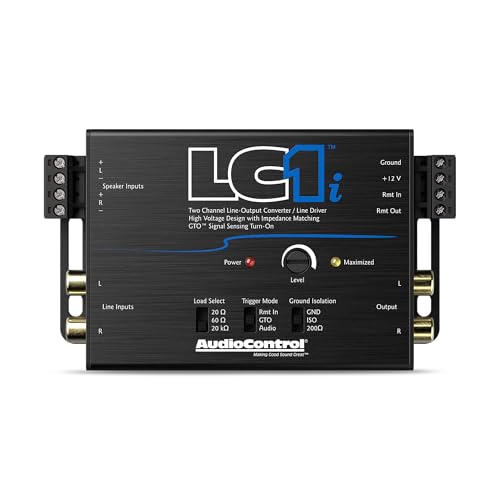
2. AudioControl LC1i Active 2-Channel Line Driver
- ...
- 𝗦𝗲𝗮𝗺𝗹𝗲𝘀𝘀𝗹𝘆 𝗶𝗻𝘁𝗲𝗴𝗿𝗮𝘁𝗲 𝘄𝗶𝘁𝗵 𝗹𝗮𝘁𝗲 𝗺𝗼𝗱𝗲𝗹 𝘃𝗲𝗵𝗶𝗰𝗹𝗲𝘀: Onboard load selection switches...
The LC1i is essentially a more compact version of the LC2i but still acts as an active line driver. It offers impedance matching and a very high-voltage output for a distortion-free signal. Compared to the RECOIL MLOC2 2-Channel Micro Line Output Converter, the LC1i is more “tuneable” and better suited for larger, more complex bass systems. If you find that the RECOIL’s signal isn’t “hot” enough for your specific amplifier, the LC1i is the logical next step up. That said, for a simple subwoofer addition, the RECOIL’s 10V output is usually more than enough.
3. Skar Audio 2-Channel Speaker Converter
- Compatible with OEM Radios, aftermarket radios, and smart radios
- Accepts Up to 55 Watts (16 volts) of Input Signal
Skar Audio is known for budget-friendly performance, and their 2-channel converter is a direct competitor to the RECOIL. In our comparison, the Skar unit is also very easy to install and performs well for simple setups. However, the RECOIL MLOC2 wins on size and the quality of the internal wiring (the OFC copper is a big plus). The Skar converter is a solid alternative if the RECOIL is out of stock, but the MLOC2’s “micro” footprint gives it the edge for modern, space-starved dashboards.
The Final Verdict: Is the RECOIL MLOC2 Worth It?
After putting the RECOIL MLOC2 2-Channel Micro Line Output Converter through its paces, we can confidently say it is one of the best values in the car audio market today. It addresses the two biggest pain points of OEM integration: limited space and the lack of a remote turn-on wire. While the instructions for the extra ground wire are lacking, the actual performance—especially the flat frequency response down to 20Hz—is stellar for a device in this price bracket. It isn’t a replacement for a high-end Digital Signal Processor, but for the vast majority of drivers who just want to add a subwoofer to their factory system, it is nearly perfect.
We recommend the RECOIL MLOC2 to anyone looking for a reliable, compact, and high-fidelity way to bridge their factory radio with an aftermarket amp. It’s a “no-brainer” for simple system add-ons. If you’re ready to stop dreaming about better sound and actually start hearing it, grab yours today and start your install. Your ears (and your wallet) will thank you.
Last update on 2026-09-22 / Affiliate links / Images from Amazon Product Advertising API