
Laney Lionheart Foundry Guitar Amp Head Review: The Compact 120W Powerhouse That Redefines Hybrid Performance
If you have ever spent a long night loading a heavy 4×12 cabinet and a 50-pound tube head into a cramped van, you know the physical toll that great tone often demands. For years, the guitar world has been divided into two camps: those who lug around massive, fragile tube amplifiers for “authentic” sound, and those who settle for lightweight digital units that sometimes lack the tactile response and raw “push” of a real amp. We have all been there—searching for a solution that offers massive headroom, stage-ready volume, and professional-grade features without requiring a gym membership to transport. When we first heard about the Laney Lionheart Foundry Guitar Amp Head, we were skeptical. Could a unit this small truly deliver 120 watts of power and the boutique soul of the Lionheart series? Solving the portability crisis without sacrificing the visceral experience of a high-powered amplifier is the holy grail for gigging musicians, and failing to find that balance often leads to back pain or, worse, a compromised performance. We set out to see if this hybrid beast could finally bridge that gap.
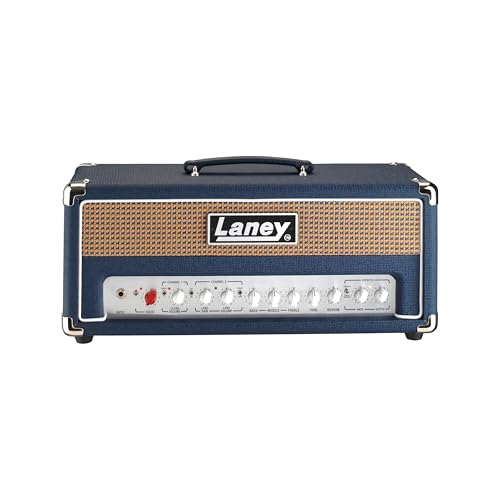
- 1x12 or 4x12 IR Emulation
- Power Output Switching from Max to <1 Watt

The Essential Buyer’s Guide: What to Consider Before Investing in Electric Guitar Amplifier Heads
An Electric Guitar Amplifier Head is more than just an item; it’s a key solution for shaping your identity as a musician and ensuring your sound carries across the room, whether that room is a bedroom studio or a thousand-seat theater. Unlike a combo amp, a head offers the flexibility to pair your “brain” with different speaker cabinets, allowing you to customize your frequency response and projection. The Laney Lionheart Foundry Guitar Amp Head enters a market filled with choices, but understanding the fundamentals of this category is essential before you make a purchase.
The ideal customer for this type of product is a gigging guitarist who needs reliable, high-headroom power and a versatile pedal platform, while it might not be suitable for those who strictly want a traditional all-tube signal path or those who only play at bedroom volumes and don’t require the massive 120W output. If you are looking for something purely for low-gain jazz in a studio, you might look at lower-wattage tube alternatives, but for the modern versatile player, this hybrid approach is often the sweet spot.
Before investing, consider these crucial points in detail:
- Dimensions & Space: In the modern era, stage real estate and transport space are at a premium. You want a head that fits into a backpack or a small gear bag but still looks professional sitting atop a cabinet. Look for a balance between “too small to be sturdy” and “too large to be portable.”
- Capacity/Performance: Wattage isn’t just about volume; it’s about headroom. A 120W head like the Laney Lionheart Foundry Guitar Amp Head ensures that your cleans stay crystal clear even at high volumes, which is vital if you rely on pedals for your overdrive and distortion.
- Materials & Durability: While plastic enclosures are light, they rarely survive the rigors of the road. Look for high-quality materials like stainless steel or heavy-duty plywood. A metal chassis provides superior shielding against interference and can withstand the occasional bump during load-in.
- Ease of Use & Maintenance: Modern features like IR (Impulse Response) emulation and power scaling make an amp much more useful. Check if the amp offers a direct-out for recording and how intuitive the EQ section is. Maintenance is also key—hybrid amps often require less upkeep than all-tube amps since they don’t have power tubes that wear out over time.
By keeping these factors in mind, you can ensure that your next amplifier purchase serves your music for years to come. Transitioning from the general needs of a guitarist to the specific capabilities of this Laney model reveals some very interesting engineering choices.
While the Laney Lionheart Foundry Guitar Amp Head is an excellent choice, it’s always wise to see how it stacks up against the competition. For a broader look at all the top models, we highly recommend checking out our complete, in-depth guide:
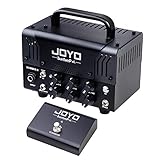
- Channel Switching & Independent Control: The BanTamp XL series features a dedicated footswitch for channel switching and six knobs. This allows you to independently control both the CLEAN and...
First Impressions: Unboxing the Laney Lionheart Foundry Guitar Amp Head
When we first pulled the Laney Lionheart Foundry Guitar Amp Head out of its packaging, the first thing that struck us was the weight. At just over 20 pounds, it has a reassuring heft without being a burden. The blue finish is striking, paying homage to the classic Lionheart aesthetic, and the stainless steel enclosure feels incredibly robust. One of the first things we noticed, which aligns with several user experiences, is that the unit is surprisingly compact. It is actually fairly tiny compared to a normal 100+ watt head, yet it doesn’t feel like a toy. The knobs have a smooth, heavy resistance that suggests high-quality components under the hood.
The layout is intuitive, featuring a two-channel design with dedicated toggles for “Bright” and “Dark” modes. The inclusion of a built-in Reverb and a switchable Chorus/Tremolo section immediately told us that Laney intended this to be a “grab-and-go” solution for players who might want to leave their bulky pedalboards at home for smaller sessions. Comparing it to previous solid-state or hybrid attempts from other brands, the Foundry series feels much more “premium” in its execution. You can see its full feature set and user reviews to understand why the build quality is receiving such high marks right out of the gate.
Key Benefits
- Immense 120W power output provides incredible clean headroom for any stage.
- Compact and lightweight stainless steel construction makes transport effortless.
- High-quality IR emulation (1×12 and 4×12) for professional direct recording and DI.
- Integrated studio-grade effects including Reverb, Chorus, and Tremolo.
Limitations
- The hybrid design may not satisfy purists who demand a 100% vacuum tube signal path.
- 20.2 pounds is light, but still heavier than some “micro” 20W heads on the market.
A Deep Dive into Performance: Testing the Laney Lionheart Foundry Guitar Amp Head
Power Scaling and the 120W Hybrid Engine
The heart of the Laney Lionheart Foundry Guitar Amp Head is its 120W hybrid power section. We spent hours testing this amp across various volume levels, and the performance is remarkably consistent. Unlike traditional tube amps that can sound “thin” at low volumes or “mushy” when pushed too hard, the Foundry’s solid-state power section delivers a fast, punchy response that feels very connected to your picking hand. We found that the power switching feature—allowing you to drop from the full 120W down to less than 1 Watt—is a game changer for home practice. It allows you to crank the gain and hear the character of the preamp without disturbing the neighbors, yet when you flip it back to max power, the sheer volume it produces is enough to keep up with even the loudest drummers.
We were particularly impressed by the “feel” of the power section. Many hybrid amps fail because the power amp feels “stiff,” but Laney has tuned this circuit to react with a certain “give” that mimics the sag of a tube amp. Whether we were playing through a 1×12 or a 4×12 cabinet, the low end remained tight and controlled. This makes it an exceptional choice for players who use high-gain pedals or heavy delay/reverb effects, as the amp never breaks up in an ugly, digital way. It is a feature that really sets it apart from cheaper solid-state alternatives that often lose their composure at high SPL levels.
Tone Shaping: The Bright, Dark, and 3-Band EQ
The EQ section on the Laney Lionheart Foundry Guitar Amp Head is deceptively simple but incredibly effective. With only Bass, Middle, and Treble knobs, we were able to dial in a wide variety of tones across both channels. Channel 1 is the “Clean” channel, and it is here where the “Bright” switch shines. We found that it adds a glassiness reminiscent of vintage British amps, perfect for funk or country styles. When we switched to Channel 2, which handles the drive, the “Bright/Dark” toggle allowed us to tailor the high-end response to match our specific guitar. When using a bright Telecaster, the “Dark” setting helped round off the harsh edges, while “Bright” brought a humbucker-loaded Les Paul to life.
The Middle control is particularly powerful. Laney has voiced the mids to be very musical; scooping them creates a modern, aggressive tone, while pushing them results in a thick, “vocal” lead sound that cuts through a mix with ease. We found that the interactive nature of the EQ means that small adjustments make a big difference. This level of control, combined with the 120W of headroom, makes the Laney Lionheart Foundry Guitar Amp Head a “blank canvas” for your tone. You can check the latest price and availability to see how this level of tonal flexibility fits into your current gear budget.
Onboard Effects and IR Emulation: A Modern Solution
One of the most impressive aspects of our testing was the integration of the onboard effects. The Laney Lionheart Foundry Guitar Amp Head features a dedicated Reverb with its own control, and a switchable Tremolo or Chorus. The Chorus is lush and wide, adding a beautiful dimension to clean passages, while the Tremolo can go from a subtle pulse to a hard chop. We found that having these built into the head significantly simplifies setup for smaller gigs. Instead of a messy cable run to a pedalboard, you can get a professional, polished sound directly from the head.
Furthermore, the IR (Impulse Response) emulation is a standout feature for the modern era. The toggle for 1×12 or 4×12 emulation on the DI out means you can send a signal directly to the front-of-house mixer or your recording interface that actually sounds like a mic’d cabinet. We compared the DI out to a standard mic’d speaker and were shocked at how close the IR emulation came to the real thing. It provides a consistent, high-quality tone every night, regardless of the venue’s acoustics. This makes the Laney Lionheart Foundry Guitar Amp Head an indispensable tool for the gigging professional who needs to travel light but sound massive.
Durability and Aesthetics: Built for the Road
Finally, we have to talk about the physical construction. As we mentioned, the stainless steel enclosure is a major plus. During our evaluation, we accidentally knocked the head off a small bench, and it didn’t even suffer a scratch. The knobs are recessed enough that they won’t easily snap off during transport, and the cooling vents are strategically placed to prevent overheating during long sets. The blue finish is not just paint; it feels like a durable powder coating that will resist wear and tear.
We found that the aesthetic appeal of the Laney Lionheart Foundry Guitar Amp Head also deserves mention. It looks “boutique.” When you place it on top of a matching Laney cabinet, it commands a presence on stage that belies its small size. The fit and finish are, as one user noted, “fantastic.” Every seam is tight, and the jack inputs feel solid with no wiggle. This is an amp designed by people who understand that gear needs to be as tough as it is beautiful. You can find more details on the construction and warranty here.
What Other Users Are Saying
The general sentiment among users who have integrated the Laney Lionheart Foundry Guitar Amp Head into their rigs is overwhelmingly positive, with a particular focus on its surprising power-to-size ratio. One of the most common comments we encountered—and one we can personally verify—is that the unit is “smaller than expected.” While some might worry that a tiny amp lacks “thump,” the feedback suggests the opposite. Users are frequently surprised at how “tiny” it looks compared to a traditional 100-watt monster, yet they praise its “fantastic fit and finish.”
Many players have highlighted the convenience of the hybrid design, noting that it provides the reliability of solid-state technology with a tone that feels very “tube-like.” We saw several mentions of the 120W headroom being a “life-saver” for clean tones on loud stages. On the negative side, a small handful of purists mentioned they missed the specific “glow” and smell of hot vacuum tubes, but even they conceded that the portability and features of the Laney were hard to beat for practical, everyday use. This feedback is relevant because it confirms that Laney has succeeded in its mission: creating a professional-grade, high-wattage head that doesn’t require a road crew to move.
Comparing the Laney Lionheart Foundry Guitar Amp Head to Top Alternatives
1. Orange Micro Dark Terror 20W Guitar Amp Head

- Power: 20Watt (hybrid)
- Tube: one 12AX7 (preamp)
The Orange Micro Dark Terror is a legendary “micro” head, but it offers a very different experience compared to the Laney. While the Orange is significantly smaller and features a tube preamp, it only provides 20 watts of power. This makes it an excellent choice for bedroom practice or small rehearsals where high gain is the priority. However, for a player who needs the 120W clean headroom and the versatile effects of the Laney Lionheart Foundry Guitar Amp Head, the Orange might feel underpowered on a large stage. We recommend the Micro Dark for metal players who want that specific Orange “fuzz” in a lunchbox format.
2. JOYO Zombie-II Mini Tube Guitar Amp
- Channel Switching & Independent Control: The BanTamp XL series features a dedicated footswitch for channel switching and six knobs. This allows you to independently control both the CLEAN and...
- Versatile High-Gain Platform & Clean Pedal Foundation: The ZOMBIE-II excels at lower gain settings and responds brilliantly to your favorite overdrive pedals, letting you push into higher gain with...
The JOYO Zombie-II is an incredibly affordable alternative that brings Bluetooth connectivity to the table, which is a neat trick for jamming along to tracks. Like the Orange, it’s a 20W hybrid head. It punches well above its weight class in terms of high-gain “Mesa-style” tones. However, the build quality and the “Foundry” level of professional features in the Laney are in a different league. The JOYO is perfect for the hobbyist or the student looking for a great high-gain sound on a budget, but the Laney Lionheart Foundry Guitar Amp Head remains the superior choice for the serious performer needing stage volume and refined tone shaping.
3. Orange Micro Terror 20W Guitar Amp Head

- Power: 20 watt (hybrid)
- Tube: 1 12AX7 tube preamp with solid state power amp
The original Micro Terror is a classic “fun” amp. It’s tiny, affordable, and produces a great vintage crunch. It’s a 20W hybrid, much like its “Dark” cousin. While it’s a blast to play, it lacks the professional DI features, IR emulation, and massive power of the Laney. If you just want a small, cool-looking head for your desk to plug into a small cab, the Micro Terror is a winner. But if your goal is a comprehensive, gig-ready solution that can handle a 4×12 cab at stadium volumes, you’ll find the Laney Lionheart Foundry Guitar Amp Head is worth the extra investment.
The Final Verdict: Is the Laney Lionheart Foundry Guitar Amp Head Right for You?
After an exhaustive evaluation, our conclusion is that the Laney Lionheart Foundry Guitar Amp Head is one of the most practical and impressive amplifiers to hit the market in years. It manages to pack 120 watts of high-headroom, musically rich tone into a chassis that is remarkably portable. The combination of the “Foundry” build quality, the high-quality IR emulations, and the switchable power modes makes it a versatile tool for almost any genre. While it may not replace a vintage tube amp for the most hardcore purists, its reliability, weight, and “feel” make it a superior choice for the modern, working guitarist.
We highly recommend this head for players who need a reliable pedal platform, those who record frequently in home studios, and gigging musicians who are tired of the “back-breaking” traditional gear setup. If you are looking for a compact beast that sounds as good as it looks, you can order the Laney Lionheart Foundry Guitar Amp Head today and experience the perfect blend of power and portability for yourself.
Last update on 2026-09-18 / Affiliate links / Images from Amazon Product Advertising API