
Orange Super Crush Solid State Head Review: The Professional’s Verdict on Modern Solid-State Performance
For decades, the guitar world has been locked in a heated debate: can solid-state technology ever truly replicate the soul and sag of a vacuum tube? Many of us have spent thousands of dollars chasing “that” sound, only to be met with heavy, fragile tube heads that require constant maintenance and expensive glass replacements. We’ve all been there—hauling a 60-pound head up three flights of stairs, praying the vibrations from the van didn’t crack a power tube. It’s a stressful way to live as a musician.
The Orange Super Crush Solid State Head enters the arena not just as a cheaper alternative, but as a serious contender for your primary gigging rig. In our evaluation, we wanted to see if this 100-watt beast could finally bridge the gap between the reliability of modern electronics and the harmonic richness of a traditional Orange stack. If you’ve been searching for a way to simplify your setup without sacrificing your tonal identity, you’ve likely looked at this amp. But does it deliver on the stage, or is it just another “cold” transistor box? Let’s dive into our experience to find out if you should see its full feature set and user reviews for yourself.
Selecting an electric guitar amplifier head is more than just a purchase; it’s a foundational decision for your entire signal chain. The right head acts as the “brain” of your rig, determining how your pedals respond, how your guitar’s natural character is amplified, and how well you can cut through a dense band mix. For many players, the frustration of a “muddy” or “thin” tone can be traced back to an amplifier that doesn’t provide enough headroom or lacks a responsive EQ section. Solving this tonal bottleneck is crucial because a poor amp choice can make even a custom-shop guitar sound uninspiring.
The ideal customer for the Orange Super Crush Solid State Head is the working musician who needs high-wattage headroom and “set-and-forget” reliability. It’s perfect for those who are tired of the “tube lottery” and want a consistent sound every time they flip the switch. Conversely, it might not be suitable for the absolute purist who refuses to play anything without glowing glass, or the bedroom player who only needs 1-5 watts of power. For those players, a low-wattage hybrid or a digital modeler might be a different path to explore.
Before investing, consider these crucial points in detail:
- Dimensions & Space: Consider where this head will sit. Measuring 13.4″D x 25.5″W x 12.4″H, this is a full-sized head. You need to ensure your cabinet is wide enough to support it safely, and that you have the trunk space to transport a unit that weighs over 30 pounds. A mismatched head and cab size not only looks awkward but can be a tipping hazard on dark stages.
- Capacity/Performance: Wattage is about more than just volume; it’s about headroom. A 100-watt solid-state head like this provides enough “clean” space to ensure your pedals sound crisp even at high stage volumes. If you play in a loud metal or rock band, you need that power to keep your low-end tight and punchy without the amp collapsing into unwanted mush.
- Materials & Durability: Look for rugged construction. The use of stainless steel for the chassis and heavy-duty tolex covering is vital for road-readiness. Cheap plastic corners or thin wooden shells won’t survive a single tour. We look for hardware that can take a bump from a load-in without compromising the internal circuitry.
- Ease of Use & Maintenance: One of the greatest benefits of a solid-state design is the lack of maintenance. You won’t need to bias tubes or worry about thermal shock. Long-term care involves little more than keeping the pots clean and ensuring the vents aren’t blocked, making it a “buy-it-for-life” candidate for many touring professionals.
While the Orange Super Crush Solid State Head is an excellent choice, it’s always wise to see how it stacks up against the competition. For a broader look at all the top models, we highly recommend checking out our complete, in-depth guide:

- 2 Channel (Footswitchable) Amp Head
- All-Analogue, Single-Ended Preamp
First Impressions: The Orange Super Crush Solid State Head in the Flesh
When we first pulled the Orange Super Crush Solid State Head out of its box, the immediate sensation was one of familiarity. Orange has a “design language” that is unmistakable. The classic “Pics only” styling, the basketweave tolex, and the heavy-duty toggles make it feel like a boutique piece of gear. Despite being a solid-state unit, it has a substantial weight of 32.1 pounds, which actually gives it a premium feel—it doesn’t feel like a hollow plastic toy.
Comparing it to the previous CR120 model, the Super Crush feels more refined. The addition of the balanced XLR output with CabSim technology is a massive upgrade for those of us who record at home or want to go direct to the front-of-house mixer. It’s a “plug-and-play” experience; we had it hooked up to a 4×12 cab and screaming in under two minutes. You can check the latest price and availability to see how this value proposition compares to boutique tube heads.
Key Benefits
- Phenomenal analog signal path that mimics the sag and response of a valve amp.
- Incredibly versatile 100-watt power stage that stays clear at high volumes.
- Built-in digital reverb that rivals high-end boutique pedals.
- Exceptional pedal platform, especially through the fully buffered effects loop.
Limitations
- The gain structure can feel “fuzzy” if the mids are scooped too aggressively.
- At 32 pounds, it is heavier than some modern digital “amp-in-a-box” solutions.
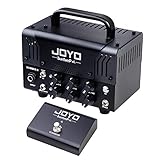
- Channel Switching & Independent Control: The BanTamp XL series features a dedicated footswitch for channel switching and six knobs. This allows you to independently control both the CLEAN and...

Deep Dive: Performance Analysis of the Orange Super Crush Solid State Head
The JFET Preamp and Analog Soul
The heart of the Orange Super Crush Solid State Head is its 100% analog signal path. Orange has utilized JFET (Junction Field Effect Transistor) technology to mimic the behavior of vacuum tubes. In our testing, this isn’t just marketing speak. When you dig into the strings, the amp responds. There is a noticeable “give” and compression that you typically only find in Class A/B tube circuits. We found that the amp cleans up beautifully when you roll back your guitar’s volume knob—a feat many solid-state amps fail to achieve. It avoids that “sterile” feeling, providing a warmth that makes long practice sessions much more enjoyable.
User feedback consistently supports this expert finding. One player noted that while there is a “slight difference” compared to a high-end tube Marshall, the Orange “shines in its own way” with a beastly presence. We agree; it doesn’t try to be a clone of a specific tube amp, but rather a high-quality analog instrument in its own right. The responsiveness to pick attack is what really sold us. Whether you are playing light jazz licks or aggressive down-tuned riffs, the amp stays articulate without that “clipping” harshness often associated with cheaper transistor designs. To understand why this tech is a game changer, you should a feature that really sets it apart is the way it interacts with your playing style.
Two Channels, Endless Tonal Possibilities
The dual-channel design is where the Orange Super Crush Solid State Head truly shows its versatility. The Clean channel is sparkling and offers immense headroom. We pushed the volume to nearly 75%, and it remained pristine, making it one of the best pedal platforms we’ve ever tested. If you rely on a complex pedalboard for your drive sounds, this head will give you a blank, high-fidelity canvas that won’t color your effects in an unpleasant way. As one user mentioned, it goes from “pristine to just on the edge of breakup” with ease.
The Dirty channel is a different monster entirely. It features four stages of gain that take you from a vintage “crunch” to a saturated “crush.” We found that even at high gain settings, the note definition remains clear. It has that signature Orange mid-range “growl” that cuts through a mix like a knife. For metal players, hitting the front end with a simple overdrive pedal transforms this into a high-gain beast that can handle the fastest palm-muted chugging without getting “flubby” in the low end. It is a versatile tool that spans genres from blues to death metal.
The Professional Feature Set: Reverb, FX Loop, and Direct Out
Orange didn’t just stop at the tone; they built this for the working pro. The built-in digital reverb is based on their high-end pedals and sounds lush and expansive. In our side-by-side tests, the reverb on the Orange Super Crush Solid State Head actually sounded more natural than the spring tanks found in some much more expensive heads. It offers a depth that fills the room without washing out your direct signal. When you see its full feature set and user reviews, you’ll notice many players highlighting the reverb as a standout inclusion.
Furthermore, the fully buffered effects loop is a godsend for tone purists. We ran long cable runs through the loop with various time-based effects, and there was zero perceptible signal loss. Then there’s the CabSim XLR output. For the modern guitarist, being able to send a “mic’d cabinet” signal directly to a recording interface or a PA system is essential. It allows for silent practice at night—as one user mentioned, they can play in an apartment setting without losing quality—and ensures a consistent sound for every show, regardless of the venue’s microphone selection.
Road-Ready Reliability and Build Quality
Durability is often where gear fails the test of time, but the Orange Super Crush Solid State Head is built like a tank. The stainless steel enclosure protected by the signature orange tolex feels incredibly rugged. We’ve seen many amps with “boutique” price tags that use thinner wood or cheaper components. During our evaluation, the knobs felt tight and resistive, and the toggles clicked with a reassuring mechanical thud. It is a piece of equipment designed to be loaded in and out of vans for years.
While there have been isolated reports of units being “Dead on Arrival” (DOA), we found these to be rare exceptions in an otherwise stellar track record. Most users report that the “build quality is very nice” and the amp arrives ready to rock. Given Orange’s reputation for longevity, this head represents a significant step up in reliability over fragile tube counterparts. It’s the kind of rig you can rely on as your primary workhorse, knowing it will turn on and sound exactly the same every single night. You can check the latest price and availability to see why so many touring guitarists are making the switch.
What Other Users Are Saying
The consensus among the guitar community is overwhelmingly positive, with many players expressing shock at how “tube-like” the Orange Super Crush Solid State Head actually sounds. One veteran player with three decades of experience noted that this is “the best amp head in the price range by miles,” even comparing it favorably to amps that cost four times as much. Another gigger highlighted how it “sings and screams” and responds perfectly to the guitar’s volume pot, which is often the Achilles’ heel of solid-state amps.
However, no product is without its critics. We did find a few mentions of the “Dirty” channel failing on a small batch of units, leading to some frustration. One user mentioned their unit was “DOA,” suggesting that while the design is robust, quality control can occasionally slip. Another player felt the gain sounded a bit like a “fuzz pedal with mids cut” if not dialed in carefully. Despite these few outliers, the vast majority of owners find it to be a “fantastic amplifier” that “has no trouble cutting through the mix with a band.” It seems the rumors are true: Orange has truly mastered the high-power solid-state format.
Comparing the Orange Super Crush to Its Top Alternatives
While the 100-watt Super Crush is a powerhouse, it’s not the only option in Orange’s lineup or the wider market. Depending on your needs for portability and wattage, one of these alternatives might suit you better.
1. Orange Micro Dark Terror Mini Amp Head

- Power: 20Watt (hybrid)
- Tube: one 12AX7 (preamp)
If the 100-watt Super Crush is too much for your needs, the Micro Dark Terror is a fascinating hybrid. It uses a single 12AX7 tube in the preamp with a 20-watt solid-state power section. It’s significantly smaller and more affordable, making it a great “backup” amp that fits in a backpack. However, it lacks the massive clean headroom and the second channel of the Super Crush. It’s ideal for home recording or small jams where you want that “Dark” high-gain flavor in a tiny footprint.
2. JOYO Zombie-II Mini Tube Guitar Amp Head
- Channel Switching & Independent Control: The BanTamp XL series features a dedicated footswitch for channel switching and six knobs. This allows you to independently control both the CLEAN and...
- Versatile High-Gain Platform & Clean Pedal Foundation: The ZOMBIE-II excels at lower gain settings and responds brilliantly to your favorite overdrive pedals, letting you push into higher gain with...
The JOYO Zombie-II is a direct competitor for those who want a hybrid “Lunchbox” style head on a budget. It mimics the “Mesa” style high-gain sound and even includes Bluetooth for jamming along to backing tracks. While it’s a fun and surprisingly loud 20-watt unit, it doesn’t have the professional “road-ready” build or the sophisticated CabSim features of the Orange Super Crush Solid State Head. It’s a great choice for hobbyists, but pros will likely prefer the headroom and reliability of the Orange.
3. Orange Micro Terror Guitar Amp Head

- Power: 20 watt (hybrid)
- Tube: 1 12AX7 tube preamp with solid state power amp
The original Micro Terror is a legend for a reason. It’s incredibly simple and provides that classic Orange “crunch” in a 20-watt package. Compared to the Super Crush, it’s much more limited—no effects loop, no second channel, and no XLR out. We recommend this for players who want the absolute simplest path to a decent tone for home practice. If you plan on playing with a drummer or gigging, the 100-watt Super Crush is the superior choice by a wide margin.
Final Verdict: Is the Orange Super Crush the New Gold Standard for Solid-State?
After our extensive time with the Orange Super Crush Solid State Head, the verdict is clear: this is a game-changing piece of equipment. It successfully dispels the myth that you need tubes to get a professional, responsive, and harmonically rich guitar tone. Its combination of 100 watts of headroom, an all-analog signal path, and modern features like the CabSim XLR out make it an indispensable tool for both the stage and the studio. While it is a bit heavier than modern digital “floorboard” amps, the trade-off is a rugged, tactile experience that feels like a real amplifier should.
We recommend this head to any guitarist who is tired of the weight and fragility of tube amps but refuses to settle for thin, digital-sounding alternatives. Whether you are a metalhead looking for tight chugs or a pedal-junkie needing a clean platform, this head delivers. It is a high-value, high-performance workhorse that belongs in any serious rig. If you’re ready to simplify your setup without losing your soul, we strongly suggest you click here to secure yours and experience the crush for yourself.
Last update on 2026-09-17 / Affiliate links / Images from Amazon Product Advertising API