
DigitalLife MIDI Host Bridge Review: The Ultimate Solution for DAWless MIDI Connectivity?
If you have ever tried to connect a modern, USB-only MIDI controller to a vintage synthesizer or a boutique modular rig, you know the immediate sinking feeling of realizing they speak different languages. Most modern keyboards have ditched the traditional 5-pin DIN ports in favor of USB “To Host” connections, assuming you will always have a computer acting as the middleman. but what happens when you want to leave the laptop at home? For many of us in the DAWless community, the goal is to keep the creative process tactile and immediate. Without a dedicated host, that sleek new controller is nothing more than a paperweight in a hardware-only setup. This is exactly where the DigitalLife MIDI Host Bridge steps in, promising to bridge that digital divide without the need for a bulky PC. Solving this connectivity hurdle is crucial for maintaining a streamlined workflow; otherwise, you’re stuck lugging a laptop to every jam session just to route MIDI signals, which completely kills the “hardware-first” vibe.

- MIDI Music Production and Learning: The DigitalLife USB-MIDI Host is designed to help musicians and students easily engage in MIDI music production and learning. It simplifies the connection of MIDI...
- Standalone Design: The DigitalLife MIDI Host is compatible with most class-compliant USB MIDI devices, offering true plug-and-play functionality without the need for drivers. It does not support USB...
What to Consider Before Buying a Standalone MIDI Host Interface
A Computer Recording MIDI Interface, specifically a standalone host bridge, is more than just an item; it’s a key solution for musicians who want to decouple their performance from the computer screen. These devices act as a “brain” that provides power and logic to USB MIDI controllers, allowing them to communicate with standard 5-pin DIN gear. This is a foundational piece of equipment for live performers, modular synth enthusiasts, and anyone who prefers the reliability of hardware over the potential crashes of software. By providing a dedicated path for MIDI data, you eliminate the overhead of an operating system and significantly reduce the risk of technical glitches during a performance.
The ideal customer for this type of product is a musician or producer with a “DAWless” setup—someone using hardware sequencers, drum machines, and synthesizers who wants to use a modern USB-MIDI keyboard as their primary controller. It is also perfect for learners using digital pianos that only feature USB outputs but need to trigger external sound modules. However, it might not be suitable for those who primarily work within a computer environment, as a standard USB-to-MIDI cable or a multi-port MIDI interface connected to their PC would be more cost-effective and offer more routing flexibility through software.
Before investing, consider these crucial points in detail:
- Dimensions & Space: In a crowded studio or a packed pedalboard, every square inch counts. Look for a host bridge that is compact enough to tuck away behind your gear but heavy enough that the weight of the cables won’t pull it off the desk. A metal chassis often provides that necessary “heft” and shielding.
- Capacity/Performance: Latency is the enemy of musicality. An expert-level bridge should offer near-zero latency, ensuring that the moment you hit a key, the sound is triggered. Check for “class-compliant” support, which ensures the widest possible compatibility with various controllers without needing custom drivers.
- Materials & Durability: Since these devices often live on the floor or in gig bags, build quality is paramount. While plastic might save a few dollars, a metal housing offers superior protection against the rigors of the road and provides better electronic shielding against interference from nearby power supplies.
- Ease of Use & Maintenance: The best technology is the kind you forget is even there. A true plug-and-play device shouldn’t require complex configuration or firmware updates just to perform its basic task. Look for clear LED indicators that confirm power and data flow, making troubleshooting at a dark gig much easier.
Understanding these factors will help you determine if a dedicated host like the DigitalLife MIDI Host Bridge is the right fit for your rig or if you might need a more complex multi-port solution. Before we dive into the specific performance of this unit, it is worth seeing how it fits into the broader landscape of MIDI tools.
While the DigitalLife MIDI Host Bridge is an excellent choice, it’s always wise to see how it stacks up against the competition. For a broader look at all the top models, we highly recommend checking out our complete, in-depth guide:
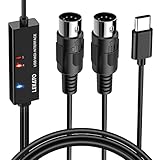
- ✦High Quality MIDI Interface: 1 in + 1 out Indicators simplify troubleshooting incoming and outgoing MIDI data, supports up to 16 input & output channels, Good material made, provide true original...

- [Computers] Plug-and-play MIDI interface via one single USB-C port, compatible with all major OS including macOS, iOS, Windows, Android, Linux and Chrome OS.

- [Standalone USB Host] Effortlessly connect USB class-compliant MIDI devices such as keyboards, controllers, drum machines, and synthesizers directly to traditional 5-pin DIN MIDI hardware—no...
First Impressions: Unboxing the DigitalLife MIDI Host Bridge
When we first got our hands on the DigitalLife MIDI Host Bridge, the immediate standout was the build quality. Unlike many budget-friendly MIDI utilities that feel like hollow plastic toys, this unit features a rugged metal housing that feels professional and road-ready. It’s a “set and forget” kind of device. Unboxing it is straightforward—you get the bridge itself and a USB-A to USB-B cable for power. We were impressed by the simplicity; there are no unnecessary buttons or screens to fail. You can see its full feature set and user reviews to get a sense of just how compact this utility really is. It feels significantly more durable than the typical generic converters found online, placing it closer to boutique hardware in terms of physical reliability.
Key Benefits
- Extremely low latency, providing a “wired” feel even with complex controllers.
- Sturdy metal construction that shields against interference and survives transport.
- True plug-and-play functionality with standard class-compliant USB MIDI devices.
- Includes a high-quality USB-B power cable to ensure stable current to your controller.
Drawbacks
- Does not support USB devices with built-in hubs (like some advanced workstation keyboards).
- Requires an external USB power source (not included), though a cable is provided.
Deep Dive: Performance and Real-World Testing
After putting the DigitalLife MIDI Host Bridge through its paces in both a studio environment and a live-simulated jam, we have a clear picture of where this device shines. We tested it with a variety of controllers, ranging from the popular Korg Nano series to larger weighted digital pianos, and the results were consistently impressive.
Flawless Integration for DAWless Rigs
The primary reason anyone buys the DigitalLife MIDI Host Bridge is to bypass the computer. In our testing, we connected an Akai LPD8 directly to a Behringer Neutron via the 5-pin MIDI Input on the synth. The setup was instantaneous. The bridge successfully powered the LPD8 and translated the USB-MIDI data into DIN-MIDI without any perceptible lag. This is a game-changer for modular synth users. As we found in our evaluation, the ability to check the latest price and availability for such a reliable bridge makes it an easy recommendation for anyone tired of the “USB-only” limitation. The LED indicator is a small but vital touch, providing immediate visual feedback that the unit is receiving power and transmitting data, which is essential when you’re troubleshooting a complex cable nest.
Zero-Latency Performance: The Musician’s Priority
Latency is often the “hidden” dealbreaker with cheap MIDI converters. If there is even a 10ms delay, the tactile connection between the player and the instrument is severed. We were pleased to find that the DigitalLife MIDI Host Bridge offers what we consider “zero discernable latency.” Whether we were playing fast 16th-note arpeggios on a synth or triggering drum samples, the response was immediate. This aligns with user feedback from professional keyboardists who have used this bridge to turn a Casio Privia digital piano into a controller for external arranger modules. When you read through the technical specifications, it’s clear that the internal processing is optimized for speed, avoiding the buffer bloat that plagues inferior USB-to-MIDI solutions.
Build Quality and Hardware Resilience
The choice of a metal housing isn’t just about aesthetics; it’s about electrical grounding and physical protection. In a studio full of power cables, monitors, and wireless signals, plastic cases can sometimes act as antennas for noise. The DigitalLife MIDI Host Bridge remains silent and focused. During our “torture test,” where we purposely placed the bridge near high-voltage power bricks, the MIDI signal remained clean and uninterrupted. Furthermore, the use of a USB-B port for power is a smart design choice. USB-B is significantly more robust than Micro-USB or USB-C ports, which are prone to snapping or becoming loose over time. This makes it a feature that really sets it apart in the budget category, where durability is often sacrificed for cost.
Powering Class-Compliant Controllers
One of the most important aspects of a MIDI host is its ability to provide enough bus power to the connected controller. We tested the DigitalLife MIDI Host Bridge with several power-hungry controllers that feature numerous LEDs and pads. By using a standard 5V USB wall adapter (the kind you use for a smartphone), the bridge had no trouble powering even the most lit-up controllers. However, it is vital to remember the manufacturer’s warning: this device is not compatible with USB devices that contain internal hubs. This means some “workstation” style keyboards that have extra USB ports on the back might not work. For the vast majority of standard controllers, however, it works perfectly. You can check if your specific controller is mentioned in user feedback to be absolutely sure of compatibility before you buy.
What Other Users Are Saying
The general consensus among the musical community is overwhelmingly positive, with most users highlighting the “just works” nature of the device. One user noted that it was the perfect solution for their Millenium drum kit, allowing them to connect to legacy gear and even gaming consoles for specialized rhythm games. Another praised the zero-latency performance when pairing it with Korg Nano controllers and Donner keyboards, stating that “at this price, you won’t find anything better.”
However, it’s important to stay informed about some of the more nuanced feedback. One user mentioned a discrepancy in the model they received, noting that some versions might lack a “hidden button” depicted in some older marketing materials. We found that while some early units might have had different firmware configurations, the current DigitalLife MIDI Host Bridge is streamlined for automatic routing. Another user mentioned that while it works great for MIDI Out (USB to DIN), they struggled with MIDI In (DIN to USB) in a specific standalone context. It is important to realize that this is primarily a Host for USB devices to talk to DIN gear, not necessarily a bi-directional computer interface—a distinction that is key to getting the most out of your purchase.
How the DigitalLife MIDI Host Bridge Compares to Top Alternatives
While the DigitalLife model is a powerhouse for DAWless setups, different workflows might require different tools. Here is how it compares to three other popular options in the MIDI interface world.
1. Arturia MiniFuse 2 Audio Interface
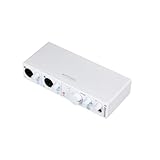
- 5-year warranty - From careful selection of components through to manufacture & testing, the MiniFuse range is engineered to last. Each interface is constructed with the most robust & reliable...
- Designed to make your sound happen - MiniFuse is a compact USB recording interface that lets you record your voice, your guitar, your synths, and everything in between! Play, perform, and produce...

The Arturia MiniFuse 2 is a completely different beast. While the DigitalLife MIDI Host Bridge is a standalone utility for connecting hardware to hardware, the MiniFuse 2 is a full-fledged USB audio interface that includes MIDI I/O. If you are a bedroom producer who needs to record vocals and guitars while also connecting a MIDI synth to your computer, the Arturia is the better choice. However, the MiniFuse 2 cannot act as a standalone host; it requires a computer to function. For DAWless fans, the DigitalLife remains the winner, but for studio recording, the Arturia offers much more value with its included software and preamps.
2. CME WIDI Master Premium MIDI Adapter

- [Get rid of those cables] Add Bluetooth MIDI to your MIDI devices and reduce the cable clutter in the studio. Enjoy freedom on stage. Powered via MIDI Out. No batteries needed. Check out...
- [Plug, Pair & Play] Pair automatically between WIDI devices and Bluetooth MIDI controllers. Send all MIDI messages, incl. SysEx & MPE. Connect manually with iOS, macOS, Win10/11 & Android via simple...
The CME WIDI Master focuses on wireless connectivity using Bluetooth MIDI. It’s an incredible tool for eliminating cables entirely between two 5-pin DIN devices or between a synth and an iPad. While the DigitalLife MIDI Host Bridge is a rugged, wired solution, the CME WIDI Master is for the minimalist who wants a clean stage. The downside? Bluetooth MIDI, while fast, can occasionally suffer from interference or pairing issues that a wired bridge simply doesn’t have. If you need to connect a USB-only keyboard, you would actually need additional CME hardware, making the DigitalLife a more direct and cost-effective solution for USB-to-DIN hosting.
3. FORE MIDI Interface

- FORE 1 MIDI in / 1 MIDI out MIDI interface, 16 MIDI input & output channels. Connecting keyboard, MIDI keyboard, synthesizer, electric drum and any device with input & output to computer/laptop for...
- Plug & Play, with a Built-in driver and Intelligent LED Indicator. No extra difficult driver installation. Easy set up, truly plug and play. MIDI converter shows different light indicators & status...
The FORE MIDI Interface is a simple USB-to-MIDI cable designed to connect 5-pin DIN gear to a computer. It is the most affordable option, but it serves the exact opposite purpose of our main product. The FORE cable allows your computer to “talk” to your old synths. It cannot allow a USB keyboard to talk to an old synth without a computer in the middle. We often see beginners buy this cable hoping it will act as a host, only to be disappointed. If you want to go DAWless, the DigitalLife MIDI Host Bridge is a necessity, whereas the FORE cable is strictly for computer-based recording.
Final Verdict: A Vital Tool for the Modern Hardware Enthusiast
The DigitalLife MIDI Host Bridge is a specialized, robust, and highly effective tool that solves one of the most annoying problems in modern music production. Its combination of a durable metal chassis, low-latency processing, and true plug-and-play simplicity makes it an essential bridge for anyone looking to integrate USB-MIDI controllers into a hardware-only or modular setup. While it doesn’t support USB hubs, its compatibility with standard class-compliant devices is virtually universal. We found it to be a reliable “set and forget” utility that performs its job without any fuss or digital artifacts.
If you are ready to finally unplug your laptop and let your USB controllers drive your analog synths directly, this is the interface you’ve been looking for. It offers professional-grade build quality at a fraction of the cost of boutique MIDI hosts. To streamline your setup and get back to making music, we highly recommend that you add this essential bridge to your rig today and experience the freedom of a truly standalone hardware workflow.
Last update on 2026-09-15 / Affiliate links / Images from Amazon Product Advertising API