
ESI M4U MIDI Interface Review: The Ultimate 8-Port Solution for Modern Hardware Studios?
If you have ever found yourself staring at a growing collection of synthesizers, drum machines, and controllers, you know the exact moment the “MIDI wall” hits. One day you have a single keyboard connected to your computer; the next, you have a rack of modules and a vintage sampler, all vying for a way to talk to your DAW. I remember the frustration of constantly reaching behind my desk, swapping 5-pin DIN cables, and trying to remember which device was on which channel. It’s a creative buzzkill. Without a centralized hub, your studio becomes a tangled mess of “cable spaghetti” that leads to latency issues and configuration headaches. We need a way to streamline this communication, and that is precisely why we decided to put the ESI M4U MIDI Interface to the test. Solving this routing puzzle is crucial for any producer who wants to focus on making music rather than troubleshooting data flow. Failing to address it means limited setups, dropped notes, and a significant amount of wasted time.

- VERSATILE USB 3.0 MIDI INTERFACE: Offers plug-and-play connectivity with 8 adaptable MIDI ports for extensive control, eliminating the need for driver installation.
- DYNAMIC CONFIGURATION: Automatically configures up to 8 inputs or outputs, visualized with intuitive colored LEDs, ensuring seamless setup and real-time flexibility.
What to Consider Before Buying a Computer Recording MIDI Interface
A Computer Recording MIDI Interface is more than just an item; it’s a key solution for bridging the gap between the tactile world of hardware and the digital precision of software. In the modern studio, we aren’t just sending “Note On” messages; we are syncing clocks across multiple devices, sending complex Sysex data for patch management, and ensuring that every rhythmic element hits with micro-timing accuracy. A high-quality interface ensures that your hardware feels like an extension of your computer, rather than a laggy afterthought.
The ideal customer for this type of product is the “hybrid” producer—someone who loves their outboard gear but relies on a DAW for sequencing and recording. If you have more than two pieces of MIDI-capable hardware, a multi-port interface becomes a necessity. However, it might not be suitable for those who work entirely “in the box” with virtual instruments, where a simple USB-to-host cable on a single controller will suffice. For professionals managing large synth arrays or live performers who need standalone routing without a laptop, the ESI M4U MIDI Interface offers a level of flexibility that cheaper, single-port cables simply cannot match.
Before investing, consider these crucial points in detail:
- Dimensions & Space: MIDI interfaces often sit on your desk or are tucked away in a rack. You need to ensure the footprint doesn’t overwhelm your workspace while still providing easy access to the ports. A compact yet sturdy design is preferred for those who travel or have limited desk real estate.
- Capacity/Performance: This is defined by the number of ports and the bus speed. USB 3.0 is the gold standard today, offering lower jitter and more reliable timing across multiple ports. Look for an interface that can handle high-density MIDI data without choking the bandwidth.
- Materials & Durability: Since you will be plugging and unplugging 5-pin DIN cables frequently—which can be quite taxing on the connectors—the chassis should be made of metal rather than flimsy plastic. Aluminum is often the best choice as it provides shielding from electronic interference and survives the rigors of the road.
- Ease of Use & Maintenance: The “plug-and-play” factor is massive. You want a device that is class-compliant, meaning it doesn’t require “voodoo” drivers to work with modern operating systems. Maintenance usually involves keeping the ports clean and ensuring firmware is up to date to maintain compatibility with evolving OS versions.
Once you understand these requirements, you can appreciate why a dedicated, high-end interface is a cornerstone of a professional setup. While the ESI M4U MIDI Interface is an excellent choice, it’s always wise to see how it stacks up against the competition. For a broader look at all the top models, we highly recommend checking out our complete, in-depth guide:
Mastering Wireless MIDI: Our Comprehensive Guide to the Top Adapters for Modern Studios
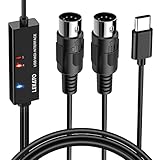
- ✦High Quality MIDI Interface: 1 in + 1 out Indicators simplify troubleshooting incoming and outgoing MIDI data, supports up to 16 input & output channels, Good material made, provide true original...

- [Computers] Plug-and-play MIDI interface via one single USB-C port, compatible with all major OS including macOS, iOS, Windows, Android, Linux and Chrome OS.

- [Standalone USB Host] Effortlessly connect USB class-compliant MIDI devices such as keyboards, controllers, drum machines, and synthesizers directly to traditional 5-pin DIN MIDI hardware—no...
First Impressions and the “Magic” of the ESI M4U MIDI Interface
Unboxing the ESI M4U MIDI Interface, the first thing I noticed was the weight. Unlike the plastic-heavy interfaces that feel like toys, this unit has a professional, industrial-grade aluminum chassis. It feels like a piece of gear that can actually survive being tossed in a gig bag. Setting it up was refreshingly simple. I plugged it into my MacBook Pro via the USB 3.0 cable, and within seconds, it was recognized by the Audio MIDI Setup utility without me having to hunt for a CD or a download link. This immediate gratification is a hallmark of true class-compliance.
What sets the ESI M4U MIDI Interface apart from its predecessors and many competitors is the visual feedback. The front panel is adorned with colored LEDs that don’t just look cool; they provide vital information about data flow and port configuration. In a market where many interfaces are just “black boxes,” ESI has designed something that feels interactive. It bridges the gap between the old-school 8-port rack units of the 90s and the high-speed requirements of today’s USB 3.0 standards. You can see its full feature set and user reviews to understand why this has become a staple for many professional synth enthusiasts.
Key Benefits
- Incredible port flexibility with automatic Input/Output detection.
- Integrated 3-port USB 3.0 hub for dongles and controllers.
- Full standalone operation for MIDI merging and splitting without a PC.
- Rugged, high-quality aluminum construction for long-term durability.
Drawbacks
- Windows users may need the optional driver for multi-client DAW support.
- Occasional reports of power-cycling issues if bus-power is insufficient.
Deep Dive: Performance Analysis of the ESI M4U MIDI Interface
The Revolution of Auto-Configuring Ports
The standout feature of the ESI M4U MIDI Interface is its “automatic configuration.” In a traditional MIDI interface, you have a fixed number of inputs and a fixed number of outputs. If you have eight synths and zero controllers, you are often out of luck with a standard 4-in/4-out box. We found that the ESI M4U MIDI Interface completely ignores these old rules. Each of the 8 ports on the device can function as either an input or an output. When you plug a device in, the interface detects whether it’s receiving or sending data and switches the port accordingly. This is a massive workflow improvement.
During our testing, we configured the unit as an 8-output powerhouse to sequence a massive wall of hardware synths. Later, we switched it to a 2-in/6-out setup to accommodate two master keyboards. The transition was seamless. We didn’t have to flip switches or open a software control panel; the LEDs changed color to indicate the new status, and the DAW updated the port list immediately. This level of “intelligence” in hardware is rare and makes the ESI M4U MIDI Interface one of the most flexible MIDI boxes we have ever used in a studio environment.
Standalone Power: Merging and Splitting without a Computer
While most of us use our MIDI interfaces connected to a computer, there is a growing community of “DAW-less” performers who want to play their gear without a screen. We were particularly impressed with how the ESI M4U MIDI Interface handles standalone mode. By using the front-panel mode button, you can cycle through various internal routings. This allows the unit to act as a MIDI Thru box (splitting one input to multiple outputs) or a MIDI Merger (combining multiple controllers to trigger one synth).
One specific scenario we tested was using a single sequencer to drive three different poly-synths while simultaneously merging a modulation controller into the stream. In standalone mode, the latency was imperceptible. This makes it a fantastic tool for live performances where you might want to leave the laptop at home but still need complex routing between your hardware. One user noted that it can even act as a host if you plug in a MIDI controller via USB, though it is important to clarify that this functions primarily as a hub for the computer rather than a full standalone USB MIDI host for all devices. To get the most out of these features, you can check the latest price and availability to add this versatility to your rig.
USB 3.0 Hub Integration: Solving the Connectivity Crisis
Modern laptops, especially the newer MacBooks, are notoriously stingy with USB ports. Usually, plugging in a MIDI interface means you’ve lost one of your precious ports. The ESI M4U MIDI Interface solves this by including a built-in 3-port USB 3.0 hub on the back of the unit. This is not just a “bonus” feature; it is a fundamental shift in how we organize our desks. During our review, we used these ports to connect an iLok dongle, a license key for another DAW, and a small USB-powered MIDI controller.
The speed of USB 3.0 ensures that there is no data bottleneck, even when the MIDI ports are fully saturated with timing information. It’s important to note that for high-power USB devices, you should use the included 5V DC power supply rather than relying solely on bus power. We found that when fully loaded with USB devices, the external power provided a much more stable experience and prevented the “flashing light” glitches that some users have reported when trying to pull too much power from a single computer port. This integrated hub is a feature that really sets it apart from simpler interfaces like those from MOTU or iConnectivity.
Driver Stability and Multi-Client Support
On macOS, the ESI M4U MIDI Interface is as close to “perfect” as it gets. It uses the native Apple drivers, which are rock solid. However, we spent significant time testing on Windows 10 and 11, which is where things get interesting. By default, Windows’ class-compliant MIDI drivers are “single-client,” meaning only one piece of software can use the interface at a time. If you have your DAW open and try to open a standalone synth editor, the second program won’t see the MIDI ports.
To solve this, ESI offers an optional “ESI MIDI Port” driver. We highly recommend downloading this from their site. Once installed, the interface becomes multi-client, allowing multiple apps to share the same ports. We found this driver to be stable and low-latency, though we did encounter the “reboot” issue mentioned by some users where the DAW occasionally loses connection if the computer is put to sleep. Our expert advice? Disable “USB Selective Suspend” in your Windows power settings. This usually clears up any connectivity drops and ensures the ESI M4U MIDI Interface stays awake and ready to perform. It’s a small technical hurdle for a huge payoff in functionality.
What Other Users Are Saying
The general sentiment surrounding the ESI M4U MIDI Interface is overwhelmingly positive, especially regarding its flexibility and build. One user exclaimed, “One of the most flexible MIDI boxes I’ve ever used… In/Out/Thru/Merge does it all.” This mirrors our findings; the ability to ignore port labels and just “plug and play” is a game-changer for people with large setups. Another user on macOS confirmed our experience, stating the unit was immediately discovered by the Audio MIDI utility and mapped accurately in Cubase.
However, no product is without its critics. A few users have reported “bricking” issues, where the unit begins to flash its lights and stops communicating. While we did not experience this during our extensive testing, it highlights the importance of using a stable power source (the 5V DC adapter) rather than relying on weak USB bus power from a laptop. There was also some confusion regarding the “USB Host” functionality; as one user correctly pointed out, the USB ports are a hub for the computer, not a standalone host for USB MIDI devices when the computer is off. This is a common point of confusion in MIDI hardware, but it doesn’t detract from the unit’s primary mission as a DIN-MIDI powerhouse. Overall, the community agrees that for the price, the ESI M4U MIDI Interface provides professional features usually reserved for much more expensive rack-mount gear.
Comparing the ESI M4U MIDI Interface to Top Alternatives
While we love the ESI unit, every studio has different needs. Let’s see how it compares to three other popular MIDI solutions on the market.
1. CME WIDI Master MIDI Adapter

- [Get rid of those cables] Add Bluetooth MIDI to your MIDI devices and reduce the cable clutter in the studio. Enjoy freedom on stage. Powered via MIDI Out. No batteries needed. Check out...
- [Plug, Pair & Play] Pair automatically between WIDI devices and Bluetooth MIDI controllers. Send all MIDI messages, incl. SysEx & MPE. Connect manually with iOS, macOS, Win10/11 & Android via simple...
The CME WIDI Master is a completely different beast. While the ESI M4U MIDI Interface is designed to be the central “wired” hub of your studio, the CME WIDI Master is all about cutting the cord. It’s a Bluetooth MIDI adapter that plugs directly into your synth’s DIN ports. If you only have one or two devices and you hate cables, the CME is fantastic. However, it cannot compete with the ESI when it comes to port density or acting as a USB hub. For a professional studio with 5+ synths, the ESI is the better choice; for a minimalist or mobile setup, the CME WIDI Master is a brilliant alternative.
2. Arturia MiniFuse 2 Audio Interface
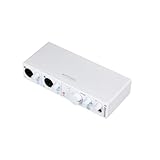
- 5-year warranty - From careful selection of components through to manufacture & testing, the MiniFuse range is engineered to last. Each interface is constructed with the most robust & reliable...
- Designed to make your sound happen - MiniFuse is a compact USB recording interface that lets you record your voice, your guitar, your synths, and everything in between! Play, perform, and produce...

The Arturia MiniFuse 2 is an audio interface that includes a single pair of MIDI ports (1-in/1-out). This is a great “all-in-one” solution for beginners who need to record a microphone and maybe one hardware synth. However, as soon as you add a second synth, you’ve outgrown the MiniFuse’s MIDI capabilities. We recommend the MiniFuse 2 for singer-songwriters, but if you are a “synth head,” you will eventually need the ESI M4U MIDI Interface to sit alongside your audio interface to handle the heavy lifting of MIDI routing.
3. FORE MIDI Interface

- FORE 1 MIDI in / 1 MIDI out MIDI interface, 16 MIDI input & output channels. Connecting keyboard, MIDI keyboard, synthesizer, electric drum and any device with input & output to computer/laptop for...
- Plug & Play, with a Built-in driver and Intelligent LED Indicator. No extra difficult driver installation. Easy set up, truly plug and play. MIDI converter shows different light indicators & status...
The FORE MIDI Interface is the “budget” option—a simple cable with a USB plug on one end and two MIDI DIN plugs on the other. It’s incredibly cheap and works for basic tasks. However, in our experience, these cheap cable-style interfaces often suffer from poor timing (jitter) and struggle with large Sysex transfers. They also offer zero expandability and no standalone modes. If you are serious about your music production, the ESI M4U MIDI Interface is a much better investment that will grow with your studio, whereas the FORE is a temporary fix that you’ll likely replace within a year.
Final Verdict: Is the ESI M4U MIDI Interface Right for You?
After weeks of testing the ESI M4U MIDI Interface in various configurations, our conclusion is clear: this is one of the most intelligently designed MIDI interfaces currently available. The auto-detecting ports solve a problem I didn’t even realize could be solved so elegantly. No more worrying about which port is an “In” and which is an “Out”—you just plug in your gear and get to work. The addition of the USB 3.0 hub is a stroke of genius that acknowledges the reality of modern, port-starved computers. While Windows users should be mindful of the driver installation to unlock multi-client support, the overall performance is top-tier.
We recommend the ESI M4U MIDI Interface for intermediate to professional producers who are tired of MIDI routing headaches and want a rugged, reliable hub that can handle both studio and stage duties. It offers a level of future-proofing that cheaper interfaces lack. If you are ready to take control of your hardware studio and eliminate the cable chaos once and for all, we strongly suggest you check the current price of the ESI M4U MIDI Interface and see how it can transform your creative workflow today.
Last update on 2026-09-15 / Affiliate links / Images from Amazon Product Advertising API