
Radial Engineering AC Driver Preamp Review: The Ultimate Stage Solution for Pure Acoustic Tone?
If you have ever stepped onto a stage with an acoustic guitar, you know the immediate sense of dread that comes with plugging directly into a PA system. You are at the mercy of the sound engineer, and more often than not, your beautiful, resonant instrument ends up sounding thin, quacky, or—even worse—erupts into a howling mess of feedback the moment you turn up the volume. We have all been there: frantically waving at the sound booth while a 100Hz rumble vibrates through the floorboards and threatens to derail the entire set. Solving this issue isn’t just about “fixing the sound”; it is about reclaiming your confidence as a performer. Without a dedicated interface like the Radial Engineering AC Driver Preamp, you are fighting your equipment rather than making music. Complications like signal loss over long cable runs and the lack of a quick-access mute for tuning can turn a professional gig into a stressful ordeal. That is exactly why we went searching for a tool that could bridge the gap between a raw pickup signal and a studio-quality live performance.

- Acoustic Instrument Preamp with Class a Buffer Circuit
- Polarity Reverse
Navigating the World of Acoustic Guitar Effects: A Detailed Buyer’s Guide
An Acoustic Guitar Effects unit is more than just an item; it’s a key solution for any musician who wants to maintain the organic integrity of their instrument while gaining the control necessary for modern stages. In the world of acoustic performance, the goal is transparency. You want the audience to hear the wood and the strings, not the electronics. A high-quality preamp or DI (Direct Injection) box acts as the brain of your signal chain, ensuring that the high-impedance signal from your guitar’s pickup is properly matched to the low-impedance input of a professional mixing console. Before you see its full feature set and user reviews, it is important to understand what makes a preamp truly “pro-grade.”
The ideal customer for this type of product is someone facing inconsistent stage environments, such as singer-songwriters, folk festival performers, or church musicians who need a reliable, “plug-and-play” solution. It is perfect for those who prioritize tone and durability over flashy digital effects. On the other hand, it might not be suitable for those who are looking for built-in reverbs, delays, or looping capabilities within a single box. If you need an all-in-one workstation, you might consider a multi-effects unit, but for the purist, a dedicated analog preamp is often the superior choice for raw audio quality.
Before investing, consider these crucial points in detail:
- Dimensions & Space: On a crowded pedalboard, every inch matters. You want a unit that is compact enough to fit in a gig bag pocket but heavy enough that it won’t slide around when you stomp on the mute switch. Look for a footprint that balances portability with accessible, “fingertip-friendly” controls.
- Capacity & Performance: In the context of preamps, “capacity” refers to headroom and signal-to-noise ratio. You need a device that can handle aggressive strumming without clipping and a circuit—ideally Class A—that doesn’t add hiss to your signal. Performance also includes how effectively the unit handles feedback through notch filters or high-pass filters.
- Materials & Durability: Live gear takes a beating. Look for heavy-gauge steel construction rather than plastic. The internal components, such as the footswitches and potentiometers (knobs), should be industrial-grade to withstand years of being stepped on and tossed into equipment trailers.
- Ease of Use & Maintenance: In the heat of a performance, you don’t want to be diving into digital menus. Physical knobs and toggle switches are essential for making “on-the-fly” adjustments. Furthermore, check the power requirements; a unit that runs on standard 9V power is much easier to integrate into a standard pedalboard setup than one requiring a proprietary voltage.
While the Radial Engineering AC Driver Preamp is an excellent choice, it’s always wise to see how it stacks up against the competition. For a broader look at all the top models, we highly recommend checking out our complete, in-depth guide:

- Transform any guitar into a ToneWoodAmp smart guitar! No Amp Required: Acoustic guitar effects that work directly from your guitar's body without needing an amplifier

- Analog Preamp and Digital Reverb
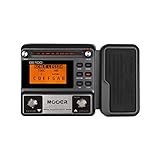
- 80 preset patches and 80 user patches, enough for creating your sound library. You can save any preferred tones by simply pressing down the SAVE button.
First Impressions: Unboxing the Radial Engineering AC Driver Preamp
When the Radial Engineering AC Driver Preamp arrived at our studio, the first thing we noticed was the weight. At nearly two pounds, this isn’t some flimsy plastic toy; it feels like a piece of military-grade hardware. Radial has a reputation for building gear that could survive a tank roll-over, and the AC Driver is no exception. The finish is a sleek, textured black, and the knobs have a satisfying resistance that suggests they won’t be accidentally bumped out of place during a show. Unlike some complex preamps that look like the cockpit of a jet, the layout here is refreshingly simple. You have a Level control, a High Pass Filter, and a Notch filter—everything you need and nothing you don’t. We found that the inclusion of a dedicated mute switch and a tuner output immediately solved the “silent tuning” dilemma that many acoustic players face. Comparing it to previous Radial offerings, it feels like a streamlined version of the PZ-Pre, focusing specifically on the needs of the single-instrument performer. It’s a tool designed for the working musician who needs to check the latest price and availability for a piece of gear that simply works every time it’s plugged in.
What We Like
- Exceptional Class A buffer circuit that preserves the natural “air” and warmth of the acoustic guitar.
- Incredibly rugged 14-gauge steel construction that is built for decades of touring.
- Highly effective notch filter and adjustable high-pass filter for surgical feedback control.
- Silent mute footswitch and dedicated tuner output for a professional stage workflow.
What We Didn’t Like
- Requires a 9V power supply (not included) and does not have a battery compartment.
- Lacks a built-in EQ section (Bass/Mid/Treble), which might be a drawback for some users.
Putting the Radial Engineering AC Driver Preamp Through its Paces: A Deep Dive
Superior Signal Integrity with the Class A Buffer
The heart of any preamp is its internal circuitry, and this is where the Radial Engineering AC Driver Preamp truly distinguishes itself from the competition. We found that the Class A buffer circuit provides a level of clarity that is often lost when plugging an acoustic guitar into cheaper, mass-produced DI boxes. Many acoustic pickups, particularly passive piezo systems like the K&K Pure Mini, are highly sensitive to “impedance loading.” When you plug these into the wrong input, the tone becomes thin and the low end disappears. During our testing, we discovered that the AC Driver acts as a perfect handshake between the guitar and the PA. The sound was full-bodied and “expensive” sounding, retaining the percussive nuances of our fingerstyle playing. This isn’t just a volume booster; it’s a high-fidelity buffer that ensures your instrument’s character isn’t mangled before it even reaches the speakers. It’s a feature that really sets it apart from budget alternatives that can sound “brittle” or “sterile” in a live environment.
Surgical Precision: Mastering Feedback and Low-End Rumble
One of the biggest challenges of acoustic performance is managing the physical resonance of the instrument. At high volumes, the hollow body of a guitar acts like a microphone, picking up the low frequencies from the monitors and creating a feedback loop. We spent significant time testing the adjustable High Pass Filter (HPF) and Notch Filter on the Radial Engineering AC Driver Preamp. The HPF is a game-changer; by rolling off the frequencies below 150Hz, we were able to clean up the “mud” in our signal, allowing the guitar to sit perfectly in a mix with a bass player and drummer. The Notch filter is equally impressive. When we encountered a specific “howl” during a soundcheck, a quick turn of the notch dial allowed us to find the offending frequency and kill it instantly without affecting the overall tone. As one user noted, having these physical controls allows you to resolve issues fast without having to dive into digital menus, which is critical when you only have a five-minute changeover at a festival.
The Professional Workflow: Mute, Ground Lift, and Connectivity
In a live setting, utility features are just as important as tone. The Radial Engineering AC Driver Preamp includes a robust mute footswitch that is completely silent—no loud “pops” through the PA when you engage it. This is paired with a dedicated Tuner Out, allowing you to keep your tuner out of the primary signal path, which we found significantly improved signal purity. We also appreciated the inclusion of a 180-degree polarity reverse switch. This is an often-overlooked tool that can solve phase-related feedback issues in seconds. Furthermore, for those playing in older venues with questionable wiring, the built-in ground lift is a lifesaver. During our evaluation, we encountered a persistent hum in our signal chain that was instantly eliminated by engaging the ground lift switch. These are the “smart features” that make this unit feel like a professional tool rather than a hobbyist’s pedal. If you are looking to streamline your setup, you can see how this unit fits into your rig and why it’s a staple for many touring pros.
Road-Ready Engineering: The Radial “Tank” Reputation
We cannot overstate the build quality of this device. The Radial Engineering AC Driver Preamp is encased in 14-gauge steel and features a “book-end” design that protects the switches and knobs from being sheared off by a wayward boot. While many other pedals use lightweight aluminum or plastic, Radial uses heavy-duty materials that provide shielding against electromagnetic interference—another reason why the signal remains so quiet. We found that the power requirements are standard 9V (40mA), making it compatible with almost any power brick on your board. One user review mentioned that this is their second Radial preamp for a smaller board because they trust the brand so much, and after our own hands-on testing, we can see why. It’s the kind of equipment that you buy once and keep for the rest of your career. It provides a level of reliability that gives you peace of mind, allowing you to focus entirely on your performance rather than worrying about equipment failure.
What Other Users Are Saying
The general sentiment among users is overwhelmingly positive, with many praising the Radial Engineering AC Driver Preamp for its simplicity and ruggedness. One user mentioned that the sound quality is “superb for how simple this device is,” specifically highlighting how the low-cut filter helps dial out unnecessary low end that causes feedback. Another performer who used it at a folk festival reported that the sound engineer “loved it too,” which is perhaps the highest praise a piece of gear can receive. We also saw confirmation of its durability, with multiple users referring to it as “built like a tank.”
On the critical side, some users pointed out that it is “a little pricey” compared to entry-level DI boxes. One experienced player noted that while the mute button is great, many acoustic players use clip-on tuners and might not find the tuner out essential. However, even the critical reviews admit that the unit “does exactly what it should” and solves the fundamental problems of acoustic amplification. We agree with the consensus: while you pay a premium for the Radial name, you are getting a level of performance and reliability that justify the investment for any serious musician.
Top 3 Alternatives to Consider
While the Radial Engineering AC Driver Preamp is a top-tier choice for purists, the market offers several other options depending on your specific needs and budget. Here is how it compares to three popular alternatives.
1. SONICAKE Acoustic Guitar Effects Pedal
- Analog Preamp and Digital Reverb
- Built-in Notch Filter and Mute with gain and frequency range adjustment capabilities to quickly eliminate whistling and shape your sound in detail
The SONICAKE Acoustic Guitar Effects Pedal is a multi-functional alternative for those who want more than just a preamp. Unlike the Radial, which focuses on a single Class A signal path, the SONICAKE includes a digital reverb and an analog preamp in one small strip. It is significantly more affordable and offers a broader range of tonal colors for the player who wants to add some “space” to their sound without buying extra pedals. However, it lacks the professional-grade steel construction and surgical notch filtering of the AC Driver. We recommend this for hobbyists or those on a tight budget who need an all-in-one “gig-in-a-box” solution rather than a specialized feedback-fighting tool.
2. MOOER Acoustikar Acoustic Guitar Pedal Simulator

- [Warm Sound] Restore the sound of the acoustic guitar. Play the sound texture of an acoustic guitar with an electric guitar.
The MOOER Acoustikar is a completely different beast. While the Radial Engineering AC Driver Preamp is designed to enhance the sound of an acoustic-electric guitar, the Acoustikar is a simulator designed to make an electric guitar sound like an acoustic. It offers three modes: Piezo, Standard, and Jumbo. This is an excellent alternative for electric guitarists who only need an acoustic sound for one or two songs in a set and don’t want to bring an extra instrument to the gig. It is incredibly compact but does not offer the DI capabilities, mute switch, or feedback controls found on the AC Driver. Choose this if you are an electric player looking for convenience, not an acoustic player looking for tone perfection.
3. ToneWoodAmp SOLO Multi-Effect Processor
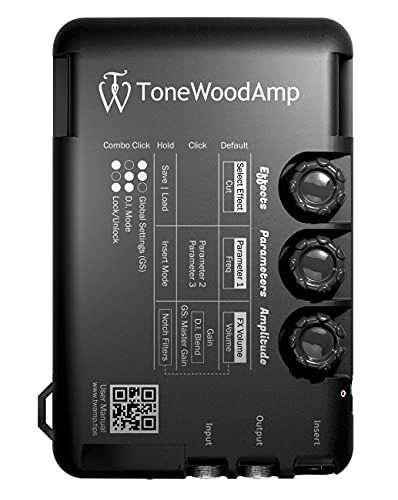
- 【One Of A Kind Experience】The ToneWoodAmp works on virtually any acoustic guitar! Adds beautiful sounding organic guitar effects to your acoustic* and acoustic-electric guitar, NO AMP REQUIRED...
- 【No Amp Required】 XXXX Get Reverbs like Hall, Room, Plate, Delay, Leslie, Auto-Wah, and Chorus, no amp required! All sounds come from the soundhole of your guitar organically. Buy one ToneWoodAmp...
The ToneWoodAmp SOLO is perhaps the most unique alternative on this list. Instead of sitting on the floor, it attaches to the back of your acoustic guitar and uses the guitar’s own body to produce effects like reverb, delay, and tremolo—no amp required! This is a fantastic tool for inspiration and practice. However, when it comes to professional stage use and feeding a PA system, it doesn’t offer the same level of signal conditioning and feedback management as the Radial Engineering AC Driver Preamp. If your goal is to have fun and experiment at home, the ToneWoodAmp is incredible. If your goal is to deliver a flawless, feedback-free performance at a large venue, the Radial remains the superior professional choice.
The Final Verdict: Is the Radial Engineering AC Driver Preamp Worth It?
After our extensive hands-on evaluation, it is clear that the Radial Engineering AC Driver Preamp is a specialized tool that does one thing exceptionally well: it makes your acoustic guitar sound exactly like it should on stage. It doesn’t distract you with unnecessary bells and whistles. Instead, it provides the essential tools—a high-quality Class A buffer, surgical filters, and professional connectivity—in a package that is virtually indestructible. While it may lack the built-in effects of some competitors, its transparency and reliability are unmatched in this price bracket. We found that the peace of mind it provides during a high-stakes performance is worth every penny of its asking price.
If you are a serious acoustic musician who is tired of battling feedback and inconsistent tone, we highly recommend adding this to your arsenal. It is a “set-and-forget” solution that will improve your sound from the moment you plug it in. Don’t let a bad PA system ruin your next performance—take control of your signal today. You can order the Radial Engineering AC Driver Preamp here and experience the difference that professional-grade engineering makes for your acoustic tone.
Last update on 2026-10-25 / Affiliate links / Images from Amazon Product Advertising API