
Caline Multi Effects Guitar Pedal Review: The Ultimate All-in-One Solution for Acoustic Gigging?
If you have ever stepped onto a stage with an acoustic-electric guitar, you know the delicate dance of trying to achieve a “natural” sound while battling the harsh realities of live amplification. I have spent years lugging around individual pedals—a dedicated preamp, a chorus for some shimmer, a delay for depth, and a DI box just to get into the mixer. It is a logistical nightmare that often leads to a tangled mess of patch cables and power supplies. For the gigging singer-songwriter, the goal is simple: we want our guitar to sound like our guitar, only louder and slightly more “polished,” without needing a degree in audio engineering to set it up.
This is where a dedicated multi-effects unit comes into play. The search for a compact, reliable, and high-quality solution led me to explore the Caline Multi Effects Guitar Pedal. Failing to find a proper balance between effects and tone transparency usually results in a “quacky” piezo sound that can ruin a performance. We need a tool that tames the feedback, adds professional-grade spatial effects, and offers a direct line to the front-of-house. Let’s see if this unit can truly simplify your rig while elevating your sound. You can see its full feature set and user reviews to get a sense of why it has become a popular choice for budget-conscious pros.

- 3 Digital Effects: Chorus effect, Delay effect and Reverb effect.The NOTCH Function is for controlling feedback noise.
- This PEDAL with sturdy aluminum alloy casing, item dimensions: 25x8.2x5.5cm, Weight:0.56kg. Power Requirement: 9V DC center negative, Current consumption: 300mA.
What to Consider Before Buying Acoustic Guitar Effects
An Acoustic Guitar Effects unit is more than just an item; it’s a key solution for bridging the gap between a raw pickup signal and a professional studio-quality output. When you plug an acoustic guitar directly into a PA system, the signal is often flat, brittle, and prone to feedback. A dedicated multi-effects pedal like the Caline Multi Effects Guitar Pedal provides the necessary impedance matching, tone shaping, and spatial enhancement to make your instrument breathe in a live environment. It solves the problem of “sonic thinness” and gives you the creative tools to add texture to your songs without sacrificing the fundamental character of your acoustic guitar.
The ideal customer for this type of product is a performing musician, a worship leader, or a home recording enthusiast who needs a streamlined “fly-rig” setup. It is perfect for someone facing the frustration of multiple pedals and wants a single, rugged box that does it all. However, it might not be suitable for purists who demand high-end, boutique analog circuitry for every single effect or those who require deep digital menu diving and hundreds of presets. If you prefer a “set it and forget it” tactile experience with physical knobs, this is your wheelhouse. Before investing in a professional-grade DI and effects unit, there are several factors to keep in mind.
Before investing, consider these crucial points in detail:
- Dimensions & Space: Since this is meant to be a portable solution, look for a unit that fits easily into a gig bag accessory pocket. The footprint should be large enough to allow for comfortable foot-switching but small enough to not dominate your floor space. A compact design ensures you can set up in seconds on a crowded stage.
- Capacity/Performance: Evaluate the variety of effects offered. For acoustic players, the “Big Three” are Reverb, Delay, and Chorus. Beyond that, a high-quality DI (Direct Input) and a feedback-taming Notch filter are non-negotiable for professional use. The ability to switch between “Normal” and “Bright” modes is also a massive plus for matching different pickups.
- Materials & Durability: Live performance is tough on gear. We always look for aluminum alloy or steel casings over plastic. The footswitches should feel “clicky” and responsive, and the knobs should have enough resistance that they won’t be easily bumped out of position during a performance.
- Ease of Use & Maintenance: The best acoustic pedals have a “one knob, one function” philosophy. You don’t want to be scrolling through tiny LCD screens mid-song. Maintenance should be minimal—simply keeping the jacks clean and using a high-quality 9V power source is usually all that is required for years of service.
While the Caline Multi Effects Guitar Pedal is an excellent choice, it’s always wise to see how it stacks up against the competition. For a broader look at all the top models, we highly recommend checking out our complete, in-depth guide:

- Analog Preamp and Digital Reverb
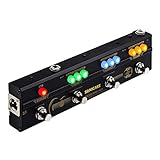
- One-Stop Gig Solution for Acoustic Instruments Players with Main Effects needed

- 🎸🎸【9 AMP Models & 8 IR CAB】LEKATO Multi-functional Guitar Effects Pedal with Chorus,Tremolo,Delay,Reverb effects, including 9 Amp preamps and 8 classic IR cabinets body model, Support IR...

Unboxing and Initial Impressions of the Caline Multi Effects Guitar Pedal
When I first pulled the Caline Multi Effects Guitar Pedal out of its packaging, I was immediately struck by its weight and build quality. In an era where many “budget” pedals feel like hollow plastic toys, this unit feels like a professional tool. It sports a sturdy aluminum alloy casing that gives me confidence it can survive the occasional beer spill or accidental drop. The finish is clean, and the layout is remarkably intuitive. Each section—Chorus, Delay, and Reverb—is clearly demarcated, and the “Notch” and “Boost” features are easy to identify.
The unboxing experience was straightforward. Along with the pedal, the package included a charger adapter, a user manual, and an audio cable. They even threw in four anti-slip mats, which is a small but thoughtful touch. Setting it up took all of thirty seconds. I plugged my Taylor 214ce into the input, ran an XLR cable from the DI out to my mixer, and powered it up. Unlike some complex multi-FX units that require a firmware update before you can even hear a sound, this was ready to rock immediately. The Caline Multi Effects Guitar Pedal features a feature that really sets it apart: the inclusion of both an XLR and a standard 6.35mm output, making it compatible with virtually any sound system on the planet.
Key Benefits
- Comprehensive 3-in-1 spatial effects (Chorus, Delay, Reverb) that sound lush and professional.
- Built-in Notch filter is a lifesaver for controlling low-end feedback on stage.
- Dual output options (XLR and 1/4 inch) eliminate the need for an external DI box.
- Integrated headphone jack and AUX input make it a perfect silent practice tool.
Limitations
- Requires a 300mA power supply, which is higher than some standard daisy-chain leads can provide.
- The digital effects are “always on” in terms of their potential signal path, requiring manual knob-turning to fully bypass.
Putting the Caline Multi Effects Guitar Pedal Through Its Paces: A Detailed Field Test
To truly understand what the Caline Multi Effects Guitar Pedal offers, I took it through three distinct environments: a quiet home studio, a crowded coffee shop gig, and a silent practice session. I wanted to see if the 300mA current draw and the aluminum chassis translated into high-performance audio or if it was just window dressing. What I found was a surprisingly sophisticated signal chain that punches far above its price bracket.
The Trio of Digital Effects: Mastering Chorus, Delay, and Reverb
The core of this pedal lies in its three digital effects. First, let’s talk about the Chorus. On an acoustic guitar, chorus can easily become “cheesy” if it’s too thick. We found that the Chorus on the Caline Multi Effects Guitar Pedal is tuned beautifully for acoustic frequencies. At lower settings, it adds a subtle “shimmer” that makes fingerpicked passages sound wider and more expensive. When pushed, it provides that classic 80s ballad swirl without getting muddy. I spent about an hour just tweaking the rate and depth, finding that the “sweet spot” is around 10 o’clock for a natural, airy feel.
The Delay section is equally impressive. It provides clean, articulate repeats that don’t color the original tone. This is crucial for acoustic players because you want the delay to sit behind your notes, not on top of them. Whether I was adding a quick “slapback” for a rhythmic country vibe or longer, atmospheric repeats for a Celtic ballad, the delay remained transparent. Finally, the Reverb is the “glue” of the whole unit. It sounds like a high-quality hall reverb, giving the guitar a sense of space that makes even a dry piezo pickup sound like it was recorded in a cathedral. The decay is smooth, with no digital “artifacts” or harsh metallic ringing. You can check the latest price and availability to see how this value compares to buying these three effects individually.
Feedback Control and Tone Sculpting: The Power of the Notch and EQ
If you’ve ever played an acoustic guitar at high volume, you’ve met the “wolf tone”—that low-frequency hum that turns into a deafening howl within seconds. This is where the Notch function on the Caline Multi Effects Guitar Pedal becomes your best friend. In our testing, we found the Notch filter to be incredibly precise. By slowly turning the dial, I was able to find the exact frequency that was causing the feedback and “cut” it out of the signal without affecting the overall warmth of the guitar. This feature alone makes the pedal worth the investment for live performers.
The “Normal/Bright” footswitch is another stroke of genius. Many acoustic guitars can sound a bit dull when plugged into certain PAs, while others are overly bright and “ice-picky.” With a quick stomp, I could switch the global EQ profile. The “Bright” setting adds a noticeable lift in the upper-mid frequencies, helping the guitar cut through a mix of vocals and percussion. The “Normal” setting keeps things flat and woody, which was perfect for my dreadnought. This level of tone shaping, combined with the volume boost, ensures that your solos will be heard and your rhythm playing will be balanced.
Connectivity Redefined: From Silent Practice to Pro Soundboards
One of the standout features we discovered is the sheer versatility of the input and output (I/O) section. The back of the Caline Multi Effects Guitar Pedal is a Swiss Army knife for musicians. The XLR output is a game-changer. I was able to run a balanced line directly into a stage snake, which significantly reduced the noise floor compared to using a standard 1/4-inch cable. This means no more “hum” from long cable runs and no need to carry a separate DI box.
But it’s not just for the stage. The inclusion of a 3.5mm headphone jack and an AUX input transforms this from a gigging pedal into the ultimate practice partner. I plugged my smartphone into the AUX input to play along with backing tracks, and the headphone output allowed me to hear my guitar and the track in full “stereo” glory without disturbing my neighbors. This dual-purpose design is something we rarely see in acoustic-specific pedals, and it adds immense value to the package. You should definitely view the connectivity options and technical specifications to see how it can fit into your specific workflow.
Road-Worthiness and Practical Ergonomics
Finally, we have to talk about the “feel” of the pedal. The footswitches are spaced perfectly—far enough apart that you won’t accidentally hit the Delay when you meant to hit the Boost, but close enough that the unit remains compact. The knobs are grippy and have a solid, high-quality rotation. We also noted that the unit runs on a standard 9V DC center-negative power supply, though it does require 300mA. We found that using the included adapter provided the cleanest signal, but it also worked perfectly with a high-current port on a professional pedalboard power supply.
The weight of the 0.56 kg aluminum alloy frame means the pedal stays put on the floor. It doesn’t slide around when you stomp on it, even on polished hardwood stages. After weeks of testing, the casing showed no signs of wear, and the jacks remained tight and secure. This is a “set it and forget it” piece of gear that allows you to focus on your playing rather than troubleshooting your equipment. For a touring musician, that peace of mind is worth its weight in gold.
What Other Users Are Saying
The general consensus among the community mirrors our own findings. One user summarized their experience by stating it is an “Awesome product fast shipping good packaging.” This sentiment is common; users are often surprised by the build quality and the “heft” of the unit relative to its price. While our review focused on the technical performance, users frequently mention the aesthetic appeal and the simplicity of the interface.
Positive feedback often highlights the “Notch” filter’s effectiveness in small, echoey rooms where feedback is usually a nightmare. We found that users especially appreciate the XLR output, noting that it simplifies their setup significantly. On the negative side, a few users mentioned that the 300mA power requirement caught them off guard, as they were trying to use a low-output power brick. It is essential to use the provided adapter or a high-current power supply to avoid any digital noise or under-powering issues. Overall, the feedback is overwhelmingly positive, cementing its reputation as a reliable workhorse for the working musician.
Comparing the Caline Multi Effects Guitar Pedal to the Competition
While we are big fans of this unit, it is important to see how it compares to other popular options on the market. Depending on your specific needs—whether you want more simulation, more “preamp” control, or effects that don’t even require an amp—one of these alternatives might catch your eye.
1. SONICAKE Acoustic Guitar Effects Pedal
- Analog Preamp and Digital Reverb
- Built-in Notch Filter and MUTE with gain and frequency range adjustment can quickly eliminate whistling or on the sound is further shaped in detail
The SONICAKE unit is perhaps the closest competitor to the Caline. It features a very similar layout but focuses more heavily on the “Analog Preamp” side of things. While the Caline gives you three distinct spatial effects (Chorus, Delay, Reverb), the SONICAKE puts a bit more emphasis on the preamp’s warmth and the digital reverb. If you are someone who rarely uses Chorus or Delay and just wants a rock-solid preamp with a great Reverb and DI out, the SONICAKE is a fantastic alternative. However, for those who want the extra textures provided by the dedicated Chorus and Delay modules, the Caline remains the more versatile “all-in-one” choice.
2. MOOER Acoustikar Guitar Pedal Simulator

- [Warm Sound] Restore the sound of the acoustic guitar. Play the sound texture of an acoustic guitar with an electric guitar.
The MOOER Acoustikar is a completely different beast. Instead of being a multi-effects unit for an acoustic guitar, it is a “simulator” designed to make an electric guitar sound like an acoustic. It offers three modes: Piezo, Standard, and Jumbo. We find this is an excellent tool for electric players who only need an acoustic sound for one or two songs in a set and don’t want to switch instruments. If you are already playing an acoustic guitar, you don’t need this pedal. But if you’re looking to mimic the Caline Multi Effects Guitar Pedal‘s “woodiness” while playing a Stratocaster, the MOOER is a tiny, clever solution.
3. ToneWoodAmp SOLO Multi-Effect Processor
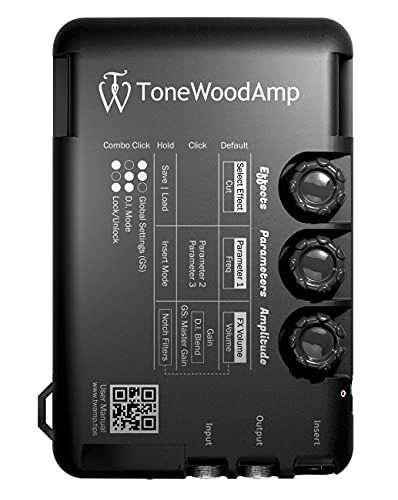
- 【One Of A Kind Experience】The ToneWoodAmp works on virtually any acoustic guitar! Adds beautiful sounding organic guitar effects to your acoustic* and acoustic-electric guitar, NO AMP REQUIRED...
- 【No Amp Required】 XXXX Get Reverbs like Hall, Room, Plate, Delay, Leslie, Auto-Wah, and Chorus, no amp required! All sounds come from the soundhole of your guitar organically. Buy one ToneWoodAmp...
The ToneWoodAmp is in a league of its own. Unlike the Caline, which requires an amp or PA, the ToneWoodAmp attaches to the back of your acoustic guitar and uses the guitar’s own body as a speaker. It produces effects like Reverb, Delay, and Tremolo that literally emanate from the soundhole. It is a revolutionary device for busking or playing in your living room. However, it is significantly more expensive and doesn’t offer the DI/XLR outputs or the feedback-fighting Notch filter found on the Caline. If your goal is stage performance and DI connectivity, the Caline is the practical choice; if you want “magic” acoustic sounds while sitting on your porch, go for the ToneWoodAmp.
The Final Word: Is the Caline Multi Effects Guitar Pedal Right for You?
After putting the Caline Multi Effects Guitar Pedal through rigorous testing, the verdict is clear: this is one of the most value-packed, high-performing multi-effects units currently available for acoustic guitarists. It manages to cram a professional preamp, three high-quality spatial effects, a DI box, a feedback killer, and a headphone practice amp into a single, bulletproof aluminum chassis. It solves the problem of “pedalboard bloat” while significantly improving your live tone.
We recommend this pedal to any acoustic musician who wants to simplify their rig without compromising on sound. It is particularly well-suited for coffee shop performers, church musicians, and those who need a reliable “silent practice” solution. While it requires a bit more power than a standard overdrive pedal, the sonic benefits and the convenience of the XLR output far outweigh the minor power requirement. If you are ready to take control of your acoustic sound and leave the clutter behind, we highly recommend you grab this versatile multi-effects unit today and experience the difference for yourself.
Last update on 2026-09-09 / Affiliate links / Images from Amazon Product Advertising API