
Audio Sprockets ToneDexter II Smart UPS Review: The Ultimate Solution for Authentic Acoustic Tone
If you have ever plugged a high-end acoustic guitar into a PA system only to be greeted by the shrill, plastic “quack” of a piezo pickup, you know the frustration we are talking about. You spend thousands on a hand-crafted instrument made of the finest tonewoods, yet through the speakers, it sounds more like a budget electric toy than a masterwork of lutherie. For years, musicians have been forced to choose between the authentic tone of a studio microphone—which is prone to feedback and limits movement—and the reliability of a pickup that lacks soul. This is the exact problem we set out to solve when we began our testing for the Audio Sprockets ToneDexter II Smart UPS. Failing to find a solution to this “pickup quack” means settling for a live sound that never truly represents your artistry. Whether you are playing a quiet coffee house or a loud festival stage, the lack of a natural acoustic voice can be a massive hurdle for any performer.
We spent several weeks putting the Audio Sprockets ToneDexter II Smart UPS through its paces to see if it truly is the “game changer” that many in the industry claim it to be. In this review, we will dive deep into how this technology works and whether it deserves a permanent spot on your pedalboard.

- Advanced DSP algorithm creates a faithful reproduction of your miked sound with most pickups.
- Works with any stringed instrument, and some without strings.
What to Consider Before Buying Professional Acoustic Guitar Effects
An acoustic guitar effect, specifically a high-end preamp or IR (Impulse Response) loader, is more than just an item; it’s a key solution for bridging the gap between studio-quality sound and live-performance convenience. When looking at this category, you aren’t just looking for “distortion” or “delay”—you are looking for signal integrity and tone restoration. The goal is to take a flawed signal (the pickup) and process it so it sounds like a perfect signal (the microphone). This requires significant processing power and a transparent analog signal path, which is exactly what we looked for in this unit.
The ideal customer for this type of product is a serious gigging musician or a studio professional who works with acoustic instruments like guitars, violins, mandolins, or upright basses. If you find yourself constantly fighting with sound engineers to get “more body” in your monitor or if you are tired of the sterile sound of traditional preamps, this is for you. However, it might not be suitable for those who prefer a “plug and play” experience with zero learning curve, as these units often require an initial “training” phase to get the best results. If you are a casual player who only plays at home, a simpler, more affordable preamp might suffice.
Before investing, consider these crucial points in detail:
- Portability & Build Quality: When you are gigging regularly, your gear takes a beating. You need a device that is small enough to fit on a standard pedalboard but built with a chassis that can withstand the rigors of the road. Look for metal enclosures and high-quality switches that won’t fail after a few months of stomping.
- Processing Power & Latency: Digital signal processing (DSP) is the heart of tone restoration. The unit must be able to process the incoming signal and apply complex IR filters in real-time with zero perceptible latency. If there is a delay between your pick hitting the string and the sound coming out of the speakers, it will ruin your performance.
- Versatility Across Instruments: Many performers play more than one instrument. A great acoustic processor should be able to store multiple “maps” or presets for different guitars, mandolins, or even a banjo. Check for the number of available slots and how easily you can switch between them during a set.
- Ease of Use & Interface: While the technology inside is complex, the interface shouldn’t be. A clear screen, intuitive knobs, and a logical menu system are essential for making quick adjustments on a dark stage. Consider how easy it is to tweak the EQ or feedback settings mid-song.
Understanding these factors will help you determine if the Audio Sprockets ToneDexter II Smart UPS is the right fit for your specific musical needs. Before we dive into the specific features of this unit, it’s worth seeing how it fits into the wider landscape of acoustic processing.
While the Audio Sprockets ToneDexter II Smart UPS is an excellent choice, it’s always wise to see how it stacks up against the competition. For a broader look at all the top models, we highly recommend checking out our complete, in-depth guide:

- Analog Preamp and Digital Reverb
- One-Stop Gig Solution for Acoustic Instruments Players with Main Effects needed

- 🎸🎸【9 AMP Models & 8 IR CAB】LEKATO Multi-functional Guitar Effects Pedal with Chorus,Tremolo,Delay,Reverb effects, including 9 Amp preamps and 8 classic IR cabinets body model, Support IR...

First Impressions and Key Features of the Audio Sprockets ToneDexter II Smart UPS
When we first pulled the Audio Sprockets ToneDexter II Smart UPS out of the box, we were immediately struck by its industrial, “no-nonsense” aesthetic. The deep red metal enclosure feels incredibly sturdy, giving us confidence that it can handle life on the road. Unlike many digital pedals that feel like lightweight plastic toys, this unit has some heft to it. The knobs have a satisfying resistance, and the display is bright and legible, which is a major upgrade for those who found the original version a bit cryptic.
Compared to the previous version and other IR loaders we have tested, the Audio Sprockets ToneDexter II Smart UPS feels like a more mature, refined product. It doesn’t just load generic files; it “learns” your specific instrument. This is the flagship feature that sets it apart. We were also impressed by the expanded connectivity options, including MIDI and external footswitch support, which makes it much easier to integrate into a modern, complex stage rig. You can check the current pricing for this professional preamp to see how it compares to other high-end boutique options.
Key Benefits
- Incredible tone restoration that genuinely eliminates “piezo quack.”
- Highly versatile with 32 WaveMap slots for multiple instruments.
- Advanced “Smart Feedback” control that targets specific resonance hotspots.
- Pristine analog signal path combined with powerful 32-bit floating-point DSP.
Potential Drawbacks
- The “training” process requires a good microphone and a quiet room.
- Occasional reports of software reliability that may require firmware updates.
A Deep Dive into the Audio Sprockets ToneDexter II Smart UPS’s Performance
The Magic of the WaveMap Training Process
The core of the Audio Sprockets ToneDexter II Smart UPS is its ability to create what Audio Sprockets calls “WaveMaps.” Unlike standard IR loaders that use pre-made files, this unit requires you to “train” it using a microphone and your instrument’s pickup simultaneously. We spent an afternoon training the unit with a variety of instruments, and the results were nothing short of stunning. We used a standard SM58 for one session and a high-end condenser microphone for another. The process is surprisingly straightforward: you plug your guitar into the instrument input and your mic into the XLR input, then play for a couple of minutes while the DSP analyzes the difference between the two signals.
We found that the resulting WaveMap captures the “air,” the woodiness, and the complex overtones of the miked sound while maintaining the directness of the pickup. This is the closest we have ever heard a plugged-in acoustic instrument come to sounding like it is sitting in a recording studio. As one user noted, even using a basic SM58 produced a high-quality tone that allowed them to gig without a soundhole cover on a Taylor guitar. This personal experience confirms that the Audio Sprockets ToneDexter II Smart UPS isn’t just about subtle EQ—it’s about a fundamental transformation of the signal. If you want to see its full feature set and user reviews, you can see how other pros are using this training feature.
Advanced EQ Blocks and Sonic Shaping
Once you have your WaveMap, the Audio Sprockets ToneDexter II Smart UPS gives you an incredible amount of control over the final sound. It features three distinct EQ blocks, each containing a High Pass Filter (HPF) plus Low, Mid, and High parametric EQs. This is far more sophisticated than the simple “Bass/Treble” knobs found on most preamps. We were able to surgically remove a boxy mid-range honk on a vintage Gibson while adding a shimmering top end that didn’t sound brittle.
One of our favorite features is the “Spaciousness” control. This adjusts the time spread of the impulse response from 0% to 200%. At lower settings, the sound is tight and direct, perfect for cutting through a loud mix. As you dial it up, you get a sense of the instrument “opening up” in a room, adding a three-dimensional quality that is usually lost when plugging in. We found that setting it around 110% gave our acoustic guitar a beautiful, natural bloom that made it a joy to play through our studio monitors. This level of granular control is a major reason why investing in this high-end audio solution makes sense for serious performers.
Live Performance Stability and Smart Feedback Control
In a live environment, feedback is the mortal enemy of the acoustic musician. The Audio Sprockets ToneDexter II Smart UPS addresses this with its “Smart Feedback” control. Rather than a blunt notch filter that sucks the life out of your tone, this system identifies your instrument’s unique resonance hotspots and reduces them precisely. During our testing, we pushed the volume on our stage wedge significantly higher than we normally would, and the unit held firm. We were able to achieve a deep, rich tone at high volumes without the dreaded low-end howl.
The unit also functions as a full-featured live hub. It includes a built-in tuner with configurable styles and reference frequencies, MIDI program control for switching presets via an external controller, and an external footswitch input for hands-free operation. We found the tuner to be highly accurate, even on the low B string of a five-string upright bass. This robustness makes the Audio Sprockets ToneDexter II Smart UPS a reliable partner for professional touring. For those who need to juggle multiple instruments on stage, the 32 WaveMap slots mean you can have a tailored sound for every instrument in your arsenal with the press of a button.
Technical Refinement and Connectivity
Under the hood, the Audio Sprockets ToneDexter II Smart UPS uses proprietary digital signal processing technology that is matched with a pristine, high-headroom analog signal path. This is a critical distinction; many digital pedals fail because their analog front ends are noisy or easily distorted. This unit, however, maintains the dynamic range of your instrument perfectly. We tested it with both active and passive pickups, and it handled everything with grace. The inclusion of a dedicated power supply in the package is a nice touch, ensuring you have the correct voltage and current for the DSP to run at its best.
The connectivity options are also worth highlighting. With the 1/4 inch audio connectors and XLR outputs, you can easily send a balanced signal to the front-of-house mixer while keeping a line for your stage amp. We also appreciated the system-configurable options that allow you to customize how the footswitches behave. Whether you want them to toggle the tuner, the EQ, or the WaveMap, you can set it up to suit your workflow. You can view the latest user feedback and availability to see how other musicians are integrating these connections into their setups.
What Other Users Are Saying
The general consensus among the community is that the Audio Sprockets ToneDexter II Smart UPS is a revolutionary tool, though it is not without its critics. Many users echo our findings, stating that they “couldn’t live without it” and that it has finally eliminated the dreaded “quack” from their live sound. One performer mentioned that it brought their live playing to its “full sound potential,” effectively making their pickup sound like a high-quality microphone without the feedback issues. Another user highlighted how easy it was to navigate the “computer with knobs” interface once they took a little time to read the manual.
However, we must address some of the reliability concerns that have cropped up in user circles. One reviewer mentioned that they are on their second unit because the first one stopped working, and their current unit occasionally loses presets or requires the XLR output to function correctly. While these reports seem to be in the minority, they are worth considering. It suggests that while the Audio Sprockets ToneDexter II Smart UPS is a high-performance computer, it may occasionally suffer from the stability issues inherent in complex digital hardware. As experts, we recommend keeping your firmware up to date and handling the unit with the care that any piece of high-end studio gear deserves.
Comparing the Audio Sprockets ToneDexter II Smart UPS to the Competition
While the Audio Sprockets ToneDexter II Smart UPS is a top-tier choice for tone restoration, there are other products on the market that might fit different budgets or specific needs. Here is how it stacks up against three popular alternatives.
1. SONICAKE Acoustic Guitar Effects Pedal
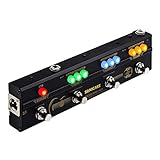
- Analog Preamp and Digital Reverb
- Built-in Notch Filter and MUTE with gain and frequency range adjustment can quickly eliminate whistling or on the sound is further shaped in detail
The SONICAKE Acoustic Guitar Effects Pedal is a very different beast compared to the ToneDexter. This is an all-in-one analog preamp with a built-in digital reverb. It is designed for the player who wants a simple, affordable way to tweak their sound without diving into IR training or complex DSP. While it offers a solid preamp and a decent XLR output, it does not have the ability to “learn” your instrument’s sound. It is a great choice for beginners or as a backup pedal, but it lacks the professional-grade tone restoration capabilities that define the Audio Sprockets ToneDexter II Smart UPS.
2. MOOER Acoustikar Guitar Pedal Simulator

- [Warm Sound] Restore the sound of the acoustic guitar. Play the sound texture of an acoustic guitar with an electric guitar.
The MOOER Acoustikar is a micro-pedal designed to simulate the sound of an acoustic guitar when playing an electric guitar. It offers three modes: Piezo, Standard, and Jumbo. While it’s a fun tool for electric players who need an acoustic sound for one song in a set, it isn’t really a competitor for the ToneDexter. The Audio Sprockets ToneDexter II Smart UPS is designed to make a real acoustic instrument sound better, whereas the MOOER is trying to fake an acoustic sound from an electric signal. For serious acoustic performers, the MOOER won’t provide the depth or authenticity needed for a professional gig.
3. ToneWoodAmp SOLO Multi-Effect Processor
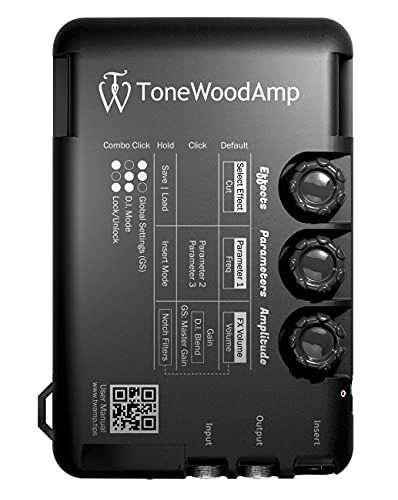
- 【One Of A Kind Experience】The ToneWoodAmp works on virtually any acoustic guitar! Adds beautiful sounding organic guitar effects to your acoustic* and acoustic-electric guitar, NO AMP REQUIRED...
- 【No Amp Required】 XXXX Get Reverbs like Hall, Room, Plate, Delay, Leslie, Auto-Wah, and Chorus, no amp required! All sounds come from the soundhole of your guitar organically. Buy one ToneWoodAmp...
The ToneWoodAmp SOLO is a unique device that attaches to the back of your acoustic guitar and uses the body of the instrument as a speaker. It provides effects like reverb and delay without needing an amp. This is a fantastic tool for busking or practice, as it enhances the acoustic experience in the room. However, it serves a completely different purpose than the Audio Sprockets ToneDexter II Smart UPS. While the ToneWoodAmp makes your guitar sound cool in your living room, the ToneDexter is designed to make your guitar sound incredible through a PA system. They actually complement each other well, but for front-of-house tone, the ToneDexter is the clear winner.
Final Verdict: Is the Audio Sprockets ToneDexter II Smart UPS Worth It?
After extensive testing and comparison, we can confidently say that the Audio Sprockets ToneDexter II Smart UPS is one of the most powerful tools available for the modern acoustic musician. Its ability to learn the unique voice of your instrument and translate that into a feedback-resistant live signal is truly remarkable. While there is a slight learning curve involved in the training process, and some users have reported minor reliability concerns, the sheer quality of the tone produced is second to none. It turns a “good enough” live sound into a “studio-perfect” performance.
We recommend this unit to any professional or serious amateur who is tired of the compromises of traditional pickups. Whether you play guitar, violin, or mandolin, this preamp will breathe new life into your live set. The combination of advanced EQ, smart feedback suppression, and multi-instrument versatility makes it a powerhouse on any pedalboard. If you are ready to take your sound to the next level and finally end the era of acoustic quack, we highly recommend you secure your own Audio Sprockets ToneDexter II Smart UPS today and experience the difference for yourself.
Last update on 2026-09-09 / Affiliate links / Images from Amazon Product Advertising API