
IOppWin Electric-to-Acoustic Guitar Simulator Pedal Review: A Surprising Solution for the Gigging Guitarist?
Every gigging guitarist knows the struggle. You are halfway through a high-energy set with your favorite Stratocaster or Les Paul, and the next song on the setlist requires a crisp, resonant acoustic intro. In a perfect world, you’d have a technician hand you a perfectly tuned Martin or Taylor. In the real world, you are usually fumbling with a guitar swap, untangling cables, and hoping the sound engineer adjusts the levels before the first verse. I have spent years trying to avoid this logistical nightmare. Carrying two guitars, two stands, and often two different types of amplifiers is a recipe for back pain and setup stress.
This is exactly why products like the IOppWin Electric-to-Acoustic Guitar Simulator Pedal exist. We search for that “holy grail” in a box—a small, affordable stompbox that can convince an audience they are hearing mahogany and spruce rather than magnets and copper wire. Failing to find a solution means either compromising your setlist or lugging around more gear than any human should. I recently spent several weeks putting this pedal through its paces to see if it truly offers a bridge between these two worlds or if it’s just another noisy paperweight on the pedalboard.

- Electric-to-Acoustic Conversion: Replicates rich, realistic acoustic guitar tones from your electric guitar.
- 3 Cabinet Modes: Piezo: Bright, modern acoustic resonance. Standard: Balanced, versatile tone. Jumbo: Warm, deep sound of large acoustic bodies.
What to Consider Before Buying an Acoustic Guitar Effects Pedal
An Acoustic Guitar Effects pedal is more than just an item; it’s a key solution for expanding your sonic palette without expanding your trunk space. These pedals are designed to reshape the signal of an electric guitar, rolling off the mid-heavy characteristics of humbuckers or single coils and introducing the complex harmonic resonances found in a hollow wooden body. They solve the problem of versatility, allowing a single instrument to cover a vast range of genres during a single performance.
The ideal customer for this type of product is someone facing cramped stages, limited budgets, or the need for quick tonal shifts, such as cover band players or solo performers. It is an excellent choice for someone who needs an “acoustic-ish” sound for a few songs but doesn’t want to invest in a dedicated acoustic rig. However, it might not be suitable for those who are recording high-fidelity folk albums or purists who demand the tactile response and true air-movement of a real acoustic guitar. For those users, a high-end microphone and a real guitar remain irreplaceable.
Before investing, consider these crucial points in detail:
- Dimensions & Space: In the modern era of “mini” pedals, footprint is everything. You want a pedal that provides maximum functionality without forcing you to buy a larger, heavier pedalboard. Look for compact designs that still allow for easy foot access to the switch.
- Capacity/Performance: This refers to the diversity of tones available. A single “acoustic” sound is rarely enough. Look for pedals that offer different “modes” (like Piezo or Jumbo) to match the specific type of acoustic tone you are trying to emulate for different song styles.
- Materials & Durability: Since this is a floor-based unit, it will be stepped on—hard. A metal housing is non-negotiable for anyone planning to take the pedal out of their bedroom. Plastic housings often fail at the hinge or the jack inputs over time.
- Ease of Use & Maintenance: You don’t want to be menu-diving during a bridge. Intuitive knobs for Top (high end/brilliance) and Body (low end/resonance) are essential for “dialing in” the sound to match your specific electric guitar’s pickups.
While the IOppWin Electric-to-Acoustic Guitar Simulator Pedal is an excellent choice for many, it’s always wise to see how it stacks up against the competition. For a broader look at all the top models, we highly recommend checking out our complete, in-depth guide:

- Transform any guitar into a ToneWoodAmp smart guitar! No Amp Required: Acoustic guitar effects that work directly from your guitar's body without needing an amplifier

- Analog Preamp and Digital Reverb
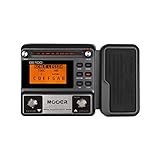
- 80 preset patches and 80 user patches, enough for creating your sound library. You can save any preferred tones by simply pressing down the SAVE button.
First Impressions and Key Features of the IOppWin Electric-to-Acoustic Guitar Simulator Pedal
When I first unboxed the IOppWin Electric-to-Acoustic Guitar Simulator Pedal, the first thing that struck me was its diminutive size. Measuring just 1.9 x 1.25 x 3.6 inches, it is truly a “micro” pedal. Despite its small stature, it feels remarkably dense and well-constructed. The all-metal housing gives it a premium feel that belies its very affordable price point. I’ve handled boutique pedals that didn’t feel this sturdy. Before you even plug it in, you can see its full feature set and user reviews to understand why it’s gaining traction in the budget gear community.
Setup was instantaneous. It utilizes a standard 9V DC power supply (which, as we found, is not included—a common trend with mini pedals). The layout is remarkably simple: a large central knob for “Level,” and two smaller pots for “Top” and “Body.” A three-way toggle switch allows you to flip between Piezo, Standard, and Jumbo modes. This simplicity is a breath of fresh air compared to digital multi-effects units that require a manual just to change the EQ. I was eager to see if this analog circuit could truly replicate the organic textures of a wooden instrument.
Key Benefits
- Ultra-compact footprint that fits on even the most crowded pedalboards.
- Rugged metal construction capable of surviving heavy stage use.
- Three distinct modes (Piezo, Standard, Jumbo) offer genuine tonal variety.
- True Bypass switching ensures zero tone coloration when the pedal is off.
Drawbacks
- Does not include a 9V power adapter, which is required for operation.
- Requires careful EQ tweaking on the amp to avoid “piercing” high frequencies.
Deep Dive: A First-Hand Performance Analysis of the IOppWin Electric-to-Acoustic Guitar Simulator Pedal
The Three-Mode Architecture: Versatility in a Toggle
In our testing, the heart of the IOppWin Electric-to-Acoustic Guitar Simulator Pedal experience lies in its three-way mode switch. We spent hours cycling through these settings using various electric guitars, from a bright Telecaster to a dark, humbucker-equipped Gibson. The “Standard” mode is the most balanced, providing a sound reminiscent of a dreadnought with aged strings—it’s warm but has enough “cluck” to be recognizable. When we switched to “Jumbo,” the low-end resonance became much more pronounced. It simulates the larger body cavity of a jumbo acoustic, adding a “thump” to the palm mutes that we found surprisingly convincing.
The “Piezo” mode is perhaps the most specialized. It replicates the bright, almost crystalline attack of an under-saddle pickup. While some users might find this mode a bit “thin,” we found it to be the most effective for cutting through a dense band mix. If you are playing in a five-piece band, you don’t necessarily want the massive low end of a Jumbo; you want the percussive high-end sparkle of the Piezo mode to sit on top of the drums and bass. To get the most out of these modes, you should check out the Piezo, Standard, and Jumbo modes in action through various user video demos.
Analog Integrity and Signal Clarity
One of the standout technical aspects we evaluated was the analog signal path. Many budget simulators rely on cheap digital signal processing (DSP) that can introduce a “latency” or a “plastic” feel to the notes. The IOppWin Electric-to-Acoustic Guitar Simulator Pedal uses advanced analog technology to shape the sound. This results in a much more dynamic response. When I played softly, the pedal responded with a muted, woody tone; when I dug in with a heavy pick, the simulated “top” brightened up naturally, much like a real acoustic would react to player dynamics.
Furthermore, the inclusion of True Bypass is a critical win. We’ve tested many “budget” pedals that suck the life out of your electric tone when they are turned off. With this pedal, our original electric signal remained completely untouched when the effect was disengaged. This makes it a “set it and forget it” addition to your board. You can explore the full specifications of this analog pedal to see how it maintains signal integrity compared to more expensive digital alternatives.
Dialing in the “Wood”: The Top and Body Controls
The real secret to making the IOppWin Electric-to-Acoustic Guitar Simulator Pedal sound authentic is the interaction between the “Top” and “Body” knobs. We discovered that these aren’t just simple EQ knobs; they seem to affect the harmonic resonance of the simulation. The “Body” knob adds that essential “woody” girth. If you turn it up too high, it can get boomy, but at about 2 o’clock, it gives the electric guitar a believable hollow-body resonance. The “Top” knob controls the “brilliance” or the sound of the pick hitting the strings.
We did encounter a common issue mentioned by some users: the high frequencies can become piercing if the “Top” knob is maxed out, especially when running into a bright electric guitar amp like a Fender Twin. However, we found that by backing off the treble on the amplifier and conservatively using the “Top” knob on the pedal, we could achieve a very smooth, usable tone. It requires a bit of “ear-tuning,” but once you find the sweet spot, the results are impressive for a $20-30 device. For those looking for a budget-friendly way to experiment, you can pick up this pedal for your own board and start tweaking.
Stage Practicality and Build Quality
From a purely logistical standpoint, this pedal is a winner. During a mock “performance” test, I appreciated how the metal housing felt solid underfoot. The LED is bright enough to be seen on a dark stage, and the footswitch has a satisfying “click” without being overly stiff. Because it is so small, I was able to tuck it into a corner of my board that was previously unused. I’ve had larger pedals that provided less utility than this little box.
One user noted that the pedal was “too small,” but in our experience, that’s its greatest strength. As long as you aren’t wearing oversized boots, the spacing between the footswitch and the knobs is sufficient. It’s a tool designed for the working musician who values every square inch of their gear bag. If you’re tired of lugging around an extra guitar, you should see why users rave about its compact metal housing and consider how much easier your next load-in could be.
What Other Users Are Saying
The general sentiment surrounding the IOppWin Electric-to-Acoustic Guitar Simulator Pedal is one of pleasant surprise, often tempered by the reality of its price point. Many users emphasize that for the cost of a few sets of strings, they are getting a tool that significantly expands their sound. One user shared that it sounded better than a much larger, more expensive pedal they had previously used, noting that they regretted ever getting rid of the IOppWin unit. This aligns with our findings that bigger isn’t always better in the world of analog simulation.
On the other hand, some users were more critical, stating that it “sounds nothing like an acoustic guitar.” We believe this often stems from unrealistic expectations. As one balanced review pointed out, it is “about as close as you can get” without buying an actual acoustic amp or guitar. We also saw mentions of “piercing” highs, which we confirmed can happen if the EQ isn’t managed properly. One particularly insightful user mentioned that the pedal actually works wonders when used to enhance a real acoustic-electric guitar, adding a layer of professional polish to a direct-in signal. You can read the latest customer feedback here to see how it might fit your specific setup.
Comparing the IOppWin Electric-to-Acoustic Guitar Simulator Pedal to Top Alternatives
1. SONICAKE Acoustic Guitar Effects Pedal
- Analog Preamp and Digital Reverb
- Built-in Notch Filter and Mute with gain and frequency range adjustment capabilities to quickly eliminate whistling and shape your sound in detail
The SONICAKE A Factory is a significantly more robust offering compared to the IOppWin. While the IOppWin focuses purely on the simulator aspect in a micro format, the SONICAKE includes a built-in preamp and a digital reverb. This makes it a superior “all-in-one” solution for players who want to go directly into a PA system, as it features an XLR output. If you have the extra space on your board and want a more complete acoustic “rig” in a box, the SONICAKE is the better choice. However, for those who just want a quick toggle on their existing electric board, the IOppWin remains the more space-efficient and budget-friendly option.
2. MOOER Acoustikar Guitar Pedal Simulator

- [Warm Sound] Restore the sound of the acoustic guitar. Play the sound texture of an acoustic guitar with an electric guitar.
The MOOER Acoustikar is the direct inspiration (and competitor) for the IOppWin. They share almost identical layouts, including the Piezo/Standard/Jumbo modes. In our side-by-side comparison, the MOOER tends to have a slightly more refined high-end response, but it often comes at a higher price point. The IOppWin essentially offers 95% of the MOOER’s performance for a fraction of the cost. If you are a brand loyalist or want the original “micro” simulator, go with MOOER. If you want the absolute best value for your dollar, the IOppWin is nearly impossible to beat.
3. ToneWoodAmp SOLO Multi-Effect Processor
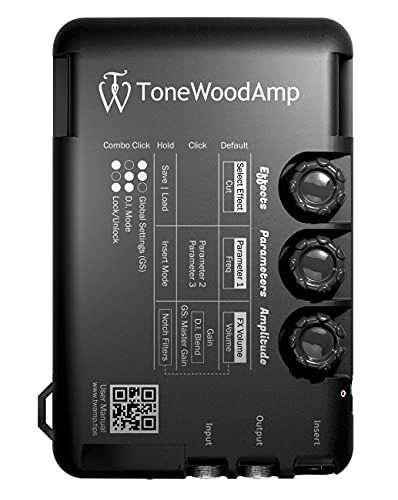
- 【One Of A Kind Experience】The ToneWoodAmp works on virtually any acoustic guitar! Adds beautiful sounding organic guitar effects to your acoustic* and acoustic-electric guitar, NO AMP REQUIRED...
- 【No Amp Required】 XXXX Get Reverbs like Hall, Room, Plate, Delay, Leslie, Auto-Wah, and Chorus, no amp required! All sounds come from the soundhole of your guitar organically. Buy one ToneWoodAmp...
The ToneWoodAmp SOLO is a completely different beast and shouldn’t be compared directly to a stompbox, though it often appears in the same search results. This device attaches to the back of an actual acoustic guitar and uses the body of the guitar as a speaker. It is a premium professional tool for acoustic purists. If you are looking to make your electric guitar sound like an acoustic, the ToneWoodAmp is not for you. But if you already own an acoustic-electric and want to add world-class effects without an amp, this is the gold standard. For the electric player looking for simulation, stick with the IOppWin.
Final Verdict: Is the IOppWin Electric-to-Acoustic Guitar Simulator Pedal Right for You?
After extensive testing, our verdict on the IOppWin Electric-to-Acoustic Guitar Simulator Pedal is clear: it is a high-value “utility” pedal that punchs well above its weight class. It isn’t going to fool a professional recording engineer into thinking you’ve tracked a vintage Gibson Hummingbird, but that isn’t its purpose. Its purpose is to give the gigging guitarist a believable, usable acoustic texture at the tap of a toe, and in that regard, it succeeds admirably.
We recommend this pedal to budget-conscious hobbyists, cover band musicians, and anyone who wants to experiment with acoustic tones without the “gear creep” of extra guitars and amps. While you’ll need to spend a few minutes dialing in the EQ to tame the high end, the payoff is a versatile, rugged, and incredibly small addition to your tone-shaping arsenal. Don’t let the low price fool you; this is a serious tool. To transform your electric rig today, secure yours today and transform your tone.
Last update on 2026-10-25 / Affiliate links / Images from Amazon Product Advertising API