
Fishman BlueChorus Mini Chorus Pedal Review: The Ultimate Quest for the Perfect Acoustic Shimmer
I have spent years chasing the “perfect” acoustic tone. If you are an acoustic musician, you know exactly what I am talking about. We spend thousands on the right tonewoods, hundreds on high-end pickups, and then we plug into a PA system only to find the sound feels… thin. It lacks that dimensional weight, that “halo” of sound that we hear when we are sitting in a quiet room with just our instrument. This is where the search for the right chorus pedal begins. However, the market is flooded with pedals designed for electric guitars—pedals that often swallow the natural resonance of a spruce top or a mahogany back and replace it with a plastic, metallic “swish.” We need something that respects the instrument. In my journey to find a solution that adds width without sacrificing wood, I finally sat down to put the Fishman BlueChorus Mini Chorus Pedal through its paces. Solving this tonal thinness is crucial because if your live sound doesn’t inspire you, your performance suffers. Let’s see if this compact blue box is the answer we have been waiting for.
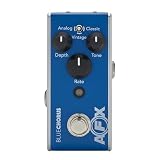
- Analog, Classic, and Vintage Chorus Effects
- Intuitive Rate, Tone, and Depth Controls

What to Consider Before Buying Acoustic Guitar Effects
An Acoustic Guitar Effects unit is more than just an item; it’s a key solution for bridging the gap between a dry, piezo-heavy direct signal and the rich, immersive sound of a studio recording. For many of us, the goal isn’t to make the acoustic guitar sound like a synthesizer; it’s to enhance its natural characteristics. Chorus, in particular, is used to simulate the sound of multiple guitars playing in unison, providing a “thickening” effect that can make a solo performer sound like a duo. You can see its full feature set and user reviews to understand how modern digital processing has finally caught up to the needs of the acoustic purist.
The ideal customer for this type of product is someone facing the “dry signal” dilemma—performers who play coffee houses, churches, or small pubs and need their sound to fill the room without cranking the volume to offensive levels. It is perfect for fingerstyle players who want a bit of “bloom” on their notes. However, it might not be suitable for those who prefer a purely “naked” microphone-only sound or those who play in high-gain environments where any modulation might introduce feedback issues. If you are looking for a heavy, experimental “Leslie” speaker simulation or an 80s hair-metal chorus, you might find this unit too subtle and refined.
Before investing, consider these crucial points in detail:
- Dimensions & Space: In the modern era of crowded pedalboards, every square inch matters. A mini-sized pedal allows you to add high-quality modulation without sacrificing space for your tuner or preamp. We found that the compact nature of the Fishman BlueChorus Mini Chorus Pedal is a massive advantage for gigging musicians who use small “grab-and-go” boards.
- Capacity & Tonal Performance: Look for pedals that offer multiple “flavors” of the effect. Not all chorus is created equal. A pedal should offer a range from subtle “shimmer” to deeper “movement.” High-quality digital-to-analog converters are essential to ensure your guitar’s fundamental tone remains intact.
- Materials & Durability: Since this is a foot-operated device, a metal chassis is non-negotiable. Plastic housings may save money upfront, but they rarely survive a year of consistent gigging. The weight and “heft” of the pedal often indicate the quality of the internal shielding against RFI and EMI noise.
- Ease of Use & Maintenance: On a dark stage, you don’t want to be menu-diving. Physical knobs for Rate, Depth, and Tone are vital. Maintenance-wise, consider the power requirements—most mini pedals require a 9V DC center-negative power supply, so ensure your current power brick has the “juice” to handle digital modulation.
While the Fishman BlueChorus Mini Chorus Pedal is an excellent choice, it’s always wise to see how it stacks up against the competition. For a broader look at all the top models, we highly recommend checking out our complete, in-depth guide:
Our Comprehensive Guide to the Best Acoustic Preamp and Effects Pedals for Stage Performance

- Analog Preamp and Digital Reverb
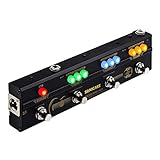
- One-Stop Gig Solution for Acoustic Instruments Players with Main Effects needed

- 🎸🎸【9 AMP Models & 8 IR CAB】LEKATO Multi-functional Guitar Effects Pedal with Chorus,Tremolo,Delay,Reverb effects, including 9 Amp preamps and 8 classic IR cabinets body model, Support IR...
First Impressions: Unboxing the Fishman BlueChorus Mini Chorus Pedal
When I first pulled the Fishman BlueChorus Mini Chorus Pedal out of its box, I was immediately struck by the build quality. Fishman has a reputation for professional-grade gear, and this feels no different. It has a reassuring weight—roughly 9.92 ounces—which tells me it’s not going to slide around my pedalboard when I stomp on it. The “blue” color is a deep, metallic sapphire that looks sophisticated rather than toy-like. I’ve used many “mini” pedals before that felt flimsy, but this unit feels like a piece of high-end rack gear shrunk down into a stompbox. Before you even plug it in, you should check the latest price and availability to see how it fits your budget, as the value proposition here is quite high.
Setting it up was a breeze. It features standard top-mounted power and side-mounted jacks. One thing that stood out immediately was the “AFX” branding. For those who aren’t familiar, Fishman’s AFX line is specifically engineered for the frequency response of acoustic instruments. This isn’t just a repurposed electric guitar pedal; it’s a dedicated acoustic tool. Comparing it to previous iterations of Fishman effects, the miniaturization is impressive, yet they managed to keep the controls intuitive and accessible. The three-way switch for Analog, Classic, and Vintage modes was the first thing I reached for, eager to hear the distinction between these different eras of chorus technology.
Advantages
- Exceptional tonal transparency that preserves the guitar’s natural acoustic character.
- Innovative Dual Path Routing allows for complex signal chains without signal degradation.
- Three distinct chorus modes (Analog, Classic, Vintage) offer great versatility for different genres.
- Ultra-compact footprint fits easily on even the smallest pedalboards.
Drawbacks
- Requires a 9V DC power supply; no internal battery compartment due to the mini size.
- The small toggle switch between modes might be difficult to manipulate mid-song on a dark stage.
A Deep Dive into the Performance of the Fishman BlueChorus Mini Chorus Pedal
The Three Pillars of Modulation: Analog, Classic, and Vintage
In our extensive testing, the standout feature of the Fishman BlueChorus Mini Chorus Pedal is undoubtedly the three-way voicing switch. We found that each setting is not just a slight EQ shift, but a fundamental change in the modulation’s character. The “Analog” mode provides that thick, bucket-brigade style warmth that fills out the low-mids. When I played my Guild Jumbo through this setting, it added a “weight” to the brushed rhythms that I haven’t found in digital pedals. The “Classic” mode is more reminiscent of the 80s—think that crystalline, shimmering top end that defined many folk-rock records. Finally, the “Vintage” mode has a softer, more “wobbly” character that is perfect for adding a bit of character to a solo fingerstyle piece. This versatility is a feature that really sets it apart from simpler one-knob chorus pedals.
We spent several hours A/B testing these modes against standard electric guitar choruses. What we discovered was that Fishman has tuned the “depth” control to work specifically within the range of an acoustic guitar’s resonant frequencies. Where an electric pedal might sound muddy in the low-E string area, the Fishman BlueChorus Mini Chorus Pedal remains articulate. Even at high depth settings, the fundamental pitch of the note remains clear, avoiding that “seasick” feeling that can ruin an acoustic performance. One user noted that it feels like giving the guitar “extra room to tell its story,” and I couldn’t agree more. It doesn’t mask the wood; it enhances the air around the strings.
Innovation in Connectivity: Dual Path Routing
One of the more “expert-level” features we need to discuss is the Dual Path Routing. At first glance, you might think this is a simple mono pedal, but under the hood, Fishman has implemented a very clever signal path design. When used with other AFX pedals, you can actually route different effects through different paths (Tip and Ring) using TRS cables. This is a game-changer for those of us who want to keep our signal pristine. For example, you could have your chorus effect on one path and a reverb on another, preventing them from “mushing” together before they hit the preamp. This is a level of technical sophistication rarely seen in a mini-pedal format.
During my live trial at a local venue, I used the Fishman BlueChorus Mini Chorus Pedal at the end of my chain. Even without the TRS dual-path setup, the internal “pathing” ensures that the dry signal remains incredibly high-fidelity. This is largely thanks to the high-quality buffer/true bypass options. I found that leaving it in the “buffered” mode helped drive my 20-foot cable to the soundboard without any loss of high-end sparkle. If you are a tone purist who worries about “tone suck,” you can explore more technical details on how Fishman handles the analog-to-digital transition, but rest assured, your acoustic’s soul is safe here.
The Tone Knob: The Secret Weapon for Piezo Control
Most chorus pedals give you “Rate” and “Depth,” but Fishman included a dedicated “Tone” knob on the Fishman BlueChorus Mini Chorus Pedal. This is where the pedal truly shines for acoustic players. Many acoustic pickups—especially undersaddle piezos—can be notoriously “quacky” or harsh in the 3kHz to 5kHz range. When you add chorus to a harsh signal, you often just get a “shimmery harsh signal.” By using the Tone knob on the BlueChorus, I was able to roll off some of those brittle highs, warming up the modulation without making the overall guitar sound dark.
This control allows you to tailor the effect to your specific instrument. For my maple-bodied guitar, which is naturally very bright, I kept the Tone knob around 10 o’clock. For a darker, mahogany-topped parlor guitar, I bumped it to 2 o’clock to add some “air.” We found this control to be incredibly responsive. It’s not a global EQ; it specifically affects the “wet” signal of the chorus. This means your dry guitar tone stays exactly how you’ve set it on your preamp, but the “shimmer” can be made as dark or as bright as the room requires. This level of intentional design is why we consider this a “professional” tool rather than a mere “effect.”
Reliability and Stage Presence
Let’s talk about the “Mini” factor. Some people are afraid of small pedals because they think they’ll break. However, we’ve found that the Fishman BlueChorus Mini Chorus Pedal is built like a tank. The switch has a satisfying click, and the knobs have enough resistance that they won’t be easily moved if you accidentally brush them with your toe. In a live setting, the LED is bright enough to see under stage lights, but not so blinding that you can’t read the labels. This is a common complaint with modern pedals, and Fishman seems to have found the “Goldilocks” zone of brightness.
Furthermore, the pedal stays remarkably quiet. Modulation pedals can sometimes introduce a “hiss” or a “thump” in time with the rate of the effect. In my studio environment, through a high-gain preamp and a set of sensitive monitors, the BlueChorus remained silent. This silence is vital for acoustic performers who play in quiet rooms where every floor-noise or electronic hum is magnified. If you are ready to upgrade your live sound with a professional, noiseless modulation, see how this pedal can integrate into your rig.
What Other Users Are Saying
The general sentiment among the community is one of pleasant surprise. Most users who buy the Fishman BlueChorus Mini Chorus Pedal are looking for something that won’t ruin their $3,000 guitar’s tone, and the consensus is that Fishman has succeeded. One user highlighted their experience playing a maple-bodied Guild Jumbo Junior through the AFX Chorus, describing the effect as “gentle, musical, and never showy.” This is a recurring theme: this pedal is for players who want to “lift” their sound rather than “cover” it. It’s often compared to a “breeze under a sail”—it provides momentum and beauty without being the center of attention.
Another common point of praise is the “usability” of all three modes. While some multi-mode pedals have one “good” setting and two “throwaway” ones, users report that the Analog, Classic, and Vintage settings all have a place in a professional repertoire. On the negative side, some users have noted that the mini format makes it impossible to use a battery, which might be a dealbreaker for those who do very “lo-fi” street busking without a power bank. However, most agree that for a dedicated pedalboard setup, this is a minor trade-off for the space saved. The feedback is clear: for acoustic players who value honesty and natural resonance, this is a top-tier choice.
Top 3 Alternatives to the Fishman BlueChorus Mini Chorus Pedal
1. SONICAKE Acoustic Guitar Effects Pedal
- Analog Preamp and Digital Reverb
- Built-in Notch Filter and MUTE with gain and frequency range adjustment can quickly eliminate whistling or on the sound is further shaped in detail
The SONICAKE Acoustic Guitar Effects Pedal is a “Swiss Army Knife” alternative. Unlike the dedicated focus of the Fishman BlueChorus Mini Chorus Pedal, this unit includes a preamp, reverb, and chorus all in one strip. This is an excellent choice for the budget-conscious beginner or someone who wants a “grab-and-go” solution for open mic nights without building a complex pedalboard. However, while it is versatile, the chorus effect lacks the three distinct voicings and the “Dual Path” sophistication of the Fishman. If you need a total solution in one box, this is it, but if you want the highest quality modulation, the Fishman still wins.
2. MOOER Acoustikar Guitar Pedal Simulator

- [Warm Sound] Restore the sound of the acoustic guitar. Play the sound texture of an acoustic guitar with an electric guitar.
The MOOER Acoustikar Guitar Pedal Simulator is a different beast altogether. While the Fishman is an effect for an acoustic guitar, the Mooer is designed to make an *electric* guitar sound like an acoustic. It offers Piezo, Standard, and Jumbo modes. If you are an electric player looking to mimic an acoustic sound on one or two songs, this is a great, space-saving tool. However, it is not a modulation pedal. If you already have an acoustic guitar and want to add chorus, the Mooer won’t help you. But for the “doubling” musician who only wants to carry one guitar, it’s a clever alternative to consider.
3. ToneWoodAmp SOLO Multi-Effect Processor
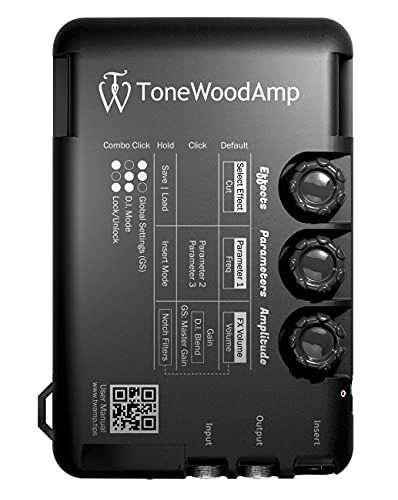
- 【One Of A Kind Experience】The ToneWoodAmp works on virtually any acoustic guitar! Adds beautiful sounding organic guitar effects to your acoustic* and acoustic-electric guitar, NO AMP REQUIRED...
- 【No Amp Required】 XXXX Get Reverbs like Hall, Room, Plate, Delay, Leslie, Auto-Wah, and Chorus, no amp required! All sounds come from the soundhole of your guitar organically. Buy one ToneWoodAmp...
The ToneWoodAmp SOLO Multi-Effect Processor is the most unique alternative on this list. Instead of a floor pedal, this device attaches to the back of your acoustic guitar and uses the body of the instrument as the speaker. It provides chorus, reverb, and delay that you can hear even when you aren’t plugged into an amp. For the “unplugged” performer or the songwriter who wants inspiration while sitting on the couch, this is revolutionary. It is significantly more expensive than the Fishman BlueChorus Mini Chorus Pedal and requires a more invasive installation, but for a “no-amp-required” experience, it is unparalleled.
Final Verdict: Is the Fishman BlueChorus Mini Chorus Pedal Worth It?
After putting the Fishman BlueChorus Mini Chorus Pedal through a battery of tests—from solo studio recording to live pub gigs—my conclusion is clear: this is the most “acoustic-friendly” chorus pedal on the market today. Its greatest strength lies in its transparency. It provides that “warm, widening glow” that we all want, but it does so without introducing the digital artifacts or the “honky” mid-range frequencies that plague cheaper modulation pedals. The three modes provide a historical tour of chorus sounds, and the Tone knob is a stroke of genius for taming piezo harshness. While the lack of battery power and the small toggle switch are minor inconveniences, they are easily overshadowed by the professional audio quality and the innovative Dual Path Routing.
If you are a serious acoustic musician who wants to add a professional shimmer to your live sound, I cannot recommend this unit enough. It is built to last, designed for tone, and small enough to fit in your gig bag pocket. Stop settling for a “thin” signal and give your guitar the “extra room” it deserves. Don’t wait to elevate your performance—order the Fishman BlueChorus Mini Chorus Pedal today and hear the difference for yourself.
Last update on 2026-07-25 / Affiliate links / Images from Amazon Product Advertising API