
Yamaha P71 88-Key Weighted Digital Piano Review: Authentic Feel Meets Modern Portability
For many of us, the dream of owning a concert grand piano is often met with the harsh reality of modern living. Whether it is a lack of floor space in a city apartment, the prohibitive cost of tuning an acoustic instrument, or the need to practice at 2:00 AM without waking the neighbors, the obstacles are real. I remember the frustration of trying to learn complex classical pieces on a flimsy, unweighted keyboard; the keys felt like plastic toys, and my finger strength never developed properly. When you transition from a “springy” keyboard to a real piano, the difference is jarring and often discouraging. This is why searching for a solution like the Yamaha P71 88-Key Weighted Digital Piano becomes a turning point for so many musicians. We need an instrument that respects the tradition of the craft while embracing the convenience of the digital age, solving the “space vs. soul” dilemma once and for all.

- Acoustic Piano Feel - Touch-sensitive keys allow for true expression and dynamic performance. The weighted action replicates the acoustic piano experience
- Elevated Sound - Choose from 10 unique Voices, including the richness and resonance of a Yamaha grand piano, with full dynamic sound and deep bass

What to Consider Before Buying a Digital Piano
A digital piano is more than just an item; it’s a key solution for developing proper technique and musicality without the logistical nightmare of a 500-pound acoustic beast. The main benefits of this category lie in the marriage of “action” and “sound.” A high-quality digital piano solves the problem of maintenance—you never have to call a tuner—and provides the versatility of volume control and headphone connectivity. It allows a student to practice in silence and a professional to record directly into a computer with ease. Essentially, it bridges the gap between a portable electronic keyboard and a stationary acoustic piano.
The ideal customer for this type of product is someone facing space constraints, such as a student in a dorm or a family in a modest-sized home. It is also perfect for intermediate players who want a reliable practice tool that mimics the resistance of real piano hammers. However, it might not be suitable for those who require an ornate furniture piece that doubles as a room’s centerpiece, or for extreme purists who refuse to play on anything without vibrating physical strings. If you are looking for a synth with hundreds of electronic “wobble” sounds, this minimalist approach might also feel too restrictive.
Before investing, consider these crucial points in detail:
- Dimensions & Space: Digital pianos vary from slim, portable slabs to heavy console models. Measure your intended practice area and consider if you need a dedicated stand or if a desk will suffice. A full 88-key instrument is over four feet wide, so ensuring it fits your lifestyle is the first step toward a consistent practice routine.
- Key Action & Weighting: This is the most critical technical metric. “Fully weighted” or “Hammer Action” keys use actual weights or mechanisms to simulate the lever system of an acoustic piano. Without this, you won’t build the necessary finger strength for advanced dynamics (playing very softly vs. very loudly).
- Sound Engine & Polyphony: Look for instruments that use high-quality sampling from actual grand pianos. Polyphony refers to how many notes can ring out at once; for complex pieces with sustain, you want at least 64-note polyphony to prevent notes from cutting off prematurely.
- Connectivity & Features: Consider if you need to connect to a computer for music production or if you require “Duo Mode” for lessons where the teacher and student play the same octaves side-by-side. A headphone jack is standard, but the quality of the internal speakers also determines how much you’ll enjoy playing without “cans” on.
Choosing the right digital piano requires balancing these factors against your budget. While the Yamaha P71 88-Key Weighted Digital Piano is an excellent choice, it’s always wise to see how it stacks up against the competition. For a broader look at all the top models, we highly recommend checking out our complete, in-depth guide:
- Acoustic Piano Keyboard Feel – Touch-sensitive keys allow for dynamic performances. The 88-key weighted keyboard action replicates the acoustic piano experience
- Acoustic Piano Feel - Touch-sensitive keys allow for true expression and dynamic performance. The weighted action replicates the acoustic piano experience

- 【Weighted Digital Piano】- The digital piano with 88 SEMI-Weighted Keys simulates the real touch of playing the piano. Half-weighted keys reduce the sense of strength than full-weighted keys, for...
First Impressions and Key Features of the Yamaha P71 88-Key Weighted Digital Piano
Unboxing the Yamaha P71 88-Key Weighted Digital Piano, the first thing that struck us was its elegant, minimalist aesthetic. Unlike many keyboards that are cluttered with dozens of buttons and flashing lights, the P71 keeps things professional and clean. It feels substantial yet surprisingly manageable at 25 pounds. Setting it up took less than five minutes; we simply plugged in the power supply and the included sustain pedal, and it was ready to play. The matte finish on the black keys is a particularly nice touch, providing a bit of grip that you don’t usually find on entry-level models. It is designed to be a “plug-and-play” instrument, prioritizing the piano experience over digital gimmicks.
The standout feature is undoubtedly the GHS (Graded Hammer Standard) action. When we first ran our fingers across the keys, the resistance felt remarkably familiar. To get a better sense of the build quality, we recommend you see its full feature set and user reviews, which confirm that this model is built to last through years of rigorous practice. Compared to older versions in the P-series, the P71 feels more streamlined and efficient, making it a top contender for anyone who values simplicity and high-quality sound.
What We Like
- Authentic Graded Hammer Standard (GHS) action that builds real finger strength.
- Stunning AWM Stereo Sampling for a rich, resonant grand piano tone.
- Compact, slim design that fits perfectly in small apartments or dorms.
- Intuitive one-button operation makes changing voices effortless.
What We Didn’t Like
- The included sustain pedal is a basic “footswitch” style; serious players may want to upgrade to a piano-style pedal.
- Internal speakers are clear but could benefit from more bass response at high volumes.
A Deep Dive into the Performance of the Yamaha P71 88-Key Weighted Digital Piano
The Graded Hammer Standard (GHS) Action: A Masterclass in Touch
The most important aspect of any digital piano is how it feels under your fingers, and we spent hours testing the Yamaha P71 88-Key Weighted Digital Piano to see if its GHS action lived up to the hype. In our evaluation, the “Graded” part of the GHS name is its greatest strength. On a real acoustic piano, the hammers for the lower notes are heavier than those for the higher notes. The P71 mimics this perfectly: the bass keys have a distinct “heaviness” and resistance, while the treble keys feel lighter and more agile. This is a feature that really sets it apart from semi-weighted alternatives.
As we played through various scales and dynamic exercises, the touch sensitivity allowed for a high degree of expression. If you strike a key softly, you get a delicate, hushed tone; strike it firmly, and the sound barks with authority. This level of control is essential for anyone moving between a digital setup and a teacher’s acoustic piano. We found that the matte finish on the black keys helped prevent slipping during longer practice sessions where moisture can become an issue. One user who has played for 18 years noted that after significant research, they settled on this model specifically because the keys provided the authentic practice experience they desperately missed after moving. To ensure you’re getting this level of quality, you should check the latest price and availability for this highly-rated model.
AWM Stereo Sampling: Bringing the Concert Grand Home
The sound engine in the Yamaha P71 88-Key Weighted Digital Piano utilizes Yamaha’s proprietary AWM (Advanced Wave Memory) sampling. To our ears, the primary Grand Piano voice is exceptionally lush. It doesn’t sound like a “recording” of a piano; it feels like the sound is blooming from within the instrument. By using pairs of waveforms captured with two microphones, Yamaha has managed to recreate the depth and spatial resonance of a physical piano. We found that the richness of the tone remained consistent whether we were using the built-in speakers or a high-quality set of headphones.
Beyond the grand piano, there are 10 unique voices, including electric pianos, organs, and strings. While we spent 90% of our time on the main piano setting, the “Dual Mode” allows you to layer two voices together—such as piano and strings. This creates a cinematic, expansive sound that is incredibly inspiring for songwriting or casual improvisation. One advanced intermediate player mentioned they gave away their old, bulky acoustic piano for this digital model and were thrilled with the sound quality, noting they no longer had to deal with expensive tuning. The simplicity of the “Grand Piano/Function” button allows you to switch between these sounds without diving into complex menus, keeping your focus entirely on the music. You can explore the different sound profiles and user demos to hear this richness for yourself.
Modern Connectivity and the “Logic Pro” Advantage
In today’s musical landscape, a digital piano needs to do more than just play sounds; it needs to talk to our devices. The Yamaha P71 88-Key Weighted Digital Piano features a USB-to-Host port, which we found to be incredibly reliable during our testing. We connected the P71 to a MacBook Pro and launched Logic Pro; the piano was recognized instantly as a MIDI controller. This opens up a world of possibilities, from recording your performances to using the GHS keys to trigger high-end software instruments like the Bösendorfer patches mentioned by some professional users.
For those using it as a learning tool, the 3.5mm headphone jack is a lifesaver. We tested it with several different pairs of headphones and found the output to be clean, with plenty of volume headroom. The “Duo Mode” is another clever feature where the keyboard is split into two identical halves, each with its own middle C. This is a game-changer for lessons, allowing the teacher to demonstrate a passage and the student to mimic it immediately in the same register. This versatility makes it a top-tier choice for students and producers alike. Whether you are learning your first chords or scoring a film, the connectivity here is robust and future-proof.
Portability and Build Quality: The 25-Pound Powerhouse
One of the most surprising aspects of our time with the Yamaha P71 88-Key Weighted Digital Piano was how it balanced its heavy-duty key action with such a slim, portable frame. At only 11.5 inches deep and weighing just 25 pounds, it is incredibly easy to move. We were able to move it from a dedicated stand to a tabletop without any strain, which is a massive advantage for gigging musicians or families who need to clear space for other activities. Despite the lightweight frame, the build quality feels premium. There is no “creaking” of the plastic housing, and the keys feel securely seated.
We did encounter one user report of “dead keys” upon delivery, but it’s important to note that Yamaha offers a generous 2-year warranty on these products. In our experience, the internal packaging is quite robust, though we recommend being present for delivery if possible. The sheer durability of Yamaha instruments is legendary; as one piano teacher noted, they recommended this specific model because it is known to be one of the most durable options available online. For anyone worried about the longevity of a digital investment, reading through the long-term owner reviews provides significant peace of mind. It feels like a professional instrument that can survive the rigors of daily practice and occasional travel.
What Other Users Are Saying
The general sentiment surrounding the Yamaha P71 88-Key Weighted Digital Piano is overwhelmingly positive, with a consensus that it offers the best “bang for your buck” in the weighted piano market. Many users emphasize that it is the perfect “transition” instrument. For example, one musician who spent their life playing brass instruments found this to be the ideal entry point into the world of piano. Another user, an 18-year veteran of the keys, praised its ability to provide an authentic experience in a small apartment where a real piano simply wouldn’t fit.
On the negative side, some users have noted that the delivery packaging can sometimes be too revealing, showing exactly what is inside the box. There was also a mention of a “loud bass clef” compared to the treble, though this can often be adjusted via touch sensitivity settings or may have been a rare defect. One user received a unit with a couple of dead keys, but they were quick to point out that the manufacturer’s warranty is helpful in such cases. Overall, the feedback suggests that while no mass-produced electronic item is perfect, Yamaha’s quality control and sound engineering make this a safe and satisfying purchase for the vast majority of buyers.
How the Yamaha P71 Stacks Up Against the Competition
While the Yamaha P71 88-Key Weighted Digital Piano is a fantastic all-rounder, it’s helpful to see how it compares to other popular models in the same price bracket. Depending on whether you prioritize furniture style, advanced tech features, or a budget-friendly entry point, one of these alternatives might catch your eye.
1. Donner DDP-90 88-Key Weighted Digital Piano
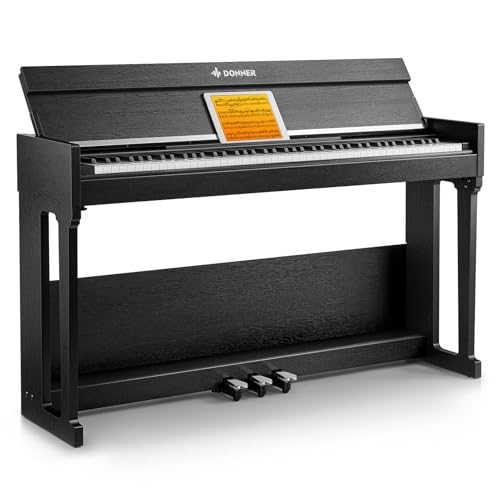
- 【Updated DDP-90 Pro】This upgraded digital piano now features 238 tones, 200 rhythms, and 100 songs, giving players far more options for practice, composition, and performance.
- 【Ideal First Digital Piano For Modern Living Space】DDP-90 Pro is smaller and lighter than the normal piano without infect sound quality, specially designed for the Compact Family Room. With a...
The Donner DDP-90 is a different beast entirely when it comes to design. While the P71 is a portable “slab” piano, the DDP-90 features a built-in wooden cabinet and a full three-pedal unit (Sustain, Soft, and Sostenuto). This makes it a much better choice for someone who wants a piece of furniture that looks like a traditional upright piano. In terms of feel, it also offers 88 weighted keys, but the sound engine is generally considered a step below Yamaha’s AWM sampling. Choose this if the “piano look” and having three pedals are your top priorities for your home decor.
2. Roland FP-10 Compact 88-Note Digital Piano

- Meet the FP-10, the starting point of the acclaimed FP-Series from Roland which has defined how a digital piano should sound and feel.
- Rich, responsive tone from Roland's renowned SuperNATURAL Piano sound engine
The Roland FP-10 is the P71’s fiercest rival. It features Roland’s SuperNATURAL piano tone and the PHA-4 Standard Keyboard, which many players find has an even more realistic “escapement” feel than Yamaha’s GHS. It also includes Bluetooth MIDI connectivity, allowing you to connect wirelessly to apps like GarageBand. However, the FP-10 can sometimes be slightly more expensive and harder to find in stock. If you are a tech-savvy player who wants the absolute best key texture and doesn’t mind a slightly more complex interface, the Roland is a stellar alternative.
3. Alesis Recital 88-Key Digital Piano Keyboard
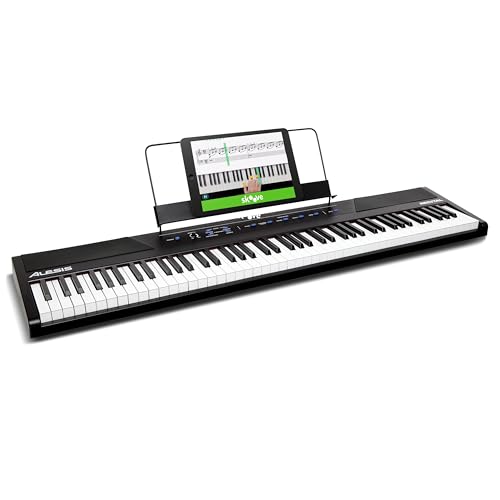
- An Electric Piano That’s Tailored to You - Feature-packed Electric keyboard with 88 premium full-sized semi weighted keys with adjustable touch response to suit your preferred playing style
- Premium Sounds - 5 voices (Acoustic Piano, Electric Piano, Organ, Synth, and Bass), built-in FX - Chorus, Reverb, and two built in 20W speakers that deliver crystal-clear, room-filling sound
The Alesis Recital is the choice for those on a strict budget. Unlike the P71, the Recital uses “semi-weighted” keys, which means they do not have the actual hammer-action resistance of an acoustic piano. While this makes the instrument much lighter and more affordable, it isn’t ideal for students who want to develop classical technique. It does feature powerful 20W speakers and a very simple layout. We recommend this for absolute beginners or casual hobbyists who aren’t sure if they want to commit to serious piano study yet but want a full 88-key range.
Final Verdict: Is the Yamaha P71 the Right Choice for You?
After our extensive testing and analysis, the Yamaha P71 88-Key Weighted Digital Piano stands out as the gold standard for entry-level digital pianos. It strikes a near-perfect balance between high-end performance and mid-range affordability. Its primary strength lies in its GHS action and AWM sound engine, which together provide an experience that is remarkably close to playing a real acoustic grand. While the included pedal is basic and the speaker system is standard, these are minor trade-offs for an instrument that gets the “feel” so right. It is a tool that grows with you, suitable for a child’s first lesson, a student’s college dorm, or a professional’s MIDI studio.
If you are looking for an instrument that prioritizes authentic touch and world-class sound without the clutter of unnecessary buttons, this is the piano for you. It solves the space problem, eliminates tuning costs, and provides a beautiful, inspiring tone that will keep you coming back to practice day after day. Don’t settle for a “toy” keyboard when you can have a real musical partner; we highly recommend that you check the latest price and secure your own Yamaha P71 today to begin your musical journey on the right note.
Last update on 2026-04-01 / Affiliate links / Images from Amazon Product Advertising API