
Wittner Taktell Piccolo Metronome Review: A Masterclass in Mechanical Precision
I remember clearly the first time I sat down to tackle a complex Bach invention. My fingers were flying, my spirit was high, but my timing was—to put it politely—a complete disaster. I was rushing the easy passages and dragging through the difficult ones, a common pitfall for any developing musician. It wasn’t until my mentor placed a mechanical metronome on the piano that I truly understood the concept of “musical pulse.” For decades, the click of a pendulum has been the heartbeat of music education. Without a reliable way to measure time, our practice becomes erratic, and our progress plateaus. Finding a tool that provides not just a beat, but a tangible, visual, and audible reference point is crucial. The market is flooded with digital apps that beep and flash, but many of us find them clinical or distracting. This is why many serious musicians return to the classics, leading us to our deep evaluation of a legendary tool: the Wittner Taktell Piccolo Metronome.
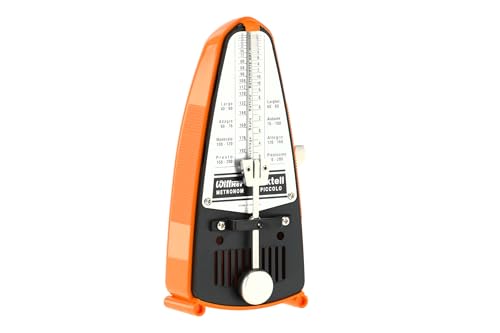
- Excellent craftsmanship and the highest grade hardwoods are coupled to produce these wood case models
- Pendulum motion provides visual sensing of tempo
What to Consider Before Investing in a High-Quality Metronome
A metronome is more than just an item; it’s a key solution for any musician looking to master the foundational elements of rhythm, tempo, and phrasing. Whether you are a beginner struggling to keep a steady quarter note or an advanced player refining polyrhythms, the metronome acts as an impartial judge of your performance. It solves the problem of “internal clock drift,” where a musician unknowingly accelerates during intense passages. By providing a constant, unwavering reference, it allows the brain to focus on technique and expression without losing the structural integrity of the piece.
The ideal customer for this type of product is someone facing the challenges of acoustic practice—piano students, violinists, or woodwind players who value a “natural” sound and a visual aid. It is perfect for those who want to disconnect from their smartphones and avoid the distractions of notifications during practice. However, it might not be suitable for those who require silent practice with headphones or those who need complex beat subdivisions and programmable sequences, for which a digital alternative might be better suited. If you need something that fits in a pocket and handles 7/8 time signatures with ease, a digital unit is your best bet; but if you want soul and reliability, mechanical is the way to go.
Before investing, consider these crucial points in detail:
- Dimensions & Space: Consider where the unit will sit. A tabletop metronome needs a flat, stable surface to remain accurate. If you practice in different rooms or travel to lessons, a compact “Piccolo” size is far superior to the larger, traditional wooden pyramids that are cumbersome to move.
- Capacity & Performance: Look at the tempo range and the duration of a single wind. A good mechanical metronome should cover at least 40 to 208 BPM. Furthermore, the internal spring mechanism should be high-quality enough to run for several minutes—if not hours—without needing a constant rewind during a long movement.
- Materials & Durability: While traditional wood is beautiful, high-grade plastic used in German engineering is incredibly durable and resistant to humidity changes. The internal clockwork should ideally be made of hardened steel or high-quality alloys to ensure the “tick” remains consistent over years of use.
- Ease of Use & Maintenance: Mechanical units are refreshingly simple, but they do require care. You want a model where the winding key is easy to access and doesn’t get lost. Maintenance usually involves keeping the unit dust-free and ensuring it isn’t dropped, as the pendulum balance is a delicate piece of physics.
In our years of testing various timing tools, we have found that the tactile feedback of a physical pendulum is often the missing link in a student’s rhythmic development. While the Wittner Taktell Piccolo Metronome is an excellent choice, it’s always wise to see how it stacks up against the competition. For a broader look at all the top models, we highly recommend checking out our complete, in-depth guide:
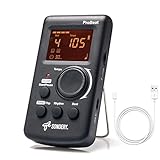
- Direct and fast setting of beat, tempo, rhythm by buttons and knobs. Easily reading color screen helps a lot to understand what you want out of your Sondery brand ProBeat digital metronome.

- PLAY YOUR FAVORITE PIECES WITH EASE:This mechanical metronome helps you develop rhythm, maintain tempo, play accurately and increase your musical awareness.

- 【PERFECT FOR BEGINNERS】The mechanical metronome beat sound is easy to recognize. The metal movement of the pendulum helps beginners to subconsciously establish the concept of the beat in a more...
First Impressions: The German Engineering of the Wittner Taktell Piccolo Metronome
Upon unboxing the Wittner Taktell Piccolo Metronome, specifically in its vibrant orange finish, the first thing that strikes you is the heritage. This isn’t a flimsy toy; it feels like a precision instrument. Weighing in at a mere 5.9 ounces and standing just over 6 inches tall, it fits comfortably in the palm of your hand. The plastic casing is dense and polished, reminding us that Wittner has been manufacturing these since 1895. The “Piccolo” designation is apt—it takes up very little real estate on a piano lid or a music stand.
Setting it up is a joy for anyone who appreciates mechanical simplicity. There are no batteries to find, no firmware to update, and no menus to scroll through. You simply remove the front cover, which protects the pendulum during transit, and you’re greeted by a beautifully calibrated scale. We found that the orange color isn’t just a stylistic choice; it makes the unit highly visible in low-light practice rooms, ensuring you can always track the pendulum’s swing out of the corner of your eye. To truly understand why this model remains a staple, you should see its full feature set and user reviews for yourself.
What We Like
- Exceptional German craftsmanship with a high-grade spring mechanism.
- The “tock-tock” sound is loud, clear, and far more musical than digital beeps.
- Extremely long run-time on a single wind of the key.
- Compact, portable size that doesn’t sacrifice visual pendulum clarity.
What We Didn’t Like
- The plastic case, while durable, doesn’t have the resonance of a wooden model.
- No built-in bell for beat accents (common in smaller Piccolo models).
A Deep Dive Into the Performance of the Wittner Taktell Piccolo Metronome
The Physics of the Tick: Mechanical Precision and Sound Quality
In our extensive testing, the primary reason we kept coming back to the Wittner Taktell Piccolo Metronome was the quality of its audible signal. Unlike digital metronomes that produce a square-wave “beep” which can be fatiguing or easily masked by the overtones of a violin or piano, the Wittner produces a percussive “tock.” This sound is organic and sits perfectly within the acoustic environment. We found that even when practicing at high volumes, the mechanical click cuts through the music without being “annoying”—a sentiment echoed by many parents who have to listen to their children practice for hours on end.
The accuracy is managed by a high-grade spring and a weighted pendulum. We tested the tempo consistency against a digital strobe, and the Wittner held its ground remarkably well. As long as the unit is placed on a level surface, the beat is mathematically even. This is where you can really feel the German manufacturing. The internal gears move with a smoothness that suggests this device will last for decades. In fact, many users have reported owning Taktell models for over 40 years that still function perfectly. To ensure you’re getting this legendary longevity, check the latest price and availability of the current generation models.
The Visual Advantage: Using the Pendulum for Rhythmic Anticipation
One of the most significant benefits we noticed during our evaluation is the visual feedback. Digital metronomes often use a small flashing LED, but the Wittner Taktell Piccolo Metronome features a physical swinging arm. For a musician, rhythm isn’t just about the moment the beat hits; it’s about the space between the beats. Watching the pendulum move toward the apex allows the brain to “anticipate” the next click. This is exactly how a conductor’s baton works. We found this incredibly helpful for teaching students how to internalize a pulse rather than just reacting to a sound.
This visual sensing of tempo is a feature that really sets it apart from modern apps. When you are working on slow, eloquent passages, the steady, rhythmic swing of the pendulum provides a “happy coziness,” as one user aptly described it. It turns practice from a stressful exercise in “staying with the click” into a more dance-like coordination with a physical partner. The scale behind the pendulum is clearly marked with both BPM numbers and traditional Italian tempo markings (Andante, Allegro, etc.), making it an educational tool in its own right.
Design Innovation: The Traveling Winding Key
A common complaint with mechanical metronomes is the loss of the winding key. Wittner solved this with a clever design choice in the Wittner Taktell Piccolo Metronome. The winding key has a “home” inside the front cover. You simply pull the key from its storage hole and screw it onto the winding stem on the side of the unit. This screw-on feature ensures that the key stays attached during use and doesn’t rattle or fall off. We’ve used many metronomes where the key is just a slip-on fit, and those inevitably get lost in a gig bag or behind a piano. Wittner’s attention to this small detail is a feature that really sets it apart for the traveling musician.
The cover itself is another highlight. It fits snugly over the face of the metronome, locking the pendulum in place. This is vital for portability. If a pendulum is allowed to swing freely during transport, it can bend the delicate internal escapement. With the Wittner Taktell Piccolo Metronome, you can toss it into a backpack with confidence, knowing the internals are secured. The “Orange” color of our test unit was also a major hit; it’s vibrant, sparkly, and adds a bit of modern flair to a traditional tool, making it “cool” enough that younger students actually want to use it.
Long-Term Reliability and Maintenance-Free Operation
We often get asked if mechanical metronomes are worth the hassle compared to free apps. Our answer is a resounding “yes” when it comes to the Wittner Taktell Piccolo Metronome. There is a psychological component to winding up a clockwork mechanism that signals the start of a serious practice session. We found that the unit runs for a “looooooooong time,” as one user put it, on a single wind. During a standard 45-minute practice session, I only had to give it a few turns every few days. This lack of reliance on batteries or charging cables means your practice is never interrupted by a “low battery” warning.
Maintenance is virtually non-existent. Aside from keeping it away from extreme moisture and avoiding dropping it on hard floors, the Wittner Taktell Piccolo Metronome is built to be an heirloom. While one user mentioned a unit breaking after a few uses, this is overwhelmingly the exception rather than the rule, likely due to a rare manufacturing defect or shipping damage. The vast majority of musicians find these to be “infalible” (infallible). If you want an instrument that values simplicity and warmth over digital complexity, you can see its full feature set and user reviews to confirm its standing in the musical community.
What Other Users Are Saying
The general consensus among the musical community regarding the Wittner Taktell Piccolo Metronome is one of deep respect and satisfaction. Most users praise its “vibrant” colors and “loud enough” sound, noting that it is far more pleasant to listen to than the shrill beeps of a smartphone. One veteran musician noted that they have owned a Taktell since 1972 and it still works perfectly, which is a testament to the brand’s consistency. Another parent mentioned that their daughter actually finds the metronome “cool,” which has directly translated into more frequent and effective piano practice.
However, no product is without its detractors. A small minority of users reported issues with durability, with one mentioning it broke shortly after purchase. It’s important to remember that these are precision mechanical instruments; they contain delicate springs and gears. If handled roughly, they can fail. Some users also noted that it takes time to get used to a mechanical tempo if you’ve only ever used digital ones. Overall, the feedback is overwhelmingly positive, with many users stating they would “always prefer Wittner over any other alternative.” The “coziness” and “warmth” of the sound are recurring themes that highlight why the Wittner Taktell Piccolo Metronome remains a best-seller.
How the Wittner Taktell Piccolo Metronome Compares to Top Alternatives
1. KORG TM60CBK Combo Tuner Metronome
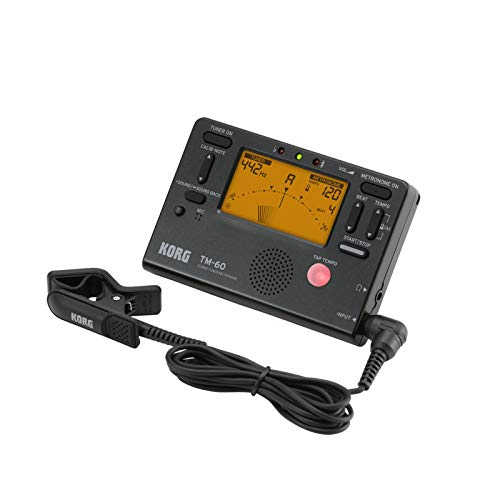
- Equipped with high-precision tuner function and metronome function, the two functions can be used simultaneously
- Colour: Black
The KORG TM60CBK represents the modern, digital approach to timing. Unlike the mechanical Wittner Taktell Piccolo Metronome, this unit is a “combo” that includes a highly accurate tuner and a contact microphone. It’s an excellent choice for orchestral players or guitarists who need to tune up and then immediately jump into rhythmic exercises. However, it lacks the visual pendulum and the “warm” sound of the Wittner. While the Korg is more versatile with its beat subdivisions and headphone jack, it feels like a piece of tech rather than a musical instrument. It’s the better choice for those who need to practice silently or in very loud environments where a mechanical click might be lost.
2. Wegrower Vibrating Metronome Watch
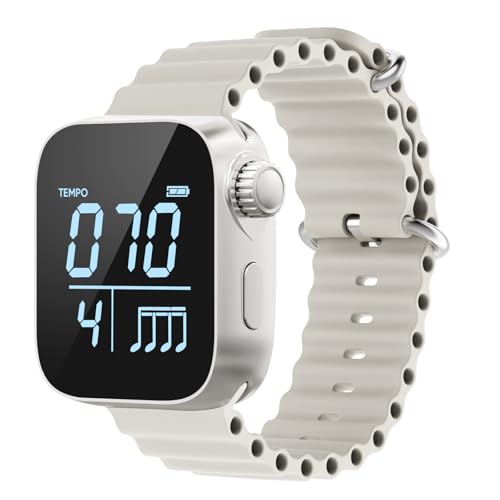
- 𝐏𝐞𝐫𝐟𝐞𝐜𝐭 𝐏𝐫𝐚𝐜𝐭𝐢𝐜𝐞 𝐌𝐞𝐭𝐫𝐨𝐧𝐨𝐦𝐞:This compact vibrating metronome is ideal for guitar, violin, drum, and piano practice, helping...
- 𝐖𝐨𝐫𝐤𝐨𝐮𝐭 𝐓𝐞𝐦𝐩𝐨 𝐓𝐫𝐚𝐜𝐤𝐞𝐫: Great for running and fitness, this wearable metronome keeps your pace steady with silent vibration. (Note: No...
The Wegrower Vibrating Metronome Watch is a completely different beast, aimed at drummers or performers who need a “stealth” beat. Instead of an audible click, it vibrates against your wrist. This is a fascinating alternative to the Wittner Taktell Piccolo Metronome if you find audible clicks distracting or if you are performing live and need to keep time without an earpiece. It features app support and long battery life. However, for a student sitting at a piano or desk, the lack of an audible “tock” and a visual pendulum makes it less effective for foundational learning. It’s a specialized tool for performers, whereas the Wittner is a masterclass in pedagogy.
3. Donner DPM-1 Mechanical Metronome for Musicians

- 【INCREDIBLE FEATURES】: Suitable for practicing any musical instrument. It can make up 40 to 208 beats per minute, and the beat selection is 0, 2, 3, 4, 6. It has a tempo tolerance of 1% and a beat...
- 【LEARN MUSIC WITH EASE】: It is an important tool for learning music. It can provide a loud sound during practice to help learners keep track of the rhythm, allowing learners to accurately grasp...
The Donner DPM-1 is a direct competitor to the Wittner in the mechanical space, often styled with a traditional wood grain look (though usually made of plastic). It is larger than the Wittner Taktell Piccolo Metronome and typically includes a bell to accent the first beat of a measure (2/4, 3/4, 4/4, etc.). While the Donner offers great value and that classic pyramid look, it lacks the precision and heritage of Wittner’s German manufacturing. In our experience, the internal spring of a Wittner is more consistent over the long term. The Donner is a great budget-friendly entry into mechanical metronomes, but the Wittner Piccolo is the superior choice for portability and long-term reliability.
The Final Verdict: Is the Wittner Taktell Piccolo Metronome the Right Choice for You?
After weeks of testing and comparing the Wittner Taktell Piccolo Metronome against both digital and mechanical rivals, our conclusion is clear: this is an essential tool for any serious musician’s workspace. It strikes a perfect balance between traditional mechanical soul and modern portability. The “Piccolo” size makes it incredibly convenient, while the German-engineered internals provide a level of rhythmic consistency that digital apps simply cannot replicate in terms of “feel.” While it may lack the bells and whistles of a digital tuner-metronome combo, it excels at its one true purpose—providing a steady, musical, and visual heartbeat for your practice.
We highly recommend the Wittner for piano students, string players, and anyone who wants to improve their timing without the distractions of a screen. It is a durable, beautiful, and highly functional piece of equipment that is likely to outlast your current instrument. If you are ready to take your rhythmic precision to the next level with a tool that sounds as good as it looks, we suggest you grab your Wittner Taktell Piccolo Metronome here and experience the difference that century-old craftsmanship makes in your daily practice.
Last update on 2026-09-29 / Affiliate links / Images from Amazon Product Advertising API