
Wittner Metronome Review: The Unwavering Beat for Serious Musicians
As musicians, we’ve all been there: diligently practicing a challenging piece, convinced we’re maintaining a steady tempo, only to record ourselves and discover our timing is akin to a rollercoaster ride. This inconsistent rhythm, often an invisible barrier to progress, is one of the most frustrating hurdles in musical development. Without a reliable anchor, our internal clock can wander, leading to sloppy performances, difficulties in ensemble playing, and a general stagnation in our technical and expressive capabilities. Many of us, myself included, have dabbled with phone apps or simple digital clickers, only to find their sterile, often thin, “beep” sound distracting rather than helpful, or their interface too fiddly to integrate seamlessly into a focused practice session. The fundamental problem isn’t just about keeping a beat; it’s about internalizing that beat, making it an intuitive part of our musicality. Ignoring this foundational aspect means building a house on shaky ground, where every new technique or piece becomes exponentially harder to master. This is precisely why a dedicated, high-quality metronome is not just an accessory, but an indispensable partner in the journey of any serious musician.

- Tempo range: 40-208 beats per minute
- Beat indication: Click sound and light
What to Consider Before Investing in a Metronome
A metronome is more than just an item; it’s a key solution for developing consistent rhythm, improving timing, and fostering disciplined practice habits. It addresses the common musician’s dilemma of an unreliable internal pulse, providing an objective external reference that allows for precise tempo control, gradual speed increases, and ultimately, a more confident and accurate performance. Without it, musicians often struggle with rushing, dragging, or inconsistent phrasing, hindering their ability to play complex passages cleanly or to synchronize effectively with others in an ensemble setting. The benefits extend beyond mere accuracy, leading to enhanced musicality, better sight-reading, and a deeper understanding of rhythmic structures.
The ideal customer for this type of product is someone facing the challenge of inconsistent tempo, a music student striving for technical mastery, a professional musician needing a reliable practice tool, or an educator guiding their pupils towards rhythmic precision. It’s perfect for those who understand the value of a steady beat and prefer a tactile, intuitive experience over purely digital solutions. Conversely, this particular type of metronome might not be suitable for those who require advanced features like complex rhythmic subdivisions, programmable patterns, or highly adjustable volume controls, or for those whose primary need is extreme portability in the smallest form factor. While incredibly effective at its core function, its simplicity means it foregoes the “bells and whistles” of some modern digital counterparts, which might be a drawback for users seeking more experimental rhythmic exploration or silent, vibrating metronomes.
Before investing, consider these crucial points in detail:
- Dimensions & Space: The physical footprint and portability of your metronome can significantly impact your practice environment. A smaller, more compact unit is ideal for musicians who travel frequently or have limited space on their music stand or desk. Think about whether it needs to fit into a gig bag or briefcase, or if it will primarily live in a stationary spot in your studio.
- Capacity/Performance: This refers to the metronome’s tempo range, accuracy, and overall consistency. A broad tempo range (like the Wittner Metronome’s 40-208 BPM) accommodates everything from slow, deliberate practice to blistering allegros. Accuracy is paramount; a metronome that drifts can do more harm than good. Also consider the clarity and distinctiveness of its beat, whether audible or visual.
- Materials & Durability: The construction materials speak volumes about a metronome’s longevity and tactile quality. While plastic is common, higher-end models often incorporate hardwoods or robust metals. A well-built metronome should withstand years of regular use, resisting wear and tear from frequent adjustments and occasional bumps.
- Ease of Use & Maintenance: Simplicity is often a virtue in a practice tool. A metronome that is quick to set up and easy to adjust allows you to focus more on your music and less on the device itself. Consider whether it’s wind-up, battery-operated, or rechargeable, and how straightforward routine tasks like battery replacement or cleaning might be.
Understanding these aspects will help guide your choice towards a metronome that not only meets your immediate needs but also supports your long-term musical growth.
While the Wittner Metronome is an excellent choice, it’s always wise to see how it stacks up against the competition. For a broader look at all the top models, we highly recommend checking out our complete, in-depth guide:
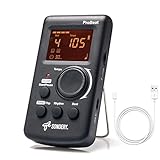
- Direct and fast setting of beat, tempo, rhythm by buttons and knobs. Easily reading color screen helps a lot to understand what you want out of your Sondery brand ProBeat digital metronome.

- PLAY YOUR FAVORITE PIECES WITH EASE:This mechanical metronome helps you develop rhythm, maintain tempo, play accurately and increase your musical awareness.

- 【PERFECT FOR BEGINNERS】The mechanical metronome beat sound is easy to recognize. The metal movement of the pendulum helps beginners to subconsciously establish the concept of the beat in a more...
First Impressions of the Wittner Metronome: Simplicity Meets Precision
Unboxing the Wittner Metronome, we were immediately struck by its elegant simplicity. There’s an undeniable classic aesthetic to it, a refreshing departure from the often cluttered interfaces of modern digital devices. It arrived in a straightforward package, and the moment we took it out, its compact size became apparent. At 3.54 x 1.57 x 5.1 inches and weighing a mere 3.68 ounces, it feels wonderfully portable without being flimsy. The black finish, coupled with what feels like high-grade hardwoods and stainless steel components, exudes a sense of robust German craftsmanship. There was no assembly required – it was ready to go right out of the box, a quality we deeply appreciate when eager to dive into practice. Compared to the often sterile plastic of many budget options, the Wittner Metronome feels substantial and well-engineered, a tool designed to last. Its single dial for tempo adjustment is immediately intuitive, promising a no-fuss experience that allows us to focus entirely on the music. This initial encounter truly hinted at a product that prioritizes core functionality and build quality above all else, making it an appealing prospect for musicians seeking reliability without unnecessary complexity. To truly appreciate its design and user-centric approach, we recommend you explore its features and see what makes it stand out.
What We Like
- Distinctive, crisp, non-electronic click sound.
- Compact, portable, and durable design.
- Effortless and precise tempo adjustment with a dial.
- Reliable German craftsmanship ensures longevity.
- Headphone jack allows for silent practice.
What We Didn’t Like
- No volume control, which can be excessively loud for some environments.
- The visual beat indicator is somewhat dim and less practical for all users.
Mastering the Beat: A Deep Dive into the Wittner Metronome’s Performance
The Art of Auditory Feedback: Sound Quality and Clarity
When it comes to metronomes, the quality of the audible beat is paramount, and this is where the Wittner Metronome truly distinguishes itself. From the moment we first engaged it, we were met with a sound that is both classic and incredibly effective: a crisp, distinct “wooden block” click. This isn’t the generic, often irritating “beep” or synthesized tick of many digital metronomes or phone apps. Instead, it’s a warm, resonant, and remarkably clear percussive sound that cuts through ambient noise without being harsh or distracting. This characteristic timbre is invaluable for practice, providing a solid, unmistakable reference point that helps us internalize the rhythm more effectively. We’ve found that this particular sound quality makes it far easier to maintain focus during long practice sessions, especially when playing acoustic instruments like the piano or a dulcimer, where a thin digital sound can easily get lost or become grating.
One aspect that immediately garnered our attention, and indeed that of many users, is its volume. The Wittner Metronome is undeniably loud, a deliberate design choice that ensures its beat is audible over a wide range of instruments, from a grand piano to an orchestral ensemble. While some might initially perceive the lack of a volume control as a drawback – and we acknowledge that it can be a little overwhelming in very quiet environments – its robust projection is a significant advantage for most musicians. We’ve personally experienced the frustration of trying to hear a faint metronome over a forte passage, and the Wittner Metronome elegantly solves this problem. For those who find it too loud, particularly during late-night practice or when others are in the vicinity, the included earphone jack offers a brilliant solution. Plugging in the earphone provides an appropriately amplified sound directly to the ear, allowing for completely silent external practice. This versatility, offering both a commanding audible presence and discreet personal monitoring, is a testament to the thoughtful design of the Wittner Metronome, making it a highly adaptable tool for various practice scenarios. It’s truly a standout feature that solidifies its position as a go-to for serious musicians; discover more about its superior sound quality and other benefits.
Precision in Motion: Tempo Accuracy and Usability
At the heart of any metronome lies its ability to deliver a consistent and accurate tempo, and the Wittner Metronome excels in this fundamental requirement. With a tempo range spanning from a languid 40 beats per minute (BPM) to a brisk 208 BPM, it caters to virtually every musical need, from slow, meditative practice to fast, technically demanding passages. What truly sets its usability apart is the intuitive, direct dial system. In an age dominated by digital interfaces that often require multiple button presses or frustratingly slow digital scrolling to adjust tempo, the Wittner Metronome offers a refreshing return to simplicity and immediate control. We found ourselves quickly dialing in the desired BPM with a single, smooth turn of the wheel, eliminating any unnecessary interruptions to our creative flow. This tactile, responsive adjustment not only saves time but also maintains focus, allowing for seamless transitions between different practice speeds without breaking concentration. It’s a design choice that underscores the Wittner brand’s long-standing reputation for prioritizing the musician’s experience.
Beyond its user-friendly interface, the Wittner Metronome delivers on its promise of high reliability and accuracy. We put it through its paces, comparing its tempo to various digital sources, and found it maintained a rock-solid beat without any noticeable drift. This consistency is crucial; an unreliable metronome is worse than no metronome at all, potentially instilling poor rhythmic habits. The combination of its precise quartz mechanism and the visual pendulum signal—though subtle—reinforces the audible tick, providing a multi-sensory approach to tempo guidance. This unwavering accuracy and straightforward operation mean that the Wittner Metronome isn’t just a tool; it’s a dependable partner in rhythmic development that truly stands the test of time. Whether you’re a beginner just learning to keep a steady pulse or a seasoned professional refining intricate passages, its reliable performance and ease of adjustment make it an indispensable aid, helping to build a solid rhythmic foundation with minimal fuss. For those seeking unwavering accuracy and simple, direct control, this is a feature that truly sets it apart from the competition.
Designed for Longevity: Craftsmanship and Portability
The Wittner Metronome is not merely a functional device; it is a testament to enduring craftsmanship. The product description highlights the use of high-grade hardwoods and stainless steel, and our hands-on experience confirms that these are not just marketing claims. The body feels remarkably solid and well-constructed, suggesting a product built to withstand the rigors of daily practice and transport. This robustness is a welcome contrast to the often fragile plastics found in many contemporary musical accessories. We appreciate the tactile satisfaction of holding a tool that feels substantial and reliable, instilling confidence that it will continue to perform flawlessly for years to come. This commitment to quality materials and meticulous assembly is a hallmark of the Wittner brand, known globally for its dedication to producing high-quality musical instruments and accessories. Such durability ensures that your investment in a Wittner Metronome is a long-term one, avoiding the need for frequent replacements due to wear and tear.
Despite its sturdy construction, the Wittner Metronome remains remarkably portable. With product dimensions of 3.54 x 1.57 x 5.1 inches and an item weight of just 3.68 ounces, it strikes an ideal balance between being substantial enough not to feel cheap, yet compact enough to be carried with ease. We found it tucks away effortlessly into a gig bag, a briefcase, or even a larger coat pocket, making it an excellent companion for lessons, rehearsals, or practicing on the go. This “grab-and-go” convenience means that a reliable metronome is always within reach, removing any excuses for inconsistent practice. While it’s battery-operated, requiring a single 9V battery, this is a widely available and easy-to-replace power source, adding to its practical portability without complex charging needs. The blend of robust, quality materials and a thoughtful, travel-friendly design makes the Wittner Metronome a versatile and dependable tool for any musician who values both durability and the freedom to practice wherever inspiration strikes. Its compact design is a major selling point for many; you can find more details on its build and portability.
The Visual Cue and Practical Considerations
Beyond the primary auditory feedback, the Wittner Metronome also incorporates a visual beat indication through a small, red blinking light. While the primary mode of operation for most musicians will undoubtedly be the audible click, this visual cue serves as an excellent supplementary aid. We’ve found it particularly useful in scenarios where the sound needs to be completely off, perhaps during recording sessions where any external noise is undesirable, or in extremely loud environments where even the Wittner’s robust click might be challenged. For those moments when pure auditory feedback isn’t feasible or preferred, the blinking light offers a silent, consistent pulse. However, it’s worth noting that some users, and we concur, find the red light to be somewhat dim, making it less practical as a primary indicator, especially in bright lighting conditions. It’s certainly functional, but not as prominent or dynamic as the visual pendulums found on traditional mechanical metronomes. Its utility largely lies in being a subtle, unobtrusive secondary cue rather than a bold, attention-grabbing one.
Powering the Wittner Metronome requires a single 9V battery, a straightforward and easily sourced solution. While some might prefer a rechargeable built-in battery, the 9V offers widespread availability and eliminates the need for proprietary charging cables, making replacements simple and quick. The battery compartment is easily accessible, ensuring that downtime due to power issues is minimal. Furthermore, the metronome includes a standard pitch A440 reference, a useful feature for musicians who need a quick tuning check before or during practice. This ensures that in addition to providing a reliable tempo, the Wittner Metronome offers a fundamental frequency reference, streamlining the preparation process for practice or performance. While its visual light might be a minor point of contention for some, its overall package of practical features, including the widely available power source and pitch reference, reinforces its design as a highly functional and musician-centric tool. For comprehensive details on all its integrated features, including the A440 reference, we encourage you to check the latest price and availability.
Echoes from the Practice Room: What Other Musicians Are Saying
Our expert findings on the Wittner Metronome are strongly echoed by the broader community of musicians who have incorporated it into their practice routines. We consistently found praise for its distinctive sound and ease of use. Many users, much like ourselves, are ardent opponents of the “beep” sound prevalent in digital metronomes, highly commending the Wittner Metronome’s “very crisp wooden block sound” which they describe as “loud enough to hear over the piano but not distracting.” This reinforces our assessment of its superior auditory feedback. Users frequently highlight its portability and intuitive dial, with one noting it’s “small enough to carry in my pocket” and appreciating the ability to “quickly dial in the tempo with the wheel. No holding a button down while it digitally scrolls through the numbers.” The reliability and craftsmanship are also common themes, with statements like “Very well made, great design” and “This brand is known for high reliability, accuracy, and long usage life.” Even those new to metronomes, like parents buying for their children, found it “Easy to hear while playing to keep the beat.”
However, the feedback isn’t universally glowing, and some common critiques align with our observations. The primary point of contention, as we noted, is the lack of volume control and the resultant loudness. While many musicians appreciate its projection, some found it “really loud” to the point of being overwhelming in quiet settings. One particularly vivid account described experiencing “tinnitus so painful” after exposure, highlighting the intensity of the sound for sensitive ears or in specific scenarios. This feedback underscores the importance of the headphone jack as a crucial mitigating feature. Another minor drawback, as we experienced, was the “dim red blinking light,” which some users felt “seems like a waste and not too practical.” Despite these points, the overall sentiment remains overwhelmingly positive, with many considering it the “best metronome I’ve had,” confirming that its core strengths far outweigh its minor limitations for its target audience. This collective experience solidifies the Wittner Metronome’s reputation as a reliable and effective tool for musicians who prioritize fundamental quality and an authentic beat. To see all the feedback directly and gauge its reception for yourself, browse user reviews and detailed product information.
Exploring the Rhythm Landscape: Alternatives to the Wittner Metronome
While the Wittner Metronome offers a superb blend of traditional sound and modern reliability, it’s always insightful to consider how it stacks up against other reputable options in the market. Different musicians have different needs, and what works perfectly for one might not be ideal for another.
1. Wittner 834 Taktell Piccolo Metronome

- WITTNER Metronome taktell PICCOLO
- Plastic Casing
The Wittner 834 Taktell Piccolo Metronome represents a direct comparison within the Wittner family. Like our featured Wittner Metronome, the Taktell Piccolo boasts the brand’s renowned German craftsmanship and a clear, audible tick. The key difference, as its “Piccolo” designation suggests, lies in its even more compact size. This model is often wind-up, maintaining a classic, purely mechanical operation that appeals to purists who prefer to avoid batteries entirely. Those who value ultimate portability, a truly vintage feel, and a completely self-sufficient device might lean towards the Taktell Piccolo. It typically has a smaller range of tempo settings compared to electronic quartz models but delivers consistent rhythm with the satisfying visual swing of a pendulum. If your practice space is extremely confined, or if you simply appreciate the charm and simplicity of a traditional mechanical metronome above all else, the Taktell Piccolo could be a more appealing choice, offering Wittner quality in an even smaller package.
2. Wittner 804K Metronome
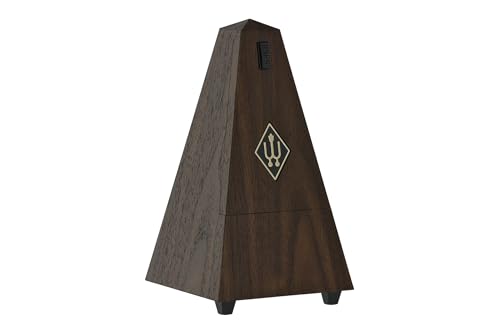
- Traditional Shape
- Wind Up Mechanism
Another strong contender from the Wittner lineage is the Wittner 804K Metronome. This model often signifies a more traditional, classic pyramid-style metronome, complete with a visible pendulum and a wind-up mechanism. While our featured Wittner Metronome is a quartz electronic model, the 804K leans into the purely mechanical tradition. This alternative is ideal for musicians who desire the iconic look and feel of a classic metronome, often made with beautiful wooden casings that double as an attractive piece of studio decor. The 804K provides a robust, natural “clack” and the unmistakable visual cue of the swinging pendulum, which many find incredibly helpful for internalizing the beat. While less portable than the compact electronic Wittner Metronome, its larger size can offer greater stability on a music stand and a more resonant acoustic presence. For those who prioritize the aesthetic and kinetic experience of a purely mechanical metronome, and whose practice is primarily stationary, the 804K provides an authentic and reliable alternative from a trusted brand.
3. Seiko SQ50-V Quartz Metronome for Piano & Instruments

- Enhanced Design Upgrade – The SQ-50-V improves on the classic SQ50 with a sleek new look, upgraded interface, and even easier operation for musicians of all levels.
- Precision Tempo Control – Effortlessly set tempos from 40 to 208 BPM using the intuitive 39-position rotary dial—ideal for dialing in accurate timing for practice or performance.

Stepping outside the Wittner brand, the Seiko SQ50-V Quartz Metronome offers a compelling electronic alternative that directly addresses some of the Wittner Metronome’s limitations. As a quartz metronome, it delivers precise, digital accuracy, much like our reviewed Wittner Metronome, but it includes key features often sought after by modern musicians. Crucially, the Seiko SQ50-V boasts adjustable volume, a significant advantage for users who find the Wittner Metronome too loud or who need to adapt its output to various environments. It also incorporates built-in tone generators for A and Bb, providing a handy reference for tuning. The red LED indicator is typically brighter and more pronounced than the Wittner’s, making it a more effective visual cue. For musicians who require versatile volume control, additional tuning functions, or prefer the convenience of standard AA batteries over a 9V, the Seiko SQ50-V presents a feature-rich, highly adaptable option. It sacrifices the Wittner’s distinctive “wooden block” click for a more standard electronic sound, but compensates with a wider range of practical features that cater to a broader spectrum of contemporary musical needs. Ultimately, the choice between the classic appeal of the Wittner Metronome and the modern conveniences of the Seiko SQ50-V hinges on individual priorities and practice requirements.
Our Final Verdict: Is the Wittner Metronome the Right Beat for You?
After extensive testing and considering the valuable insights from countless musicians, our final verdict on the Wittner Metronome (865061) is clear: this is an exceptional tool for anyone serious about rhythmic development. Its core strengths lie in its unparalleled sound quality – a crisp, non-electronic click that cuts through instrument sound without distraction – and its rock-solid reliability, a hallmark of Wittner’s German craftsmanship. We found its intuitive dial for tempo adjustment to be a refreshing change from cumbersome digital interfaces, allowing for seamless and focused practice. While its lack of volume control can make it quite loud in certain settings, the inclusion of a headphone jack offers a practical solution for discreet practice. The modest visual light, though not its strongest feature, serves as a suitable secondary cue.
We wholeheartedly recommend the Wittner Metronome to students, professional musicians, and educators who prioritize unwavering accuracy, superior auditory feedback, and a durable, straightforward design over advanced digital features. It’s the perfect choice for those who appreciate the elegance of simplicity and the effectiveness of a well-engineered, purpose-built device. If you’re tired of flimsy apps or sterile digital clicks and seek a metronome that will faithfully serve your musical journey for years to come, the Wittner Metronome is an investment that truly pays dividends in rhythmic precision and musical confidence. Don’t let inconsistent timing hold back your progress any longer; take the next step towards rhythmic mastery and secure your Wittner Metronome today.
Last update on 2026-09-28 / Affiliate links / Images from Amazon Product Advertising API