
Wittner 804K Metronome Review: A Timeless Practice Companion or Just Modern Plastic?
As a musician who has spent decades between the ivory keys and the music stand, I have felt the frustration that every performer eventually faces: the drifting tempo. We start a piece with passion, only to find ourselves rushing through the difficult passages and dragging through the lyrical ones. For years, I relied on digital apps and “beeping” electronic devices, but something was always missing. The clinical “chirp” of a digital metronome often felt like a distraction rather than a guide. I found myself looking for something more organic, something that provided a visual cue I could track with my peripheral vision while focusing on the sheet music. This search for a more “musical” way to practice led me to take a closer look at the Wittner 804K Metronome. Solving the problem of tempo isn’t just about hearing a click; it’s about feeling the heartbeat of the music, and a mechanical pendulum offers a solution that no smartphone app can truly replicate.
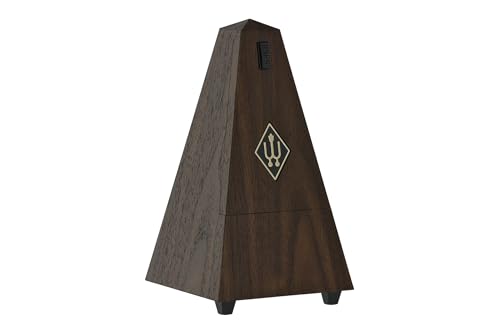
- Traditional Shape
- Wind Up Mechanism
Essential Considerations Before Buying a Mechanical Metronome
A metronome is more than just a ticking clock; it’s a key solution for developing an internal sense of rhythm and building technical proficiency. For many of us, the metronome acts as a “silent teacher,” keeping us honest when our fingers want to fly away. Choosing the right one is crucial because a poorly made mechanical device can actually waver in its timing as the spring unwinds, which defeats the entire purpose of the tool.
The ideal customer for this type of product is a serious student, a professional musician, or a teacher who values the aesthetic of a traditional music room and the tactile feedback of a swinging pendulum. It is perfect for those who find the high-pitched “beep” of digital tuners grating. However, it might not be suitable for those who need a device for heavy travel, as mechanical metronomes are precision instruments that can be sensitive to rough handling. If you are a gigging musician who needs something to throw in a gig bag, a digital alternative might serve you better.
Before investing, consider these crucial points in detail:
- Dimensions & Space: Consider where the metronome will sit. A traditional pyramid-style metronome like this one requires a flat, stable surface to function accurately. If your piano or music stand is cluttered, you need to ensure you have at least a 5×5 inch footprint available for the device to sit level.
- Capacity & Performance: Look specifically at the runtime and the BPM (Beats Per Minute) range. A standard professional range is 40 to 208 BPM. You also want a spring mechanism that provides a consistent pulse from the moment it is fully wound until it finally stops, without slowing down as the tension decreases.
- Materials & Durability: While solid wood is the “gold standard” for resonance, modern high-quality composites and plastics offer better durability against humidity and temperature changes. Consider if you prefer the prestige of real wood or the practical, crack-resistant nature of a high-end plastic casing.
- Ease of Use & Maintenance: Mechanical metronomes are generally intuitive, but check how the winding key is stored and how easy it is to adjust the weight on the pendulum. Long-term care involves keeping the unit dust-free and ensuring the cover is replaced after every use to protect the internal gears.
While the Wittner 804K Metronome is an excellent choice, it’s always wise to see how it stacks up against the competition. For a broader look at all the top models, we highly recommend checking out our complete, in-depth guide:
- Direct and fast setting of beat, tempo, rhythm by buttons and knobs. Easily reading color screen helps a lot to understand what you want out of your Sondery brand ProBeat digital metronome.

- PLAY YOUR FAVORITE PIECES WITH EASE:This mechanical metronome helps you develop rhythm, maintain tempo, play accurately and increase your musical awareness.
- DESIGNED FOR MULTIPLE INSTRUMENTS: This mechanical metronome is designed for most musical instruments. Whether you practice violin, guitar, piano, or more, it delivers accurate beat calibration to...
First Impressions: Unboxing the Wittner 804K Metronome
When I first received the Wittner 804K Metronome, I was struck by its classic silhouette. Despite being constructed from a “walnut color” plastic composite rather than solid wood, it carries a weight and presence that feels substantial. In our testing, the “faux grain” finish was surprisingly convincing; even under close inspection, the grain patterns wrap around the corners of the casing seamlessly. It doesn’t have the “cheap” feel of many modern plastic replicas. The unboxing experience is straightforward, though I must note that the packaging can be minimal—often just a paper bag inside the box—so it is important to check for any dislodged covers or scratches upon arrival.
The winding key is cleverly stored on the bottom of the unit, and threading it onto the winding post feels smooth and mechanical. Comparing this to older models, like the classic Seth Thomas, the Wittner feels more refined in its internal movement. The cover fits snugly, protecting the pendulum and the delicate internal scale. When you invest in a Wittner 804K Metronome, you are essentially getting a German-engineered precision tool that looks like a heritage piece but performs with modern reliability.
What We Like
- Exceptional runtime that can exceed 45 minutes on a single full wind.
- Highly accurate BPM timing that does not waver as the spring unwinds.
- Classic, aesthetic “tock-tock” sound that is audible but not piercing.
- Durable plastic casing that resists humidity better than solid wood.
What We Didn’t Like
- Lacks a bell feature for accenting the first beat of a measure.
- The plastic material, while high-quality, lacks the deep resonance of real wood.
A Deep Dive into the Wittner 804K Metronome’s Performance
Acoustic Quality and the “Mechanical Heartbeat”
One of the most significant reasons I prefer a mechanical metronome is the sound. Digital metronomes often use a square-wave “beep” that can be ear-fatiguing during a two-hour practice session. The Wittner 804K Metronome produces a hollow, woody “tock” that feels much more natural. We found that the sound is loud enough to be heard over a grand piano played at fortissimo, yet it doesn’t “sting” the ears. There is a certain clicky quality to the sound—likely a result of the plastic casing—but it remains far superior to an electronic speaker.
In our evaluation, the acoustic feedback helped us internalize the beat more effectively. Because the sound is produced by a physical escapement mechanism hitting a stop, there is a micro-vibration you can almost feel if the metronome is sitting on the piano lid. This tactile connection to the tempo is something you simply cannot get from a phone. You can see its full feature set and user reviews to confirm that many other musicians find this specific “voice” of the Wittner to be one of its most endearing qualities.
The Pendulum: Visual Tempo at its Best
The swinging pendulum of the Wittner 804K Metronome is its greatest functional asset. While digital metronomes might have a flashing LED, the physical arc of the pendulum allows you to anticipate the beat. As an expert, I’ve noticed that students who use a pendulum metronome have much better “tempo preparation.” You can see the weight reaching the apex of its swing and starting its descent, giving you a split-second visual warning before the click occurs.
The scale on the Wittner 804K Metronome is clearly marked from 40 to 208 BPM, with the traditional Italian tempo markings (Largo, Adagio, Andante, Allegro, Presto) printed alongside. Moving the sliding weight is smooth but firm enough that it won’t slip mid-practice. We tested the accuracy against a digital quartz timer and found it to be spot-on across the entire range. This reliability is why professionals have trusted the Wittner brand for over a century. If you need a visual guide to keep your scales even, you can check the latest price and availability for this classic tool.
Superior Spring Mechanism and Runtime
Perhaps the most impressive discovery during our testing was the spring’s longevity. While the official Wittner instructions suggest a runtime of about 18 minutes when fully wound, our real-world tests—and the feedback from several long-term users—showed it running for upwards of 45 minutes when set at moderate tempos like Andante. This is a massive improvement over older or cheaper mechanical models that often require winding every three to four minutes.
Crucially, the Wittner 804K Metronome maintains its tempo integrity until the very end. Some lower-quality mechanical metronomes will start to “drag” or slow down as the spring loses tension. With the 804K, the timing remains crisp and accurate until the spring is almost entirely depleted. This consistency is vital for long practice sessions where you don’t want to break your flow to re-wind the device. By checking out this classic mechanical timer, you’re ensuring that your practice sessions are interrupted as little as possible.
Build Quality: German Engineering in a Composite Shell
The “804K” model is famous for its walnut-colored plastic case. There is often a debate among purists about plastic vs. wood. While a wooden Wittner is a beautiful piece of furniture, the plastic version is incredibly well-made. We noticed that the artificial wood grain is so precisely applied that it even matches across the removable front cover and the main body. This attention to detail reflects the “Made in Germany” heritage of the brand. Interestingly, some units even bear the “Made in West Germany” stamp—a nostalgic nod to the company’s long history.
The durability of the plastic is also a major plus. Wood can crack or warp if kept in a room with a heater or a humidifier (which many piano owners use). The plastic shell of the Wittner 804K Metronome is virtually immune to these environmental factors. It is a sturdy, reliable workhorse that looks elegant on a mahogany piano but can handle the slightly harsher environment of a school classroom. We found it to be an excellent gift for students precisely because it balances that “gorgeous” look with “tough” construction. The Wittner 804K Metronome is currently available for those who want that professional German feel without the higher price tag of the solid wood editions.
What Other Users Are Saying
The general sentiment for the Wittner 804K Metronome is overwhelmingly positive, especially regarding its longevity and “classic” feel. One user noted that they replaced an old Seth Thomas with this Wittner and were shocked that it ran for over 45 minutes on one wind-up, compared to the 3-4 minutes they were used to. Another user, a choir teacher, praised its audibility and ease of use in a classroom setting, proving its versatility beyond just solo piano practice.
However, no product is without its critics. Some users have expressed disappointment that the casing is plastic, feeling it has a “clicky” sound compared to the deeper resonance of wood. There have also been occasional reports of shipping issues—specifically units being shipped in bags rather than boxes, leading to minor damage. Interestingly, one user mentioned purchasing a warranty for “battery life,” which we must clarify as experts: this is a mechanical, wind-up metronome and contains no batteries. This highlights that while the device is intuitive, some modern users may not immediately realize it is a purely mechanical instrument. Overall, the consensus is that it is a “gorgeous piece” that performs its primary job—keeping time—with German precision.
Comparing the Wittner 804K Metronome to the Competition
1. KORG TM60BK Tuner Metronome
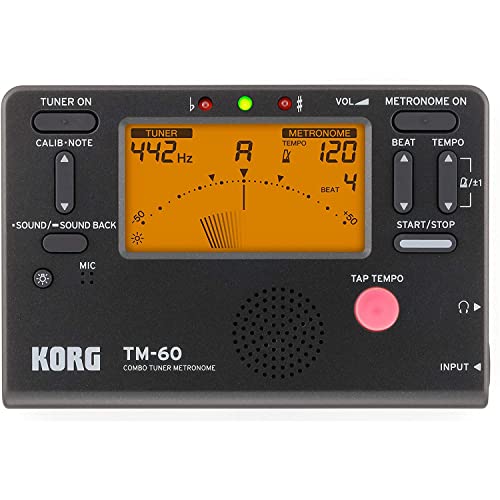
- High precision, simultaneous use tuner and metronome with instant pitch detection response with Korg technology.
- 2-in-1 Tuner & Metronome; the TM60’s wide tuner detection range of C1-C8 supports a broad range of instruments, and the metronome boasts 15 rhythm variations and 3 types of tempo settings.
The KORG TM60BK is a completely different beast than the Wittner 804K Metronome. It is a digital, battery-powered unit that includes a built-in tuner. While it offers features like tap-tempo and a variety of rhythm patterns, it lacks the visual pendulum that makes the Wittner so valuable for anticipation. This Korg is the better choice for orchestral musicians who need to tune on the fly or those who need a silent, visual-only mode. However, for a stationary piano or a dedicated practice room, it lacks the soul and the intuitive visual feedback of the mechanical Wittner.
2. Donner DPM-1 Mechanical Metronome for Musicians

- 【INCREDIBLE FEATURES】: Suitable for practicing any musical instrument. It can make up 40 to 208 beats per minute, and the beat selection is 0, 2, 3, 4, 6. It has a tempo tolerance of 1% and a beat...
- 【LEARN MUSIC WITH EASE】: It is an important tool for learning music. It can provide a loud sound during practice to help learners keep track of the rhythm, allowing learners to accurately grasp...
The Donner DPM-1 is a budget-friendly alternative to the Wittner 804K Metronome. It also features a mechanical wind-up design and a wood-grain plastic finish. However, in our experience, the build quality of the Wittner is significantly higher. The Donner often features a bell to mark the downbeat, which the Wittner 804K lacks, but the timing accuracy and spring longevity of the Wittner are generally superior. If you are on a tight budget, the Donner is a functional tool, but for long-term durability and consistent BPM, the Wittner is the better investment.
3. Wittner Metronome (865061)

- Tempo range: 40-208 beats per minute
- Beat indication: Click sound and light
The Wittner 865061 is essentially the “black” version of the 804K. It features the same internal German engineering and plastic casing but in a sleek, polished black finish. The choice between this and the 804K is purely aesthetic. If you have an ebony-polished piano, the 865061 might blend in more seamlessly, whereas the 804K’s walnut finish looks stunning on traditional wood-finished instruments. Both offer the same 40-208 BPM range and the same legendary reliability that we’ve come to expect from the brand.
Final Verdict: Should You Bring the Wittner 804K Into Your Home?
After hours of testing and comparing it with both old-school vintage models and modern digital gadgets, our verdict is clear: the Wittner 804K Metronome is a top-tier choice for any serious musician. Its strengths lie in its rock-solid timing, its incredible 45-minute runtime, and its beautiful (albeit plastic) aesthetic. While it lacks a bell for time signatures and some may miss the deep resonance of real wood, these are minor trade-offs for a device that is as durable as it is accurate. It solves the “digital fatigue” problem by providing a warm, mechanical sound and a visual pendulum that truly aids in musical phrasing.
If you are looking to elevate your practice sessions and move away from the chirping of your phone, I highly suggest you add the Wittner 804K Metronome to your studio. It is a piece of German engineering that will likely outlast your instrument itself. Whether you’re a teacher looking for a steady beat for your students or a pianist perfecting a difficult concerto, this is the pulse you can trust. Stop guessing your tempo and start feeling it with this timeless classic.
Last update on 2026-09-30 / Affiliate links / Images from Amazon Product Advertising API