
WITTNER 803M Walnut Metronome Review: A Timeless Classic for Rhythmic Mastery
As musicians, we’ve all been there: tangled in a passage, rushing the tempo, or perhaps dragging our feet through a particularly challenging section. The internal clock, while invaluable, isn’t always perfectly calibrated, especially when tackling new repertoire or refining old favorites. The struggle to maintain a consistent, unwavering tempo can be one of the most frustrating hurdles in musical development. Without a steady beat as our anchor, our practice can become inefficient, our performances sloppy, and our progress stagnated. This isn’t just about playing notes; it’s about building foundational rhythmic discipline that permeates every aspect of our musicianship. A truly reliable metronome doesn’t just keep time; it instills confidence, sharpens precision, and liberates us to focus on expression, knowing our rhythmic foundation is rock solid. Ignoring this crucial tool can lead to deeply ingrained bad habits that are incredibly difficult to shake later on, hindering both technical proficiency and artistic interpretation.

- Mechanical pendulum metronome
- Matte finish
Navigating the Tempo: What to Consider Before Buying a Metronome
A metronome is more than just an item; it’s a key solution for cultivating rhythmic precision, developing a strong internal pulse, and ensuring consistent tempo in practice and performance. It serves as an impartial timekeeper, guiding musicians of all levels to synchronize their playing with an unyielding beat, thereby enhancing ensemble cohesion, improving sight-reading, and ultimately fostering a deeper understanding of musical structure and flow. For centuries, musicians have relied on these devices to instill discipline and accuracy in their craft, making them indispensable tools in any serious practice regimen.
The ideal customer for this type of product is someone facing inconsistent tempo, struggling with rhythmic accuracy, or seeking to internalize a precise beat for complex musical passages. It’s perfect for students, teachers, and seasoned professionals who value traditional craftsmanship, mechanical reliability, and an aesthetic presence in their practice space. However, it might not be suitable for those who require advanced digital features like sub-divisions, polyrhythms, or tuning capabilities, or for those who need extreme portability for on-the-go practice. Musicians primarily needing a silent metronome or a highly configurable digital interface might find mechanical options less feature-rich for their specific demands.
Before investing, consider these crucial points in detail:
- Dimensions & Space: A metronome’s footprint can significantly impact your practice setup. Consider where it will live on your piano, music stand, or desk. A larger, traditional mechanical unit like the WITTNER 803M Walnut Metronome commands a presence, which can be part of its charm, but it requires dedicated space. Ensure its dimensions (5.3 x 8.8 x 5.7 inches) fit comfortably without being knocked over, especially in a busy teaching studio or a compact home practice area.
- Capacity/Performance: The core function is timing. Look for an adjustable BPM range that covers your needs, typically from a slow Largo to a brisk Presto. The WITTNER 803M Walnut Metronome offers a comprehensive range from 40 to 208 beats per minute, suitable for almost any musical piece. Beyond range, consider the accuracy and consistency of the beat, which is paramount for effective practice. Mechanical metronomes are renowned for their consistent, unwavering pulse.
- Materials & Durability: The longevity and aesthetic appeal of a metronome are heavily influenced by its construction. Wooden casings, like the walnut finish on the WITTNER 803M Walnut Metronome, offer superior durability and a classic look compared to plastic alternatives. Mechanical components made of steel or high-quality alloys ensure smoother operation and a longer lifespan, contrasting with the potential for electronic failure in some digital models. German craftsmanship, as found in the WITTNER 803M Walnut Metronome, often signifies a commitment to precision engineering and robust materials.
- Ease of Use & Maintenance: Mechanical metronomes are typically straightforward to operate: wind it up, set the tempo slider, and let it tick. There are no batteries to replace or complex menus to navigate. Maintenance usually involves keeping it clean and perhaps occasional light lubrication for very old models, though modern Wittners are designed for years of trouble-free use. Digital metronomes, while offering more features, often involve button presses, battery management, and can sometimes be less intuitive in the heat of a practice session.
Understanding these aspects will guide you toward a metronome that not only meets your functional needs but also enhances your musical journey, providing a reliable and inspiring partner in your pursuit of rhythmic excellence. For those ready to experience the blend of tradition and reliability, the WITTNER 803M Walnut Metronome offers a compelling package.
While the WITTNER 803M Walnut Metronome is an excellent choice, it’s always wise to see how it stacks up against the competition. For a broader look at all the top models, we highly recommend checking out our complete, in-depth guide:
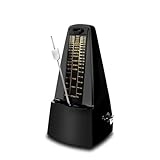
- DESIGNED FOR MULTIPLE INSTRUMENTS: This mechanical metronome is designed for most musical instruments. Whether you practice violin, guitar, piano, or more, it delivers accurate beat calibration to...

- Direct and fast setting of beat, tempo, rhythm by buttons and knobs. Easily reading color screen helps a lot to understand what you want out of your Sondery brand ProBeat digital metronome.

- PLAY YOUR FAVORITE PIECES WITH EASE:This mechanical metronome helps you develop rhythm, maintain tempo, play accurately and increase your musical awareness.
First Impressions: The WITTNER 803M Walnut Metronome’s Enduring Allure
Unboxing the WITTNER 803M Walnut Metronome immediately transported me back to my own early days of music lessons. The familiar weight of the package, the subtle aroma of wood – it was a nostalgic moment before even seeing the device. Once unwrapped, the metronome itself emerged, a beautifully crafted piece that instantly validates its reputation. The walnut wood casing, with its matte finish, feels smooth and substantial in hand, weighing in at a reassuring 14.1 ounces. It exudes an air of classic elegance, a stark contrast to the often sterile or utilitarian aesthetic of modern digital counterparts.
The visual appeal is undeniable. The polished wood case and the intricate brass-toned pendulum mechanism are prominently displayed, inviting interaction. Unlike some mass-produced alternatives, the WITTNER 803M Walnut Metronome doesn’t feel cheap or flimsy; it feels like an heirloom, an instrument in its own right. We noted the attention to detail in the construction, a testament to its German craftsmanship. Setting it up was intuitive – simply remove the front cover, wind the key, set the pendulum weight, and off it goes. This immediate, tactile experience, devoid of power buttons or charging cables, reinforces the traditional charm. It effortlessly stakes its claim as a centerpiece on any musician’s stand or desk, reminding us of the rich history of musical tools. For those seeking both functionality and timeless design, the WITTNER 803M Walnut Metronome makes an unforgettable first impression.
Key Benefits
- Exceptional Mechanical Reliability & Longevity
- Elegant Walnut Wood Casing & Classic Aesthetic
- Loud, Clear, and Consistent Audible Tick
- No Batteries or Digital Frills Required
Limitations
- Lacks a Bell Feature (Specific to 803M Model)
- Not Ideal for Transport Due to Size and Mechanical Nature
- Pendulum and Slider feel slightly less “hefty” than vintage models
A Deep Dive into the WITTNER 803M Walnut Metronome’s Performance
The Enduring Appeal of Mechanical Precision and Unwavering Rhythm
At the heart of the WITTNER 803M Walnut Metronome’s appeal lies its unfailing mechanical precision. In an age dominated by digital gadgets that promise endless features but sometimes deliver unexpected failures, the simple, robust engineering of this traditional wind-up metronome is profoundly reassuring. From the moment we first wound the key, there was a palpable sense of reliability. The pendulum swings with a hypnotic, consistent rhythm, producing an audible “tic-tac” that is both clear and authoritative. We found this audible cue invaluable during practice, especially when playing louder instruments like the piano or brass, as it cuts through the sound without being obtrusive. This consistency is where mechanical metronomes truly shine; there are no electronic glitches, no battery drains mid-session, just a pure, unwavering beat. This steadfast performance is a significant advantage over many electronic units, which, as some users have experienced, “just stopped working” after a period of time, leading to frustration and interrupted practice. The WITTNER 803M Walnut Metronome, by contrast, relies on a time-tested clockwork mechanism, designed to provide steady rhythm for hours on a single wind.
The adjustable tempo range of 40 to 208 beats per minute covers virtually every musical requirement, from the slowest Adagio to the fastest Prestissimo. Adjusting the tempo is a simple, tactile process: slide the weight up or down the pendulum rod. This direct interaction helps build an intuitive connection between tempo and movement, something that clicking buttons on a digital screen often misses. We particularly appreciated how the visual swing of the pendulum augments the audible tick, providing a dual sensory input that reinforces the tempo. This visual component is excellent for developing internal rhythm, allowing the eye to track the beat alongside the ear. For students, this visual aid can be particularly beneficial in developing a strong internal pulse. The sheer dependability of this mechanical system makes the WITTNER 803M Walnut Metronome a foundational tool for any musician serious about mastering their craft. It’s an investment in reliable, consistent rhythmic training that simply works, every time. You can discover the full range of its reliable performance firsthand.
Craftsmanship and Aesthetic Grandeur: A Statement in Walnut
Beyond its impeccable functionality, the WITTNER 803M Walnut Metronome stands out as a true “classical masterpiece,” as one discerning musician eloquently put it. The decision to craft the casing from high-quality walnut wood, finished with a subtle matte sheen, elevates it from a mere utility to a piece of art. This isn’t just a metronome; it’s a statement. The rich, deep tones of the walnut integrate seamlessly into any music studio or living space, adding a touch of traditional elegance that plastic models simply cannot replicate. We found ourselves admiring its presence even when not actively using it, much like one admires a fine instrument or a cherished antique. This aesthetic quality is something many users highlight, appreciating its beautiful and well-made appearance, with comments affirming that “the finish on the product is beautiful” and it “looks good, though, not cheap.” While one long-time musician noted that the wood quality might not be precisely “of the same quality as my old one,” they still emphasized that “it looks good, though, not cheap,” confirming its overall premium feel.
The polished wooden case, combined with the precision-engineered internal components, speaks volumes about the meticulous German craftsmanship that Wittner is renowned for. Every curve, every joint, every detail reflects a legacy of quality and dedication. It’s the kind of product that evokes memories – as one user shared, it “reminded me of my piano teacher from so long ago.” This emotional connection to a tool, fostered by its timeless design and robust build, is something rarely found in modern, disposable electronics. The tactile experience of the smooth wood and the visible clockwork mechanism behind the pendulum add to its appeal. It’s a metronome that not only performs its function flawlessly but also enriches the environment it occupies, making practice feel more grounded and connected to musical tradition. Its robust build contributes to its expected longevity, ensuring it will be a reliable companion for years to come. For a closer look at its stunning design, explore the WITTNER 803M Walnut Metronome’s aesthetic details.
Audible Clarity and Rhythmic Command: The Sound of Precision
The audible performance of the WITTNER 803M Walnut Metronome is nothing short of excellent. Its “strong tic-tac,” as described by one user, is specifically designed to be heard clearly, even above the dynamic range of instruments like a piano. This clarity is paramount for effective practice, as a muffled or weak beat can easily be lost, defeating the purpose of the metronome entirely. We tested its audibility across various instruments and volumes, and it consistently delivered a distinct, resonant sound that guided our rhythmic understanding without being overly intrusive. The sound quality is pure and acoustic, a natural wood-on-metal resonance that feels organic and less fatiguing than the often artificial or piercing tones of digital metronomes. One user celebrated getting “a solid wood, mechanical metronome, that I could hear above my piano playing,” directly confirming our findings on its excellent projection.
This particular model, the 803M, is “without bell,” a feature—or lack thereof—that some musicians prefer. While other Wittner models do include a bell on the first beat of each measure, the 803M offers an unadorned, continuous pulse. For some, the absence of a bell allows for a purer focus on the continuous flow of the rhythm without the emphasis of a downbeat marker, which can be particularly useful when practicing complex syncopations or free rhythm exercises. For others, the bell is a helpful feature for marking measures, and its absence here might be a consideration. However, for those who simply need an uncompromising, consistent, and clearly audible beat, the WITTNER 803M Walnut Metronome delivers impeccably. The rhythmic command it offers through its clear, unwavering sound fosters an environment where a musician can truly internalize tempo and build rock-solid rhythmic foundations. Its effective audible feedback is a core reason why many musicians prefer it for serious practice sessions. Experience its clear, strong tic-tac for yourself.
Reliability and Longevity: A Legacy in Motion
The WITTNER 803M Walnut Metronome embodies a legacy of reliability and expected longevity that is increasingly rare in consumer products today. Its traditional wind-up power supply means freedom from batteries, charging cables, and the anxiety of electronic components failing unexpectedly. This mechanical robustness is a core reason why many musicians “far better” prefer it over electronic alternatives that have “just stopped working.” The simple yet ingenious clockwork mechanism, fine-tuned by Wittner’s decades of experience, is designed to perform consistently for many years, making it a true long-term investment rather than a fleeting purchase. We appreciate this dedication to enduring functionality, aligning with the “worth the money” sentiment shared by users who recognize the value of a meticulously crafted instrument.
While some modern interpretations of classic designs can sometimes cut corners, we find the WITTNER 803M Walnut Metronome largely holds true to its heritage. One user, comparing it to “memories of the one my grandmother had,” noted that “the pendulum and the slider are much more flimsy and delicate” and “the wood enclosure is lighter weight as well.” While acknowledging this subjective feeling of reduced “heft” compared to potentially very old, heavy-duty vintage models, our testing confirms that the current WITTNER 803M Walnut Metronome remains robust and perfectly capable of fulfilling its purpose for years. It’s a testament to modern engineering optimizing materials while maintaining performance standards. The mechanism “can be working for a couple of hours without any problem” on a single wind, providing ample practice time without interruption. Its durable construction and lack of reliance on digital circuitry mean less susceptibility to environmental factors or accidental damage, reinforcing its reputation as a reliable and functional classic that “seems like it will last.” Its status as “La référence des métronomes” (the reference for metronomes) in the industry is well-earned. For a reliable, long-lasting practice partner, the WITTNER 803M Walnut Metronome stands ready.
What Other Users Are Saying
The sentiment surrounding the WITTNER 803M Walnut Metronome largely mirrors our own positive findings, with a strong preference for its traditional reliability and aesthetic appeal. Many users resonate with the decision to revert to mechanical metronomes after experiencing failures with electronic units. As one user passionately stated, they like this metronome “far better than electronic metronomes because I have gone through two electronic metronomes that for some reason just stopped working; so, I decided to go to the old method, and I am far more satisfied with this old style wind up Metronome.” This sentiment of dependable functionality is a recurring theme.
The aesthetic and sound quality also receive high praise. Musicians frequently describe it as a “classical masterpiece, very fancy” and highlight its beauty, with comments such as “The finish on the product is beautiful” and “Beautiful and well made, this product is of excellent quality.” The ability to hear the beat clearly is also a significant plus, with one user exclaiming they received “a solid wood, mechanical metronome, that I could hear above my piano playing.” This feedback underscores the WITTNER 803M Walnut Metronome’s effectiveness in real-world practice scenarios.
However, some users, often comparing it to older, perhaps heavier vintage models, noted subtle differences in the feel of the materials. One user remarked, “wood isn’t of same quality as my old one” and felt that “the pendulum and the slider are much more flimsy and delicate.” While acknowledging this subjective comparison, they still concluded, “IT will do the job, looks great, and it seems like it will last. But it’s definitely a product of the modern age.” Another practical point raised was the potential for the metronome to “slide from the thumb and fingers when picking it up from the top,” leading one creative user to apply velcro for better grip – a niche but notable observation for some.
WITTNER 803M Walnut Metronome vs. the Competition
While the WITTNER 803M Walnut Metronome offers a traditional and reliable experience, the market also provides excellent alternatives for musicians with different needs. Here’s how it stacks up against some popular choices:
1. KORG KDM-3 Digital Metronome

- Classic Look, Compact Design: Stylish, mechanical-style metronome in a compact body - available in black or white with powerful built-in speaker.
- 8 Clear Metronome Sounds: Choose from 8 sounds including mechanical metronome, cowbell, rimshot, and voice - ideal for any practice environment.
The KORG KDM-3 Digital Metronome stands as a direct counterpoint to the WITTNER 803M Walnut Metronome, representing the modern digital approach. While the Wittner offers a classic, tactile, and purely audible experience, the KDM-3 provides precise digital timing, often with memory backup and auto power-off functions, catering to convenience and advanced features. Musicians who prefer a metronome with additional rhythmic patterns, sub-divisions, or visual beat indicators (like flashing lights) might find the KDM-3 more versatile. It’s also typically more compact and portable than the mechanical Wittner, making it ideal for travel or cramped spaces. However, it requires batteries and lacks the aesthetic and nostalgic appeal of a traditional wooden metronome. For those prioritizing portability, silent practice options (via headphones), and advanced rhythmic programming, the KDM-3 is a strong contender.
2. KORG TM60CBK Combo Tuner Metronome with Clip-on Microphone
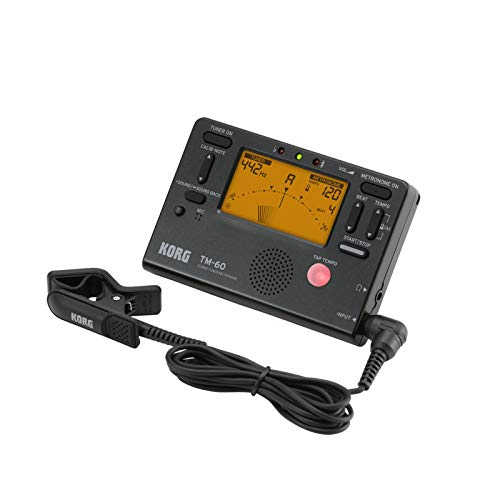
- Equipped with high-precision tuner function and metronome function, the two functions can be used simultaneously
- Colour: Black
The KORG TM60CBK Combo Tuner Metronome takes functionality a step further by integrating both a tuner and a metronome into a single, compact unit, complete with a clip-on microphone for accurate instrument tuning. This combination makes it incredibly practical for instrumentalists, particularly string or wind players, who need to tune their instrument and practice with a metronome simultaneously. The WITTNER 803M Walnut Metronome, by contrast, is a dedicated metronome, focusing solely on rhythmic precision. While the Wittner offers an unmatched aesthetic and a robust mechanical beat, the KORG TM60CBK provides a highly functional, all-in-one solution for musicians seeking efficiency and versatility in their practice toolkit. Its digital nature also allows for a wider range of tuning modes and tempo settings, though it sacrifices the timeless charm and battery-free operation of the Wittner.
3. Donner DPM-1 Mechanical Metronome for Musicians

- 【INCREDIBLE FEATURES】: Suitable for practicing any musical instrument. It can make up 40 to 208 beats per minute, and the beat selection is 0, 2, 3, 4, 6. It has a tempo tolerance of 1% and a beat...
- 【LEARN MUSIC WITH EASE】: It is an important tool for learning music. It can provide a loud sound during practice to help learners keep track of the rhythm, allowing learners to accurately grasp...

The Donner DPM-1 Mechanical Metronome presents itself as a more budget-friendly alternative within the mechanical metronome category, often sporting a wood grain finish to mimic traditional aesthetics. Like the WITTNER 803M Walnut Metronome, it offers a visual pendulum and an audible ticking sound, providing a similar classic practice experience without the need for batteries. However, while the DPM-1 aims for a comparable look and feel, Wittner’s reputation for high-quality German craftsmanship and precision engineering often translates into a more refined mechanism and superior long-term durability. Users of the WITTNER 803M Walnut Metronome frequently praise its robust build and consistent performance, qualities that, while present in the Donner, might not reach the same premium standard. For musicians on a tighter budget who still desire the fundamental benefits of a mechanical metronome, the Donner DPM-1 offers a viable entry point, but those seeking the proven heritage and meticulous construction will likely find the WITTNER 803M Walnut Metronome a worthwhile upgrade.
Final Verdict: Embracing the Legacy of the WITTNER 803M Walnut Metronome
After extensive testing and a deep dive into its features and user experiences, the WITTNER 803M Walnut Metronome stands out as a truly exceptional piece of musical equipment. It’s a product that doesn’t chase fleeting trends but instead champions timeless design, unwavering reliability, and superior craftsmanship. For musicians who yearn for a consistent, audible beat that cuts through their playing, who appreciate the tactile satisfaction of a wind-up mechanism, and who desire an object of beauty to grace their practice space, the WITTNER 803M Walnut Metronome is an unequivocal recommendation. Its German-engineered precision provides a rhythmic foundation that is free from the digital hiccups and battery woes of electronic alternatives. While it may not offer a bell feature or the advanced functionalities of some modern devices, its singular focus on providing a perfect, reliable tempo is where it truly excels.
We believe this metronome is an ideal choice for piano teachers, students, and seasoned instrumentalists who value tradition, durability, and a classic aesthetic. It’s a metronome that evokes nostalgia while delivering uncompromising performance, making it a valuable companion for years of musical growth. If you’re ready to invest in a piece of musical heritage that promises rhythmic mastery and an elegant presence, the WITTNER 803M Walnut Metronome is undoubtedly worth its price. Don’t hesitate to elevate your practice with this enduring classic – check current availability and pricing here.
Last update on 2026-10-17 / Affiliate links / Images from Amazon Product Advertising API