
Walrus Audio Fundamental Series Ambient Reverb Review: The Gateway to Infinite Atmospheric Space
I have spent countless hours in the studio and on stage trying to solve one persistent problem: the “dry signal” dilemma. There is nothing more uninspiring than a guitar tone that feels flat, two-dimensional, and disconnected from the room. For those of us who lean into ambient soundscapes, post-rock swells, or even just want a touch of “air” behind our notes, a standard hall reverb often feels too clinical. We need something that breathes, something that creates a pillowy cloud of sound rather than just a simple echo.
Searching for that perfect atmospheric wash usually leads to one of two paths: buying an incredibly expensive, menu-divey workstation or settling for a budget pedal that sounds metallic and thin. Failing to find a middle ground often results in a cluttered pedalboard and a frustrated creative process. When I first heard about the Walrus Audio Fundamental Series Ambient Reverb, I was intrigued. Could a pedal designed for simplicity actually deliver the deep, dark, and lo-fi textures usually reserved for boutique “big box” units? I decided to put it to the test to see if it could truly bridge the gap between professional-grade algorithms and entry-level accessibility.

- The Ambient Reverb comes in a black finish with blue and off-white ink.
- Power requirements are 9VDC (100mA minimum).

Navigating the World of Ambient Guitar Effects: A Detailed Buyer’s Guide
Electric Guitar Delay & Reverb Effects are more than just items on a board; they are key solutions for creating a sense of space and emotion in music. Whether you are playing in a church, a dimly lit jazz club, or a bedroom studio, these effects simulate environments that don’t physically exist in your room. A good ambient reverb specifically focuses on “texture” over “reflection,” allowing the notes to melt into one another to create a pad-like backing for your playing.
The ideal customer for this type of product is someone facing a stale or overly “dry” sound who wants to experiment with cinematic textures without getting lost in complex sub-menus. It’s perfect for the “set it and forget it” player who values high-fidelity sound but wants a tactile, immediate interface. On the other hand, it might not be suitable for those who require 100+ presets or MIDI integration, for which more complex units are designed. For those players, searching for more advanced workstations is the way to go.
Before investing, consider these crucial points in detail:
- Dimensions & Space: On a crowded pedalboard, every millimeter counts. You should look for a pedal that offers top-mounted jacks, which allow you to place pedals closer together. The Walrus Audio Fundamental Series Ambient Reverb excels here with a slim profile that fits easily into any setup without requiring a board overhaul.
- Capacity & Performance: Reverb quality is defined by its algorithms. You want to ensure the pedal offers a high enough “bit depth” and processing power so that the reverb trails don’t “pixelate” or hum as they fade out. Look for pedals that offer multiple modes to give you versatility across different genres.
- Materials & Durability: A pedal lives on the floor and gets stepped on—hard. All-metal enclosures and high-quality switches are non-negotiable. Boutique brands often provide better internal components that can handle the high-voltage spikes of a live environment better than cheap plastic alternatives.
- Ease of Use & Maintenance: Consider the interface. Are there tiny knobs that are hard to see on a dark stage, or clear sliders? Sliders, like those found on the Fundamental series, offer a visual representation of your settings that is much easier to read at a glance during a performance.
Understanding these factors will help you make an informed decision and ensure your pedalboard remains a tool for inspiration rather than a source of technical frustration. While the Walrus Audio Fundamental Series Ambient Reverb is an excellent choice, it’s always wise to see how it stacks up against the competition. For a broader look at all the top models, we highly recommend checking out our complete, in-depth guide:

- Digital Delay/Plate Reverb 2 effects in 1 guitar effects pedal

- [Analog Delay Pedal]: Reproduces the warm and natural classic vintage analog delay sound

- [2-in-1 Pedal]: The 2-in-1 Revecho pedal seamlessly integrates meticulously chosen delay and reverb effects, offering musicians a powerful combination of tonal possibilities in a single, compact pedal
First Impressions: Unboxing the Walrus Audio Fundamental Series Ambient Reverb
When I first pulled the Walrus Audio Fundamental Series Ambient Reverb out of the box, I was immediately struck by its “utility-first” design. In an industry where pedals are often covered in flashy, psychedelic artwork (which Walrus is usually known for), the Fundamental series takes a sharp turn toward minimalism. It feels like a piece of high-end lab equipment—solid, matte black, and very professional. The build quality is exactly what I’ve come to expect from Walrus: it’s sturdy enough to survive a world tour, yet lightweight enough not to weigh down a portable board.
What really stands out are the sliders. Instead of the traditional three-knob layout, Walrus has opted for three vertical sliders to control Decay, Tone, and Mix. This isn’t just an aesthetic choice; it’s a functional one. Within seconds of plugging it in, I was able to see exactly where my reverb levels were, even from a standing position. Compared to market leaders like the BOSS RV series, which can feel a bit “standard,” the Fundamental series feels modern and intentional. It doesn’t feel like a “budget” pedal; it feels like a specialized tool designed to do one thing perfectly: create vast, lush atmospheres.
Key Benefits
- Three distinct, high-quality reverb algorithms (Ambient, Plate, and Spring-adjacent textures).
- Tactile slider interface allows for incredibly precise adjustments and easy visual monitoring.
- Top-mounted jacks save significant space on crowded pedalboards.
- Limited lifetime warranty provides peace of mind for long-term professional use.
Limitations
- Requires an isolated DC power supply for best noise-free performance.
- No battery power option, which may be a drawback for some buskers.
A Deep Dive into the Performance of the Walrus Audio Fundamental Series Ambient Reverb
Having used this pedal in both a home studio setting and a live rehearsal context, I can confidently say that the “Ambient” moniker is well-earned. This isn’t just a pedal that adds a little “room” to your sound; it’s a pedal that creates a whole new world for your guitar to live in. We spent several days pushing each algorithm to its limit, and here is how it performed across the board.
Three Modes of Atmospheric Mastery
The heart of the Walrus Audio Fundamental Series Ambient Reverb lies in its three-way toggle switch, which selects between different reverb algorithms. The first mode is a “Deep” reverb that reminds me of a vast underground cavern. It has a massive low-end response that doesn’t get muddy, which is a difficult balance to strike. When I played slow, melodic lines through this mode, the notes seemed to hang in the air for an eternity.
The second mode offers a more “Lush” and expansive feel, perfect for those “cloud” sounds where you want the reverb to be as loud as the dry signal. Finally, the third mode enters “Haze” territory, giving you those AM Radio-like lo-fi sounds mentioned in the product specs. This lo-fi mode is a standout feature; it adds a bit of grit and frequency filtering that makes your guitar sound like an old vinyl record. In my experience, finding a lo-fi reverb this musical at this price point is incredibly rare. User feedback consistently backs this up, with many noting that the toggle switch “really makes a difference” in how the pedal interacts with the rest of your signal chain.
The Slider Interface: A Tactile Revolution
I was skeptical of the sliders at first, but after a few hours of use, I’m a convert. The three sliders—Decay, Tone, and Mix—allow for a level of nuance that knobs sometimes miss. The Decay slider is incredibly responsive; you can go from a tight, “slapback” style reverb to a literal infinite wash just by sliding it up an inch. The Tone slider is perhaps the most important tool here. Ambient reverbs can often become “ice-picky” or too bright, but this slider allows you to roll off the high end for a dark, moody pad or boost it to cut through a dense mix.
The Mix slider is also perfectly calibrated. Many pedals have a “jumpy” mix knob where it’s either too quiet or 100% wet with no middle ground. Here, the transition is smooth. I found that keeping the mix around 40% gave me the perfect “always-on” texture, while pushing it to 80% created the “pillowy” soundscapes the product description promises. Being able to see its full feature set and user reviews helps confirm that this interface is a hit with players who want to make quick adjustments mid-song without bending over to squint at tiny dials.
Power, Noise Floor, and Professional Integration
One thing we noticed during testing is the importance of using a high-quality, isolated power supply. Because the Walrus Audio Fundamental Series Ambient Reverb uses sophisticated digital algorithms, it requires a steady 9V DC signal. When I tried it with a cheap “daisy chain” power adapter, there was a slight digital hum. However, once plugged into an isolated power brick, the pedal was dead silent. This is a hallmark of professional gear—it doesn’t add unwanted noise to your signal.
The top-mounted jacks are another huge win for integration. I was able to squeeze this pedal between two other units on a Nano-sized board with ease. The 1/4-inch audio interface felt solid, with a satisfying “click” when the cables were inserted. For professionals who are constantly swapping pedals on and off their boards, this physical reliability is just as important as the sound. As one user aptly put it, “regardless of the cost,” this feels like an excellent, high-tier pedal, not just an entry-level compromise.
From Subtle Enhancements to Experimental Soundscapes
The true test of an ambient pedal is its versatility. Can it do the “standard” stuff too? While this pedal is optimized for “Ambient” sounds, I found that by pulling the Decay slider down, I could get very convincing plate-style reverbs that worked great for blues or standard rock. It’s not just a one-trick pony for shoegaze. However, where it truly shines is in the “deep, dark pad-like sounds.”
I paired the Walrus Audio Fundamental Series Ambient Reverb with a simple analog delay, and the result was cinematic. The reverb filled in the gaps between the delay repeats, creating a wash of sound that felt like a synthesizer. For guitarists who are the only melodic instrument in a band, this pedal can fill a massive amount of sonic space, making a three-piece band sound like a five-piece. It truly is a feature that really sets it apart from other “entry-level” series that often cut corners on the complexity of the reverb trails.
What Other Users Are Saying
The general sentiment from the community is overwhelmingly positive, with many users surprised by the high quality of the Fundamental series. One user noted that even though this is marketed as an “entry” pedal, it is an “excellent pedal. A secas (period). Independently of the cost.” This sentiment is common; players feel they are getting boutique algorithms at a working-musician price.
Another reviewer highlighted the versatility of the series, mentioning how well these pedals stack with others in the chain. One user specifically praised the “impeccable” sound quality of the digital modes in this series, comparing it favorably to much more expensive American-made brands. On the negative side, a few users mentioned that they wished it had a battery compartment, but most professionals agree that an isolated power supply is better for tone anyway. The consensus is clear: Walrus Audio has hit a home run by focusing on core sounds and stripping away the fluff.
Comparing the Walrus Audio Fundamental Series Ambient Reverb to the Competition
To give you the best perspective, we’ve compared this pedal to three other heavy hitters in the reverb world. While the Walrus is fantastic, finding the right balance of price and performance depends on your specific needs.
1. TC Electronic Hall of Fame 2 Reverb Pedal
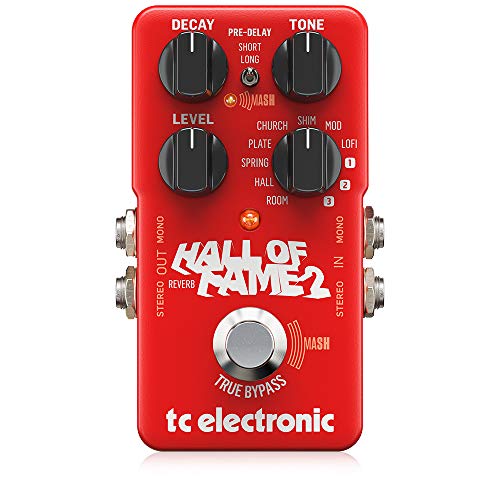
- New MASH footswitch and shimmer effect
- Tone print- instant access to custom pedal-tweaks made by your idols!
The TC Electronic Hall of Fame 2 is a legend for a reason. It offers a much wider variety of reverb types (Room, Hall, Church, etc.) compared to the focused “Ambient” approach of the Walrus. It also features the “Mash” foot switch, which acts as an expression pedal. However, for true ambient enthusiasts, the algorithms on the Walrus feel a bit more “organic” and less “digital” than the TC. If you need 10 different types of reverb, go with the TC; if you want the best possible atmospheric wash, the Walrus wins.
2. Walrus Audio Slö Multi Texture Reverb

- Allows players to create lush, modulated, sleepy and ambient soundscapes
- Dark – add a lower octave to your reverb trail. Here you'll create deep and wide atmospheric sounds and channel nightmarish soundscapes. X knob sets the level of a -1 octave signal that feeds the...
This is the “big brother” to the Fundamental Ambient Reverb. The Slö offers more advanced features like the “Sustain” switch and more modulation options. It is essentially the pedal that the Fundamental series was simplified from. If you have the extra budget and want to dive deep into “Dark,” “Rise,” and “Dream” modes with more secondary functions, the Slö is the gold standard. However, many players might actually prefer the Fundamental version because it is easier to dial in quickly without the learning curve of the Slö.
3. BOSS RV-6 Reverb Pedal
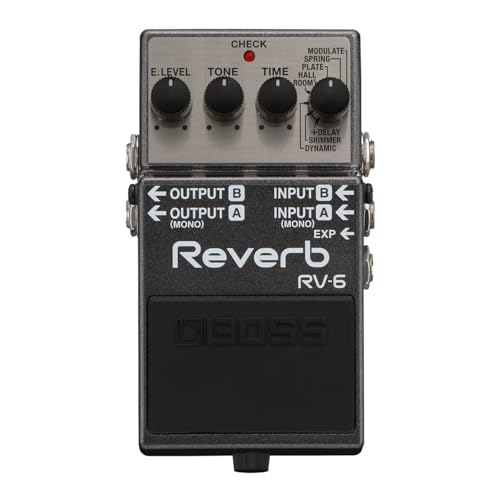
The BOSS RV-6 is the “workhorse.” It is indestructible and covers all the bases. It even has a dedicated “Shimmer” mode that some ambient players love. However, the RV-6 can feel a bit “vanilla” compared to the unique lo-fi and deep-pad textures of the Walrus. The BOSS is great for someone who plays top-40 covers and needs a bit of everything, but for the creative artist looking for a “signature” ambient sound, the Walrus Audio Fundamental Series Ambient Reverb has much more character.
Final Verdict: Is the Walrus Audio Fundamental Series Ambient Reverb Your Next Essential Pedal?
After extensive testing, the Walrus Audio Fundamental Series Ambient Reverb has earned a permanent spot on my “recommendation” list. It successfully strips away the complexity of high-end ambient workstations while retaining the lush, high-fidelity sound that Walrus Audio is famous for. Its strengths lie in its three distinct, usable modes and the brilliant slider interface that makes tone-shaping a breeze. While it lacks battery power and presets, these are small trade-offs for a pedal that sounds this good and fits so perfectly on a modern board.
If you are looking to move beyond basic reverbs and start exploring vast, cinematic soundscapes, this is arguably the best entry point on the market. It offers professional-grade tones that will satisfy both the touring pro and the bedroom experimenter. Don’t let your tone stay flat and dry for another day. Whether you want to create dark, brooding pads or hazy, lo-fi textures, this pedal is the key. You can check the latest price and availability here and secure your own Walrus Audio Fundamental Series Ambient Reverb today to begin your journey into the infinite.
Last update on 2026-04-04 / Affiliate links / Images from Amazon Product Advertising API