
Walrus Audio Canvas Power Supply HP Review: The High-Current Hero for Modern Digital Pedalboards
If you have ever spent hours meticulously crafting a signal chain only to have it ruined by a persistent hum or a digital modeler that randomly reboots, you know the frustration of inadequate power. In the modern era of guitar gear, we aren’t just dealing with simple analog overdrives anymore; we are running sophisticated digital multi-effects, high-current IR loaders, and power-hungry modelers. These units demand massive amounts of clean, isolated current that traditional power supplies simply cannot provide. We found ourselves constantly juggling multiple wall-warts or worrying about whether our power supply could handle the surge of a Quad Cortex or a Line 6 HX Stomp. The search for a single, slim, and ultra-powerful solution is what led us to evaluate the Walrus Audio Canvas Power Supply HP. Solving this power bottleneck is crucial because without stable current, your expensive digital effects will never reach their full sonic potential, and in the worst-case scenario, you risk hardware failure during a live performance.
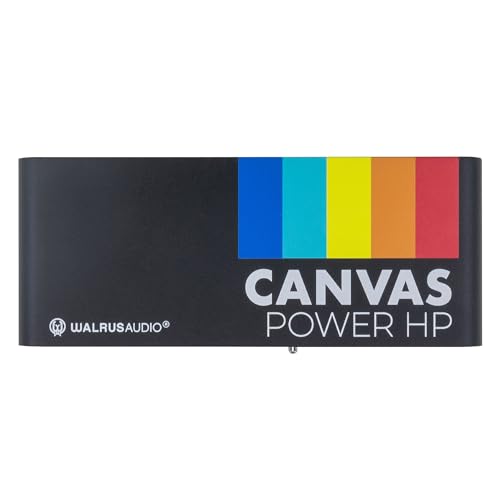
- 3 Isolated Power Outputs delivering up to 500mA of clean power at 9v
- One 3A isolated output with selectable 9 or 18V

Choosing the Right Power Solution for Electric Guitar Multieffects
An Electric Guitar Multieffects power solution is more than just an item; it’s a key solution for maintaining the integrity of your tone and the reliability of your performance. For anyone moving into the world of digital modeling and complex DSP-based effects, the power supply becomes the literal foundation of the rig. We’ve seen countless musicians invest thousands in “best-of-class” pedals only to choke them with cheap, daisy-chained power cables. A dedicated high-performance supply ensures that each pedal operates at its intended voltage without noise interference from its neighbors, which is essential when you are mixing digital and analog components in a single chain.
The ideal customer for this type of product is someone facing the specific challenge of powering high-draw units like the Neural DSP Quad Cortex, the Line 6 Helix family, or the Kemper Player, while it might not be suitable for those who only use a handful of low-draw analog pedals. If your board consists of three classic Boss pedals, this level of power is likely overkill, and you might consider more compact, lower-output alternatives. However, for the modern “hybrid” board enthusiast, this is a game-changer. Before you commit, you should see its full feature set and user reviews to ensure it fits your specific amperage requirements.
Before investing, consider these crucial points in detail:
- Dimensions & Space: Modern pedalboards are crowded real estate. You need a supply that is slim enough to mount underneath low-profile boards like the Pedaltrain Nano or Metro series. Look for a height of around one inch to ensure maximum compatibility.
- Capacity/Performance: Always check the “mA” (milliamp) rating. High-performance digital pedals often require 500mA to 3000mA. The Walrus Audio Canvas Power Supply HP is specifically designed to handle these “HP” (High Power) requirements with a dedicated 3A output.
- Materials & Durability: A power supply lives in a harsh environment. It needs a rugged aluminum chassis to dissipate heat effectively and withstand the rigors of touring. Avoid plastic-housed units that can crack or overheat under heavy load.
- Ease of Use & Maintenance: Look for features like LED status indicators for each output. This allows you to troubleshoot a faulty cable or a short circuit instantly during a soundcheck without having to flip your entire board over.
Choosing the right power architecture is the first step toward a professional-sounding rig. While the Walrus Audio Canvas Power Supply HP is an excellent choice, it’s always wise to see how it stacks up against the competition. For a broader look at all the top models, we highly recommend checking out our complete, in-depth guide:
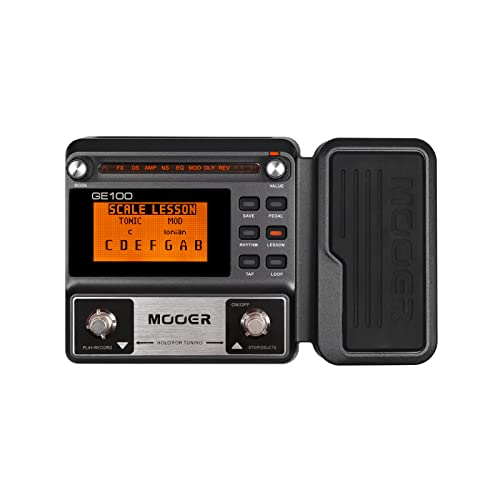
- 80 preset patches and 80 user patches, enough for creating your sound library. You can save any preferred tones by simply pressing down the SAVE button.

- GE150 Pro Series, is designed based on MOOER’s updated GE series design language and MNRS modelling technology. Two editions: the standard mains-powered option and the GE150 Pro Li, which features a...
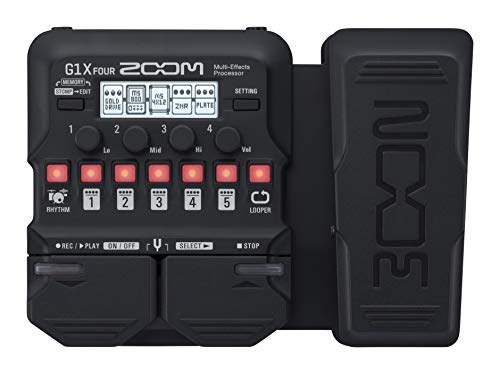
- 71 built-in guitar effects and 13 amp models
First Impressions: The Sleek Utility of the Walrus Audio Canvas Power Supply HP
Unboxing the Walrus Audio Canvas Power Supply HP immediately signals that this is a professional-grade tool. Walrus Audio has moved away from the bulky, heavy transformers of the past and embraced a modern, switch-mode architecture. The first thing we noticed was the incredible slimness—at just over an inch tall, it feels remarkably light yet sturdy in the hand. The finish is a clean, industrial aesthetic that matches the rest of the Canvas line, and it includes a generous assortment of cables, including the necessary 2.5mm adapters for high-current modelers. You can check the latest price and availability to see how this fits into your current build budget.
Initial setup was a breeze thanks to the included universal mounting brackets. Unlike some competitors that require proprietary drilling or expensive extra kits, the Walrus Audio Canvas Power Supply HP feels designed for the “everyman” board. Comparing it to market leaders like the Strymon Zuma or the CIOKS DC7, the Walrus stands out because of its specific focus on that massive 3A output. While other supplies might offer many 500mA ports, few offer a single port capable of 3000mA, which is a specific requirement for the most demanding multi-effects on the market today.
Key Benefits
- Massive 3A (3000mA) isolated output for high-draw modelers.
- Ultra-slim profile (1.18 inches) fits under almost any pedalboard.
- Built-in LED power meter to monitor total consumption in real-time.
- Linkable design allows for easy expansion as your gear collection grows.
Drawbacks
- Only features four total outputs, which may require daisy-chaining for larger boards.
- The 24V power brick is external, which some users find cumbersome to mount.
A Deep Dive into the Performance of the Walrus Audio Canvas Power Supply HP
The 3A Powerhouse: Driving the Big Engines
The standout feature of the Walrus Audio Canvas Power Supply HP is undoubtedly its high-current capability. In our testing, we focused heavily on the 3A (3000mA) output. Most standard isolated power supplies top out at 500mA per port. While 500mA is plenty for a BigSky or a TimeLine, it is insufficient for a Neural DSP Quad Cortex or a full-sized Line 6 Helix. Traditionally, players had to use the bulky factory “wall-wart” power supply that came with those units, often zip-tying it to the bottom of their board in a messy fashion. We found that the Walrus Audio Canvas Power Supply HP eliminates this need entirely. It powered our high-draw digital units with absolute ease, providing a stable, selection of either 9V or 18V for that specific port. The 9V setting delivered the exact current needed for our modeler to boot quickly and run without a single glitch or unexpected noise floor increase. It is truly a feature that really sets it apart from the sea of standard power supplies available today.
Visual Intelligence: The Integrated Power Meter
One of the most innovative additions to this unit is the LED power meter. In our professional experience, most power supply failures or noise issues come from “red-lining” the supply—drawing more current than the unit can safely provide. With the Walrus Audio Canvas Power Supply HP, the guess-work is gone. We observed the meter as we engaged different effects; it provides a clear visual representation of how much headroom remains. This is a massive psychological benefit for the gigging musician. Knowing that you are only using 60% of your available power gives you the confidence that your rig won’t sag or fail during a heated set. Each of the three 500mA outputs also features its own status LED, which we found incredibly helpful for quickly diagnosing a cable that wasn’t fully seated. This level of visual feedback is rarely seen in units of this size and price point, making it a highly sophisticated tool for the modern stage.
Silent Operation: Modern Switch-Mode Architecture
Noise is the enemy of every guitar player, especially when using high-gain amps or digital modelers that can amplify any interference in the power line. We were particularly impressed by the low noise floor of the Walrus Audio Canvas Power Supply HP. By utilizing a modern switch-mode architecture, Walrus Audio has managed to minimize the electromagnetic interference (EMI) that often plagues older, linear transformer-based supplies. During our evaluation, we placed the unit directly underneath a wah pedal—a notorious “noise-sucker”—and were delighted to find zero introduced hum. This efficiency also means the unit generates very little heat. Even after four hours of continuous use powering a full board, the chassis was only slightly warm to the touch. This efficiency is a testament to the engineering behind the product, ensuring that your delicate digital circuits are fed clean, consistent power without the thermal stress that can shorten the lifespan of your gear.
Versatility and Expansion: The Canvas Ecosystem
While the Walrus Audio Canvas Power Supply HP only has four outputs, its design philosophy is centered on “quality over quantity.” However, Walrus cleverly addressed the needs of players with larger boards through its linkable architecture. We found the 24V link port to be a fantastic inclusion. It allows you to daisy-chain additional Canvas Power units, such as the Canvas Power 5 or 8, without needing a second wall outlet. This modular approach is brilliant. We started with the HP to power our main modeler and a couple of high-draw delays, and as we added more analog drives, we simply linked a smaller unit to handle the extra ports. To understand why this flexibility is so valuable, you should view the technical specifications for the linking system. It turns your power supply into a scalable ecosystem rather than a static box that you’ll eventually outgrow.
What Other Users Are Saying
The general sentiment among users who have integrated the Walrus Audio Canvas Power Supply HP into their rigs is overwhelmingly positive. One user described it as “an awesome product,” emphasizing how it finally allowed them to ditch the multiple power bricks they were using for their hybrid digital/analog board. We found that many professional touring guitarists have highlighted the slim profile as the deciding factor, noting that it fits where even the most popular competitors cannot. Some minor feedback from the community mentions the desire for more outputs on a single unit, but most acknowledge that the high-current trade-off is worth it for their specific needs. Overall, the consensus confirms our findings: it is a reliable, noise-free powerhouse that solves a very specific, modern problem with elegance and high-end engineering.
Comparing the Walrus Audio Canvas Power Supply HP to Top Multi-Effects Alternatives
While the Walrus Audio Canvas Power Supply HP is a power supply designed to support a rig, many guitarists looking at high-end power are also considering whether they should just buy an all-in-one multi-effects unit that manages its own power. If you haven’t yet committed to a dedicated modeler, or if you are looking to simplify your entire setup, these alternatives are the top contenders in the Electric Guitar Multieffects space.
1. Valeton GP-200 Multi-Effects Guitar Pedal with Expression
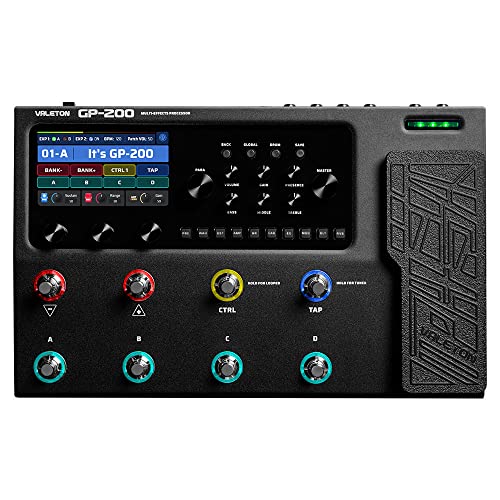
- The Multi Effects Processor Has 240+ Built-in Guitar/Bass/Acoustic Effects with 140 Legendary Amplifiers&Cabinets Simulations and 100 Renowned Stompbox Effect Pedals; Supporting 20 3rd Party IRs...
- 100 Built-in Drum Rhythms and 180 Seconds Looper, 256 Presets, Equipped with the New-Gen HD Modeling Technology On this Multi Effects Pedal, Adjustable Signal Chain with Maximum 11 Simultaneous Effect...
The Valeton GP-200 is a comprehensive multi-effects processor that offers an incredible array of amp modeling and IR simulations. Unlike the Walrus Audio power supply, which is a support tool, the GP-200 is the heart of the rig. We found that for players who want everything in one box—MIDI, expression pedal, and a huge library of effects—the GP-200 is an outstanding value. However, if you already have a collection of boutique pedals that you love, the GP-200 might feel restrictive. You would choose this if you want to eliminate the need for a complex pedalboard and a high-end power supply like the Walrus entirely.
2. Valeton GP-100 Guitar Multi-Effects with Expression Pedal

- 140 Built-in Guitar/Bass/Acoustic Effects with 45 Legendary Amp Models and 40 carefully selected IR Cabinet Simulations, 24-bit 44.1kHz Signal Processing
- 100 Built-in Drum Rhythms and 90 Seconds Looper, 198 Presets, Adjustable Signal Chain with Maximum 9 Simultaneous Effect Blocks
For the budget-conscious musician or someone looking for a portable practice rig, the Valeton GP-100 is a fantastic entry point. It provides a surprisingly high-quality sound engine in a tiny footprint. In comparison to the Walrus Audio Canvas Power Supply HP, the GP-100 is a much simpler solution. While it won’t power your other pedals, it serves as a great “grab-and-go” unit. We recommend the GP-100 for beginners or as a backup rig, whereas the Walrus power supply is aimed at the serious professional building a permanent, high-fidelity pedalboard.
3. Donner Arena 2000 Guitar Multi-Effects Pedal

- [Rich and Delicate Sound] With FAVCM technology and high-precision 24 bit/44.1 kHz audio processing, Arena2000 Multieffects Processors greatly reduce the "plastic taste" of the digital effect, making...
- [278 Effect Types] 100 classic effect simulations, 80 amp simulations, and 50 cabinet simulations, which provide a wide range of legendary guitar tones from music history. Whether it's fresh urban pop...
The Donner Arena 2000 sits in the middle of the pack, offering a robust set of 278 effects and XLR outputs for direct recording or live performance. It’s a versatile unit that competes well with the Valeton series. When comparing it to the utility of the Walrus Audio Canvas Power Supply HP, the choice comes down to your philosophy of gear. If you are a “pedalboard purist” who wants to curate every single sound with individual stompboxes, the Walrus is your best friend. If you want a digital powerhouse that does it all for a fraction of the cost of a boutique board, the Donner Arena 2000 is a very compelling alternative.
The Final Verdict: Is the Walrus Audio Canvas Power Supply HP Right for You?
After putting it through its paces, we can confidently say that the Walrus Audio Canvas Power Supply HP is a specialized, top-tier solution for a very modern problem. Its ability to deliver 3A of clean, isolated power in such a slim form factor makes it an essential tool for anyone running high-current modelers alongside their favorite effects. While the limited number of outputs might be a hurdle for some, the linkability and the sheer quality of the power provided more than make up for it. It is rugged, silent, and visually intuitive thanks to the clever power meter.
If you are tired of dealing with bulky adapters and the constant fear of under-powering your expensive digital gear, this is the investment your rig deserves. We highly recommend it for professional gigging musicians and home studio enthusiasts alike who demand the absolute best in power stability. Don’t let a cheap power supply be the weak link in your signal chain—take the next step and check the latest price and availability to upgrade your pedalboard today.
Last update on 2026-04-04 / Affiliate links / Images from Amazon Product Advertising API