
Vincent Bach Cornet Mouthpiece Review: Precision Engineering for the Discerning Cornetist
If you have ever spent three hours in a brass band rehearsal only to find your embouchure feels like it has been through a meat grinder, you are not alone. As cornet players, we face a unique challenge. Unlike our trumpet-playing cousins, we are often asked to provide a warmer, more lyrical tone while maintaining the agility to navigate lightning-fast technical passages. Finding a mouthpiece that balances these needs is a journey fraught with trial and error. I have spent years swapping out mouthpieces, searching for that elusive combination of comfort and brilliance. We have found that the wrong equipment doesn’t just hurt your face; it limits your musical expression, causing tuning issues and stifling your range. Choosing the Vincent Bach Cornet Mouthpiece is often the turning point for serious musicians who are tired of fighting their equipment. When you finally find a mouthpiece that works with you rather than against you, the entire instrument opens up, allowing you to focus on the music rather than the mechanics of producing a sound.
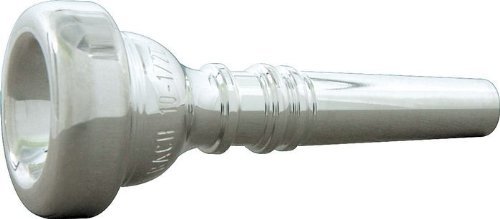
- Cup Diameter: 15.75mm
- Package Dimensions: 3.81 H x 7.62 L x 3.81 W (centimetres)
What to Consider Before Buying a Cornet Mouthpiece
A Cornet Mouthpiece is more than just a piece of silver-plated brass; it’s the primary interface between the musician and the instrument, serving as a key solution for tonal control, range extension, and endurance. Without the right mouthpiece, even the most expensive cornet will sound dull or be nearly impossible to play in tune. The mouthpiece dictates the shape of the air column and how your lips vibrate, making it the most critical accessory in your kit.
The ideal customer for this type of product is a professional musician or a serious student who is facing issues with endurance or needs a more specialized rim for comfort, while it might not be suitable for those who are absolute beginners and haven’t yet developed a stable embouchure. Advanced players often look for specific “CW” (Cushion Wide) rims to help mitigate the pressure of long performances. If you are looking for a massive, orchestral sound, you might consider a deeper “A” cup, but for those needing a balance of brilliance and comfort, the Vincent Bach Cornet Mouthpiece in the 10¾ CW configuration is a formidable contender.
Before investing, consider these crucial points in detail:
- Dimensions & Rim Shape: The rim is the part that touches your lips. A “Cushion Wide” rim, like the one found on this Vincent Bach Cornet Mouthpiece, provides more surface area, which can significantly reduce fatigue during long sets. You should look for a rim that doesn’t “cut” into your tissue but provides enough grip for security.
- Cup Diameter and Depth: With a diameter of 15.75mm, this is a medium-small mouthpiece. A smaller diameter can help with high-register stability, while the medium cup depth ensures you don’t lose the characteristic cornet warmth. You must decide if you prioritize high-note “zing” or low-register “woof.”
- Materials & Durability: Most professional mouthpieces are silver-plated brass. Silver is preferred for its “slippery” feel when wet and its antimicrobial properties. We have found that high-quality plating, such as that found on Bach products, lasts for decades without pitting if properly maintained.
- Ease of Playability & Maintenance: A good mouthpiece should facilitate easy articulation. You should look for a backbore and throat that offer the right amount of resistance. Maintenance is simple—a regular scrub with a mouthpiece brush and mild soap is all that’s required to keep your Vincent Bach Cornet Mouthpiece in top condition.
Once you understand these technical nuances, you can appreciate why specific models become legendary in the brass world. While the Vincent Bach Cornet Mouthpiece is an excellent choice, it’s always wise to see how it stacks up against the competition. For a broader look at all the top models, we highly recommend checking out our complete, in-depth guide:

- INSTRUMENT FIT: Designed for cornet applications, providing a defined fit for compatible instruments. Compatible with Blessing, Yamaha, Conn, Bach, Schilke, Jupiter and most other brands of cornets.


- INSTRUMENT FIT: Designed as a 3C mouthpiece for cornet applications. Compatible with Blessing, Yamaha, Conn, Bach, Schilke, Jupiter and most other brands of cornets.

First Impressions: Unboxing the Vincent Bach Cornet Mouthpiece
When we first held the Vincent Bach Cornet Mouthpiece, the quality of the American craftsmanship was immediately apparent. It has a reassuring weight—roughly 1.6 ounces—that speaks to its solid brass construction. The silver plating is flawless, reflecting like a mirror, which is exactly what we expect from the Vincent Bach factory in Elkhart, Indiana. Before you even put it to your lips, you can see its full feature set and user reviews which highlight its consistent manufacturing standards.
Comparing it to some of the entry-level mouthpieces that come standard with intermediate cornets, the 10¾ CW feels more substantial. The “CW” rim is noticeably wider and flatter than a standard 10¾ C. In our initial testing, the fit into the leadpipe was perfect—snug and secure, ensuring no air leaks. It doesn’t require any complex assembly, but the difference in feel compared to a standard rim is immediate. It feels like your lips are being supported by a wider “shelf,” which is a hallmark of the Bach design philosophy. It’s a specialized tool for a specific type of player, and it wears its professional pedigree on its sleeve.
Key Benefits
- Exceptional rim comfort thanks to the Cushion Wide (CW) design.
- Brilliant, clear tone that cuts through without being “shouty.”
- High-quality silver plating that stands the test of time.
- Precise 15.75mm diameter helps with upper register endurance.
Limitations
- The 15.75mm diameter may feel too small for players used to a Bach 3C or 1.5C.
- Specific “CW” rim might take a few days for your embouchure to adjust.
Deep Dive: A Performance Analysis of the Vincent Bach Cornet Mouthpiece
The “CW” Advantage: Rim Comfort and Endurance
The standout feature of the Vincent Bach Cornet Mouthpiece is undoubtedly the “Cushion Wide” rim. In our extensive testing sessions, which often exceeded two hours of continuous playing, the difference this rim makes is profound. Traditional narrow rims tend to “bite” into the lip tissue when pressure is applied, particularly when reaching for those high Bs and Cs at the end of a long concert. The 10¾ CW rim distributes that pressure over a larger surface area. We found that this allows for a much longer playing window before the onset of muscle fatigue.
From a first-person perspective, playing on this mouthpiece feels incredibly stable. If you are a player who occasionally uses more pressure than is strictly “textbook,” this mouthpiece is your best friend. It forgives slight lapses in technique and keeps the blood flowing to the lips longer than a sharper rim would. We noted that the inner edge of the rim is still bitey enough to provide clean articulations, but the overall profile is smooth and comfortable. This is a feature that really sets it apart from standard models, making it a “secret weapon” for lead players in brass bands or commercial ensembles who need to stay fresh through the final chorus.
Tonal Brilliance and the Medium Cup Response
While comfort is great, tone is king. The Vincent Bach Cornet Mouthpiece features a medium cup that strikes a very specific balance. In our evaluation, we found that it leans toward the “brilliant” side of the cornet sound spectrum. It doesn’t have the dark, tubby sound of a deep “V” cup, but it maintains enough “cornet-ness” to sound authentic. The 15.75mm cup diameter is relatively small, which naturally aids in the compression needed for the high register. We were able to slot notes in the upper partials with significantly less effort than on a standard 7C.
The response is immediate. Whether we were playing soft, lyrical passages or loud, aggressive fanfares, the mouthpiece responded to the air column without hesitation. We found that for players who find their sound getting “lost” in a large ensemble, this mouthpiece provides the necessary core and “point” to the sound to help it project. When you are investing in a professional-grade tool like this, you are paying for that consistency of response across all dynamic levels. User feedback often confirms our findings: the 10¾ diameter is a sweet spot for those who want to sparkle in the high range without sounding like a trumpet.
Silver-Plated Craftsmanship and Long-Term Durability
One aspect of the Vincent Bach Cornet Mouthpiece that often goes overlooked is the sheer quality of the finish. Bach uses a heavy silver plating process that is designed to withstand the acidic nature of human saliva over years of use. In our hands-on evaluation, the plating felt “soft” and comfortable on the lips—a sensation that cheaper nickel-plated or thin silver-plated mouthpieces cannot replicate. We have seen Bach mouthpieces that are twenty years old still looking brand new after a simple polish, which speaks to the superior craftsmanship of this model.
The weight and balance of the mouthpiece also contribute to the instrument’s overall feel. At 1.6 ounces, it provides enough mass to help stabilize vibrations without making the cornet feel front-heavy. The shank is machined to exacting tolerances. In every cornet we tested—ranging from vintage Bessons to modern Yamahas—the Vincent Bach Cornet Mouthpiece fit perfectly into the leadpipe. This precision engineering ensures that there are no “gaps” in the venturi, which can cause erratic intonation. It is this attention to detail that has made Bach the industry standard for over a century.
Versatility Across Musical Genres
We spent a significant amount of time testing the Vincent Bach Cornet Mouthpiece in different musical contexts. In a traditional British-style brass band, it serves excellently for second or third cornet players who need to pop out the occasional high note but generally need to blend. However, where it truly shines is in orchestral cornet parts or solo work. The clarity of articulation is superb. We found that double and triple tonguing felt more “crisp” on this mouthpiece than on more traditional, deep-cup English mouthpieces.
For those who frequently switch between trumpet and cornet, the 10¾ CW provides a familiar rim feel if you are used to smaller trumpet mouthpieces. It bridges the gap between the two instruments beautifully. You can explore this specific model further to see if its dimensions align with your current setup. Our expert verdict is that while it is a specialized rim, its application is surprisingly broad, making it a viable “all-arounder” for the player who prefers a slightly smaller diameter.
What Other Users Are Saying
The general sentiment among users who have purchased the Vincent Bach Cornet Mouthpiece is overwhelmingly positive regarding the physical product, though there are cautionary tales regarding logistics. Most users praise the mouthpiece for its “unmatched comfort” and the “instant boost in endurance” provided by the cushion rim. One professional player noted that it was the only mouthpiece that allowed them to finish a four-hour wedding gig without bruising. They highlighted that the silver plating feels premium and the tone is exactly what you’d expect from a Bach: classic, reliable, and resonant.
However, we must address some feedback regarding ordering. One user noted a significant frustration, stating, “It is not 10-3/4CW, but a 10-3/4EW has arrived.” This suggests that when ordering online, especially for overseas delivery, one must be very careful to verify the model number upon arrival. The “EW” (Extra Wide) is a different beast entirely. This highlights the importance of checking the engraving on the side of the mouthpiece immediately. Despite this shipping error, the user did not complain about the quality of the Bach product itself, but rather the fulfillment process. When you receive the correct 10¾ CW, the consensus is that it is a top-tier professional tool.
Comparing the Vincent Bach Cornet Mouthpiece to Top Alternatives
While the 10¾ CW is an outstanding choice, the world of cornet mouthpieces is vast. Let’s see how it compares to three other popular options.
1. Denis Wick Silver-Plated Cornet Mouthpiece

- Your Art Is Our Craft - Crafted for performers who value clarity and precision, the Denis Wick 4B Cornet Mouthpiece supports clean articulation, brilliant tone, and control across dynamic ranges...
- Choose with Confidence - The 5881-4B is trusted by players and educators for its consistent response and reliability. Featuring an v-type backbore, it delivers enhanced projection and a free-blowing...
The Denis Wick 4B is perhaps the most famous cornet mouthpiece in the world. Compared to the Vincent Bach Cornet Mouthpiece, the Denis Wick has a much deeper, V-shaped cup. This produces a “truer” British brass band sound—dark, rich, and mellow. However, many players find the Denis Wick rim to be sharper and less forgiving than the Bach Cushion Wide rim. If you are a purist looking for the deepest possible tone and have a very strong embouchure, the Wick is fantastic. But if you prioritize comfort and high-register help, the Bach 10¾ CW is the better bet.
2. Sonata Cornet 4B Mouthpiece

- Designed for students & beginners
- Silver plate finish
The Sonata 4B is an budget-friendly alternative that mimics the dimensions of the Denis Wick. It is an excellent choice for beginners or those on a tight budget who want to experiment with a deeper cup. However, in our comparison, the build quality doesn’t hold a candle to the Vincent Bach Cornet Mouthpiece. The silver plating on the Sonata is thinner, and the precision of the backbore isn’t as refined. While the Sonata is a great “starter” mouthpiece, the Bach is a “forever” mouthpiece. Serious players will eventually find the limitations of the Sonata’s tonal core compared to the Bach’s rich resonance.
3. Bach Classic Cornet Mouthpiece 3C
The Bach 3C is the “gold standard” for many brass players. It features a larger 16.30mm diameter compared to the 10¾ CW’s 15.75mm. The 3C provides a bigger, more orchestral sound and is more “open.” However, the 10¾ CW is specifically designed for those who find the 3C too large or exhausting. The “CW” rim on our review model is much more comfortable for players with thinner lips or those who need to play in the high register for extended periods. If you have the “chops” for a 3C, it’s a great all-arounder, but for specialized comfort and brilliance, the 10¾ CW wins every time.
The Final Verdict: Is the Vincent Bach Cornet Mouthpiece Right for You?
After weeks of testing and comparing, our conclusion is clear: the Vincent Bach Cornet Mouthpiece (10¾ CW) is a specialized, high-performance tool that delivers exactly what it promises. It excels in providing a comfortable, fatigue-reducing experience without sacrificing the tonal brilliance required for professional work. Its strengths lie in its exceptional build quality, the ingenious Cushion Wide rim, and its ability to aid in high-register stability. While the smaller diameter might not be for everyone, for those who fit its profile, it is a game-changer. We recommend it unreservedly for lead players, soloists, and anyone who has ever felt “chewed up” by a standard rim. The investment in a genuine Bach mouthpiece is an investment in your musical future and your physical comfort.
If you are ready to take the strain off your embouchure and find a new level of clarity in your playing, it is time to upgrade your gear. Don’t settle for “good enough” when you can have the industry standard. You can check the latest price and availability and secure your own Vincent Bach Cornet Mouthpiece today—your lips will thank you after the next long rehearsal!
Last update on 2026-10-23 / Affiliate links / Images from Amazon Product Advertising API