
Vandoren Lyre Profile Clarinet Mouthpiece Review: Is This the Ultimate Upgrade for Your Sound?
Every clarinetist knows the intimate, sometimes frustrating relationship between player, reed, and mouthpiece. I remember spending hours in the practice room, battling a setup that felt stubbornly resistant, producing an uneven tone in the upper register, and leaving my embouchure completely fatigued before I could even work through half of my repertoire. For both developing students and seasoned professionals, finding a piece of equipment that bridges the gap between mechanical ease and rich, expressive tonal color can feel like chasing a moving target. If you are struggling with unwanted squeaks, poor intonation, or simply working far too hard just to get a clean response across all registers, the bottleneck in your setup isn’t your fingers or your practice habits—it is likely your mouthpiece.
Upgrading to a meticulously engineered piece like the Vandoren Lyre Profile Clarinet Mouthpiece can completely transform your playing experience, turning a daily struggle into an effortless musical conversation. To truly understand why this model has captured the attention of educators and performers alike, we need to dive into what makes it tick.

- Easy blowing especially in upper register with a round, rich tone
- Tip Opening - 117.5 (1/100mm)
What to Consider Before Buying a Clarinet Mouthpiece
A clarinet mouthpiece is more than just an item; it’s a key solution for shaping your fundamental tone, intonation stability, and playing endurance. Choosing the right mouthpiece directly impacts how efficiently air converts into sound, dictating your dynamic range, resistance levels, and overall comfort during long rehearsal sessions. Without the correct match for your embouchure and playing style, you risk developing bad habits, chronic lip fatigue, and a thin, uninspiring tone that fails to project in an ensemble setting.
The ideal customer for this type of product is someone facing consistency issues in their upper register, students looking to transition to professional-grade gear without fighting excessive resistance, or orchestral players seeking a warmer, rounder sound color. Conversely, it might not be suitable for extreme avant-garde jazz players looking for a radically bright, piercing tone with an aggressive tip opening, who might instead consider specialized jazz or commercial mouthpieces.
Before investing, consider these crucial points in detail:
- Dimensions & Space: Tip openings and facing lengths dictate how much reed vibration is allowed and how much air pressure is required. The 1.175mm tip opening combined with a long facing offers a balanced platform that accommodates a wide variety of standard reed strengths, making it versatile without demanding an impossible lung capacity.
- Capacity/Performance: Evaluate how well the mouthpiece handles dynamic shifts from whispering pianissimo to roaring fortissimo. A superior model maintains pristine intonation and tonal focus across all registers, particularly silencing the notorious tuning quirks in the instrument’s throat tones and high altissimo range.
- Materials & Durability: While some student models use basic molded plastics, professional mouthpieces utilize precision-milled hard rubber or high-grade compositions that resist wear, maintain sharp rail geometry over years of heavy use, and provide a warm acoustic resonance that plastic simply cannot replicate.
- Ease of Use & Maintenance: Long-term care involves regular cleaning with lukewarm water, avoiding harsh chemical sterilizers that discolor the finish, and protecting the sensitive tip with a quality patch. A user-friendly design minimizes initial breaking-in friction, allowing you to focus purely on musicality from day one.
Taking all of these factors into account ensures that your next equipment purchase serves your artistic growth for years to come. When you are ready to check the latest price and availability, you will find that investing in quality pays immediate dividends in your daily practice.
While the Vandoren Lyre Profile Clarinet Mouthpiece is an excellent choice, it’s always wise to see how it stacks up against the competition. For a broader look at all the top models, we highly recommend checking out our complete, in-depth guide:
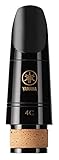
- Yamaha's official original-equipment 4C clarinet mouthpiece, identical to what's included with new Yamaha standard, intermediate and professional series clarinets.
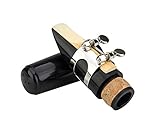
- Includes Brass Ligature, one reed and Plastic Cover

- Easy to play in the upper register and has a pure sound

First Impressions and Design Philosophy of the Vandoren Lyre Profile Clarinet Mouthpiece
Unboxing the Vandoren Lyre Profile Clarinet Mouthpiece immediately reveals the precision craftsmanship associated with decades of French woodwind heritage. Holding it in my hand, the polished finish gleams under the studio lights, and the iconic Profile 88 beak angle feels instantly natural against the teeth. Unlike standard profiles that can force a steeper jaw angle, the Profile 88 exterior contour is subtly tapered to encourage a relaxed, anatomically comfortable embouchure. The rails are impeccably symmetrical, the tip rail is microscopically even, and the chamber geometry looks optimized for maximum airflow efficiency. Compared to standard factory mouthpieces that often come bundled with student clarinets, this professional-grade upgrade feels like shifting from a standard economy car into a finely tuned sports machine. The moment you slip a ligature over a #3 reed and test the initial response, the meticulous engineering becomes glaringly apparent.
Key Benefits
- Delivers an exceptionally round, rich, and dark tonal color
- Significantly reduces squeaking and unstable notes for developing players
- Profile 88 beak design provides superior playing comfort and posture
- Offers effortless response and crisp articulation in the upper register
Drawbacks
- Requires precise reed matching (optimized for #2 through #3.5)
- May feel slightly resistant to players accustomed to ultra-open, jazz-style tips
Deep Dive Into Performance: Putting the Vandoren Lyre Profile Clarinet Mouthpiece to the Test
To truly evaluate what makes this mouthpiece a staple in conservatories and concert halls worldwide, I put it through rigorous testing over several weeks, playing orchestral excerpts, scale studies, and challenging chamber music repertoire. Here is how it performs where it matters most.
Response, Resistance, and Ease of Blowing
The first thing I noticed during my initial scale runs was the sheer efficiency of air transfer. Many mouthpieces either feel too stuffy—forcing you to overblow to get a core sound—or too wide open, causing the tone to spread and lose its center. The Vandoren Lyre Profile Clarinet Mouthpiece strikes a remarkable balance. The resistance is cooperative rather than obstructive, acting as a supportive cushion against which your embouchure can lean. As I moved through arpeggios, I found that notes spoke instantly with minimal tongue pressure, resulting in a cleaner, more articulate start to every phrase. This characteristic is a massive win for players who experience fatigue during long rehearsal blocks. You can see its full feature set and user reviews to understand how this effortless blowing behavior benefits players at various skill levels.
Upper Register Stability and Intonation Control
The altissimo and high clarion registers are notorious testing grounds for any clarinet mouthpiece. Poorly designed tips often produce thin, piercing squeaks or sharp, unmanageable pitches that require extreme lip manipulation to tame. Testing the upper register with this mouthpiece was a revelation. High Gs and As spoke with a centered, velvety core, entirely devoid of the harsh edge that plagues lesser equipment. Intonation remained rock-solid across dynamic shifts, meaning I could play a high register passage softly without the pitch sagging flat. This flawless stability is precisely why this model is trusted by professional section players and advanced students alike; it removes the anxiety from high-register leaps, allowing you to focus purely on musical interpretation and phrasing.
Tone Color and Articulation Clarity
Tone production is where the Lyre designation truly shines. The internal chamber design encourages a darker, richer harmonic spectrum without sacrificing projection. Whether executing lightning-fast staccato passages or sustaining a lyrical, legato phrase, the articulation remained crisp, dry, and immediate. The tongue meets the reed with absolute clarity, and the resulting sound blooms instantly into the room. It is a wonderfully forgiving mouthpiece for articulation, helping to clean up blurred or sluggish tongue strokes while providing a velvety warmth that blends seamlessly into a clarinet section or stands out gracefully in a solo context.
What Other Users Are Saying
The real-world feedback from players who rely on this mouthpiece daily overwhelmingly reinforces my studio findings. Across various musical communities, users frequently highlight how much easier it is to control compared to competing models. One novice player noted that they make significantly fewer squeaks and can produce notes with noticeably less effort, transforming their daily practice sessions from a chore into an enjoyable experience. Another common sentiment echoes the professional pedigree of the item, with players mentioning that it is the exact model used by their teachers and ensemble conductors in high-level academic presentations and concerts. While a few users point out that it demands careful reed matching to unlock its full potential, the universal consensus is that its intonation stability and rich sonic output make it a stellar long-term investment. You can check current pricing details to see how accessible this professional upgrade really is.
Comparing the Vandoren Lyre Profile Clarinet Mouthpiece to Its Top Alternatives
When optimizing your clarinet setup, small accessories and alternative configurations can also play a supporting role in your overall comfort and gear longevity. Let us examine how three popular alternatives stack up against a comprehensive mouthpiece upgrade.
1. D’Addario Reserve Mouthpiece Patch Black, 5-Pack

- PROTECTS MOUTHPIECE - Protects your saxophone or clarinet mouthpiece
- PREVENTS SLIDING - Prevents your teeth from sliding.
While not a mouthpiece itself, protecting your investment is crucial. The D’Addario Reserve Mouthpiece Patch Set provides essential protection against teeth wear, reduces irritating vibrations transmitted through the jaw, and stabilizes your top teeth placement. If you purchase a premium mouthpiece, applying one of these high-grade patches is practically mandatory to preserve the beak’s finish and ensure a secure, comfortable embouchure grip during long practice sessions.
2. Glory Clarinet Mouthpiece Kit
- Includes Brass Ligature, one reed and Plastic Cover
- It would make a good mouthpiece for a beginning clarinet student or as an extra mouthpiece.
The Glory Clarinet Mouthpiece Kit is marketed as an all-in-one budget solution, complete with a ligature, reed, and plastic cap. While it serves as an inexpensive emergency backup or a basic starter piece for absolute beginners on a strict budget, it simply cannot compete with the acoustic refinement, intonation precision, and rich tonal depth found in professional-grade equipment. Serious students will quickly outgrow its limitations.
3. WINGKIND Alto & Clarinet Mouthpiece Cushion Set

- Protects mouthpiece and teeth, prevents teeth from sliding
- Use on Alto and tenor saxophone and clarinet mouthpieces
Similar to mouthpiece patches, the WINGKIND Alto & Clarinet Mouthpiece Cushion Set offers a practical way to enhance playing comfort and absorb unwanted vibrations. At 0.8mm thickness, these black cushions provide a durable barrier that prevents tooth scratches on the beak while helping to anchor your embouchure securely. They are an inexpensive, highly recommended companion accessory for any serious clarinetist.
Final Verdict on the Vandoren Lyre Profile Clarinet Mouthpiece
The Vandoren Lyre Profile Clarinet Mouthpiece easily earns its reputation as a gold standard for players seeking to elevate their sound. By successfully marrying effortless blowing mechanics with a rich, dark tonal palette and rock-solid intonation across all registers, it removes the technical barriers that so often frustrate developing and professional musicians alike. Whether you are tired of fighting your current setup, looking to clean up your upper register articulation, or simply wanting to project with greater warmth and confidence, this mouthpiece delivers exceptional value. If you are ready to experience a noticeable leap forward in your musical expression, I strongly encourage you to explore the Vandoren Lyre Profile Clarinet Mouthpiece today and discover what your clarinet has truly been missing.
Last update on 2026-10-23 / Affiliate links / Images from Amazon Product Advertising API