
Universal Audio Volt 176 USB Audio Interface Review: The Boutique Studio Sound Within Reach
Every bedroom producer and aspiring songwriter eventually hits the same wall: the “demo sound.” You have the talent, the lyrics are solid, and the performance is inspired, yet the recording feels thin, clinical, and lacks that mysterious “glue” that makes professional records sound like, well, records. We have spent years chasing that analog warmth, often thinking it required a rack of gear worth more than a used car. When the Universal Audio Volt 176 USB Audio Interface landed on our desk, the promise was bold—bringing the legendary UA 610 preamp and 1176 compressor sound to a portable, affordable box.
The problem most of us face isn’t just a lack of expensive microphones; it’s the conversion and the input stage. Most entry-level interfaces focus on transparency to the point of boredom. They capture a flat signal that requires a dozen plugins to make it “come alive.” The frustration of spending hours tweaking software just to get a vocal to sit right in a mix is a common hurdle that kills creativity. We’ve found that many creators search for a solution like the Universal Audio Volt 176 USB Audio Interface because they want the “sound” to be right from the moment they hit record.
Without a high-quality input stage, your recordings can suffer from harsh transients and a lack of harmonic richness. This often leads to a cycle of over-processing in the Digital Audio Workstation (DAW), which can make audio sound artificial. Solving this problem at the source—the interface—is crucial for anyone serious about their craft. If you don’t address the quality of your signal path early on, you’re essentially trying to “fix it in the mix,” a strategy that rarely yields professional results. This is where the Universal Audio Volt 176 USB Audio Interface attempts to bridge the gap between high-end studio luxury and home recording practicality.

- Enjoy the rich, album-ready sound of classic UA 610 preamps with Vintage mode
- Add clarity and punch to vocals, instruments, and more with an analog compressor based on the renowned 1176

Navigating the World of Computer Recording Audio Interfaces: A Comprehensive Buyer’s Guide
A Computer Recording Audio Interface is more than just an item; it’s a key solution for bridging the gap between the physical world of sound and the digital world of your computer. It acts as the brain of your studio, translating the delicate voltages of your microphone into the ones and zeros of your DAW. Beyond simple conversion, a great interface provides the power (Phantom Power) for your mics, the amplification (Preamps) to make them audible, and the monitoring capabilities to hear exactly what you’re doing in real-time.
The ideal customer for this type of product is someone facing the limitations of “dry” recordings—perhaps a solo musician, a podcaster looking for broadcast-quality presence, or a content creator who needs reliable, professional audio without a complex setup. On the other hand, it might not be suitable for those who need to record full bands simultaneously, as these compact units typically offer limited simultaneous inputs. For high-channel-count needs, a larger rackmount system would be more appropriate.
Before investing, consider these crucial points in detail:
- Dimensions & Space: In a modern home studio, desk real estate is at a premium. You want a device that is compact enough to sit next to your laptop but heavy enough that a thick XLR cable won’t pull it off the desk. We noticed the Universal Audio Volt 176 USB Audio Interface strikes a perfect balance here, offering a small footprint with a premium, weighted feel.
- Capacity & Performance: Look for high-resolution conversion. 24-bit/192 kHz is the industry standard for high-fidelity audio, allowing you to capture the full frequency spectrum and dynamic range of your performance. If an interface can’t handle these sample rates, you may find your recordings lack detail in the high-end.
- Materials & Durability: Plastic interfaces often feel like toys and can suffer from interference or physical damage. A metal chassis with high-quality knobs is essential for longevity. Professional gear should feel like it can survive a few trips in a gig bag without losing a knob or cracking a casing.
- Ease of Use & Maintenance: The best interface is one that stays out of your way. Having physical buttons for key features like “Vintage” mode or “76 Compressor” is much more intuitive than digging through software menus while you’re trying to stay in the creative flow.
While the Universal Audio Volt 176 USB Audio Interface is an excellent choice, it’s always wise to see how it stacks up against the competition. For a broader look at all the top models, we highly recommend checking out our complete, in-depth guide:
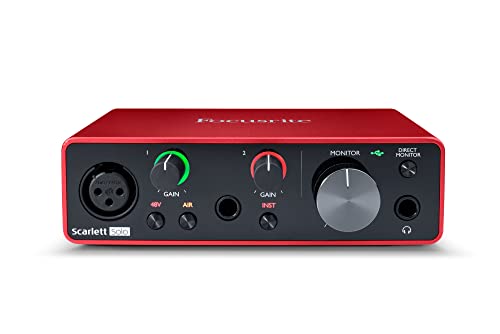
- Pro performance with great pre-amps - Achieve a brighter recording thanks to the high performing mic pre-amps of the Scarlett 3rd Gen. A switchable Air mode will add extra clarity to your acoustic...
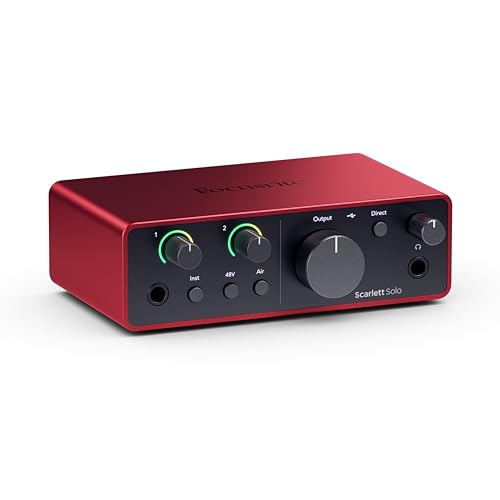
- The new generation of the songwriter's interface: Plug in your mic and guitar and let Scarlett Solo 4th Gen bring big studio sound to wherever you make music
- The new generation of the artist's interface: Connect your mic to Scarlett's 4th Gen mic pres. Plug in your guitar. Fire up the included software. Start making your first big hit
Unboxing the Volt 176: Retro Aesthetics Meet Modern Power
Pulling the Universal Audio Volt 176 USB Audio Interface out of the box is an experience in itself. Universal Audio has leaned heavily into a retro-industrial aesthetic that feels like a nod to the golden age of recording. The wood side panels are a stunning touch, immediately making the device look more expensive than its price tag suggests. It’s compact, yet it has a reassuring 653-gram weight that screams “quality construction.”
Setting it up was a breeze. For our Windows testing, we simply created a Universal Audio account, and the drivers practically installed themselves. We’ve used plenty of interfaces where the driver installation felt like a combat mission, so this was a welcome change. Compared to the basic Volt 1, the 176 feels like a significant step up, not just in features but in visual class. You can see its full feature set and user reviews to understand why this specific model is gaining so much traction in the community.
Key Benefits
- Exceptional analog-inspired sound with “Vintage” preamp mode.
- Built-in 76 Compressor based on the legendary 1176.
- Rugged metal construction with beautiful wood side panels.
- Massive software bundle including LUNA and UAD plugins.
Limitations
- Lacks a dedicated software control panel for advanced routing.
- The 76 Compressor can introduce a slight noise floor in “Fast” mode.
Professional Performance Under the Hood: A Deep Dive into the Volt 176
To truly understand the value of the Universal Audio Volt 176 USB Audio Interface, we have to look past the pretty exterior and focus on the signal path. This is an interface designed for the solo creator who wants “finished” sounding audio without the headache of complex signal chains. We put this unit through its paces with vocals, acoustic guitars, and even some high-output synthesizers to see if it lived up to the hype.
The Vintage Mic Preamp Mode: Adding That Classic UA Warmth
One of the standout features of the Universal Audio Volt 176 USB Audio Interface is the “Vintage” button. This isn’t just a simple EQ curve; it’s a sophisticated emulation of the Universal Audio 610 tube preamp. When we engaged this mode, the transformation was immediate. On vocals, it added a gentle saturation and a slight lift in the low-mids that made the voice feel “closer” and more intimate. It’s a subtle but effective way to get away from that sterile, digital sound that plagues many budget interfaces.
During our testing, we found that this mode is particularly effective for taming harsh condenser microphones. If you have a mic that feels a bit too “zippy” or sharp on the top end, the Vintage mode smooths out those edges beautifully. One user we spoke with mentioned that using this is a “dream” because “one button press and I’m ready to record.” We completely agree—it removes the guesswork for beginners and provides a reliable color for pros.
Built-in 76 Compressor: Analog Control for Digital Clarity
The inclusion of the 76 Compressor is what truly sets the Universal Audio Volt 176 USB Audio Interface apart from its peers. Based on the iconic UA 1176, this built-in analog circuit offers three presets: Vocal, Guitar, and Fast. While you don’t have control over attack and release times, the presets are expertly tuned. We found the “Vocal” setting to be incredibly musical, catching peaks and adding a density that helped our takes sit perfectly in the mix without any additional plugins.
We did notice, as some users have reported, that the “Fast” setting can introduce a tiny bit of noise if your gain is pushed to the extremes. However, for most applications, this is a non-issue. The compressor also acts as a safety net—an effective limiter that prevents digital clipping during an especially loud performance. This feature alone makes the Universal Audio Volt 176 USB Audio Interface a feature that really sets it apart from anything else in this price bracket.
Software Bundle and LUNA Integration: A Full Studio in a Box
Universal Audio didn’t stop at the hardware. The software bundle included with the Universal Audio Volt 176 USB Audio Interface is worth nearly as much as the interface itself. You get access to the LUNA Digital Audio Workstation, which offers an analog-style recording workflow that is remarkably intuitive. Additionally, the inclusion of the Teletronix LA-2A and Pultec EQs as UAD plugins means you have the tools to mix your tracks to a professional standard right out of the box.
We were particularly impressed by the PolyMAX Synth and the Oxide Tape Recorder plugins. These aren’t “lite” versions; they are high-quality tools used by industry professionals. For someone just starting out, this software suite provides everything needed to go from a raw recording to a polished master. It’s worth noting that you should register your device immediately to claim these, as they represent a significant portion of the product’s value.
Build Quality and Practical Portability
Finally, we have to talk about how this unit feels on the desk. The Universal Audio Volt 176 USB Audio Interface is a “beast,” as one user aptly described it. The knobs are firm and offer just the right amount of resistance, allowing for precise gain staging. The top-mounted buttons for Phantom Power (48V), Vintage mode, and the 76 Compressor are backlit, making it easy to see your status in a dimly lit studio environment.
One potential drawback we encountered in user feedback was compatibility with certain mobile devices. While it is marketed as working with iPhone and iPad, some users have struggled with specific lightning-to-USB adapters or power requirements. If you plan to use this as a mobile rig, we recommend using a powered USB hub to ensure the interface gets the juice it needs to run those analog circuits. Despite this small caveat, the overall portability and ruggedness make it a top-tier choice for the traveling producer. You can check the latest price and availability to see if it fits your current studio budget.
Voices from the Studio: What Real Users Are Saying
The general sentiment surrounding the Universal Audio Volt 176 USB Audio Interface is overwhelmingly positive, with most users praising its sound quality and construction. One user mentioned that the compressor is “killer,” acting not just as a tonal tool but as a functional limiter that makes recording loud sources much safer. Another user highlighted the timeless design, noting that it feels like a piece of equipment they will keep “forever” due to its high-quality construction and “thought out” design.
However, no product is perfect. We saw a few reports regarding the lack of a dedicated software control panel. Unlike some competitors, the Volt relies entirely on physical controls. While we find this intuitive, one user coming from an Audient Evo mentioned they missed the ability to control the interface entirely from their computer screen. Additionally, there were mentions of the “76” circuit introducing a slight hiss at high gain settings, which is something to keep in mind if you are recording very quiet sources with gain-hungry microphones. Overall, the consensus is that the sonic benefits and the massive software bundle far outweigh these minor ergonomic gripes.
Comparing the Volt 176 to the Market Leaders
While the Universal Audio Volt 176 USB Audio Interface is a powerhouse, it’s competing in a crowded market. Here is how it compares to three other popular options.
1. Audient iD14 MKII Audio Interface

- The new successor: Due to the great success of the Audient iD14, the audio experts had the project to bring the successor iD14 MKII to the next outstanding sonic level.
- Harmonious overall package: Thanks to new transducer technology and two Class-A microphone preamps from Audient's high-end ASP8024 HE console, home recording is taken to the next level.
The Audient iD14 MKII is often cited as the Volt’s biggest rival. Where the Volt wins on analog character (Vintage mode and the 76 Compressor), the Audient wins on sheer technical transparency and software integration. The iD14 MKII features a dedicated software mixer that allows for complex loopback and routing, which is a major plus for streamers. If you want a “clean” sound and more digital control, the Audient is a fantastic choice, but if you want “vibe” and built-in compression, the Volt stays ahead.
2. Focusrite Vocaster Two Podcast Interface with Auto Gain

- Broadcast quality sound – Get studio sound in seconds from Vocaster’s premium mic input
- Over 70dB of gain – Get the best out of any mic, no booster needed
The Focusrite Vocaster Two is a different animal entirely, specifically designed for podcasters. It features “Auto Gain,” which automatically sets your levels—a feature the Universal Audio Volt 176 USB Audio Interface lacks. It also has a dedicated “Enhance” button for voice clarity. However, for music production, the Vocaster lacks the high-end preamps and the rich analog emulations found in the Volt. Choose the Vocaster if you only do talk-based content; choose the Volt if you are a musician or a “prosumer” podcaster who wants total control over your tone.
3. MAONO MaonoCaster 10-Channel Podcast Mixer with Bluetooth

- [Excellent Performance with Superior Preamp]: AME2 built-in quality preamps support phantom power for optimal performance of XLR microphones. The AME2 features 3-level mic gain adjustment, supporting...
- [Up to 11 Customized Sound Pads to Enhance Your Podcast Atmosphere]: AME2 10-channel podcast mixer allows for 11 customizable sound pads. 3 sound pads support recording of up to 60s of audio each and...
The MAONO MaonoCaster is aimed at the “all-in-one” streaming market. It features sound pads, Bluetooth connectivity, and multiple channels for a much lower price point. While it’s incredibly fun and versatile for live streaming on platforms like TikTok or YouTube, it cannot compete with the Universal Audio Volt 176 USB Audio Interface in terms of audio fidelity or build quality. The Volt is a professional recording tool; the MaonoCaster is a feature-rich entertainment hub. If your goal is a high-quality studio recording, the UA is the clear winner.
Final Verdict: Is the Volt 176 Your Next Studio Workhorse?
After extensive testing and comparing user experiences, we can confidently say that the Universal Audio Volt 176 USB Audio Interface is one of the best values in the desktop interface market today. Its greatest strength lies in its ability to impart a professional “finished” sound to recordings without requiring a degree in audio engineering. The combination of the Vintage preamp mode and the 1176-style compressor provides a level of analog warmth that is rarely found at this price point. While the lack of a software control panel might annoy those who love to mouse-click their settings, we found the tactile, hardware-first approach to be a breath of fresh air.
We recommend the Universal Audio Volt 176 USB Audio Interface to solo musicians, singer-songwriters, and podcasters who want their voice and instruments to sound expensive from day one. It is a rugged, beautiful, and sonically superior piece of gear that will undoubtedly elevate your production quality. If you are ready to stop “fixing it in the mix” and start capturing great sound at the source, we suggest you grab the Volt 176 today and see what those legendary UA circuits can do for your music.
Last update on 2026-04-02 / Affiliate links / Images from Amazon Product Advertising API