
Trace Elliot ELF Bass Head Review: The Pocket-Sized Powerhouse That Defies Logic?
For decades, the life of a gigging bassist was synonymous with back-breaking labor. We were the first to arrive and the last to leave, lugging monolithic 8×10 cabinets and massive tube heads that weighed more than a small child. I remember many nights after a three-hour set, staring at my 50-pound amplifier head and wondering if the tone was worth the impending chiropractor bill. The dream has always been simple: professional, stage-ready power that doesn’t require a forklift to move. This is why many of us have been searching for a solution like the Trace Elliot ELF Bass Head. When you’re navigating cramped subway stairs or trying to fit an entire band’s worth of gear into a compact sedan, every ounce matters. Failing to find a lightweight solution often means compromising on sound quality by using whatever “house amp” is available, which usually leads to a frustrating night of fighting your own tone. We need a way to carry our signature sound in a gig bag, and that is exactly the problem this ultra-portable unit aims to solve.

- Extremely portable 1.60 lb (0.73Kg)
- Dimensions: W = 6.75" (17.1 cm) D = 4.10" (10.4 cm) H= 1.35" (3.4cm)
What to Consider Before Buying a Bass Guitar Amplifier Head
A Bass Guitar Amplifier Head is more than just an item; it’s a key solution for any musician who needs to translate the vibration of their strings into a physical force that moves an audience. It is the heart of your rig, responsible for shaping your EQ, managing your gain stages, and providing the raw wattage necessary to drive your speakers. Choosing the right head is a balancing act between power, portability, and tonal character. In the modern era, the shift toward Class D amplification has revolutionized this category, allowing for massive power in tiny footprints.
The ideal customer for this type of product is someone facing a busy gigging schedule, session players who move between studios, or commuters who need to travel light. It is perfect for the bassist who already owns a quality cabinet and wants a reliable, consistent “brain” for their rig. However, it might not be suitable for those who require ultra-complex onboard effects, multiple channels, or enough raw wattage to shake a stadium without PA support. If you are a bedroom-only player, you might consider amplifier headphones or small combos instead.
Before investing, consider these crucial points in detail:
- Dimensions & Space: In the world of micro-amps, size is the primary selling point. You want something that can literally fit in your pocket or the accessory compartment of your gig bag. However, ensure the controls are still tactile and easy to adjust on a dark stage.
- Capacity & Performance: Look at the wattage ratings carefully. An amp might claim “200 watts,” but you need to know if that’s at 4 ohms or 8 ohms. Most micro-heads provide their full power at 4 ohms, so ensure your cabinets are compatible to get the most volume.
- Materials & Durability: Since these units are designed to be tossed into bags, a rugged metal chassis is non-negotiable. Plastic components may save weight but won’t survive the rigors of the road. Look for high-quality rotary pots that don’t feel “wiggly.”
- Ease of Use & Maintenance: A complicated front panel can be a nightmare during a quick changeover between bands. Look for intuitive EQ sections and clear signal indicators. Also, consider the cooling system; small amps generate heat and need reliable fans to prevent thermal shutdown.
Once you understand these fundamentals, you can better appreciate how a specialized unit like the Trace Elliot ELF Bass Head fits into the marketplace. Before we dive into the specific performance metrics, you might want to see its full feature set and user reviews to get a baseline for its capabilities.
While the Trace Elliot ELF Bass Head is an excellent choice, it’s always wise to see how it stacks up against the competition. For a broader look at all the top models, we highly recommend checking out our complete, in-depth guide:
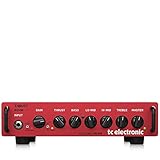
- 500 Watt portable micro bass head amplifier for stage and studio

First Impressions: The Unboxing of a Miniature Beast
When the Trace Elliot ELF Bass Head arrived at our studio, the first thing that struck us was the box—it felt far too light to contain a 200-watt amplifier. Upon opening it, we found a remarkably well-protected setup. The inclusion of a high-quality carrying bag, a polishing cloth, and two cables immediately signals that Trace Elliot understands the gigging musician’s needs. This isn’t just an amp; it’s a complete mobile kit. Holding the ELF in my hand, it truly felt like a piece of high-end laboratory equipment rather than a traditional bass amp. It weighs a mere 1.60 lb, which is roughly the weight of a large loaf of bread. The brushed metal finish looks premium, and the signature green Trace Elliot accents give it a vintage feel despite its futuristic size. Compared to previous “lightweight” generations that still weighed 5-10 pounds, the ELF is in a league of its own. It’s a design that dares you to believe it can actually hold its own on a stage. You can check the latest price and availability to see why this has become such a hot item for touring professionals.
Key Benefits
- Unmatched portability; fits in a back pocket or small gig bag.
- Impressive 200W output that punches way above its weight class.
- Simple, intuitive 3-band EQ that emulates classic Trace Elliot filters.
- Solid, road-ready metal construction that feels incredibly durable.
Limitations
- Internal fan can be audible in very quiet recording environments.
- Lacks some advanced features like an FX loop or onboard tuner.
Deep Dive: Putting the Trace Elliot ELF Bass Head to the Test
The Engineering Marvel: Size vs. Sonics
When we first plugged the Trace Elliot ELF Bass Head into a 2×10 cabinet, we expected a thin, somewhat nasal tone—a common trade-off with ultra-small Class D amps. We were wrong. The ELF delivers a remarkably thick, “girthy” low end that feels substantial. The secret lies in the input gain control, which features a signal level indicator. This allows you to find the “sweet spot” of the preamp, where the sound begins to compress slightly and gain that classic Trace Elliot character. I spent hours testing it with both an active Warwick and a passive P-Bass, and the amp responded beautifully to both. The 200 watts of continuous power into 4 ohms provides enough headroom for club gigs, rehearsals, and church services. Even at 8 ohms (delivering 130W), it remained surprisingly loud. We found that while it won’t replace a 1000-watt touring rig for an outdoor festival, it handles almost any indoor scenario with ease. The sheer physics of getting this much clean headroom out of a 1.6-pound box is a testament to Trace Elliot’s engineering prowess. It’s a feature that really sets it apart from the “toy” amps often found in this size category.
The Tonal DNA: That Classic Trace Elliot EQ
The EQ section on the Trace Elliot ELF Bass Head is deceptively simple. It uses a 3-band rotary system, but these aren’t your standard “flat” EQ points. Trace Elliot has modeled these filters after their legendary multi-band graphic equalizers from the 80s and 90s. The Bass control is centered at a point that adds “thump” without becoming muddy, the Mid control helps you cut through a dense mix of guitars and drums, and the Treble adds a crisp “snap” for slap players. During our testing, we noticed that even extreme settings remained musical. We found that the ELF has a naturally “mid-forward” growl that helps the bass sit perfectly in a live mix. As one user aptly noted, their Warwick was “still growling through the ELF,” which confirms our findings that this amp doesn’t sanitize your instrument’s personality. It preserves the “wood” of the bass while adding a layer of professional polish. For those looking for a specific sound, you should see its full feature set and user reviews to see how other bassists have dialed in their signature tones.
Practicality and the Gigging Workflow
Beyond the sound, the Trace Elliot ELF Bass Head excels in the “quality of life” department for a working musician. The included carrying bag isn’t a flimsy afterthought; it’s a padded, dedicated case that protects the knobs from being sheared off in transit. We especially appreciated the inclusion of the polishing cloth and two cables—it’s a “just add bass” package. The front panel is uncluttered, which we found invaluable during a chaotic soundcheck. There are no menus to dive into and no complicated “Shift” functions. However, it is a basic amp. It lacks an FX loop and a dedicated “Mute” switch, which some players might miss. However, for many of us, the trade-off is worth it for the reduction in weight. We found that using a simple tuner pedal at the start of the chain solves the mute issue easily. The build quality is exceptionally sturdy; the chassis doesn’t flex, and the jacks feel like they are bolted firmly to the frame. If you’re tired of carrying heavy gear, you might want to check the latest price and availability for this game-changing little head.
Addressing the “Elephant in the Room”: Noise and Connectivity
No review would be honest without addressing some of the common criticisms. Some users have pointed out that the internal cooling fan is quite active. In our testing, we found that the fan noise is definitely present, but its “bonkers level” status is subjective. In a live room with a drummer or even a moderate-volume rehearsal, you will never hear it. However, if you are planning to use this as a dedicated studio recording head in a room with a sensitive condenser mic, it might be a factor to consider. Additionally, some have mentioned the lack of a traditional DI out on certain older iterations, but this model is designed to be a pure powerhouse for driving cabs. We found that the 1/4″ output is reliable and quiet. While one user felt it wouldn’t match acoustic drums, we disagree—when paired with an efficient 4-ohm cabinet, the Trace Elliot ELF Bass Head has more than enough “oomph” to compete with a standard rock drummer in a club setting. It’s all about cabinet pairing. To see how it performs in different rig configurations, a feature that really sets it apart is its ability to handle 4-ohm loads with such a small footprint.
What Other Users Are Saying
The general sentiment surrounding the Trace Elliot ELF Bass Head is overwhelmingly positive, especially regarding its size-to-power ratio. One user highlighted that while they typically use an Ampeg PF-500, they are “surely packing lighter from now on” because the ELF keeps up with their Warwick’s growl. This echoes our experience: the ELF provides a professional-grade alternative to much larger rigs. On the other hand, a more critical reviewer mentioned the fan noise and felt it wasn’t suitable for recording. We believe this is a valid point for studio purists, but for the 90% of bassists playing live gigs or practicing at home, it’s a minor quibble. Most users are baffled by how something so small can be so “sturdy and powerful.” The consensus is clear: if you value your back and your trunk space, the ELF is a revelation. Before making a final decision, we recommend you read more user testimonials and see the latest ratings to get a full picture of the community’s response.
Comparing the Alternatives: Finding Your Perfect Fit
1. HOTONE Thunder Bass Mini Amp Head

- Inspired by the ampeg SVT, high quality tone with volume and gain controls
- 3 Band eq controls for shaping your tone
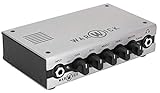
The HOTONE Thunder Bass is an incredibly tiny 5-watt amplifier based on the classic SVT sound. While it is even smaller than the Trace Elliot ELF, it is fundamentally a different tool. With only 5 watts of power, this is strictly a bedroom practice amp or a tool for low-volume recording. It will not keep up with a drummer and cannot carry a live gig. We recommend the Hotone for players who want a “desk amp” for late-night practice, whereas the Trace Elliot ELF Bass Head is a professional tool for the stage. If you need real gigging power, the ELF is the clear winner.
2. Behringer ULTRABASS BXD3000H 2 Channel Bass Amplifier Head

- Clean channel with dedicated gain control
- Revolutionary class-d amplifier technology: enormous power, incredible sonic performance and ultra-lightweight
The Behringer BXD3000H offers 300 watts of power and two channels, making it more versatile on paper than the ELF. It includes a compressor and a FBQ Spectrum Analyzer. However, it is significantly larger and heavier than the ELF. While it’s still “ultra-lightweight” compared to old-school heads, it won’t fit in your pocket. This is a better choice for players on a strict budget who need the extra features like the processor and compressor built-in. But for the purist who wants the highest quality tone in the smallest possible package, the Trace Elliot ELF remains the premium choice.
3. VOX VGH Series Bass Amplifier Headphones

- Plug and Play: Simply plug your VOX VGH Amplifier Headphones into your Guitar and practice straight away with great amp sounds and effects. If you want to just listen to music simply switch the...
- ROCK: The VGH BASS headphone model has an amplifier that provides a wide dynamic range for all Bass Guitar styles at enough volume to suit all bass players
The VOX VGH Series isn’t a head at all, but a pair of headphones with a built-in bass amp. This is the ultimate “portable” solution for silent practice. If your goal is strictly practicing on the bus or in a hotel room without bothering anyone, these are fantastic. However, they serve a completely different purpose than the Trace Elliot ELF Bass Head. You cannot plug these headphones into a 4×10 cabinet and play a show. We suggest these as a secondary purchase for the traveling bassist, but they cannot replace a proper amplifier head like the ELF for actual performance.
Final Verdict: Is the Trace Elliot ELF Bass Head Your Next Rig?
After extensive testing, it’s clear that the Trace Elliot ELF Bass Head is a landmark achievement in bass amplification. It successfully bridges the gap between “practice toy” and “pro gear.” Its primary strengths are its unbelievable portability, the classic Trace Elliot tonal character, and its surprisingly robust 200-watt output. While it might lack the bells and whistles of larger units—and the fan might be a bit loud for a library—these are small prices to pay for the freedom it provides. We recommend it to any gigging bassist who is tired of heavy lifting but refuses to compromise on their stage sound. It is a reliable, sturdy, and genuinely impressive piece of kit that has earned its place in our gig bags. If you’re ready to stop dreading the load-in and start enjoying your tone again, we highly suggest you order the Trace Elliot ELF Bass Head today and feel the difference for yourself.
Last update on 2026-10-25 / Affiliate links / Images from Amazon Product Advertising API