
TC Electronic THRUST BQ500 Portable Bass Head Review: The Ultimate High-Wattage Solution for the Gigging Bassist
For decades, bass players have been the unsung pack mules of the music world. While guitarists casually stroll into a venue with a digital modeler in their backpack, we’ve been lugging 60-pound “boat anchor” amplifiers and oversized cabinets that require a chiropractor’s visit after every gig. The struggle is real: you need enough headroom to compete with a heavy-hitting drummer, but you also want a rig that doesn’t occupy your entire trunk or break your back during load-out. This search for the “holy grail”—high wattage, light weight, and a price tag that doesn’t require a second mortgage—often leads to compromises in tone or reliability. If you’ve ever felt the frustration of a “portable” amp that clips the moment you dig in for a slap solo, or a budget head that sounds like a swarm of bees in a tin can, you know exactly why the TC Electronic THRUST BQ500 Portable Bass Head has generated so much buzz in the community. Solving the portability-versus-power equation is crucial; failing to do so means either sacrificing your sound quality on stage or eventually burning out from the physical toll of vintage gear.
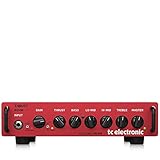
- 500 Watt portable micro bass head amplifier for stage and studio
- Compact and lightweight design for ultimate portability
What to Consider Before Investing in a Bass Guitar Amplifier Head
A Bass Guitar Amplifier Head is more than just an item; it’s the heart of your sonic identity and a key solution for translating the subtle nuances of your fingers into air-moving power. Whether you are playing a smoky club, a high-end recording studio, or your spare bedroom, the head dictates how your instrument interacts with the room. It’s not just about volume; it’s about “headroom”—the ability of the amplifier to handle sudden peaks in your playing without distorting. Before you see its full feature set and user reviews, you must understand how these units fit into your specific lifestyle.
The ideal customer for this type of product is the pragmatic, working musician who needs a “plug-and-play” solution that sounds professional right out of the box. It’s perfect for the weekend warrior who wants a reliable backup or a primary gigging head that fits in a gig bag. However, it might not be suitable for the “tone purist” who demands a 100% all-tube signal path or the experimentalist who needs twenty different onboard effects and deep-menu digital editing. If you are looking for a complex workstation, you might consider a high-end modeling floorboard instead.
Before investing, consider these crucial points in detail:
- Dimensions & Space: In the modern gigging landscape, space is a premium. You want a head that can sit securely on top of a 2×10 or 1×15 cabinet without hanging over the edges, and ideally, something that fits into the accessory pocket of your bass case. A compact footprint allows for easier transport and a tidier stage setup.
- Capacity & Performance: Wattage isn’t just about being loud; it’s about clarity. We generally find that a bass amp should ideally have three times the wattage of the guitar amp it’s competing with. Look for at least 300 to 500 watts for a gigging environment to ensure your low-end stays tight and punchy at high volumes.
- Materials & Durability: Road life is brutal. A chassis made of rugged steel or high-grade aluminum is essential to protect the internal circuitry from drops, vibrations, and the occasional spilled drink. Ensure the knobs feel solid and the connectors are of professional quality, such as twist-lock speaker outputs.
- Ease of Use & Maintenance: Long-term care is simpler with solid-state or Class-D technology because there are no fragile glass tubes to replace or bias. Look for “auto-ranging” power supplies if you plan to tour internationally, and check that the cooling fan is quiet enough for studio environments.
Choosing the right head is a balancing act between features and simplicity. Finding a balance is easier when you check the latest price and availability of such units, ensuring you get the most “bang for your buck” without sacrificing the essential performance metrics.
While the TC Electronic THRUST BQ500 Portable Bass Head is an excellent choice, it’s always wise to see how it stacks up against the competition. For a broader look at all the top models, we highly recommend checking out our complete, in-depth guide:
Check Out Our Definitive Rankings of the Best Portable Bass Amp Heads for Gigging and Studio Work
- 500 Watt portable micro bass head amplifier for stage and studio

First Impressions: The TC Electronic THRUST BQ500 Portable Bass Head Unboxed
When the TC Electronic THRUST BQ500 Portable Bass Head first arrived on our test bench, the first thing that struck us was the sheer lack of heft—in a good way. At under 5 pounds, it feels more like a piece of high-end rack equipment than a traditional “amp.” The unboxing experience was straightforward; TC Electronic focuses on the gear, not the flair. Inside, you find the head, a power cable, and a manual. The “Thrust” branding and the striking red faceplate give it a modern, aggressive aesthetic that looks great sitting atop any cabinet.
The build quality is immediately apparent. The steel chassis feels industrial and “road-ready,” which we confirmed by comparing it to several plastic-bodied competitors in the same price bracket. There is no flex in the metal, and the knobs have a satisfying resistance to them. While some might find the four-band EQ simple, we found it refreshing. In an era of digital menus, having four knobs and a single “Thrust” compressor dial is a welcome return to tactile simplicity. It’s clear that TC Electronic designed this for the bassist who wants to set their tone in thirty seconds and get on with the show, proving that you don’t need a heavy rack to get this level of performance and punch.
Key Benefits We Love
- Incredible power-to-weight ratio; delivers a true 500 watts in a 4.9-pound package.
- Mosfet preamplifier provides a warm, tube-like response that feels “squishy” and responsive to your touch.
- Universal power supply makes it a perfect companion for touring musicians playing in different countries.
- Exceptional value for money, often outperforming heads that cost twice as much.
Drawbacks to Consider
- The “Thrust” compressor is subtle; those looking for heavy “squashing” may still need an external pedal.
- Only features a Speakon-style output, which might require an adapter for older 1/4″ cabinets.
Deep Dive: Putting the TC Electronic THRUST BQ500 Portable Bass Head to the Test
The Raw Power of Class-D Technology
The heart of the TC Electronic THRUST BQ500 Portable Bass Head is its Class-D power section. In our testing, we paired it with both a 4×10 and a 1×15 cabinet. The immediate takeaway? This thing PUMPS. There has been some online debate about whether budget Class-D heads “really” hit their rated wattage, but we found that at 4 ohms, the BQ500 provides more than enough volume to shake the walls of a medium-sized venue. One user we spoke with noted that they were able to be heard clearly over a loud drummer with the master volume set only to 40%, and our experience mirrored this. The headroom is impressive; even when digging in hard on the E-string with a passive P-bass, the low end remained tight and articulate.
What makes this power section special is how it handles the “pragmatic” needs of a bassist. You don’t get that harsh, brittle clipping typical of cheap solid-state amps. Instead, there’s a smooth ceiling to the volume. We credit this to the intelligent design of the internal circuitry which seems to prioritize a clean signal path. For those worried about reliability, the fan is remarkably quiet. During our studio sessions, the fan was virtually inaudible, which is a massive plus for those who want to use the balanced DI out for recording without picking up mechanical noise. This reliability is a feature that really sets it apart from the noisy fans found on older portable units.
The Mosfet Preamp: That Elusive “Tube” Feel
One of the biggest complaints about portable digital amps is that they can feel “cold” or “sterile.” TC Electronic addressed this by using a high-voltage Mosfet preamplifier. In our analysis, we found that the TC Electronic THRUST BQ500 Portable Bass Head mimics the harmonic content and “feel” of a tube amp better than almost anything else in its price class. When you crank the gain, you don’t get a fuzz-box distortion; you get a subtle thickening of the notes. It reacts to your playing dynamics—if you play softly, it’s crystalline and clean; if you dig in with a pick, it growls with a pleasant “hair” around the notes.
The 4-band EQ section is tuned beautifully. We noticed that the frequencies chosen (80Hz, 400Hz, 800Hz, and 10kHz) are the exact “sweet spots” for bass guitar. The 400Hz and 800Hz knobs are particularly effective for cutting through a dense mix or scooping out the “honk” of a mid-heavy room. We tested this with a 5-string active bass and a vintage passive bass, and the Active/Passive switch on the front panel did an excellent job of matching the input impedance. We found that even with the EQ set flat, the “natural” voice of the amp is full and punchy, providing a “blank canvas” for your pedals or the natural character of your instrument.
The “Thrust” Compressor: One Knob to Rule Them All
The namesake feature, the “Thrust” compressor, is a one-knob solution designed to add punch and consistency to your sound. In our evaluation, we found it to be a very musical, albeit subtle, effect. It’s not meant to be an “effect” compressor like you’d use for a funk solo; rather, it’s a leveling tool. As you turn the knob clockwise, you can feel the heavy downbeats becoming more controlled. This is especially beneficial for “slap” players who want to keep their “pops” from clipping the amp or the PA system.
However, we agree with some user feedback that to really “hear” the compression, you need to drive the gain stage relatively hard. It’s a transparent circuit that focuses on preserving the nuance of your playing while capturing those erratic peaks. We found it worked best as a “set it and forget it” tool at about 12 o’clock. It adds a certain “density” to the sound that helps the bass sit perfectly in the pocket of a rock or metal mix. If you’re a player who hates fiddling with attack and release times, this simplified approach is a godsend, and you can see how other users utilize this feature in their own setups.
Studio and Practice Versatility
Beyond the stage, the TC Electronic THRUST BQ500 Portable Bass Head excels as a practice and recording tool. We spent significant time testing the headphone output and the Aux input. The headphone amp includes speaker emulation, which is a critical detail. Many bass heads just send the raw, fizzy preamp signal to the headphones, but the BQ500 sounds like a mic’d cabinet. It’s warm and inspiring, making those midnight practice sessions much more enjoyable. The ability to plug in a phone or laptop via the Aux input and jam along to tracks is handled perfectly, with the levels balanced nicely against your bass signal.
The balanced DI output is another high point. We plugged it directly into a DAW interface and were met with a clean, low-noise signal. The Pre/Post EQ switch allows you to send either the raw tone of your bass or your sculpted amp tone to the sound engineer. In our experience, the DI signal is “hot” enough that you don’t need to crank your interface gain, resulting in a very professional recording chain. For the bassist who does a lot of home recording or silent stage “direct-to-PA” gigs, this level of connectivity in such a small box is invaluable.
What Other Users Are Saying
The general sentiment surrounding the TC Electronic THRUST BQ500 Portable Bass Head is one of pleasant surprise. Most users highlight the “price-to-power” ratio as its strongest selling point. One seasoned player of 30 years noted, “This is an amazing amp… I had a $3,000 professional setup, and while everything has its pluses, for the price, this is beyond amazing.” Another user praised the effectiveness of the EQ, stating that the controls allow them to dial in sounds for classic punk and metal with ease, while the Thrust adjustment “does a fantastic job of controlling those heavy downbeats.”
On the critical side, some users pointed out that the “Thrust” compressor is perhaps too subtle for those who want a heavy, squashed sound. One user mentioned, “I’d rather have some distortion,” noting that the amp stays very clean even at high gain settings. Another minor gripe was the lack of a 1/4″ speaker output, as the unit only uses Speakon connectors. However, most agree that for a sub-$300 head, these are minor trade-offs. It’s worth it to take a look at the current offers and read through the hundreds of positive experiences from working bassists who have made this their “go-to” rig.
Comparing the TC Electronic THRUST BQ500 Portable Bass Head to Top Alternatives
1. HOTONE Thunder Bass Mini Bass Amp

- Inspired by the ampeg SVT, high quality tone with volume and gain controls
- 3 Band eq controls for shaping your tone
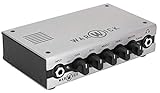
The HOTONE Thunder Bass is a vastly different animal compared to the BQ500. While the BQ500 is a 500-watt gigging powerhouse, the Hotone is a 5-watt “nano” head. It is designed almost exclusively for desktop practice and low-volume jamming. It offers a surprising amount of grit and a dedicated FX loop, making it a fun “toy” for the studio. However, it lacks the headroom, DI capabilities, and sheer volume required for a live band setting. You would choose the Hotone if your primary goal is portability over performance, but for anyone playing with a drummer, the TC Electronic remains the clear winner.
2. Behringer ULTRABASS BXD3000H 2 Channel Bass Amplifier Head

- Clean channel with dedicated gain control
- Revolutionary class-d amplifier technology: enormous power, incredible sonic performance and ultra-lightweight
The Behringer BXD3000H sits in a similar price bracket but offers a different feature set. It’s a 300-watt head that includes two channels and a 7-band graphic EQ with an “FBQ” spectrum analyzer. This is great for players who want to visually see their frequencies and switch between a clean and distorted channel. However, it is significantly larger and less “portable” than the BQ500. While the Behringer offers more “bells and whistles,” we found the TC Electronic to have a more professional, “tube-like” core tone thanks to the Mosfet preamp. The BQ500 is the better choice for the minimalist who values tone and portability over channel-switching.
3. VOX VGH Series Bass Amplifier Headphones

- Plug and Play: Simply plug your VOX VGH Amplifier Headphones into your Guitar and practice straight away with great amp sounds and effects. If you want to just listen to music simply switch the...
- ROCK: The VGH BASS headphone model has an amplifier that provides a wide dynamic range for all Bass Guitar styles at enough volume to suit all bass players
The VOX VGH Series represents the ultimate in “stealth” bass amplification. It isn’t a head at all, but rather a set of headphones with an integrated bass amp. For the player who *only* needs to practice silently and has no intention of ever plugging into a cabinet, this is a clever solution. However, it provides zero versatility for gigging or recording through a professional DI. Compared to the BQ500, which offers a high-quality headphone out *plus* 500 watts of stage power, the Vox is a niche accessory. The BQ500 is a far more robust investment for a developing or professional bassist.
Final Verdict: Is the TC Electronic THRUST BQ500 the Best Bang-for-Buck Head?
After putting the TC Electronic THRUST BQ500 Portable Bass Head through its paces in rehearsals, home recordings, and live scenarios, our verdict is clear: it is a “modern classic” for the pragmatic bass player. It successfully solves the problem of heavy gear without sacrificing the “feel” and “thump” that we bassists crave. While the compressor is subtle and the lack of 1/4″ outputs might annoy those with older cabs, these are small prices to pay for a 500-watt head that weighs less than a bag of flour and fits in your backpack. Its warm Mosfet preamp and transparent DI make it just as useful in the studio as it is on a stage. If you are a working bassist on a budget, or a professional looking for the ultimate backup rig, this is an absolute “no-brainer.” Don’t wait; grab your TC Electronic THRUST BQ500 here and upgrade your rig today—your back (and your sound engineer) will thank you.
Last update on 2026-10-25 / Affiliate links / Images from Amazon Product Advertising API