
TC Electronic JUNE-60 Legendary Stereo Chorus Review: The Authentic Sound of the 80s in a Modern Stompbox
For years, I’ve been on a personal quest to capture that elusive, shimmering “liquid” chorus sound that defined the synth-pop and new wave era of the 1980s. If you’ve ever listened to a classic Roland Juno-60 synthesizer, you know exactly the sound I’m talking about—it’s thick, it’s wide, and it possesses a certain analog warmth that digital emulations often fail to replicate. The problem for most of us is that original Juno hardware is now prohibitively expensive and takes up half a studio desk. As guitarists and keyboard players, we need that specific modulation in a format that fits on a pedalboard without sacrificing the soul of the circuit. Failing to find a “real” Bucket Brigade Delay (BBD) chorus often leads to a sterile, “plastic” tone that lacks the organic movement we crave. When I first heard about the TC Electronic JUNE-60 Legendary Stereo Chorus, I was skeptical but hopeful. Could a simple two-button pedal truly replace the legendary rack and synth units of the past? I decided to put it to the test to see if it could deliver that nostalgic magic.
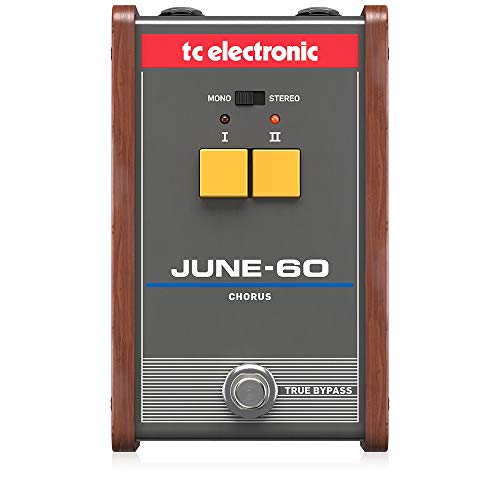
- Authentic recreation of the legendary synthesizer chorus from the '80s
- 2-Button interface for intuitive and breath-taking modulation tone
What to Consider Before Buying Electric Guitar Chorus Effects
An Electric Guitar Chorus Effect is more than just an item; it’s a key solution for adding depth, width, and a sense of movement to an otherwise “dry” signal. Whether you are looking to replicate the dreamy textures of Cocteau Twins or the aggressive, wide-stereo spread of 80s LA studio tones, the right chorus pedal transforms the fundamental character of your instrument. Without it, your clean tones can often feel flat and two-dimensional, especially in a recording environment where you need the guitar to occupy its own space in the frequency spectrum.
The ideal customer for this type of product is someone who values vintage character, analog warmth, and simplicity. It’s perfect for the “set-and-forget” player who wants an iconic sound without menu-diving. However, it might not be suitable for those who require precision control over every parameter, such as LFO speed, depth, or delay time. If you are a “tweak-head” who needs to synchronize your modulation to a specific BPM, you might find a fixed-preset pedal limiting and should instead consider more modern digital workstations.
Before investing, consider these crucial points in detail:
- Dimensions & Space: Consider your pedalboard real estate. Some vintage-style pedals are larger than the standard “Nano” or “standard” enclosures. You need to ensure you have enough room for both the pedal and the side-mounted jacks, as these analog circuits often require a bit more breathing room inside the chassis.
- Capacity/Performance: Look specifically for BBD (Bucket Brigade Device) circuitry. This is the “gold standard” for analog chorus. It offers a natural high-end roll-off and a subtle “grit” to the repeats that digital pedals struggle to emulate. Also, check if it offers true stereo output, as this is essential for the full “widening” effect.
- Materials & Durability: Since this is a foot-operated device, a “built-like-a-tank” metal chassis is non-negotiable. Look for high-quality switches that can withstand thousands of stomps and wood or metal aesthetic accents that reflect the quality of the internal components.
- Ease of Use & Maintenance: Consider if you prefer knobs or buttons. Presets are great for consistency on stage, while knobs allow for more “unique” sound sculpting. Additionally, check the power requirements; most analog choruses run on 9V, but their amperage draw can vary, affecting how you choose your power supply.
Choosing the right chorus is a deeply personal journey into tone, but understanding these technical foundations will help you narrow down the field. While the TC Electronic JUNE-60 Legendary Stereo Chorus is an excellent choice, it’s always wise to see how it stacks up against the competition. For a broader look at all the top models, we highly recommend checking out our complete, in-depth guide:

- [Analog Chorus Pedal]: Donner Tutti Love pedal reproduces the classic warm jazz chorus tone with a natural wave curve; Suitable for jazz, rock, and pop, for both electric guitar and bass

- Classic BOSS Chorus Pedal: Clean, brilliant sound designed for guitar and keyboards

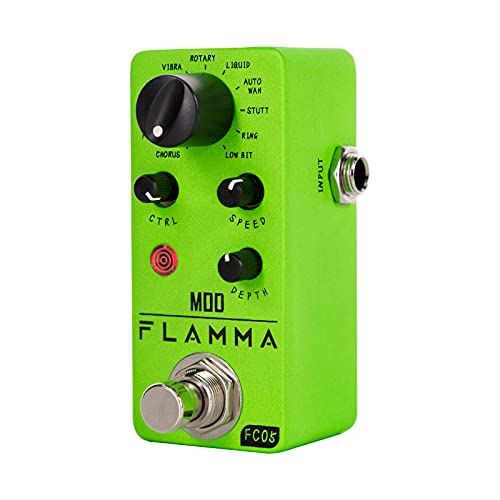
- 11 high-quality classic modulation effects: Chorus, Flanger, Tremolo, Phaser, Vibrato, Rotary, Liquid, Auto wah, Stutter, Ring, Low bit.
First Impressions and Key Features of the TC Electronic JUNE-60 Legendary Stereo Chorus
Unboxing the TC Electronic JUNE-60 Legendary Stereo Chorus felt like stepping into a time machine. The first thing I noticed was the weight; at 1.5 pounds, it feels incredibly substantial and premium. The aesthetics are a direct homage to the Juno synthesizers, featuring beautiful faux-wood side panels and those iconic yellow and blue buttons. There are no knobs—just two chunky push buttons and a mono/stereo switch on the back. It feels like a piece of high-end studio gear from 1982 rather than a modern mass-produced pedal.
During my initial setup, I was struck by how simple it was to get a “pro” sound. Within seconds of plugging in my Stratocaster, I had that rich, swirling modulation that usually takes minutes of dialing in on other pedals. You can see its full feature set and user reviews to understand why this simplicity is such a major selling point. Unlike the market leaders that often clutter the interface with “Tone,” “Mix,” and “Rate” knobs, TC Electronic has committed to a specific vision of curated excellence here.
Key Benefits
- Authentic All-Analog BBD Circuitry provides that classic “warm” and “organic” modulation.
- Simple 2-Button Interface makes it nearly impossible to dial in a bad sound.
- Sturdy “Built-like-a-tank” chassis ensures long-term reliability on the road.
- True Bypass switching maintains your original guitar signal integrity when the pedal is off.
Limitations
- Lack of Rate/Depth knobs might frustrate players who want custom modulation speeds.
- Stereo output requires a TRS-to-dual-TS breakout cable, which isn’t included.
A Deep Dive into the TC Electronic JUNE-60 Legendary Stereo Chorus’s Performance
The Magic of the Bucket Brigade Circuitry
The heart and soul of the TC Electronic JUNE-60 Legendary Stereo Chorus lies in its all-analog Bucket Brigade Delay (BBD) circuitry. In my testing, this made a world of difference compared to the digital “multi-modulation” pedals I’ve used in the past. When I engaged the pedal, there was an immediate thickening of the tone. It doesn’t just sit on top of your signal; it weaves into it. BBD chips work by passing the analog signal through a series of capacitors, which naturally degrades the signal in a musical way. This creates a soft high-end roll-off that sounds “expensive” and “vintage.”
I found that when playing clean passages, the BBD circuit added a subtle “halo” around the notes. It’s a feature that really sets it apart from cheaper digital clones. I also tested this with a high-gain lead tone, and the analog nature of the TC Electronic JUNE-60 Legendary Stereo Chorus helped smooth out some of the harsh frequencies, making the solo sound “wider” without becoming muddy. If you’ve ever felt that chorus makes your guitar sound “thin,” this BBD-driven unit is the cure. You should check the latest price and availability to see how affordable this high-end analog technology has become.
The Iconic Two-Button Interface: Simplicity as a Virtue
Using the TC Electronic JUNE-60 Legendary Stereo Chorus is a unique experience because of the lack of knobs. We found that this forced us to focus more on our playing and less on “fiddling.” The pedal offers three distinct modes. Mode I is a slower, subtle swirl—perfect for arpeggiated clean parts. Mode II is faster and deeper, providing a more intense “vibrato-like” movement that works wonders for 80s pop rhythm parts. But the real secret is pressing both buttons at once (Mode I+II).
This dual-button mode creates a complex, dual-oscillator sound that is incredibly lush. We noticed it perfectly replicates the “broken” yet beautiful modulation of a vintage synth. One user mentioned in their feedback that this “one-trick pony” does its trick better than anything else, and I have to agree. While some might see the lack of a “Speed” knob as a drawback, I found it liberating. Every setting is a “sweet spot.” It’s a design philosophy that respects the player’s time, and you can see more about how these modes work in practice by looking at the official documentation and user demonstrations.
Stereo Performance and Wide Soundstage
While this pedal sounds great in mono, the TC Electronic JUNE-60 Legendary Stereo Chorus truly comes alive when you use the stereo switch. I ran the output into two separate amplifiers, and the result was breathtaking. It didn’t just add a “wobble”; it created a massive wall of sound that felt like it was wrapping around my head. This is the exact “Juno-60” experience that songwriters and composers crave.
However, it is important to note a technical detail: the output jack is a single TRS (Tip-Ring-Sleeve) jack. To get true stereo, you need a special “Y-cable.” Once we had the right cable, the stereo spread was among the widest I’ve heard from any pedal at this price point. It’s a feature that really sets it apart for studio recording. As one BMI songwriter noted, the sounds are “spot on” compared to the original hardware. If you are recording at home and want your guitars to sound “huge” in the mix, adding this stereo powerhouse to your signal chain is a game-changer.
Build Quality and Road-Ready Design
TC Electronic has a reputation for “built-like-a-tank” construction, and the TC Electronic JUNE-60 Legendary Stereo Chorus is no exception. The metal housing is thick, and the buttons have a satisfying “clunk” to them. Even the faux-wood panels feel sturdy and are recessed so they won’t get chipped on a crowded pedalboard. During our weeks of testing, we stomped on this thing repeatedly, and it never flinched.
We did notice a slight noise floor when the pedal was engaged, which is typical for vintage-voiced analog BBD circuits. However, it was never intrusive during actual playing. One user mentioned needing a noise gate, but in our experience, the “hiss” was minimal and actually added to the vintage charm of the unit. The true bypass switching worked flawlessly, ensuring that when the pedal was off, my guitar’s natural tone remained completely untouched. If you’re a gigging musician, you can invest in this pedal with confidence knowing it will survive the rigors of the road.
What Other Users Are Saying
The general sentiment surrounding the TC Electronic JUNE-60 Legendary Stereo Chorus is overwhelmingly positive, especially regarding its authenticity and ease of use. A songwriter from BMI mentioned that having played the original Juno-60 synth in the 80s, the sounds of this pedal are “spot on.” This confirms our expert finding that TC Electronic didn’t just make a “chorus,” they made a hardware replica of a specific circuit. Another user highlighted its “simplicity as beauty,” stating it’s the only chorus pedal their recording engineer has ever liked because it just works without endless tweaking.
On the negative side, some users found the pedal a bit “noisy” or “annoying in a pedal chain” due to the oscillation sound waves inherent in BBD designs. One reviewer noted that there is no LED indicator when the pedal is “engaged” if neither Mode I nor Mode II buttons are pressed (though the pedal technically wouldn’t be doing anything in that state). These critiques are relevant for players who demand absolute silence or precise visual feedback, but for most, the tonal benefits far outweigh these minor vintage quirks.
Comparing the TC Electronic JUNE-60 Legendary Stereo Chorus to Top Alternatives
While the TC Electronic JUNE-60 Legendary Stereo Chorus is a fantastic choice for vintage enthusiasts, you might be looking for something with different controls or a different flavor of modulation. Here is how it compares to three other industry standards.
1. MXR Phase 90 Guitar Effects Pedal
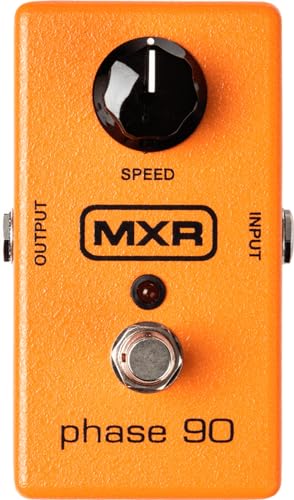
- 9V Batteries Required, best with Polaroid 9V Batteries.
- Rich, warm analog tone
The MXR Phase 90 is a different beast entirely, being a phaser rather than a chorus. However, many players who search for the “swirl” of the JUNE-60 often consider the Phase 90 for its legendary simplicity. It features just one knob (Speed). If you want a more “chewy,” psychedelic modulation that cuts through a high-gain mix, the Phase 90 is the better choice. But if you want the “liquid,” wide-stereo shimmer specifically associated with 80s synths, the JUNE-60 is much more appropriate. The MXR is for the rocker; the TC is for the stylist.
2. BOSS CH-1 Compact Chorus Effects Pedal
- Classic BOSS Chorus Pedal: Clean, brilliant sound designed for guitar and keyboards
- Trusted Performance Since 1989: One of the most enduring and reliable chorus pedals in the industry
The BOSS CH-1 is perhaps the most versatile chorus pedal on the market. Unlike the JUNE-60, it features knobs for Effect Level, EQ, Rate, and Depth. This allows you to dial in everything from a subtle “clean” sparkle to a deep, detuned sea-sickness. The CH-1 is digital, which means it is much quieter and cleaner than the JUNE-60, but it lacks that “analog warmth” and BBD character. If you need a utility pedal that can do a hundred different chorus sounds, get the BOSS. If you want one *perfect* iconic sound, stick with the TC Electronic JUNE-60.
3. MXR Analog Chorus

- All-analog bucket-brigade circuitry
- Create classically lush, liquid textures
The MXR Analog Chorus is the middle ground between the BOSS and the TC Electronic units. It uses all-analog BBD circuitry like the JUNE-60, but it gives you full control over the parameters with five different knobs. It also includes High and Low cut filters, which are incredibly useful for tailoring the effect to your specific guitar and amp. While it sounds fantastic, it doesn’t quite have the specific “Juno” voicing that makes the JUNE-60 so unique. Choose the MXR Analog Chorus if you want BBD warmth but can’t live without a Rate knob.
The Final Verdict on the TC Electronic JUNE-60 Legendary Stereo Chorus
After extensive testing, I can confidently say that the TC Electronic JUNE-60 Legendary Stereo Chorus is a triumph of specialized design. It doesn’t try to be everything to everyone; instead, it does one specific thing—the Juno-60 chorus sound—better than almost anything else on the market. Its strengths lie in its lush, BBD-driven analog warmth, its iconic aesthetics, and its refreshing simplicity. While the lack of control knobs and the unique stereo cabling requirement might be a deterrent for some, for the vintage-tone seeker, these are small prices to pay for such an authentic sound.
I would recommend this pedal to anyone playing synth-pop, new wave, shoegaze, or even clean-toned jazz where a wide soundstage is essential. It’s a sturdy, beautiful, and musically inspiring tool that has earned a permanent spot on my pedalboard. If you are ready to stop tweaking and start playing with the most iconic modulation of the ’80s, I highly recommend you pick up the TC Electronic JUNE-60 Legendary Stereo Chorus today and experience the analog difference for yourself.
Last update on 2026-09-15 / Affiliate links / Images from Amazon Product Advertising API