
Tascam DP-32SD 32-Track Digital Multi-Track Audio Recorder Review: The Ultimate Professional Standalone Studio?
For many of us, the modern recording process has become inseparable from a computer screen. We spend our workdays staring at monitors, and when it’s time to be creative, we often find ourselves right back in front of a glowing display, fighting with latencies, software updates, and the temptation of social media notifications. This “DAW fatigue” is a real phenomenon that can stifle inspiration before the first note is even played. We wanted a way to get back to the essence of music—capturing a performance with physical faders and dedicated knobs without the distractions of a PC. This is where the Tascam DP-32SD 32-Track Digital Multi-Track Audio Recorder enters the frame. It promises a high-track-count, professional-grade recording environment that fits on a desk and operates entirely without a computer. If you’ve ever felt that your mouse and keyboard were getting in the way of your guitar or your voice, a standalone Portastudio like this might be the solution you’ve been searching for.
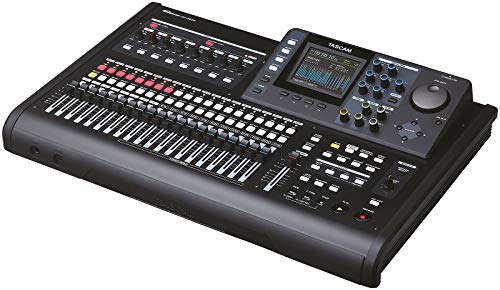
- Records an unmatched 32 tracks to solid-state media, and up to eight tracks can be recorded at a time via the XLR/TRS combo jacks
- Features studio-quality input processing like compression and limiting, and guitar amp simulation and multi-effects on the instrument-level input
Choosing the Right Digital Multitrack Recorder for Your Workflow
A Digital Multitrack Recorder is more than just an item; it’s a key solution for songwriters, bands, and producers who prioritize a stable, distraction-free environment. These units provide a dedicated hardware platform that doesn’t crash because of an OS update or a plugin conflict. When we evaluated the Tascam DP-32SD 32-Track Digital Multi-Track Audio Recorder, we realized its primary benefit is the “always-ready” nature of the hardware. You turn it on, and within seconds, you are ready to arm a track and hit record.
The ideal customer for this type of product is someone facing creative blocks in a traditional studio setting or a band that wants to record rehearsals with high fidelity without hauling a rack of interfaces and a laptop. It is perfect for those who want the tactile feel of a real mixing console. However, it might not be suitable for those who rely heavily on MIDI sequencing, virtual instruments, or surgical “pixel-peeping” editing that only a mouse and a large monitor can provide. For those users, a standard audio interface might be a better fit, but for the purist, this machine is a dream. You can see its full feature set and user reviews to determine if it aligns with your specific creative needs.
Before investing, consider these crucial points in detail:
- Dimensions & Space: This is not a “pocket” recorder. With dimensions of approximately 34 x 51 cm, you need a dedicated space on your desk. It feels like a piece of professional furniture, providing enough room for 20 physical faders without feeling cramped.
- Capacity & Performance: With 32 playback tracks and 8 simultaneous recording tracks, you need to consider your project scope. While it can handle a full drum kit (8 mics), it’s important to know that you’ll be bouncing or managing tracks if you plan on doing massive orchestral arrangements.
- Materials & Durability: The Tascam build quality is legendary. We found the chassis to be robust and the faders to have a smooth, weighted throw. Unlike plastic-heavy budget units, this feels like it can withstand years of studio sessions.
- Ease of Use & Maintenance: Because it records to SD cards, maintenance is minimal. There are no internal hard drives to fail or fans to get noisy. Keep your SD cards organized and the unit dust-free, and it will likely outlast your current laptop by a decade.
Understanding these factors is the first step toward reclaiming your creative flow. Before we dive deeper into the performance, it is helpful to see how standalone units fit into the wider world of recording gear.
While the Tascam DP-32SD 32-Track Digital Multi-Track Audio Recorder is an excellent choice, it’s always wise to see how it stacks up against the competition. For a broader look at all the top models, we highly recommend checking out our complete, in-depth guide:

- CAPTURE BIGGER PROJECTS WITH CONFIDENCE – Record music, interviews, podcasts, video audio, and live performances with a 4-track recorder that helps you capture more of the moment without worrying...
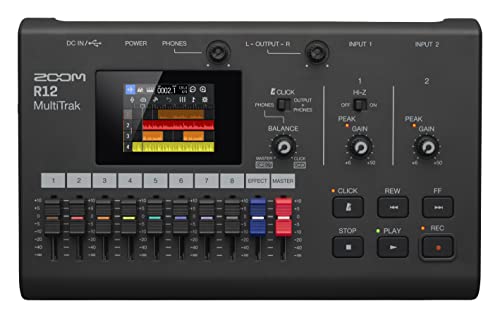
- EIGHT TRACKS WITH A TOUCHSCREEN – Records up to 8 tracks with two XLR/TRS inputs, a full-color LCD touchscreen, and DAW-style editing tools for cutting, copying, looping, and mixing without a...

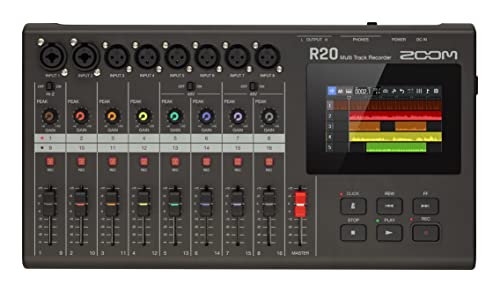
- RECORD WITHOUT A COMPUTER – DAW-style touchscreen interface lets you record, edit, and mix directly on the device with an intuitive, hands-on workflow
First Impressions: Unboxing the Tascam DP-32SD 32-Track Digital Multi-Track Audio Recorder
When we first pulled the Tascam DP-32SD 32-Track Digital Multi-Track Audio Recorder out of the box, the immediate impression was one of “serious business.” It doesn’t look like a consumer gadget; it looks like a condensed version of a 1990s high-end mixing desk. The matte black finish and the 3.5-inch color display give it a modern yet classic aesthetic. Setup is incredibly straightforward—plug in the power brick, insert the SD card, and you’re ready to go. There are no drivers to install and no firmware hurdles to jump over just to get a signal.
Comparing it to its predecessors, the move to SD cards (the “SD” in the name) is a massive improvement over the old CD-burner or hard-drive versions. It’s silent. There’s no hum of a spinning disk, which is vital when you’re recording sensitive acoustic instruments in the same room as the recorder. The faders feel substantial, and the dedicated channel strip buttons mean you aren’t digging through menus just to adjust the EQ. You can check the latest price and availability to see how this professional build fits your budget.
What We Like
- Massive 32-track playback capability allows for complex arrangements without computer lag.
- Physical faders and dedicated EQ/Pan knobs provide a truly tactile mixing experience.
- Solid-state recording to SD/SDHC cards ensures silent operation and data stability.
- The integrated 40-input mixer is incredibly powerful for bouncing and complex routing.
What We Didn’t Like
- Limited to 8 simultaneous recording inputs, which might be tight for massive live band setups.
- The 3.5-inch screen, while color, can feel a bit small when naming tracks or doing deep waveform editing.
An Expert Deep Dive into the Performance of the Tascam DP-32SD
The Tracking Experience: 8 Inputs and High-Quality Preamps
The core of any recorder is its preamps, and we were pleasantly surprised by the transparency of the 8 XLR/TRS combo inputs on the Tascam DP-32SD 32-Track Digital Multi-Track Audio Recorder. In our testing, we ran everything from high-output condenser mics to passive ribbons. The gain range is generous, and the noise floor is impressively low for a unit at this price point. Recording 8 tracks simultaneously is the “sweet spot” for most home studios—it allows for a full drum kit (Kick, Snare, Hi-Hat, two Toms, and a pair of Overheads) with one input left over for a scratch vocal or bass DI.
We found that the “Auto Punch” feature is a lifesaver for solo musicians. If you’re playing guitar and need to fix a specific bar, you can set the punch-in and punch-out points, and the machine handles the rest, allowing you to focus on the performance rather than hitting buttons. This level of automation within a standalone unit is a feature that really sets it apart from more basic multitrackers. The recording quality can be set up to 24-bit/48kHz, which is the industry standard for high-fidelity audio, ensuring your tracks are ready for professional mastering.
The Mixing Workflow: Hands-On Control and the Integrated Mixer
This is where the Tascam DP-32SD 32-Track Digital Multi-Track Audio Recorder truly shines. Having 20 physical faders (including the master fader) changes the way you approach a mix. Instead of using a mouse to move one fader at a time, you can use both hands to balance levels in real-time. This leads to more “musical” mixes that feel dynamic rather than static. The tracks are organized as 8 mono tracks and 12 stereo/mono selectable tracks. This is perfect for modern productions where you might have several stereo synthesizers or stems alongside mono vocals and instruments.
One of the most impressive aspects we observed is the dedicated channel strip. There are physical knobs for High, Mid, and Low EQ, as well as Send and Pan. When you select a track, these knobs immediately control that track’s parameters. There is no “hidden” menu logic to learn for basic mixing tasks. This workflow speed is something we haven’t found in any software-based DAW. For those who want the technical details, exploring the detailed technical specifications will reveal just how much routing power is packed into this 40-input mixer.
Signal Processing: Onboard Effects and Mastering Tools
We spent a significant amount of time testing the built-in processing power of the Tascam DP-32SD 32-Track Digital Multi-Track Audio Recorder. Each of the 8 inputs has access to “Dynamics” processing—meaning you can compress or limit your signal on the way in. This is crucial for capturing a consistent vocal or taming a peaky snare drum. Additionally, there are “Guitar Effects” (amp simulations, distortion) and “Mix-down Effects” (reverb, delay). While the guitar sims might not replace a high-end dedicated modeler, they are more than adequate for laying down high-quality demos and even final tracks if you’re good at tweaking.
The “Mastering Room” is the final piece of the puzzle. Once your mix is balanced, you enter a dedicated mode where you can apply multi-band compression, EQ, and normalization to the entire stereo file. This allows you to produce a finished, “loud,” and professional-sounding track entirely within the box. We found the mastering tools to be surprisingly sophisticated, offering a level of polish that usually requires external plugins. The robust build quality you can expect from Tascam extends to the internal DSP, which never stuttered or lagged during our heavy mixing sessions.
Data Management and Computer Connectivity
While the goal of the Tascam DP-32SD 32-Track Digital Multi-Track Audio Recorder is to stay away from the computer, Tascam understands that you eventually need to share your music. The USB 2.0 port on the back allows the unit to act as a card reader. You can easily export your mono or stereo WAV files to a computer for further editing or uploading to streaming services. We tested the file transfer speed, and while USB 2.0 isn’t the fastest by modern standards, it’s reliable and works flawlessly with both Mac and PC.
The use of SD cards up to 32GB provides roughly 50 hours of recording time (depending on track count and bit depth). This is plenty of space for multiple albums worth of material. We recommend using high-quality Class 10 cards to ensure no dropouts during 8-track recording. This simple, file-based system is a breath of fresh air compared to the complex file structures of some DAW software. It’s just WAV files in folders. Simple, effective, and professional.
What Other Users Are Saying
The general sentiment among owners of the Tascam DP-32SD 32-Track Digital Multi-Track Audio Recorder is overwhelmingly positive, particularly regarding its reliability. One user, a veteran studio engineer, noted that “this machine saved my creativity by letting me turn off my monitor and just listen again.” Many users praise the “one-knob-per-function” feel of the EQ section, which makes mixing a much more intuitive process than using a mouse.
On the negative side, some users have pointed out that the screen can be difficult to read from steep angles, and a few have mentioned the learning curve associated with the “Virtual Tracks” feature. However, most agree that once you spend a few hours with the manual, the logic of the machine becomes second nature. The feedback from the community confirms our findings: this is a workhorse designed for people who want to spend more time playing and less time troubleshooting software. Before making a choice, investing in this professional-grade hardware is backed by a community of dedicated Portastudio enthusiasts.
Comparing the Tascam DP-32SD to Top Alternatives
While the Tascam is a powerhouse for traditional multitracking, the market offers several other specialized tools. Let’s see how it compares to three other popular options.
1. Zoom L-8 Digital Podcast Mixer/Recorder

- EIGHT CHANNELS FOR BANDS AND PODCASTERS – Captures 12 tracks simultaneously at 24-bit/96kHz directly to SD card, delivering professional-quality audio for podcasts, live performances, and studio...
- SIX PREAMPS WITH -121DBU NOISE FLOOR – Features a -121dBu noise floor with up to +54dB of gain, 3-band EQ, and onboard effects on every channel for clean, versatile signal handling across your...
The Zoom L-8 is a very different beast. While it offers multitrack recording, it is heavily skewed toward podcasters and small live broadcasts. It features sound pads for triggering jingles and is battery-operable, making it much more portable than the Tascam. However, it lacks the deep mixing faders (it only has 8) and the extensive 32-track playback capability of the Tascam. If you are a musician building complex arrangements, the Tascam is the clear winner. If you are a traveling podcaster, the Zoom L-8 is the better fit.
2. Zoom H8 Digital Multitrack Recorder

- ONE RECORDER THAT ADAPTS TO YOUR WORKFLOW – The Zoom H8 is built for creators who switch between setups, with dedicated modes for field recording, music, and multi-person recording.
- TEN TRACKS FROM FOUR XLR INPUTS AND TWO COMBOS – Capture up to 10 individual tracks plus a stereo mix using 4 XLR inputs and 2 combo jacks for microphones, instruments, and more.
The Zoom H8 is an ultra-portable, handheld-style recorder with a modular capsule system. It’s fantastic for field recording or capturing a quick rehearsal, and its touchscreen interface is very modern. However, it completely lacks the physical fader surface that makes the Tascam DP-32SD 32-Track Digital Multi-Track Audio Recorder so powerful for mixing. The H8 is about portability and convenience, whereas the Tascam is about being a central “hub” for a home studio. They serve very different purposes in a musician’s toolkit.
3. Tascam DP-008EX 8-Track Digital Multitrack Recorder
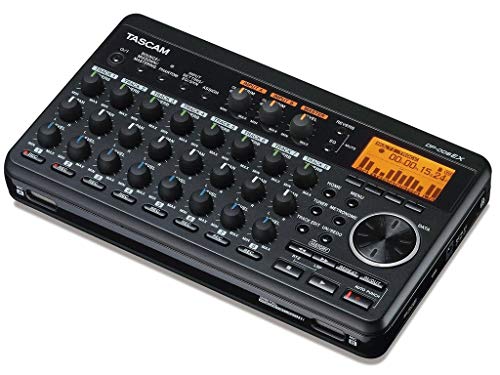
- Item Package Dimension: 12.51L x 9.68W x 6.76H inches
- Item Package Weight - 2.44 Pounds
If you love the Tascam workflow but find the DP-32SD too large or expensive, the DP-008EX is the “little brother.” It fits in a gig bag and runs on batteries, making it the ultimate “notebook” for songwriters. You get 8 tracks of recording and built-in microphones. However, you lose the 32-track playback, the large color screen, the 20 physical faders, and the sophisticated mastering tools. We recommend the DP-008EX for capturing ideas on the go, but for producing a full album, the DP-32SD is far superior.
The Final Verdict: Is the Tascam DP-32SD Right for You?
After extensive testing, our conclusion is that the Tascam DP-32SD 32-Track Digital Multi-Track Audio Recorder remains one of the best values in the audio world for anyone looking to move away from a computer-centric setup. Its combination of 32 playback tracks, tactile faders, and high-quality internal processing makes it a formidable studio centerpiece. While it’s limited to 8 simultaneous inputs and doesn’t have the “infinite” nature of a DAW, these limitations often act as a catalyst for better decision-making and more focused recording sessions.
We recommend this unit to songwriters, bands, and hobbyists who want a professional, stable, and tactile recording experience. It is a robust, reliable, and “musical” piece of hardware that honors the legendary Portastudio name. If you are ready to stop staring at waveforms and start moving faders, you can order your Tascam DP-32SD here and transform your recording workflow today. It’s time to let the music take center stage again.
Last update on 2026-09-14 / Affiliate links / Images from Amazon Product Advertising API