
starfa lab Saxophone Neck Strap Review: Practical Everyday Support or Budget Compromise?
Every saxophonist and woodwind player knows the distinct ache that sets in after an hour of practice. Whether you are holding up an alto saxophone during a fast-paced jazz rehearsal or balancing a heavy tenor horn through a two-hour community band set, the weight on your cervical spine accumulates rapidly. Factory-included stock straps are notoriously inadequate; they are often little more than thin nylon ribbons with minimal padding that dig into your neck muscles, creating friction and persistent soreness. To solve this problem, many players look for an affordable upgrade that provides genuine ergonomic cushioning without requiring a complex, bulky body harness.
That search brings us to the starfa lab Saxophone Neck Strap. Designed as a soft leather-padded solution for alto sax, tenor sax, and bass clarinet players, this neck strap aims to offer reliable weight distribution at an accessible price point. In our evaluation, we put this accessory through its paces to determine whether it offers the durability, comfort, and security required for regular practice sessions and performances. Before committing your instrument to a new support system, you can check its full specs and real-world availability to see if it aligns with your playing setup.

- [Upgraded Length]:This adjustable saxophone neck strap is perfect for players of all ages and sizes, easily adjustable from 17inch-22.8inch(43.2cm-58cm).
- [Thick Leather Padded Comfort]:This saxophone accessory has a 5cm wide backstrap with ultra-soft padding that evenly distributes the weight and eliminates neck fatigue when using an alto saxophone...
What to Look for in a Woodwind Instrument Strap Before Buying
A Woodwind Instrument Strap is more than just a basic accessory; it’s a key solution for reducing physical fatigue, maintaining correct playing posture, and safeguarding high-value woodwind instruments from catastrophic drops. Without a reliable support system, musicians often develop tense neck shoulder posture, leading to reduced breathing capacity, poor hand positioning, and premature stamina loss during extended gigs.
The ideal customer for this type of strap is an intermediate player, a returning adult hobbyist, or a multi-instrumentalist who needs a dependable, comfortable support strap for everyday use on alto sax, tenor sax, or bass clarinet. However, this product style might not be suitable for players who handle heavy baritone saxophones exclusively or musicians who suffer from severe pre-existing neck injuries; those individuals generally require a dual-shoulder harness or frame system to completely offload neck pressure.
Before investing, consider these crucial points in detail:
- Dimensions & Space: Pay close attention to the adjustable length range. A strap must allow the instrument’s mouthpiece to enter your mouth naturally without pulling down or forcing you to slouch. Shorter length ranges suit younger players and smaller body frames, while taller musicians require extended straps—especially when doubling on tenor sax or bass clarinet.
- Capacity/Performance: Consider how effectively the backstrap spreads the load across your trapezius muscles. A wide neck band distributes downforce over a broader surface area, preventing localized pinches on crucial neck arteries and nerves during prolonged practice sessions.
- Materials & Durability: Leather, neoprene, and memory foam offer varying degrees of cushion and moisture resistance. Genuine or high-grade synthetic leather provides a sleek appearance and long-term structural stability, whereas standard nylon webbings can fray or stretch under load over time.
- Ease of Use & Maintenance: The adjustment slider must move smoothly under tension for fast on-the-fly tuning, yet hold firmly without slipping mid-performance. Furthermore, the connection hook should feature non-scratch protective coatings or durable polymers to preserve your horn’s delicate strap ring finish.
Before purchasing any support strap, evaluating how these features interact with your specific height and instrument type will ensure you select a model that enhances your playing position rather than straining it. To compare options, you can explore current pricing for this model alongside your initial requirements.
While the starfa lab Saxophone Neck Strap is an excellent choice, it’s always wise to see how it stacks up against the competition. For a broader look at all the top models, we highly recommend checking out our complete, in-depth guide:
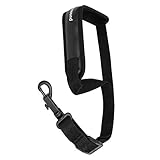
- Upgraded Length: We updated length with suitable for players of all ages and sizes, and easily adjusts from 17"–22.8" (43,2cm–58cm).

- All-Day Comfort with Neoprene Padding: Soft, durable neoprene cushions the neck and absorbs movement, reducing bounce and fatigue during practice, rehearsals, or long performances.

- Comfortable Neoprene Support: Padded neoprene design distributes weight evenly across the shoulders to reduce neck and back strain during long rehearsals or performances.
Unboxing and Initial Impressions of the starfa lab Saxophone Neck Strap
Out of the packaging, the starfa lab Saxophone Neck Strap makes an immediate impression as a clean, low-profile accessory. Weighing in at a lightweight 2.72 ounces, it does not add unnecessary bulk to your gig bag. The highlight of the unboxing experience is the backstrap itself: featuring a 5cm wide neck pad lined with soft leather padding, it feels pliable and ready to use without requiring a long break-in period. The black solid-pattern styling gives it a classic look that fits right into formal concert settings or casual rehearsals.
The adjustment slider slides along the main cord with minor resistance, which is promising for preventing unintentional slippage when the weight of the horn is applied. The overall length range spans from 17 inches to 22.8 inches (43.2cm to 58cm), giving it a modest operational window. When we inspected the attachment point, the sturdy hook mechanism looked clean and smooth, designed specifically to avoid gouging the brass finish on your instrument’s strap ring. Musicians interested in inspecting the design details can view the starfa lab Saxophone Neck Strap on online retail listings for high-resolution closeups.
Pros
- Smooth and ultra-soft padded leather backstrap that reduces neck irritation
- Sturdy, smooth hook mechanism designed to prevent scratching instrument metal
- Broad multi-instrument support across Alto Sax, Tenor Sax, and Bass Clarinet
- Affordable price point, making it an exceptional entry or backup strap
Cons
- 17″ to 22.8″ adjustment length may feel restrictive for taller players (over 5’10”)
- Padding density is suitable for general use, but may feel light for extra-heavy gigging
In-Depth Performance Analysis: Putting the starfa lab Saxophone Neck Strap to the Test
1. Ergonomics & Comfort: Leather Padding Under Pressure
The primary reason to upgrade from a stock strap to the starfa lab Saxophone Neck Strap is comfort, and in our hands-on evaluation, the strap performs admirably in this department. The 5cm wide backstrap is crucial here; by expanding the contact patch across the nape of the neck, it prevents the severe neck pinch commonly associated with narrow 1-inch nylon straps. The ultra-soft leather surface feels smooth against bare skin and does not grab or pull at clothing collars during energetic playing.
When supporting an alto saxophone, the weight feels balanced and comfortably distributed. During 45-minute continuous practice blocks, we noticed significantly less localized strain along the upper trapezius muscles. The padding material has enough cushion to damp small movement vibrations without feeling squishy or unstable. If you are replacing a worn-out, unpadded strap, selecting a soft leather design built for neck support like this one makes daily rehearsal far more pleasant.
However, it is worth noting the limits of the cushion depth. While the padding is soft and thoroughly lined, it relies on a streamlined leather envelope rather than thick, ultra-dense gel or memory foam inserts. For standard alto saxophones and lighter tenor saxophones, this structural choice works well, maintaining an elegant look while relieving pressure points. For players seeking heavy-duty padding for 3-hour outdoor gigs, it offers moderate, reliable comfort rather than high-end orthopedic displacement.
2. Sizing and Adjustment Mechanics: Navigating the 17″ to 22.8″ Range
A neck strap must balance secure height setting with fast adjustability. The adjustment mechanism on the starfa lab Saxophone Neck Strap utilizes a central slider that grips the cord under tension. In our field testing, raising or lowering the horn to align the mouthpiece requires a simple tilt-and-slide action. Once locked under the downward pull of an alto or tenor sax, the mechanism stays in position without slowly creeping downward as you play.
The critical factor to analyze is the total sizing range, which spans from 17 inches to 22.8 inches (43.2cm to 58cm). For players of average height or compact builds—such as young students or musicians around 5’2″ to 5’6″—this range hits a sweet spot for alto saxophone placement. The instrument sits at a comfortable chest height, allowing easy neck movement and natural posture. You can see all length parameters and customer feedback to verify how this measurement interacts with your torso size.
Where taller players (around 5’10” and above) need to be cautious is when using this strap for tenor saxophone or bass clarinet resting positions. Because tenor saxes and bass clarinets suspend lower along the body frame, taller musicians may find themselves sitting near the absolute maximum extension point of 22.8 inches. If you have a longer torso and play tenor sax, the horn may rest slightly higher than your ideal ergonomic entry angle, requiring you to extend the slider to its absolute limit.
3. Hook Integrity and Instrument Protection: Safeguarding Your Horn
Instrument security is non-negotiable. A failing hook or sharp metal edge can severely damage an expensive woodwind horn. During our close inspection of the starfa lab Saxophone Neck Strap, we evaluated both the structural strength of the hook hardware and its physical interaction with brass strap rings.
The hook exhibits solid rigidity under load, showing no flexing or weakness when subjected to downward pull forces exceeding normal horn weights. Its surface contour is smooth and free of burrs, which prevents abrasive wear against the instrument’s eyelet ring. Fast attachment and quick release during instrument changes are easy, making it practical for multi-instrumentalists switching between horns on stage.
Furthermore, the non-scratch design principles built into the hardware give peace of mind. Many budget straps utilize unshielded metal hooks that erode lacquered brass finishes within weeks of use. Here, the hook material provides a smooth contact interface, serving as a feature that really sets it apart from standard OEM replacement straps in the sub-twenty-dollar category.
4. Multi-Instrument Adaptability: Alto Sax, Tenor Sax, and Bass Clarinet
Versatility is a major advantage for woodwind players who double across different instruments. We tested the starfa lab Saxophone Neck Strap across three primary compatible instruments: Alto Saxophone, Tenor Saxophone, and Bass Clarinet.
On Alto Saxophone, the strap excels. The weight of an alto (typically between 4.5 to 5.5 lbs) is suspended easily by the leather backstrap, keeping the horn anchored without pulling the back of your neck forward. On Tenor Saxophone, the padded section continues to absorb weight effectively, though as noted earlier, tall players will need to fully extend the adjustment cord. On Bass Clarinet, where the instrument’s floor peg bears much of the vertical weight when seated, the strap serves as an exceptional stabilizer, holding the upper joint steady without burdening the neck.
The lightweight 2.72-ounce total weight makes it easy to pack into any instrument case pocket or outer accessory pouch without crowding space. For doubling players who need a reliable, take-anywhere backup strap or a primary strap for secondary instruments, this versatility adds real value to your kit.
What Other Musicians Are Saying About This Strap
To supplement our hands-on testing, we analyzed real-world feedback from musicians across different skill levels and physical profiles who have used the starfa lab Saxophone Neck Strap extensively.
Positive user feedback frequently highlights the leather neck padding and practical performance on various instruments. A bass clarinetist noted that the padding felt comfortable on the neck and that the hook provided strong, secure quality during rehearsals. Another adult player, returning to the alto saxophone after a 20-year hiatus, praised the strap as an affordable, effective replacement for aging factory gear, confirming that for a player standing 5’5″, the length fit comfortably for regular playing.
On the critical side, sizing constraints and padding depth expectations emerged as common themes. A few users mentioned that while the padding is smooth, those expecting super-thick or ultra-heavy gel padding might find it somewhat modest. Additionally, taller players consistently noted that the maximum 22.8-inch length felt short for their frame when playing lower-slung horns, recommending that musicians over 5’10” verify their required drop length before purchasing. Overall, the broader consensus confirms that it is a solid, cost-effective accessory that performs well within its intended design scope.
How the starfa lab Saxophone Neck Strap Compares to Top Alternatives
1. Rayzm Universal Sax Strap

- The shoulder straps combine strong split cowhide leather with soft sheepskin for comfort. The harness design spreads the saxophone’s weight across both shoulders to reduce neck and back...
- The upgraded heavy-duty metal swivel snap hook is far more durable than earlier versions and now provides a secure, reliable hold for your saxophone with no risk of it falling. It is partially covered...
The Rayzm Universal Sax Strap takes a different ergonomic approach by utilizing a double shoulder harness design rather than a traditional single neck strap. Constructed with leather padding across both shoulders, it completely transfers instrument load away from the neck onto the shoulders and torso. This alternative is ideal for baritone sax players or musicians recovering from chronic neck strain who cannot bear weight on their cervical spine. However, compared to the sleek starfa lab Saxophone Neck Strap, the Rayzm harness is bulkier to wear, takes longer to slip on and off during quick instrument changes, and requires more storage space in your instrument case.
2. D’Addario Padded Sax Neck Strap

- PADDED SAX STRAP - Padded memory foam provides extra comfort on your neck.
- BREATHABLE - Breathable athletic material is comfortable and stays dry.

The D’Addario Padded Sax Neck Strap is a direct competitor in the traditional neck strap category. Featuring high-density foam padding encased in breathable fabric and a secure quick-adjust slider, D’Addario offers a refined, branded experience known for longevity. It comes with a secure snap hook mechanism that locks firmly onto strap rings. While the D’Addario strap offers slightly thicker foam cushioning, the starfa lab Saxophone Neck Strap counters with a smooth soft leather neck contact layer that many players prefer against bare skin, along with competitive overall value.
3. SaxHolder Saxophone Harness

- Latest Model - Transfers the entire sax weight evenly to both shoulders and stomach
- No stress on your neck
The Jazzlab SaxHolder represents a high-end structural departure from flexible neck straps. Using a patented three-point support system, the SaxHolder rests on both shoulders and bracing pads against the abdomen, removing 100% of the instrument weight from the neck without squeezing the chest. It is a favorite among professional tenor and baritone saxophonists who perform long standing gigs. While the SaxHolder offers superior weight relief, it comes at a significantly higher price point and rigid form factor. For casual players, students, or those on a budget, the starfa lab Saxophone Neck Strap provides a much simpler, highly portable, and affordable everyday alternative.
Final Verdict: Should You Buy the starfa lab Saxophone Neck Strap?
The starfa lab Saxophone Neck Strap delivers practical comfort, instrument safety, and clean aesthetics at an accessible price. Its 5cm wide soft leather-padded backstrap offers a noticeable upgrade over basic unpadded factory straps, distributing weight evenly across the neck to keep muscle tension at bay during long rehearsals. The smooth slider holds securely under tension, and the non-scratch hook design protects your instrument’s finish.
While taller musicians or players seeking heavy-duty gel padding should keep the 22.8-inch length limit in mind, this strap shines bright for students, adult returnees, and multi-instrumentalists playing alto sax, tenor sax, or bass clarinet. It offers solid quality and reliable everyday performance without overcomplicating your setup. If you are ready to eliminate neck strain and give your woodwind horn the comfortable support it deserves, click here to purchase the starfa lab Saxophone Neck Strap today.
Last update on 2026-10-18 / Affiliate links / Images from Amazon Product Advertising API