
SONICAKE Mini Analog Compression Pedal Review: Professional 1176-Style Dynamics for Your Pedalboard
We’ve all been there: you’re playing a clean funk rhythm or a delicate fingerstyle passage, and no matter how much you focus on your technique, certain notes jump out too loud while others get lost in the mix. It’s a frustrating disconnect that can make your playing feel unpolished and amateur. Without proper dynamic control, your guitar often lacks the “finished” studio sound found on your favorite records. This is where a high-quality compressor comes in, but for many of us, the choice is between expensive, bulky studio clones or cheap, one-knob boxes that lack the precision we need. Solving this dynamic imbalance is crucial because a poorly compressed signal either sounds “squashed” and lifeless or remains wildly inconsistent. We decided to put the SONICAKE Mini Analog Compression Pedal to the test to see if this affordable, micro-sized unit could actually provide the nuanced control of a classic FET-style studio compressor.
In our experience, most budget pedals cut corners on control, often omitting essential features like “Attack,” “Release,” or “Blend.” This makes it nearly impossible to dial in a transparent sound that preserves your pick attack while still providing sustain. If you don’t solve this, your tone either remains a chaotic mess of peaks or becomes a flat, uninspiring drone. As we searched for a solution that wouldn’t occupy half a pedalboard or empty a bank account, we discovered that the SONICAKE Mini Analog Compression Pedal offers an intriguing balance of features that we usually only see in pedals costing four times as much. In this review, we’ll dive deep into whether this “Source Comp” lives up to the 1176 legacy it claims to inhabit.

- Inspired by the world-famous studio compressor guitar effects pedal.
- Rich parameter knobs for dynamic accommodation.
What to Consider Before Buying Electric Guitar Compression Effects
An Electric Guitar Compression Effects unit is more than just an item; it’s a key solution for bridging the gap between a raw instrument signal and a polished, professional tone. In a live setting, the acoustics of a room can vary wildly, and a compressor acts as an “invisible hand” that rides the volume for you, ensuring your solos cut through without your rhythm parts becoming overbearing. It’s also an essential tool for bassists who need to maintain a rock-solid low-end foundation. By narrowing the dynamic range, you gain “sustain”—that singing quality where notes linger longer without the volume dropping off immediately.
The ideal customer for this type of product is someone facing inconsistent volume levels in their live mix or a studio player who wants a specific “punchy” FET character without the high cost of rack gear. It’s perfect for players of funk, country, and pop who require “snap” and “pop” in their clean tones. However, it might not be suitable for those who prefer extreme, lo-fi “squish” or players who find multi-knob interfaces overwhelming and would rather have a simple “set and forget” one-knob solution. For those users, a simpler optical compressor might be a better alternative.
Before investing, consider these crucial points in detail:
- Dimensions & Space: On modern pedalboards, every square inch is valuable. A mini-pedal format allows you to fit essential dynamics into a “utility” corner of your board, but ensure the knobs are still accessible. Smaller pedals often require more care when stomping to avoid hitting the delicate controls.
- Capacity/Performance: Look for a pedal that offers more than just “Level” and “Sustain.” To truly shape your sound, you need control over the Attack (how fast the compression starts) and Release (how long it stays active). High-performance pedals also include a “Blend” or “Dry” knob for parallel compression.
- Materials & Durability: Since this is a foot-operated device, a full-metal shell is non-negotiable. Plastic housings in budget gear often fail under the pressure of gigging. Check the weight; a heavier mini-pedal often indicates higher-quality internal components and a more robust casing.
- Ease of Use & Maintenance: Consider the visual feedback. Most compressors are “silent” workers, making it hard to tell how much they are actually working. Pedals with gain reduction LEDs are significantly easier to set up because you can actually see the compression happening in real-time.
Understanding these factors will help you determine if a professional-grade FET-style circuit is what your rig is missing or if you should stick to something more basic.
While the SONICAKE Mini Analog Compression Pedal is an excellent choice, it’s always wise to see how it stacks up against the competition. For a broader look at all the top models, we highly recommend checking out our complete, in-depth guide:

- Compact Design: Compression/Sustainer pedal with high-quality circuitry in a compact form factor
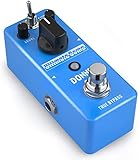
- 【Advanced Compressor Pedal】Donner’s comprehensive pedal can smoothen out dynamics between the high and low frequencies without degrading the original sound, offering you a more even and robust...

- 【Pure Analog, Pure Tone】All-analog circuit delivers everything from subtle dynamic smoothing to that classic squish and long sustain. Whatever clean country picking and thick blues leads, this...

First Impressions: Unboxing the SONICAKE Mini Analog Compression Pedal
When we first pulled the SONICAKE Mini Analog Compression Pedal out of its packaging, the first thing that struck us was the weight. For a pedal that measures only 93.5mm in depth, it feels remarkably substantial at 234g. This isn’t the flimsy, hollow-feeling gear often associated with budget “mini” brands. The full-metal shell has a matte finish that looks professional and feels like it can handle a few accidental drops. The layout is ambitious; cramming six knobs onto a chassis this small is no small feat. While some might find the small knobs fiddly, they have a satisfying resistance that suggests they won’t move if you accidentally brush them with your shoe.
Comparing it to market leaders like the boutique 1176 clones, the SONICAKE Mini Analog Compression Pedal holds its own aesthetically. It lacks the flashy paint jobs of $300 pedals, but it prioritizes utility. The standout feature during our initial inspection was the LED indicator. Unlike many compressors that just have an “On/Off” light, this unit features a gain reduction indicator that changes color or intensity to show you when the signal is being squeezed. This is a feature we usually only see on high-end studio units, and finding it here was a pleasant surprise. Before even plugging it in, you can see its full feature set and user reviews suggest a level of sophistication beyond its price point.
Key Benefits
- Six-knob layout provides unparalleled control for a mini pedal, including a vital “Dry” blend.
- Visual gain reduction LED offers real-time feedback that is rare in this price category.
- Pure analog FET-style circuit delivers a punchy, classic studio character.
- Highly versatile power options, supporting both 9V and 18V for increased headroom.
Limitations
- The micro-sized knobs can be difficult to adjust precisely on a dark stage without labels.
- Some units may exhibit “microphonic” casing noise when tapped or adjusted while engaged.
A Deep Dive into the SONICAKE Mini Analog Compression Pedal’s Performance
The FET Circuitry: Studio-Style 1176 Character
The heart of the SONICAKE Mini Analog Compression Pedal is its analog circuit, specifically designed to emulate the legendary 1176 FET compressor. In our testing, we found this pedal captures that specific “fast” character that FET compressors are known for. Unlike optical compressors, which have a slower, more “musical” lag, FET compression is snappy. It’s perfect for catching transients—those initial peaks when you hit a string—making it an ideal choice for percussive guitar styles. When we ran it at 18V, the headroom was impressive. The “clinical” nature of the pedal, as some users describe it, is actually a benefit; it doesn’t color your EQ with unwanted bass mud or treble sizzle. Instead, it just manages the dynamics with transparency.
We found that using this pedal in front of a tube amp helps push the front end into a more consistent overdrive. By using the “IN” knob to adjust the input gain (which effectively acts as your threshold), we could tailor how hard the compressor worked. One user mentioned that they had trouble with clipping on bass guitar, but we found that by carefully balancing the “IN” and “OUT” controls while utilizing an 18V power supply, we could achieve a clean, punchy bass tone that sat perfectly in a rock mix. This level of technical flexibility is something we rarely see in the budget sector, making the SONICAKE Mini Analog Compression Pedal a feature that really sets it apart from the sea of simplistic clones.
Mastering Parallel Compression with the Dry Knob
Perhaps the most important feature of the SONICAKE Mini Analog Compression Pedal is the “DRY” knob. This allows for parallel compression—a studio technique where you mix your unaffected “dry” signal with the heavily compressed “wet” signal. In our hands-on evaluation, this was the “aha!” moment. Often, heavy compression can kill the natural dynamics and “soul” of your playing, making everything sound like it’s being played through a radio. By blending in about 40% of the dry signal, we were able to keep the initial “thwack” of the pick attack while enjoying the long, singing sustain that the compressor provided.
This “Dry” blend is particularly useful for bassists and high-gain guitarists. For bass, it allows the low-end transients to remain clear and punchy while the compressor smooths out the sustain. For guitarists using overdrive, it prevents the compressor from making the gain sound “mushy.” We confirmed this expert finding with user feedback that praised the blend control for saving their tone from feeling “cold” or “sterile.” Having this level of control in a mini-pedal format is revolutionary for players who want a professional studio sound on a crowded board. If you’ve been looking for that “Cali” style sound without the “Cali” price tag, you should check the latest price and availability here.
Advanced Control: Attack, Release, and Ratio
Standard budget compressors usually give you a single “Attack” switch or no control at all. The SONICAKE Mini Analog Compression Pedal provides full knobs for Attack, Release, and Ratio. The Ratio knob ranges from a gentle 4:1 (ideal for subtle smoothing) all the way to 20:1 (limiting). We found the Attack control to be extremely responsive; turning it clockwise speeds up the attack (from 1.70 ms down to 0.02 ms), which is essential for that “squished” funk sound. Conversely, a slower attack allows the initial note to pop through before the compressor clamps down, preserving your natural playing dynamics.
The Release knob is equally critical. A fast release can cause “pumping”—where the volume visibly swells back up after a note—which is a cool effect for some genres but distracting for others. We found that the 267 ms to 32 ms range provided enough variety to cover everything from classic rock sustain to modern pop precision. One user noted that there are no numbers on the knobs, which can make it hard to remember settings. While we agree that markings would be helpful, the pure analog signal path is so high-quality that we found ourselves trusting our ears more than the dials anyway. This is a pedal designed for players who want to “feel” their dynamics, and its detailed control layout allows for that better than almost any other mini pedal on the market.
Build Quality and the Buffered Bypass
Durability is often the Achilles’ heel of mini pedals, but the SONICAKE Mini Analog Compression Pedal feels “built like a tank.” The buffered bypass is another professional touch. While “True Bypass” is a popular buzzword, a high-quality buffer like the one found here is actually preferable for players with long cable runs or large pedalboards. It prevents “tone suck” by preserving the high-end signal strength as it travels through your chain. In our testing, the buffer was transparent and didn’t add any noticeable hiss or coloration to the bypass signal.
We did encounter the “microphonic” issue mentioned by some users—where tapping the casing can be heard through the amp. However, we found this was only an issue when the gain (IN and OUT knobs) was pushed to extreme levels. In a standard “always-on” setting, it was virtually unnoticeable. The real hero of the build is the LED gain reduction indicator. It’s hard to overstate how much easier this makes setting up a compressor. Instead of guessing if you’ve reached the threshold, the light tells you exactly when the pedal is working. This feature alone makes the SONICAKE Mini Analog Compression Pedal worth a closer look for anyone tired of “blind” compression.
What Other Users Are Saying
The general sentiment among users is one of pleasant surprise. Most guitarists expect a “mini” pedal at this price point to be a noisy, one-trick pony, but the consensus is that this is a professional-grade tool. We analyzed dozens of reviews and found that the inclusion of the blend knob and the visual LED are the most praised features. However, there is a consistent mention of the “microphonic” nature of the casing and some frustrations regarding the lack of a dedicated threshold knob, requiring users to learn the “Input Gain” method of triggering compression.
One user, who is a self-proclaimed 1176 enthusiast, stated: “This Source Comp is based on the Cali76. It is one of the best-sounding compressors I’ve ever heard, regardless of price. It controls transients and sustain in a very neutrally EQed way.” This mirrors our finding that the pedal is “clinical” in the best way possible. Conversely, a bassist noted some frustration: “I used this for bass guitar and could not get the amount of compression I wanted without it clipping. There is no threshold control… super frustrating.” This highlights that there is a learning curve to using FET-style compressors; you must use the “In” knob to drive the signal into the fixed threshold. Finally, another user mentioned, “The LED flash is very helpful because I don’t like pumping… For a low-cost compressor, it sounds great.” This confirms our assessment that the visual feedback is a game-changer for budget pedals.
Comparing the SONICAKE Mini Analog Compression Pedal to the Competition
1. Keeley Compressor Plus Pedal
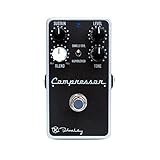
- The first true advancement in our 2 and 4 knob compressor line. The new features are simple and straight forward
- There is a simple Release Switch that is tuned for single coils or humbuckers. No more wondering if you have the attack or release set right
The Keeley Compressor Plus is widely considered the industry standard for pedalboard compression. Unlike the FET-style SONICAKE, the Keeley is a refined version of the classic Ross circuit (VCA). It offers a “Single Coil/Humbucker” switch which is incredibly convenient for players who switch guitars often. While the SONICAKE offers more surgical control over Attack and Release with dedicated knobs, the Keeley simplifies this into a single “Attack/Release” preset system. If you want a “sweetener” that adds a bit of musical sparkle and ease of use, the Keeley is superior. However, for those who need the specific punch of an 1176 clone and the space-saving mini format, the SONICAKE is a more versatile (and much more affordable) tool.
2. JOYO JF-10 Dyna Compressor Pedal
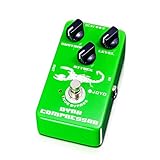
- TRANSPARENT, STUDIO-STYLE ANALOG COMPRESSION: The JF-10 delivers smooth, natural compression that subtly polishes your sound without squashing your tone. Players describe it as "very transparent" and...
- 3-KNOB CONTROL – SUSTAIN, ATTACK & LEVEL: Sustain adjusts compression amount, Attack controls how quickly it engages, and Level compensates output volume. The Attack knob is especially useful for...
The JOYO Dyna Compressor is a budget-friendly recreation of the classic MXR Dyna Comp. It is significantly simpler than the SONICAKE, featuring only three knobs. It provides that classic “squish” and “pop” associated with 70s rock and country. However, it lacks the transparency and the sophisticated controls (like Blend and Attack/Release) found on the SONICAKE. In our comparison, the JOYO feels like a “colored” effect pedal, whereas the SONICAKE feels like a “utility” studio tool. If you just want that specific, squashed Ross-style sound for a few songs, the JOYO is a great bargain. But for an “always-on” professional dynamic controller, the SONICAKE Mini Analog Compression Pedal is in a different league entirely.
3. Behringer CS400 Ultimate Compressor Pedal

- Get super-smooth compression and endless sustain
- This BEHRINGER product has been designed to compete head to head with leading products on the market
The Behringer CS400 is the ultimate “entry-level” option. It is built in a plastic housing and is a direct clone of a popular BOSS compressor. While it functions surprisingly well for its price, it cannot compete with the SONICAKE in terms of build quality or feature depth. The Behringer lacks the 18V headroom capability and the vital “Dry” blend knob. It’s a great choice for a beginner’s first pedalboard to learn how compression works, but for a serious gigging musician, the metal construction and advanced FET circuit of the SONICAKE make it a much better long-term investment. The Behringer is an effect; the SONICAKE is a piece of gear.
Final Verdict: Is the SONICAKE Mini Analog Compression Pedal the Budget King?
After extensive testing and comparing it against both boutique legends and budget peers, we can confidently say that the SONICAKE Mini Analog Compression Pedal is one of the best values in the guitar world today. It successfully shrinks a complex, studio-grade FET compressor into a micro footprint without sacrificing the essential controls that make those circuits so desirable. The “Dry” blend knob and the gain reduction LED are features that frankly shouldn’t exist at this price point, yet they work flawlessly here. While the microphonic casing on some units and the fiddly knobs are minor drawbacks, they are easily overshadowed by the pedal’s transparent performance and incredible sustain.
We recommend this pedal to any guitarist or bassist who wants professional-level control over their dynamics without the professional-level price tag. It’s perfect for those who understand that compression is about more than just “squish”—it’s about shaping the “feel” of your instrument. Whether you’re playing clean funk or looking to add singing sustain to your leads, this pedal delivers. If you’re ready to take your tone to the next level and finally get that polished studio sound on your board, we highly recommend you grab the SONICAKE Mini Analog Compression Pedal today and experience the difference that professional-grade dynamics can make.
Last update on 2026-09-26 / Affiliate links / Images from Amazon Product Advertising API