
SONICAKE Delay Reverb Guitar Effects Pedal Review: Is This the Best Value Ambient Pedal on the Market?
If you have ever plugged your guitar directly into a dry amplifier, you know the feeling of a sound that lacks life and depth. For years, I struggled to find that perfect balance between space and clarity without spending a fortune on high-end boutique pedals. The problem many of us face is the “rabbit hole” of effects; we start with a simple reverb, then realize we need a delay, and suddenly our pedalboard is cluttered, our power supply is maxed out, and our wallet is empty. Failing to find an integrated solution often leads to a messy signal chain and a tone that feels disconnected from the music.
When searching for a solution, I realized that many players, from bedroom hobbyists to Sunday morning church musicians, just want something that “works” without requiring a degree in sound engineering. This is where the SONICAKE Delay Reverb Guitar Effects Pedal enters the conversation. We wanted to see if a budget-friendly, two-in-one digital pedal could actually compete with the “big boys” or if it was just another cheap plastic toy. After putting it through its paces in several different musical contexts, we discovered that the answer is far more nuanced than a simple “yes” or “no.”

- Digital Delay/Plate Reverb 2 effects in 1 guitar effects pedal
- Max. 2000ms Delay Time, Reverb has large schedulable Decay parameter
What to Consider Before Buying an Electric Guitar Delay & Reverb Effects Pedal
An Electric Guitar Delay & Reverb Effects pedal is more than just an item; it’s a key solution for creating texture, depth, and a sense of space in your performance. Whether you are playing ethereal ambient swells or just adding a touch of “air” to a blues solo, these effects are the bread and butter of modern guitar tone. Without them, your sound can feel two-dimensional and brittle, especially when playing through digital modelers or solid-state amplifiers that lack built-in spring tanks.
The ideal customer for this type of product is someone facing a limited budget or restricted pedalboard real estate, while it might not be suitable for those who require deep menu-diving, MIDI integration, or hundreds of presets. If you are a professional touring musician who needs ten different types of delay for a two-hour set, a specialized unit like a BOSS DD-500 might be more your speed. However, for the player who wants high-quality “set and forget” tones, a combined unit is often the superior choice.
Before investing, consider these crucial points in detail:
- Dimensions & Space: Pedalboard real estate is precious. You want a unit that combines features to save space but isn’t so small that the knobs are impossible to turn or the switches are too close together. Look for a “just right” footprint that accommodates dual footswitches without causing accidental “fat-foot” hits during a performance.
- Capacity & Performance: In the world of delay, milliseconds matter. A pedal offering up to 2000ms of delay time, like the SONICAKE Delay Reverb Guitar Effects Pedal, provides enough “repeats” for everything from subtle slapback to huge, cinematic soundscapes. Pay attention to the “Decay” parameters on the reverb side to ensure it can create the “wash” you need.
- Materials & Durability: Since these devices live on the floor and are literally stepped on, metal housing is non-negotiable. Look for solid 1/4-inch jacks and switches that feel tactile rather than mushy. A heavier weight (around 400-500 grams) usually indicates better internal shielding and higher-quality components.
- Ease of Use & Maintenance: Complicated pedals often stay in the box. You want intuitive controls—knobs for Mix, Time, and Feedback—that allow you to dial in a sound in seconds. Also, consider the power requirements; standard 9V center-negative power is the industry standard and makes integration into your existing setup seamless.
While the SONICAKE Delay Reverb Guitar Effects Pedal is an excellent choice for those seeking value and performance, it’s always wise to see how it stacks up against the competition. For a broader look at all the top models, we highly recommend checking out our complete, in-depth guide:
- Digital Delay/Plate Reverb 2 effects in 1 guitar effects pedal

- [Analog Delay Pedal]: Reproduces the warm and natural classic vintage analog delay sound


- [2-in-1 Pedal]: The 2-in-1 Revecho pedal seamlessly integrates meticulously chosen delay and reverb effects, offering musicians a powerful combination of tonal possibilities in a single, compact pedal
First Impressions: Unboxing the SONICAKE Delay Reverb Guitar Effects Pedal
When we first got our hands on the SONICAKE Delay Reverb Guitar Effects Pedal, the first thing that struck us was the build quality. For a pedal in this price bracket, you often expect lightweight aluminum or even reinforced plastic. Instead, this unit feels like a tank. At 440 grams, it has a reassuring heft that suggests it can handle the rigors of a local gig or a hectic rehearsal schedule. The “Levitate” aesthetic is clean, with a matte finish and clearly labeled controls that are easy to read even under dim stage lights.
Setting it up was a breeze. It uses a standard 9V DC power supply (which you should ensure is high quality to avoid digital hum). Before you buy, you might want to see its full feature set and user reviews to understand why this dual-footswitch design is gaining so much traction. Unlike some “mini” pedals that cram everything into a tiny box, the SONICAKE Delay Reverb Guitar Effects Pedal strikes a perfect balance—it’s compact enough to fit on a crowded board but large enough to operate comfortably with your feet.
Advantages
- Incredible value: Two high-quality digital effects for the price of one entry-level pedal.
- Extended Delay Time: Up to 2000ms allows for massive ambient washes and rhythmic layering.
- Dedicated Tap Tempo: An absolute game-changer for live performances where timing is everything.
- Trail Function: The “Trail” feature allows the reverb and delay to fade out naturally after the pedal is switched off.
Limitations
- No Power Supply Included: You will need to provide your own 9V center-negative adapter.
- Digital Signal Path: While very clean, purists seeking “analog-only” warmth might find it a bit too pristine.
A Deep Dive into the Performance of the SONICAKE Delay Reverb Guitar Effects Pedal
To truly understand what this pedal offers, we tested it across various genres, from ambient post-rock to clean country picking. We used both humbucker and single-coil guitars to see how the digital processing handles different input signals. The results were surprisingly professional, proving that high-quality sound doesn’t always have to come with a boutique price tag.
Sonic Landscape: The Plate Reverb & Digital Delay Synergy
The heart of the SONICAKE Delay Reverb Guitar Effects Pedal is its dual-engine design. The reverb side focuses on a “Plate” algorithm. In our testing, we found this plate reverb to be exceptionally versatile. Unlike a spring reverb, which can sometimes sound “boingy” or metallic, this plate reverb offers a smooth, expansive decay that wraps around your notes. By cranking the “Decay” parameter, we were able to create huge, cathedral-like spaces that didn’t muddy up the original guitar signal. It’s a very “musical” reverb that feels like it belongs in a high-end studio rack.
When you kick in the delay side, things get even more interesting. With a maximum delay time of 2000ms, this pedal outclasses many digital delays that cap out at 800ms or 1000ms. We were able to create slow, drifting echoes that felt incredibly lush. We found that by setting the delay feedback high and the reverb decay to about 60%, we could achieve that “shimmering” wall of sound that is essential for modern worship music or cinematic scoring. If you want to experience this for yourself, you can check the latest price and availability to start building your own ambient board.
Live Utility: Tap Tempo and Trail Functions
One of the biggest hurdles with budget pedals is the lack of “smart” features. The SONICAKE Delay Reverb Guitar Effects Pedal breaks this mold by including a dedicated Tap Tempo function. During our live test sessions, being able to tap the tempo of the delay to match the drummer was invaluable. It eliminates the awkwardness of bending down to twist a knob mid-song. Furthermore, the “Trail” function is a feature often reserved for much more expensive units. When you turn the pedal off, the echoes and reverb tails don’t just cut off abruptly; they decay naturally.
This “Trail” function makes the transition between song sections feel professional and polished. We also noted the special design Buffer Bypass circuit. In a long signal chain with multiple pedals and long cables, you often lose high-end frequencies (known as “tone suck”). The buffer in this pedal acts as a signal restorer, ensuring that your guitar’s natural brightness reaches the amplifier intact. We found this to be a feature that really sets it apart from other budget-friendly options that often use cheap true-bypass switches that click loudly or degrade the signal.
User Interface and Ease of Use
The layout of the SONICAKE Delay Reverb Guitar Effects Pedal is refreshingly simple. There are no menus to navigate, no hidden “shift” functions, and no need for an external app. Each effect has its own dedicated footswitch and set of controls. The delay section gives you ‘Time’, ‘FB’ (Feedback), and ‘Mix’, while the reverb section offers ‘Decay’ and ‘Mix’. This simplicity is its greatest strength. We found that even during a fast-paced rehearsal, we could make micro-adjustments to the mix levels without missing a beat.
We particularly appreciated the spacing of the footswitches. Despite its relatively compact size, the switches are far enough apart that you won’t accidentally engage the delay when you only wanted reverb. For those who are new to pedals, this is an ideal starting point because it teaches the fundamentals of how delay and reverb interact. If you are looking for a reliable entry point into the world of effects, you should take a closer look at the control layout here.
Build Quality and Reliability
Durability is often where cheap pedals fail. They either have flimsy plastic jacks or footswitches that stop working after a few months of use. Our evaluation of the SONICAKE Delay Reverb Guitar Effects Pedal showed that the hardware is built to last. The 1/4-inch jacks are securely bolted to the chassis, meaning they won’t wobble or lose connection over time. The knobs have a nice resistance to them—they aren’t loose, so they won’t get bumped out of position easily.
While the pedal is digital, it operates with a relatively low power draw of 92mA. This is important because it means it can be powered by almost any standard power brick or even a daisy chain without causing digital interference or noise. We tested it alongside several other pedals on a shared power supply and found it to be impressively quiet. For players who are concerned about noise floor and reliability, this unit is a safe bet. You can read more about its technical specifications to see if it fits your specific power setup.
What Other Users Are Saying
The general sentiment among users is one of pleasant surprise. Most players expect “budget” pedals to be functional but unremarkable; however, the SONICAKE Delay Reverb Guitar Effects Pedal seems to consistently exceed those expectations. We found that users especially appreciate the value-to-performance ratio, with many noting that it replaced two or more separate pedals on their board.
One experienced user, who has been playing for 30 years and owns a high-end Strymon Timeline, noted: “The [Strymon] is a phenomenal pedal. But I’m at a point where I just want to set it and play. I found myself going down rabbit holes… [this pedal] gets the job done and very well.” This highlights the pedal’s “plug and play” appeal. Another user mentioned using it for DAWless synth jams, praising the Tap Tempo feature for keeping the textures in sync with their sequences.
On the negative side, a few users were disappointed that a power supply wasn’t included, which is standard for most pedals but can be a surprise for beginners. One user mentioned a volume drop when using it in front of a high-gain distortion, saying: “The problem is that the volume drops when you activate… I thought I had connected it incorrectly.” In our testing, we found that placing the pedal in the effects loop of the amplifier usually solves any perceived volume or headroom issues, but it’s something to keep in mind if you plan to run it strictly in front of a dirty amp.
Comparing the SONICAKE Delay Reverb Guitar Effects Pedal to the Competition
To help you decide if this is the right choice, let’s look at how it compares to some of its closest competitors in the market.
1. Orange Crush 35 2-Channel Reverb Amplifier
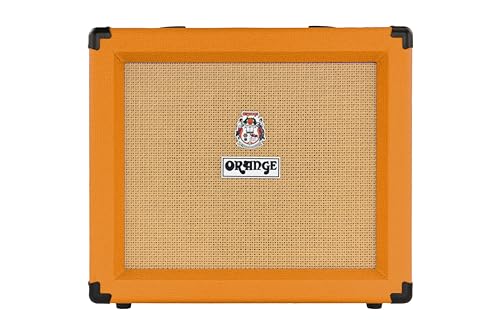
- Footswitchable channels and an analogue signal path
- Cab Sim loaded headphone output
While not a pedal, the Orange Crush 35 represents an alternative approach to getting a good reverb sound. This amplifier has a built-in digital reverb that sounds fantastic for practice and small gigs. However, it lacks the flexibility of the SONICAKE Delay Reverb Guitar Effects Pedal. With the pedal, you get a dedicated delay with tap tempo and 2000ms of time, which no built-in amp reverb can match. If you already have an amp you love, the SONICAKE is the better way to expand your sound. If you are looking for a complete “all-in-one” practice solution, the Orange amp is a great choice, but for tone-shaping versatility, the pedal wins hands down.
2. BOSS DD-8 Digital Delay Guitar Pedal

- The most advanced BOSS compact series delay ever
- Eleven versatile modes include basic digital delay, vintage echoes, shimmer, mod, looper, and more
The BOSS DD-8 is the industry standard for digital delay. It offers more modes (including shimmer, reverse, and warp) and legendary BOSS durability. However, the DD-8 does not include a reverb engine. To get the same functionality as the SONICAKE Delay Reverb Guitar Effects Pedal, you would need to buy a separate BOSS RV-6, which would cost nearly three times as much as the SONICAKE. If you are a delay specialist who needs every possible delay type, get the BOSS. If you want a high-quality ambient “wash” that combines both effects in one affordable box, the SONICAKE is the much more economical and space-saving choice.
3. MOOER A7 Reverb Guitar Pedal Versatile Effects

- 7 different reverb effects from classic to psychedelic, Traditional Plate , Hall Large Spacious Reverb, Warp Moulated Reverb,Shake, Crush, Shimmer, Dream Reverb in a micro size.
- Trail On: Choose between INFINITE trail function or the more traditional“ Trail On” function
The MOOER A7 is a dedicated reverb pedal that focuses on “Ambient” sounds. It has 7 different reverb types and a “trail” function. While the reverb algorithms in the A7 are arguably more creative and varied, it again lacks the delay component. The SONICAKE Delay Reverb Guitar Effects Pedal provides a more complete “soundscape in a box.” If you only need crazy, psychedelic reverbs, the MOOER is a strong contender. But for most guitarists, the combination of a solid Plate Reverb and a 2000ms Delay provided by SONICAKE is far more useful for everyday playing and gigging.
Final Verdict: Should You Buy the SONICAKE Delay Reverb Guitar Effects Pedal?
After extensive testing and comparison, we can confidently say that the SONICAKE Delay Reverb Guitar Effects Pedal is a standout performer in the budget-to-midrange market. Its greatest strength lies in its simplicity and the quality of its core sounds. The Plate Reverb is lush and unobtrusive, and the Digital Delay is crisp and expansive. The inclusion of Tap Tempo and Trail functions makes it a legitimately professional tool that can hold its own on any stage.
We recommend this pedal to anyone looking to simplify their board, as well as beginners who want to explore ambient textures without breaking the bank. While it might not have the “prestige” of boutique brands, the ears don’t lie—this pedal sounds great. Whether you are using it as an “always-on” sweetener or for massive, echoing leads, it delivers. If you are ready to elevate your tone and add a professional sense of space to your playing, we highly suggest you order yours today and experience the ambient magic for yourself.
Last update on 2026-04-02 / Affiliate links / Images from Amazon Product Advertising API