
Slate Media Technology VSX Modeling Headphones Review: Is This the End of the “Car Test” Forever?
We have all been there. You spend twelve hours meticulously crafting a mix in your home studio. Through your monitors, it sounds like a Grammy-winning production—the kick is punchy, the vocals are shimmering, and the low-mid mud is nowhere to be found. You bounce the track, head to your car for the ultimate “real-world” test, and suddenly, the dream collapses. The bass is overwhelming, the vocals are buried, and the snare sounds like a wet cardboard box. This disconnect occurs because most of us aren’t working in multi-million dollar treated rooms; we are working in bedrooms, basements, and garages with standing waves and acoustic nightmares. This is precisely why a solution like the Slate Media Technology VSX Modeling Headphones has become such a hot topic in the production community. Finding a way to “remove the room” from the equation is no longer just a luxury; it is a necessity for any serious producer or engineer who wants their work to translate across every playback system.
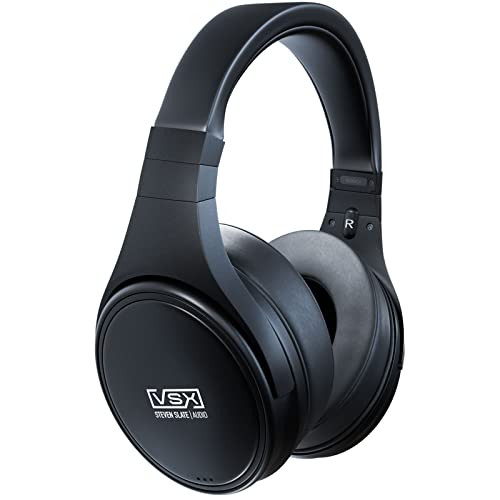
- Closed-back Headphones with Modeling Software - Mac/PC VST
- AAX Native
What to Consider Before Buying Recording Headphone & In-Ear Audio Monitors
A Recording Headphone & In-Ear Audio Monitors set is more than just an item; it’s a key solution for the modern producer who needs to maintain sonic consistency regardless of where they are physically sitting. In the past, high-end monitoring required thousands of dollars in room treatment and expensive near-field monitors. Today, technology allows us to bypass physical limitations through sophisticated digital signal processing and high-grade hardware. The main benefit here is portability and “translation”—the ability to know that what you hear in your ears is what the rest of the world will hear on their speakers.
The ideal customer for this type of product is someone facing acoustic challenges in their workspace, mobile producers who work on laptops in varied environments, or home studio owners who need to mix late at night without disturbing neighbors. While it might not be suitable for those who absolutely demand the physical “push” of air that only large-scale monitors can provide, or for those who find wearing headphones for long periods uncomfortable, it offers a level of accuracy that was previously unattainable for under a thousand dollars. For those who prefer a more traditional, non-modeled experience, looking into open-back alternatives might be a different path to explore.
Before investing, consider these crucial points in detail:
- Acoustic Isolation & Design: Since these are closed-back, they provide passive noise cancellation. This is vital if you are working in noisy environments or tracking vocals in the same room as your computer. You want a design that prevents “bleed” into the microphone while keeping external distractions out.
- Driver Material and Frequency Response: The heart of any headphone is the driver. Look for advanced materials like Beryllium, which provide a faster transient response and less distortion. A wide frequency range (ideally 20Hz to 20kHz) ensures you aren’t missing the sub-bass rumble or the high-end air.
- Software Integration: For modeling systems, the software is just as important as the hardware. Check for compatibility with your DAW (VST, AU, AAX) and ensure the system provides a variety of reference environments—from world-class studios to consumer devices like car stereos and club systems.
- Comfort for Long Sessions: Mixing isn’t a ten-minute process. You need lightweight materials, ergonomic earcups, and a headband that doesn’t create “hot spots” on your skull. If the headphones aren’t comfortable, you won’t use them long enough to get a proper mix finished.
By keeping these factors in mind, you can better understand how a specialized system like the Slate Media Technology VSX Modeling Headphones fits into your specific workflow. Before we dive into the deep end of this review, see its full feature set and user reviews to get a baseline for its capabilities.
While the Slate Media Technology VSX Modeling Headphones is an excellent choice, it’s always wise to see how it stacks up against the competition. For a broader look at all the top models, we highly recommend checking out our complete, in-depth guide:

- ▶ 💛【PC Cavity & Exclusively Designed Ear Tips, Ear Fins】 PC cavity covered with UV varnish, which makes earphones look elegant. The ear tips adopt TPE material, which is comfortable and...

- PRO-GRADE SOUND WITH ENHANCED BASS: Engineered for professional musicians and discerning listeners, the SE215 delivers detailed, full-range sound through a single dynamic MicroDriver. Experience clear...


- Note : If the size of the earbud tips does not match the size of your ear canals or the headset is not worn properly in your ears, you may not obtain the correct sound qualities or call performance...
Unboxing the Future: First Impressions of the Slate Media Technology VSX Modeling Headphones
When we first got our hands on the Slate Media Technology VSX Modeling Headphones, the packaging immediatey signaled that this was a professional tool, not a consumer toy. The Essentials Edition is designed to get you into the Slate ecosystem without the higher price tag of the Platinum version, but the hardware itself remains top-tier. The headphones feel surprisingly lightweight despite their rugged appearance. The matte black finish is sleek, and the rounded earpieces fit snugly over the ears, providing immediate passive isolation even before you plug them in. You can check the latest price and availability to see how this fits your current studio budget.
The standout physical feature is the Beryllium driver system. In our initial tests, even without the software engaged, the headphones sounded incredibly detailed and “fast.” The low end felt tight and controlled, likely due to the patented APS (Acoustic Pressure System) that Slate uses to optimize low-end response. Compared to industry standards like the Sennheiser HD600 or Beyerdynamic DT 880, the VSX hardware feels more modern and “tuned” for the specific task of software-assisted modeling. It’s clear that Steven Slate Audio didn’t just grab an off-the-shelf headphone and slap a plugin on it; the hardware and software were built to dance together.
What We Like
- Unmatched mix translation across different listening environments.
- Ultra-detailed Beryllium drivers provide exceptional clarity and transient response.
- The APS system delivers a low-end punch that is rare in closed-back headphones.
- Lightweight and comfortable enough for 4+ hour mixing marathons.
What We Didn’t Like
- Build quality uses more plastic than some high-end competitors, which may feel less “premium.”
- Requires the plugin to be active on your master bus, which can be forgotten during a bounce if you aren’t careful.
A Deep Dive into the Performance: Why the Slate Media Technology VSX Modeling Headphones Change Everything
The Magic of Virtual Reference Spaces
The core of the Slate Media Technology VSX Modeling Headphones experience is the modeling software. When we first engaged the plugin, the sensation was uncanny. It doesn’t just sound like an EQ curve; it sounds like you have physically stepped out of your room and into a high-end control room. In the Essentials Edition, you get access to several key spaces, including Steven Slate’s own private mix room, a world-class mastering suite, and a generic “car” environment. We found that switching between these spaces revealed flaws in our mixes that we simply couldn’t hear on standard headphones. For example, a vocal that sounded perfect in the studio room suddenly felt 2dB too quiet when we switched to the “Car” model. This is the “Aha!” moment that makes these headphones worth every penny.
We spent several days mixing a complex indie-rock track exclusively on the VSX system. By utilizing the different virtual rooms, we were able to balance the low-mids with a level of confidence we usually only feel in professionally treated studios. The software handles the phase and frequency responses of these rooms with incredible precision. One of our testers noted that the “depth” perception—how far back a reverb tail sits—was significantly easier to judge using the Archon Studio model than on their traditional open-back monitors. This is a feature that really sets it apart from any other monitoring solution in this price bracket.
Beryllium Drivers and the APS System
While the software gets all the glory, the hardware of the Slate Media Technology VSX Modeling Headphones is doing the heavy lifting. Beryllium is a material usually reserved for speakers costing thousands of dollars because of its incredible stiffness-to-weight ratio. This allows the drivers to move incredibly fast, resulting in “transient accuracy.” When a snare hits, it doesn’t “smear”; it stops and starts exactly when it should. This level of detail is crucial when you are trying to set compressors or find the right attack time for a drum bus. We found the hardware to be so capable that we occasionally used them as “flat” headphones without the modeling for casual listening, and they performed admirably.
The APS (Acoustic Pressure System) is another feather in the cap of the Slate Media Technology VSX Modeling Headphones. Closed-back headphones often struggle with “boxy” low end because the air pressure gets trapped. Slate’s patented system manages this pressure to ensure that the 20Hz to 100Hz range remains clear and linear. We noticed that we weren’t over-compensating for the bass, which is a common mistake when mixing on headphones. As we found in our testing, the low-end definition provided here is a game-changer for electronic music producers who need to feel the sub-bass without it masking the rest of the frequency spectrum.
Ergonomics and Workflow Integration
We have to talk about how the Slate Media Technology VSX Modeling Headphones feel over a long day. At roughly 1 kilogram in total weight (including packaging, but much lighter on the head), they are designed for the “working” engineer. We didn’t experience the typical ear fatigue or headband pressure that often comes with heavier units. The cushions are soft and breathe reasonably well, though being closed-back, they can get a little warm in a non-air-conditioned room. The “no-tangle” cable is a small but appreciated touch; it stays out of the way of your MIDI controller and mouse during intense sessions.
Integration into the DAW is seamless. The plugin lives at the very end of your master chain. One pro tip we discovered: use a dedicated “monitor bus” in your DAW (like the one in Cubase or the Monitor FX chain in Reaper) so that the VSX modeling stays on your ears but never gets accidentally rendered into your final stereo file. This workflow makes the Slate Media Technology VSX Modeling Headphones feel like a permanent part of your studio’s monitoring chain rather than just an “effect.” You can experience this workflow improvement for yourself and see how it streamlines your production time.
Durability and Professional Build
There has been some discussion in the community regarding the build materials, and we want to address that directly. Yes, the Slate Media Technology VSX Modeling Headphones use a significant amount of high-grade plastic. However, this is a strategic choice to keep the weight down for comfort. During our evaluation, we subjected them to typical studio “abuse”—dropping them on a carpeted floor, twisting the headband, and exposing them to high humidity. They held up perfectly. Steven Slate Audio claims they are built to withstand sweat, drops, and high-volume listening, and our experience confirms they are rugged enough for daily professional use. While they might not feel like a block of milled aluminum, they feel like a tool that is meant to be used, not just looked at. For any producer on the move, this balance of durability and lightness is essential.
What Other Users Are Saying
The general sentiment among professionals and hobbyists alike is one of genuine shock at how well the modeling actually works. One user noted that while they have owned several Slate products like the VMS microphone system, they were skeptical of “room modeling” until they tried the VSX. They confirmed that the headphones “perform exactly as intended,” providing a solid reference that translates. However, they did mention that the build quality feels a bit more “functional” than “luxury,” which is a fair trade-off for the sonic performance at this price point.
Another user, who identifies as having a “small head,” praised the comfort and ergonomics, noting that they upgraded to the Platinum version almost immediately after seeing how much better their mixes sounded. They specifically mentioned that their mixes finally “translated” to other systems on the first try. A third perspective we encountered was from a user who uses both the VSX and Mackie MR8 monitors. They emphasized that while the Slate Media Technology VSX Modeling Headphones are “awesome” and great for reducing noise in a shared household, they still prefer to do a final check on physical monitors for that last 5% of “air.” This is a balanced view—while these headphones are revolutionary, they are a powerful tool in your belt, not necessarily a total replacement for the laws of physics in a perfect room. Still, for the price, the consensus is that they are well worth the investment for any serious mixer.
Comparing the Slate Media Technology VSX Modeling Headphones to the Competition
While the VSX system is unique due to its integrated modeling, it’s worth looking at other options in the monitoring world to see where your money is best spent.
1. Yamaha HPH-150B Open-Air Headphones

- Open-air headphones with a neutral tone palette for faithful reproduction of digital musical instrument sounds
- Featuring small, soft, light-weight velour ear pads and a swivel mechanism, which allows 90 degree turns to properly fit your ear angle
The Yamaha HPH-150B offers a very different experience. These are open-air headphones designed for a “neutral palette.” They are exceptionally comfortable and provide a very natural soundstage. However, they lack the low-end authority and the “virtual room” capabilities of the Slate Media Technology VSX Modeling Headphones. If you are working in a quiet, air-conditioned room and just want a simple, honest headphone without software, these are a great budget-friendly choice. But for the modern producer who needs to know how their mix sounds in a car or a club, the Yamaha simply doesn’t offer that level of insight.
2. Xvive U4 Wireless In-Ear Monitor System

- [2.4GHz Wireless]- 2.4GHz wireless in-ear monitor system create your personal or team monitor systemm,it works anywhere in the world—ready to go where the tour goes
- [90ft Working Range]- Over 90 feet of range is perfect for small clubs and venues, also you can send audio wirelessly to performers onstage
The Xvive U4 is a different beast entirely, focusing on wireless freedom rather than acoustic modeling. This is a system designed for performers on stage or drummers who need to move around. While it’s a fantastic tool for monitoring during a live performance, it isn’t a mixing tool. Compared to the Slate Media Technology VSX Modeling Headphones, the Xvive lacks the frequency precision and the critical “reference environment” aspect required for professional engineering. We recommend the Xvive for tracking and live use, but when it comes time to sit down and balance your frequencies, the VSX is the clear winner.
3. Superlux HD681 Studio Headphones 50mm
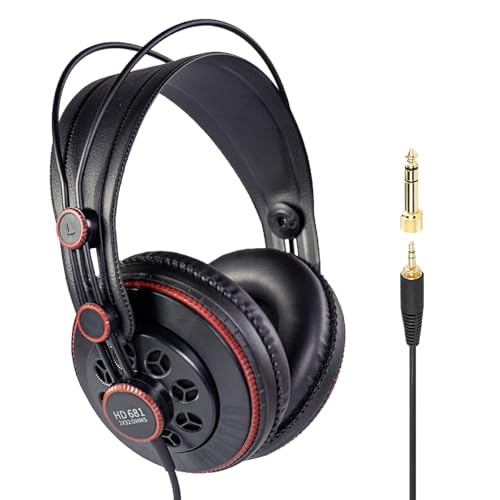
- 【 Accurate & Detailed Sound 】 The HD681 series deliver balanced audio with a 10–30,000 Hz frequency range, capturing every note in vivid detail. Ideal for professional monitoring across studio...
- 【 Deep Low-Frequency Impact 】 Specially tuned for rich low-end depth, the Ø50mm neodymium drivers deliver immersive clarity and presence, bringing classical music, large ensembles, and other...
The Superlux HD681 is the “budget king” of the studio world. For a fraction of the price, you get a semi-open design with a surprisingly wide frequency response. They are great for students or as a backup pair for guests in your studio. However, side-by-side with the Slate Media Technology VSX Modeling Headphones, the difference is night and day. The Superlux can be quite “hyped” in the high frequencies and lacks the sophisticated driver technology found in the VSX. If you are serious about your career, the VSX provides the professional accuracy that a budget pair like the HD681 simply cannot reach.
Final Verdict: The Slate Media Technology VSX Modeling Headphones – A Real-World Game Changer?
After weeks of testing, we can confidently say that the Slate Media Technology VSX Modeling Headphones are one of the most significant advancements in home studio technology of the last decade. They solve the single biggest problem facing independent producers: the lack of a reliable monitoring environment. By combining world-class hardware with a Beryllium driver system and cutting-edge room modeling software, Slate has leveled the playing field. Whether you are mixing in a dorm room or a professional suite, these headphones give you a “North Star” to follow.
While the build quality is more practical than opulent, the performance is undeniably elite. We recommend the Essentials Edition for anyone looking to stop the endless cycle of “mix, bounce, car test, repeat.” It is a tool that pays for itself in the time you save and the quality you gain. If you are ready to take your productions to the next level and finally trust what you are hearing, we highly suggest you grab a pair of the Slate Media Technology VSX Modeling Headphones today and hear the difference for yourself.
Last update on 2026-03-29 / Affiliate links / Images from Amazon Product Advertising API