
Shubb 12-String Guitar Capo Review: The Ultimate Solution for Buzz-Free Tuning?
If you have ever spent an entire practice session trying to clamp down a 12-string guitar neck, you already know the unique brand of frustration it brings. I remember sitting down with my favorite acoustic, eager to shift keys for a new arrangement, only to be greeted by that dreaded metallic buzz vibrating off the octave strings—especially the low E. Most standard capos simply lack the specialized geometry and precise pressure needed to handle the wider neck and doubled string configuration of a 12-string instrument. They clamp too loosely, forcing you to crank them down until your hand aches, or they pull the strings completely out of tune, turning what should be a two-second adjustment into a ten-minute tuning marathon. Finding a reliable tool that maintains absolute tuning stability across all twelve strings without buzzing is a holy grail quest for many acoustic players. That relentless search led me straight to the Shubb 12-String Guitar Capo, a piece of gear that has earned a legendary reputation in acoustic circles for good reason.

- TRUSTED DESIGN: Distinctive capo design that has been loved and trusted by musicians for over 35 years
- SET IT AND FORGET IT: Unique among adjustable capos, with Shubb you can “set it and forget it”–no need to reset the pressure with each use

What to Consider Before Buying a Guitar Capo
A guitar capo is more than just a simple clamp; it is a vital mechanical solution for altering your instrument’s pitch while maintaining intonation, feel, and playability. The ideal customer for this type of product is a dedicated acoustic player, singer-songwriter, or multi-instrumentalist who frequently changes keys on stage or in the studio and demands absolute tuning stability. Conversely, it might not be suitable for absolute beginners looking for a cheap plastic toy, or electric guitar players who prefer ultra-fast, spring-loaded trigger capos for lightning-fast one-handed position shifts. Before investing your hard-earned money, consider these crucial points in detail:
- Dimensions & Space: A proper capo must match the radius and width of your specific fretboard. 12-string guitars require a wider frame and custom-engineered padding to ensure equal downward pressure on both the main strings and their thinner octave counterparts without slipping off the edge of the neck.
- Capacity/Performance: Performance is measured by clamping consistency and intonation retention. A superior capo will hold every string firmly against the fret wire without forcing you to retune every single time you move it up or down the neck.
- Materials & Durability: Look for heavy-duty metals like brass or aircraft-grade aluminum rather than cheap plastics or weak pot metals. A well-constructed capo should easily last decades, with replaceable rubber sleeves available when natural wear and tear eventually occurs.
- Ease of Use & Maintenance: The mechanism should offer a smooth, repeatable action. Screw-adjustable models provide precision pressure control, while lever designs offer quick placement, striking a balance between speed and security.
Taking the time to evaluate these factors ensures you select a tool that protects your instrument’s finish, preserves your intonation, and stands up to the rigors of heavy gigging and daily practice.
While the Shubb 12-String Guitar Capo is an excellent choice, it’s always wise to see how it stacks up against the competition. For a broader look at all the top models, we highly recommend checking out our complete, in-depth guide:
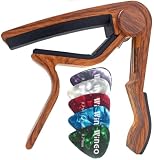
- Quick Release: easy to clip on guitar and quick to change; It can even change keys during a song, just clamp it and let your song fly.

- ♫ [ MANY APPLICATIONS ] - Designed for acoustic and electric Guitars,also fit Ukulele, Banjo, Bass, Mandolin.

- High-quality silicone rubber protects your precious guitar capo from scratching or damage.
First Impressions, Design Heritage, and Unboxing the Shubb 12-String Guitar Capo
Opening the package, the first thing that strikes you about the Shubb 12-String Guitar Capo is its satisfying heft and industrial-grade aesthetic. Crafted from solid brass with a polished nickel finish, it feels less like a disposable accessory and more like a precision instrument component. There is no flimsy plastic or weak spring to lose tension over time. Instead, you are greeted by a thoughtful, mechanical design that has been trusted by touring professionals for well over three decades. When I first held it, I immediately noticed the custom-engineered rubber pad. Unlike the stiff synthetics found on budget models, this rubber is formulated to mimic the exact density of a human fingertip. This clever design detail is what allows the unit to grip the strings firmly without crushing them or throwing your intonation completely out of whack. If you are ready to upgrade your rig, you can easily check the latest price and availability online right now.
Key Benefits & Advantages
- Eliminates annoying string buzz, specifically on demanding low octave strings
- Custom rubber pad mimics a fingertip to keep the guitar securely in tune
- Patented roller ball closure provides exceptionally smooth mechanical action
- Durable solid brass construction with a polished nickel finish built for decades of use
Drawbacks & Limitations
- Requires manual adjustment of the set screw rather than instant one-handed squeezing
- Slightly more expensive upfront than basic plastic spring capos
Deep Dive: Performance, Engineering, and Real-World Testing
The “Set It and Forget It” Micro-Adjustment Mechanism
One of the standout engineering triumphs of the Shubb 12-String Guitar Capo is its patented mechanical design. Unlike spring-loaded capos that apply a generic, often excessive amount of clamping force driven by a coil spring, this model utilizes a custom adjusting screw. During my initial setup sessions in the studio, I dialed in the exact pressure required for my acoustic’s neck profile just once. After that initial calibration, the lever mechanism locks and unlocks the unit with a simple flip. It genuinely embodies the “set it and forget it” philosophy. You never have to worry about the tension degrading over months of heavy gigging or guessing how hard to squeeze. This level of mechanical precision is a feature that really sets it apart from standard universal capos found in local music shops. Whenever I swapped positions between the second and fifth frets, the tension remained flawlessly consistent, saving me countless minutes of frustrating mid-performance tuning tweaks.
Conquering the Dreaded Low-Octave String Buzz
If you play a 12-string, you know that the thinner octave strings almost always require more precise downward pressure than their thicker companion strings, leading to persistent buzzing issues if the capo doesn’t make uniform contact across the entire fretboard. When evaluating the Shubb 12-String Guitar Capo, this was the ultimate test. I tested it across multiple demanding instruments, including a carbon fiber double-neck and a traditional dreadnought. To my absolute delight, the custom rubber pad contoured perfectly across all twelve strings. That notorious low E octave string, which usually sings a chorus of unwanted rattles with lesser gear, was held down cleanly and crisply. We found that the fingertip-like give of the rubber compound absorbs just enough energy to prevent string distortion while delivering absolute clamping firmness. If you want to dive deeper into why experienced players swear by this design, feel free to see its full feature set and user reviews to understand its long-term reliability.
Durability, Maintenance, and Long-Term Value
Investing in professional music gear means looking at longevity, and this unit is built like an absolute tank. Constructed from solid brass and coated in a resilient polished nickel finish, it easily resists the corrosion, scratches, and drops that happen on the road. After weeks of being tossed into accessory pockets and gig bags, it still looks and operates as smoothly as the day I unboxed it. Furthermore, unlike molded plastic capos that become useless trash the moment a part breaks or a rubber pad hardens, this manufacturer offers replacement parts directly on their website. You can swap out worn sleeves effortlessly, making this a lifetime investment rather than a disposable purchase. When you weigh its bomb-proof construction against the modest upfront cost, it represents phenomenal long-term value for any serious acoustic player. To secure yours today, you can easily order the Shubb 12-String Guitar Capo directly through this link.
What Other Users Are Saying
Synthesizing feedback from players across the globe confirms our hands-on findings. The general sentiment surrounding the Shubb 12-String Guitar Capo is overwhelmingly positive, with musicians praising its unmatched reliability and build quality. One experienced player noted that out of all the accessories they have owned over decades of playing, this remains the most dependable tool for firmly clamping all strings when changing keys. Another user specifically highlighted how it completely eradicated the stubborn buzz on their instrument’s low octave strings, noting that it works flawlessly even on unique multi-scale and carbon fiber builds. On the minor drawbacks side, a few users mention that it carries a slightly higher price point than cheap generic alternatives, and requires an initial manual adjustment of the set screw rather than instant one-handed clamping. However, virtually all agree that the precision and stability it provides far outweigh these minor trade-offs, cementing its status as an industry gold standard.
Comparing the Shubb 12-String Guitar Capo to Its Top Alternatives
While the Shubb 12-String Guitar Capo is our top pick for complex multi-string instruments, it helps to understand how it relates to other specialized options in the manufacturer’s lineup and the broader market. Whether you play a standard six-string or are looking for alternative clamping styles, here is how the competition breaks down.
1. Shubb C1 Steel String Capo

If you primarily play a standard 6-string acoustic or electric guitar rather than a 12-string, the Shubb C1 is the direct sibling to our review model. It features the exact same legendary brass construction, polished nickel finish, and micro-adjustable roller-ball lever mechanism, but is scaled down specifically for narrower 6-string fretboards. It shares the same stellar reputation for zero string buzz and bulletproof tuning stability, making it the ideal choice if you do not need the extra width of the C3 model. To check current pricing and details, you can explore the Shubb 12-String Guitar Capo ecosystem alongside its 6-string counterparts.
2. Shubb C1B Brass Capo for Steel String Guitars
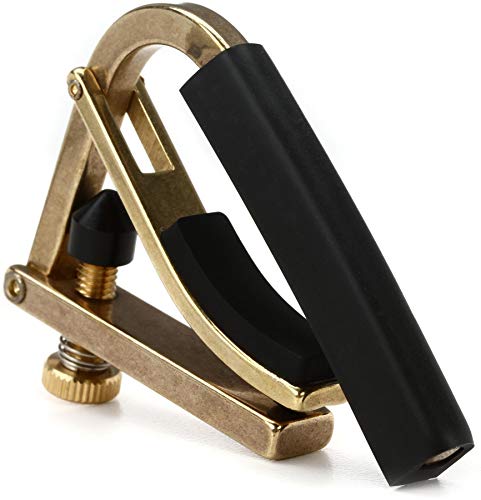
- Brand: Shubb
- Manufacturer Part: C1B
The Shubb C1B is another close relative, offering the exact mechanical performance and 6-string dimensions as the C1, but rendered in a gorgeous raw brass finish rather than polished nickel. Over time, the raw brass develops a unique, vintage-looking patina that many traditionalists and acoustic purists adore. Mechanically identical in its pressure control and fingertip rubber grip, it is purely an aesthetic choice for players who prefer a classic golden brass look over shiny silver nickel. It remains a top-tier tool for standard steel-string necks.
3. Sondery Adjustable 6-String Guitar Capo
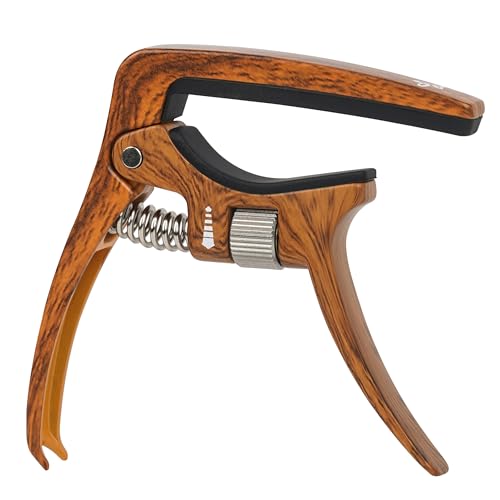
- 🎸OPTIMIZED FOR DIFFERENT GUITAR NECKS - Sondery professional guitar capo is specially for flatter radiused fingerboards of steel string guitars.
- 🎸ADJUSTABLE SPRING TENSION - This trigger tension adjustable guitar capo applies right pressure evenly to any fret. No fret buzz, great intonation.
For players seeking a budget-friendly alternative with a slightly different feature set, the Sondery Adjustable 6-String Capo offers a quick-release design complete with a handy integrated bridge pin puller. While it provides decent tension adjustment and a stylish wood-grain finish that appeals to casual players, it lacks the legendary mechanical refinement, heavy-duty solid brass heft, and specialized width needed for demanding 12-string configurations. It serves as a decent entry-level option for 6-string practice sessions, though serious gigging musicians will still prefer the rugged durability of the Shubb lineup.
Final Verdict on the Shubb 12-String Guitar Capo
The Shubb 12-String Guitar Capo easily earns its reputation as an essential piece of gear for any acoustic player wrestling with a 12-string instrument. Its brilliant combination of solid brass durability, a fingertip-mimicking rubber grip, and a micro-adjustable mechanical lever makes short work of intonation issues and annoying string buzz. While it requires a quick manual calibration rather than thoughtless squeezing, the payoff is absolute tuning stability and pristine tone across all twelve strings. If you are tired of compromised sound quality and want a professional-grade tool that will last a lifetime, this is an investment you will not regret making. To experience the difference on your own instrument, take a moment to buy the Shubb 12-String Guitar Capo today and elevate your acoustic performances.
Last update on 2026-10-09 / Affiliate links / Images from Amazon Product Advertising API