
Seymour Duncan Powerstage 170 Guitar Amp Review: The Ultimate Compact Power Solution for Modern Rig Builders?
If you have ever carried a 60-pound tube combo or a massive 100-watt head up a narrow flight of venue stairs at 1:00 AM, you know the exhaustion that comes with traditional guitar setups. For years, our live rig revolved around back-breaking tube amplifiers that promised “pure tone” at the expense of our lower backs and stage space. When digital modelers, profilers, and high-end preamp pedals started offering studio-grade tones in pedalboard-friendly formats, the bottleneck shifted entirely to power. How do you push a 2×12 or 4×12 guitar cabinet with clean, uncolored power without lugging around a heavy rackmount power amplifier?
That exact question led us to search for a dedicated, board-mounted solution that didn’t compromise on headroom, dynamic response, or acoustic punch. We needed something that could sit at the end of our signal chain, fit neatly into a gig bag, and handle everything from pristine jazz cleans to crushed high-gain metal textures across various cabinet impedances. In this detailed Seymour Duncan Powerstage 170 Guitar Amp Review, we break down our hands-on testing with this tiny titan to see if it truly delivers on its promise of stage-ready performance without the backache.
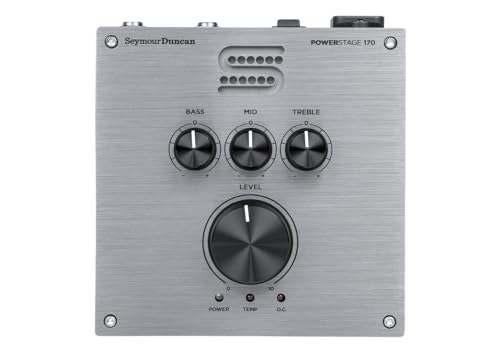
- Compact Power Amp - The PowerStage 170 is a 170-watt guitar power amplifier, and the perfect complement to your pedals or digital modeler, providing a compact, lightweight solution for gigs and...
- Pedalboard Friendly - This device fits right on your pedalboard, making it a game-changing addition to your rig. No need to lug around heavy equipment, just bring your guitar and pedals and get your...
What to Consider Before Buying a Compact Guitar Power Amplifier
An electric guitar power amp is more than just an item; it’s a key solution for modern musicians looking to transition from bulky, high-maintenance tube heads to versatile, portable rig architectures. Unlike standard guitar amplifiers that combine preamplification, equalization, and power output into a single package, a standalone power amp is designed purely to amplify an existing signal level—such as the output from a digital modeler, amp-in-a-box pedal, or multi-effects processor—and drive speaker cabinets directly. Understanding this distinction is vital before making an investment.
The ideal customer for this type of product is someone who relies heavily on preamp pedals, floor modelers (like a Line 6 Helix, Fractal FM3, or Neural DSP Quad Cortex), or gigging players who frequently encounter variable house backlines and need consistent output. On the flip side, it might not be suitable for traditionalists who expect an amp to provide built-in tube saturation, multi-channel switching, or native digital effects without relying on external front-end processing. If you want a turn-key amp that produces classic crunch straight out of the box without pedals, you should look toward traditional combo amps or versatile digital modeling combos.
Before investing, consider these crucial points in detail:
- Dimensions & Space: Consider where the unit will reside in your setup. Dedicated pedalboard power amps need to feature a compact footprint and low profile so they can mount directly onto standard boards or fit comfortably inside a heavy-duty guitar bag. Ensure that input/output jack placement does not crowd neighboring pedals or impede cable management.
- Capacity/Performance: Dynamic headroom and power output ratings are critical when driving physical speaker cabinets. Look for units delivering at least 100 to 200 watts into standard speaker loads (4, 8, or 16 ohms) to ensure clean volume that can easily compete with an aggressive live drummer without clipping or distorting unexpectedly.
- Materials & Durability: Live performance puts equipment through rigorous stress. A road-ready chassis constructed from extruded aluminum or heavy-gauge steel is non-negotiable for protection against stage impacts, thermal heat build-up, and rough transportation conditions.
- Ease of Use & Maintenance: High-power solid-state designs require active cooling, clear labeling, and intuitive control layouts. Check whether thermal fans operate quietly for studio environments and verify that tone-shaping controls respond predictably across different room acoustics. You can check the latest price and availability to evaluate how this unit fits your current gear budget.
Navigating the transition to a modern, lightweight rig requires choosing gear that aligns perfectly with your physical setup and tonal preferences. To see how board-mounted amplifiers compare to rackmount and solid-state alternatives on the market today, explore our full guide below.
While the Seymour Duncan Powerstage 170 Guitar Amp is an excellent choice, it’s always wise to see how it stacks up against the competition. For a broader look at all the top models, we highly recommend checking out our complete, in-depth guide:

- Pure Analog Technology for Crystal-Clear Sound: Featuring full analog technology with a precise frequency response of 100Hz-20kHz @ ±3dB, delivering exceptional clarity and natural tone. With 10W...

- 🎸[Built-in 4 Effects] This portable guitar amp is suitable for electric guitar, and has 4 effects, clean, distortion, overdrive, reverb, which cater to your need of daily practice.

- A professional-grade, powerful electric guitar amplifier: We have completely upgraded this 20-watt amplifier to deliver all the power needed for both practice and performance. It comes with a...
First Impressions and Key Features of the Seymour Duncan Powerstage 170 Guitar Amp
Unboxing the Seymour Duncan Powerstage 170 Guitar Amp reveals a sleek, industrial design that immediately inspires confidence. Finished in a brushed silver metal enclosure with clean black graphic accents, the amp feels dense, rugged, and exceptionally well-engineered. Weighing just 2.8 pounds and measuring 7.15 inches deep by 8.8 inches wide, it sits perfectly at the top corner of a standard Pedaltrain board. There are no flimsy plastic knobs or loose switches; the large master volume knob turns with a satisfying, smooth resistance, and the three analog EQ knobs feel firm and precise.
In terms of feature set, Seymour Duncan kept the layout refreshingly uncluttered. The front panel features a quarter-inch guitar/preamp input alongside controls for Bass, Mid, Treble, and Master Volume. On the rear panel, you find a rugged power switch, standard IEC power cable receptacle, cooling fan vents, and a quarter-inch speaker output jack compatible with 4-ohm to 16-ohm speaker loads. You can see its full feature set and specifications to see how compact power amplification has evolved.
Key Advantages
- Massive 170-watt clean power headroom handles loud stage environments effortlessly
- Compact, board-friendly chassis weighs under 3 pounds for ultimate portability
- Musical 3-band analog EQ allows quick venue-specific acoustic tuning
- Transparent tone preservation keeps modeler and pedal profiles accurate
Potential Limitations
- Requires a dedicated preamp pedal or digital modeler to generate core overdrive/distortion
- Internal cooling fan produces minor acoustic noise noticeable in dead-silent home studios
Deep Dive Performance Analysis: Testing the Seymour Duncan Powerstage 170 Guitar Amp
1. Dynamic Headroom & Power Output
The core promise of any high-power solid-state amp lies in clean headroom—the ability to reproduce transients, pick attack, and low-end punch without collapsing into unwanted crossover distortion. During our extensive testing, the Seymour Duncan Powerstage 170 Guitar Amp completely blew past our expectations in this department. Pushing 170 watts at 4 ohms (or roughly 85 watts into an 8-ohm load and 42 watts into a 16-ohm cabinet), this compact unit generates astounding volume level capabilities. When connected to a Mesa 1×12 cabinet or a heavy-duty 4×12 loaded with Celestion Vintage 30s, we rarely had to push the oversized Master Volume knob past 10 or 11 o’clock, even during loud full-band rehearsals with a hard-hitting drummer.
What makes this headroom so valuable is how it preserves signal dynamics. Many small class-D power sections feel compressed or “squished” when pushed hard, particularly when reproducing low-frequency palm mutes or heavy bass notes. We found that you can explore the Seymour Duncan Powerstage 170 Guitar Amp and hear how it retains fast, immediate transient response. Pick nuances remain sharp, crystal clean passages stay clear without rounding off, and complex ambient reverb tails linger without gritty artifacts overlaying the decay. It acts as an open, high-headroom canvas for whatever signal you feed into its input.
2. Tonal Transparency & Preamp Integration
One of the biggest hurdles when using digital modelers (like Helix, Axe-FX, or Quad Cortex) or high-end preamp pedals through a traditional guitar amplifier FX loop is unwanted colorization. Tube power sections introduce harmonic saturation, power-amp sag, and fixed resonant peaks that can clash with the meticulously dialed-in amp profiles created inside your modeler. The Seymour Duncan Powerstage 170 Guitar Amp resolves this issue by acting as an exceptionally neutral, transparent sonic engine. It doesn’t force a midrange scoop or artificial high-end presence onto your signal chain; what your modeler outputs is exactly what hits the speaker cones.
We tested this transparency using a variety of front-end processors—ranging from analog preamp pedals like the Friedman BE-OD to digital jazz patches on a Boss ME-90. In every test scenario, the fundamental character of the pedal came through cleanly. Jazz clean patches sounded deep, warm, and articulate without harsh solid-state brittle top end, while high-gain metal patches maintained tight low-end tracking and razor-sharp bite. While some dedicated Full-Range Flat-Response (FRFR) active monitors attempt a similar feat, pairing this unit with a physical guitar cabinet provides the visceral “amp-in-the-room” feel that physical speakers push, bridging the gap between digital convenience and authentic stage authority.
3. Analog 3-Band EQ & Stage Utility
While transparency is vital, every room, stage, and speaker cabinet exhibits unique acoustic quirks. A tile-floored club might sound overly bright, while a boomy wooden stage can turn your low-end into a muddy mess. Rather than forcing you to dive deep into digital menus on your modeler or re-tweak individual patch parameters mid-gig, the Seymour Duncan Powerstage 170 Guitar Amp includes a beautifully tuned 3-band analog EQ section right on its top panel.
We evaluated these tone-shaping controls across multiple environments and cabinets, including a 16-ohm Eminence Cannabis Rex 1×12 setup and an Orange 2×12 cab. The EQ parameters are distinctly musical: the Bass control boosts or cuts low-end warmth without introducing low-frequency rumble, the Mid control targets the sweet spot for cutting through a complex dense mix, and the Treble knob smooths out top-end harshness or adds crisp air when playing through darker cabinets. Being able to reach down to your pedalboard and give the Master Volume or Mid control a quick adjustment mid-song is a feature that really sets it apart from traditional tube heads or un-equipped power amps.
4. Form Factor, Portability & Build Construction
From a physical gigging perspective, reducing rig weight without sacrificing structural reliability is the ultimate goal. Seymour Duncan built this power amplifier inside a rugged, heavy-duty metal enclosure that can comfortably withstand the rigors of touring. The top control layout keeps knobs safe from accidental foot stomps if placed directly on a pedalboard, while the unit’s low weight (2.8 lbs) means you can slip it into a gig bag pocket alongside your cables and head straight to the show.
Thermal management is handled by an internal cooling fan that pulls heat away from the Class-D power module through side and rear vents. During extended two-hour performance sessions at elevated stage volumes, the aluminum chassis remained cool to the touch. It is worth noting that the internal fan does run continuously and produces a soft hum. In a live band context or high-volume rehearsal, this fan noise is completely inaudible. However, if you plan to use it in a whisper-quiet home recording room right next to sensitive microphoned setups, it is a minor factor to keep in mind. For live musicians and traveling players, you can order your unit here to lock in a compact rig that sets up in seconds.
What Other Users Are Saying
To supplement our own rigorous hands-on evaluation, we thoroughly analyzed feedback from dozens of real-world owners who rely on the Seymour Duncan Powerstage 170 Guitar Amp for daily practice, studio work, and live touring. Overall sentiment across the board is overwhelmingly positive, with users praising its impressive volume output, clean headroom, and roadworthy convenience.
Many musicians who use complex digital modeling setups—such as the Line 6 Helix, Neural Quad Cortex, or Axe-FX—highlight how easy it is to achieve authentic, room-filling sound through physical guitar cabs. One user noted that after years of running a heavy rackmount Matrix power amp, switching to this unit completely transformed their mobile rig while driving a 16-ohm 1×12 cab effortlessly. Another guitarist performing jazz routines mentioned pairing it with a Boss ME-90 and a Mesa Thiele cabinet, achieving the warmest, roundest clean tones they had ever experienced, with plenty of headroom to spare. You can read current owner reviews and pricing to see how other players integrate it into their setups.
On the critical side, feedback focuses primarily on two specific areas. First, a few users pointed out that because this unit is strictly a power amplifier rather than a standalone preamp, plugging a guitar directly into it produces an extremely dry, flat tone—reinforcing that a quality preamp or drive pedal front-end is mandatory. Second, isolated reports mentioned hardware reliability glitches over extended multi-year use, such as internal clicking sounds or unit failures, though affected owners consistently praised Seymour Duncan’s responsive customer support and quick warranty replacement services.
Comparing the Seymour Duncan Powerstage 170 Guitar Amp to Top Alternatives
1. Leo Jaymz 20W Electric Guitar Amp

- 20W electric guitar amplifier with crunch and clean channel.
- Very soft but solid fixing and comfortable handle, leather surface.
The Leo Jaymz 20W Electric Guitar Amp is an entry-level practice combo designed primarily for beginners, bedroom jamming, or ultra-small desktop setups. Featuring a built-in 6.5-inch speaker, clean/distortion channel toggling, and a 3-band EQ, it serves as an all-in-one standalone amplifier for low-volume practice. However, comparing it to the Seymour Duncan Powerstage 170 is an apples-to-oranges scenario: the Leo Jaymz produces only 20 watts through a small internal driver and cannot push external 2×12 or 4×12 cabs. The Powerstage 170 is a dedicated high-headroom professional power amp designed for gigging pedalboard users, whereas the Leo Jaymz is strictly a budget practice combo for home use.
2. Donner Mini Electric Guitar Amp
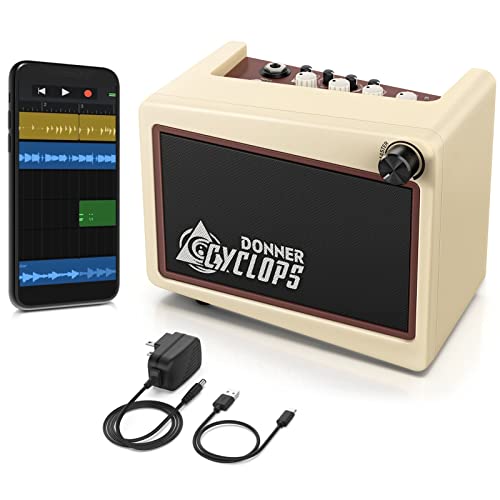
- 【7 Amplifier Models 】6 guitar amps models (based on world-famous classic/boutique/modern amplifiers) and a "flat" model with an unprocessed transparent sound. (Clean x2 - Overdrive x2 - Higain x...
- 【Drum Machine】40 drum patterns (incl. 10 metronome types) TAP button to set drum tempo.POP/ROCK/FUNK/METAL/BLUES/FUSION/METRO.
The Donner Mini Electric Guitar Amp (Cyclops) is a highly portable 5-watt desktop practice amp featuring wireless Bluetooth connectivity, 7 digital amp models, integrated modulation/delay effects, and a built-in drum machine. It is designed for ultra-compact tabletop practice, busking, or bedroom learning where absolute convenience and low volume matter most. While the Donner excels as a self-contained modeling toy for students or travelers who want built-in effects without extra gear, it lacks the raw power output, high-headroom analog clarity, and cab-driving muscle of the 170-watt Seymour Duncan Powerstage 170, which is built strictly for loud, professional live performance setups.
3. Keen Eye Fly 3 Amplifier Power Supply
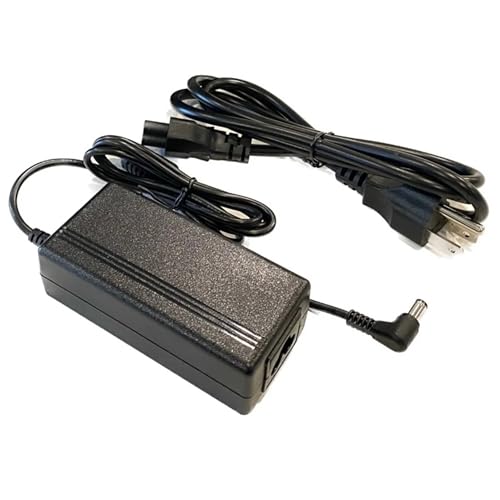
- Works with Blackstar Fly 3 Series Amps.
- Blackstar Fly 3
The Keen Eye Fly 3 Amplifier Power Supply is an accessory power adapter specifically designed to power Blackstar Fly 3 mini practice amplifiers. It is not an audio amplifier, power amp, or standalone sound processor of any kind. If you own a Blackstar Fly 3 acoustic or desktop mini amp and need a reliable wall adapter to bypass battery operation, this power supply fulfills that exact task. However, for players looking for an actual guitar amplifier that drives real speaker cabinets on stage, the Seymour Duncan Powerstage 170 Guitar Amp is the complete physical amplification hardware solution required.
Final Verdict on the Seymour Duncan Powerstage 170 Guitar Amp
After pushing the Seymour Duncan Powerstage 170 Guitar Amp through demanding rehearsal sessions, high-volume cab driving tests, and various pedalboard configurations, we can confidently state that it is one of the most practical gear investments a modern guitarist can make. By taking high-headroom class-D amplification and pairing it with a simple, high-quality 3-band analog EQ, Seymour Duncan created a product that perfectly solves the transport and tone consistency issues facing modern gigging musicians.
Whether you run an advanced floor profiler, an amp-in-a-box pedal array, or simply need a ultra-reliable backup power section in your gig bag that can plug into whatever cabinet a venue provides, this little box delivers pristine clean power, incredible dynamic punch, and simple room-shaping equalization. If you are ready to eliminate heavy gear transport and elevate your live setup’s consistency, grab the Seymour Duncan Powerstage 170 Guitar Amp today and experience modern power amplification at its finest.
Last update on 2026-09-16 / Affiliate links / Images from Amazon Product Advertising API