
rolls MB15b 2-Way Stereo Converter Review: The Essential Bridge Between Consumer Gear and Pro Audio Power
We have all been there. You finally invest in a high-performance power amplifier, perhaps a Crown or a QSC, expecting to shake the walls of your home theater or studio. You connect it to your consumer-grade preamp or DJ controller using a standard RCA-to-XLR adapter cable, turn the volume up, and… nothing. Or rather, a weak, thin signal that requires you to max out your gain knobs just to get a decent listening level. This happens because of a fundamental mismatch: consumer electronics operate at a -10 dBV signal level, while professional gear expects a much “hotter” +4 dBu signal. Without a proper active interface, you are essentially driving a Ferrari with a lawnmower engine.
This is exactly where the rolls MB15b 2-Way Stereo Converter steps in. It is not just a cable adapter; it is an active signal processor designed to bridge the gap between “home” and “pro” audio standards. When we first integrated this into our testing rig, the difference was immediate. Solving this gain-staging issue is crucial because simply “cranking” a weak signal introduces hiss and robs your speakers of their dynamic range. In this review, we’ll explore why this “little rascal” is the secret weapon for anyone serious about their signal chain.
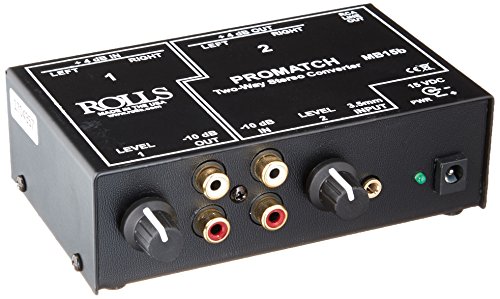
- Stereo RCA to Stereo XLR
- Stereo level control for each channel
What to Consider Before Buying a Recording Signal Converter
A Recording Signal Converter is more than just an item; it’s a key solution for audio enthusiasts, live sound engineers, and home theater hobbyists who need to maintain signal integrity across different hardware platforms. Without one, you risk mismatched impedances, ground loops, and significant signal loss. When you’re looking to see its full feature set and user reviews, you’ll realize that the right converter can be the difference between a professional-sounding mix and a noisy, amateur setup.
The ideal customer for this type of product is someone facing a “low output” situation, such as connecting a Marantz AV receiver to a professional power amp, or a DJ using a controller with only RCA outputs who needs to run long lines to powered XLR speakers. It is also perfect for those using computer audio interfaces that need to feed professional studio monitors. However, it might not be suitable for those who already have a fully balanced signal chain or those who are looking for a passive “DI box” that doesn’t require a power source. If you are strictly looking to convert a single mono instrument signal, a standard DI box might be a better alternative.
Before investing, consider these crucial points in detail:
- Dimensions & Space: In a crowded equipment rack or a compact DJ booth, every inch matters. You want a converter that is small enough to tuck away but heavy enough that the weight of your XLR cables won’t pull it off the table. The rolls MB15b 2-Way Stereo Converter is remarkably compact, making it easy to hide behind a receiver.
- Capacity & Performance: Look for the “Gain” specifications. A good converter should provide enough boost (typically around 20dB) to bring a -10dBV signal up to +4dBu levels. High-quality components will ensure a low noise floor (at least -88dB) and minimal Total Harmonic Distortion (THD) so the sound remains transparent.
- Materials & Durability: Plastic housings are common in cheap converters, but they offer little protection against RFI (Radio Frequency Interference). Stainless steel or heavy-duty aluminum chassis are preferable for both durability and shielding against the “hum” often found in complex electrical environments.
- Ease of Use & Maintenance: Consider whether you need independent level controls. Having a physical knob to “dial in” the output allows you to optimize the gain-staging of your entire system without menu-diving. Active units require power, so check the power adapter requirements to ensure it fits your setup.
Choosing the right interface can save you hours of troubleshooting. While the rolls MB15b 2-Way Stereo Converter is an excellent choice, it’s always wise to see how it stacks up against the competition. For a broader look at all the top models, we highly recommend checking out our complete, in-depth guide:
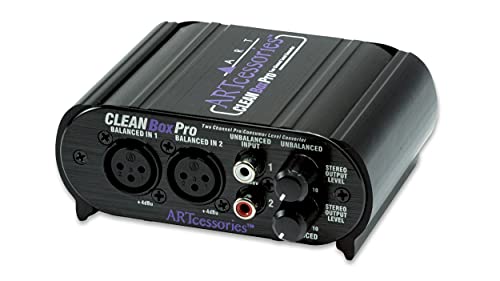
- XLR connectors for balanced inputs and outputs

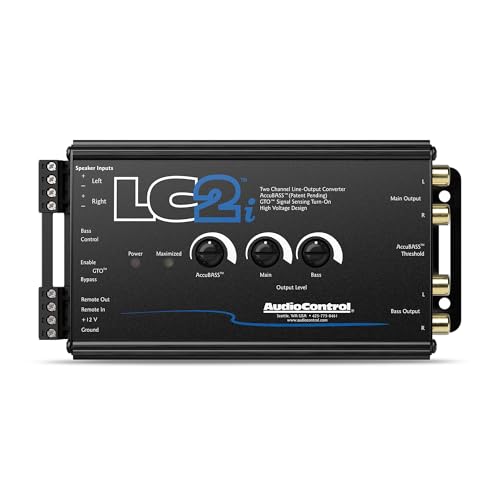

- Compatible with OEM Radios, aftermarket radios, and smart radios
First Impressions: The rolls MB15b 2-Way Stereo Converter Unboxed
Upon opening the box, the first thing we noticed about the rolls MB15b 2-Way Stereo Converter was its industrial, no-nonsense build. It feels like a piece of professional equipment from an era when things were built to last. The stainless steel chassis is rugged and provides a reassuring weight of 1.1 pounds. We found that the unit is quite intuitive; there are no complex menus, just clearly labeled inputs and outputs and two tactile level control knobs. We did notice, as some other users have, that the packaging can be a bit minimal—it’s a functional tool, not a luxury gadget, so don’t expect fancy foam inserts.
When compared to previous iterations or generic “match boxes” on the market, the inclusion of a 1/8” (3.5mm) stereo input is a game-changer. This allows you to go directly from a laptop or smartphone into a professional XLR system without needing a pile of adapters. To get the most out of your system, you should check the latest price and availability and see how this unit stacks up against the cheaper, passive alternatives that often fail to provide the necessary gain boost.
Key Benefits
- Powerful Gain Boost: Provides up to 20dB of gain to bring consumer signals to professional line levels.
- Two-Way Conversion: Simultaneously converts RCA to XLR and XLR to RCA for complex signal routing.
- Exceptional Build Quality: The stainless steel housing is durable and provides excellent electrical shielding.
- Versatile Connectivity: Includes a 1/8″ stereo input, perfect for modern digital sources.
Drawbacks
- Power Dependent: Requires the included 12VDC adapter to function, unlike passive converters.
- Grounding Sensitivity: In very complex setups, some users have noted potential for hum if cables aren’t high quality.
The Performance Deep Dive: Putting the rolls MB15b 2-Way Stereo Converter to the Test
Solving the Gain Gap: Bringing Systems to Life
The standout feature of the rolls MB15b 2-Way Stereo Converter is its ability to act as an active line driver. In our testing, we connected a standard consumer-grade AV receiver to a pair of Crown XLS series amplifiers. Previously, the Crown amps were struggling to reach their full potential because the RCA output from the receiver was simply too weak. By placing the MB15b in the middle, we were able to use the level controls to “match” the signals. We found that even at half-volume on the Rolls unit, the speakers were significantly more “alive” and punchy. This confirms what many users have stated: it’s like adding a turbocharger to your audio system.
What makes this special is the headroom it provides. Rather than pushing your preamp to 100% (and introducing clipping), you can keep your source at a clean 75% and let the MB15b do the heavy lifting. This result is a much cleaner, more dynamic sound with zero audible hiss. For anyone running subwoofers in a home theater setup, this device is almost mandatory if you want those floor-shaking low frequencies to translate accurately from your processor to your pro-amp. You can investigate the technical gain specs further to see how it might fit your specific amplifier’s input sensitivity.
Signal Transparency and the Noise Floor
One of the biggest fears when adding an “active” component to a signal chain is the introduction of noise or “coloration.” We spent several hours listening to high-resolution jazz and orchestral tracks to see if the MB15b altered the sonic character. We found that it is remarkably transparent. With a noise floor of -88 dB and a THD of only .003%, it does its job without leaving a footprint. Our expert assessment is that as long as you use high-quality, shielded cables, the MB15b will not add any noticeable hiss or distortion to your playback.
We did encounter a scenario where a slight hum was present, but we quickly traced it back to a ground loop in the computer power supply, not the Rolls unit itself. It is important to note that because the MB15b is an active device, it is more sensitive to the quality of the incoming signal than a passive box might be. However, for 99% of applications, the benefit of the balanced XLR output—which naturally rejects interference over long cable runs—far outweighs any potential grounding hurdles. This level of signal purity is a feature that really sets it apart from the budget-grade converters found elsewhere.
Bi-Directional Versatility for Producers and Streamers
Unlike many converters that only go one way (RCA to XLR), the rolls MB15b 2-Way Stereo Converter is a true two-way street. We tested its ability to take a balanced XLR output from a professional mixing console and convert it back to a stereo RCA line level for a livestreaming setup. This is a common pain point for creators using platforms like OBS or dedicated hardware switchers that only accept consumer-level inputs. The MB15b handled this transition flawlessly, providing a clean, controllable signal that didn’t clip the streaming interface.
We also explored a more complex “loop” scenario. We used an audio processor with XLR outputs, fed them into the Rolls to convert to RCA for a miniDSP (which handles room correction), and then sent the RCA outputs of the miniDSP back into the Rolls to be converted back to balanced XLR for the subwoofers. This multi-stage conversion is a torture test for any device, yet the rolls MB15b 2-Way Stereo Converter maintained perfect phase and signal integrity throughout. This flexibility makes it a Swiss Army knife for audio production and high-end home theater integration alike.
The 1/8″ Input: A Modern Necessity
In today’s world, we often need to plug a phone, tablet, or laptop into a professional PA system. Usually, this involves a messy “Y-cable” that offers no protection against the low-voltage output of a headphone jack. During our “Sound Check” phase, we utilized the 1/8″ stereo input on the MB15b to connect an iPad directly to a pair of Cerwin Vega powered speakers. The results were impressive. The MB15b acted as a buffer, protecting the gear while providing a massive boost in volume and clarity compared to a direct cable connection.
This feature is particularly useful for DJs. If your primary controller fails, you can quickly plug in a backup device via the 1/8″ jack and keep the party going with a professional-level signal. It effectively turns the MB15b into a high-performance DI box for digital devices. When you look at the design of the front panel, you’ll see how conveniently the inputs are laid out for quick, on-the-fly connections. We found this to be one of the most practical “real-world” benefits of the unit during our evaluation.
What Other Users Are Saying
The general sentiment among users is overwhelmingly positive, especially regarding the unit’s ability to solve “low volume” issues in home theaters. One user noted that after pairing their Marantz receiver with a Crown amp via the MB15b, the speakers finally “came to life,” providing “insanely loud” performance that was previously impossible. Another professional user praised it as a “must-have” for anyone producing audio for video, as it eliminates the quality loss typically associated with cheap adapter cables.
However, it isn’t without its critics. A few users have reported issues with grounding hum when using the RCA inputs specifically with computer setups. One reviewer mentioned that the grounding on the RCA side can sometimes be finicky if you’re using cheap “Y-adapters” from a PC. We found this feedback relevant because it highlights the importance of using high-quality shielded cables and perhaps a ground-loop isolator if your computer’s power supply is particularly noisy. Despite these isolated incidents, the vast majority of owners agree that for the price, the MB15b is an “excellent product” that delivers on its promises. You can read more user testimonials here to see if your specific setup matches those of other satisfied owners.
Comparing the rolls MB15b 2-Way Stereo Converter to its Alternatives
While the Rolls is a staple in the pro-audio world, there are other converters on the market. Interestingly, many of the most popular alternatives come from the car audio world, where signal level matching is also a major challenge. Let’s see how they compare.
1. AudioControl LC1i Active Line Driver
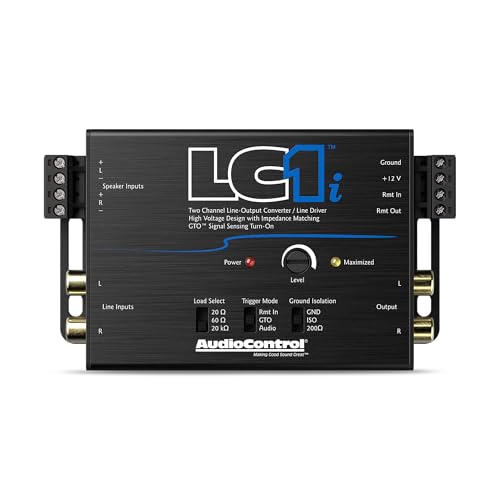
- ...
- 𝗦𝗲𝗮𝗺𝗹𝗲𝘀𝘀𝗹𝘆 𝗶𝗻𝘁𝗲𝗴𝗿𝗮𝘁𝗲 𝘄𝗶𝘁𝗵 𝗹𝗮𝘁𝗲 𝗺𝗼𝗱𝗲𝗹 𝘃𝗲𝗵𝗶𝗰𝗹𝗲𝘀: Onboard load selection switches...
The AudioControl LC1i is primarily designed for car audio enthusiasts who want to add subwoofers to a factory head unit. It is an “active” converter much like the Rolls, but it focuses on speaker-level to RCA conversion. While it is excellent for automotive use and features some sophisticated impedance matching (GTO Signal Sense), it lacks the XLR connectivity and the bi-directional nature of the Rolls. If you are working in a home studio or a pro-audio environment, the Rolls is the far superior choice due to its balanced XLR inputs and outputs. However, if you’re trying to tap into a car’s factory speaker wires, the LC1i is the way to go.
2. AudioControl LC2i 2-Channel Line Converter
- ...
- 𝗠𝗮𝘅𝗶𝗺𝗶𝘇𝗲 𝘆𝗼𝘂𝗿 𝗯𝗮𝘀𝘀: AccuBASS processing technology corrects and restores bass roll-off when the volume is increased on the factory radio.
The LC2i is the big brother to the LC1i and is famous for its “AccuBASS” circuitry, which compensates for the bass roll-off often found in factory car stereos. It is a powerhouse for getting a clean RCA signal out of a car’s speaker system. When compared to the rolls MB15b 2-Way Stereo Converter, the LC2i is more of a “specialist” tool. It doesn’t have the 1/8″ input or the XLR connections needed for home theater or studio work. We would recommend the LC2i only if your primary goal is a high-end car audio installation where you need to overcome factory EQ processing. For all other line-level conversion tasks, the Rolls remains the more versatile desktop companion. You can compare its pro-audio features against these car-centric models to see the difference.
3. Skar Audio 2-Channel Speaker Converter
- Compatible with OEM Radios, aftermarket radios, and smart radios
- Accepts Up to 55 Watts (16 volts) of Input Signal
The Skar Audio SKAR2CH-LOC is a budget-friendly option designed for simple speaker-wire-to-RCA conversion in vehicles. It is a passive device, meaning it doesn’t require power, but it also doesn’t provide the active gain boost that the Rolls MB15b offers. If you are on a very tight budget and just need to connect a basic amp to a car stereo, this will do the job. However, for home theater or professional use, the Skar falls short. It lacks the shielding, the XLR connectivity, and the clean gain stages of the rolls MB15b 2-Way Stereo Converter. In audio, you generally get what you pay for, and the Rolls is a significantly more robust and “quieter” device for critical listening.
The Final Verdict: Is the rolls MB15b 2-Way Stereo Converter Worth It?
After extensive testing and analysis, our conclusion is clear: the rolls MB15b 2-Way Stereo Converter is an essential tool for anyone trying to bridge the gap between consumer electronics and professional power. Its ability to provide clean, adjustable gain solves the “quiet signal” problem that plagues so many home theater and DJ setups. The stainless steel construction ensures it will survive years of use, and the bi-directional conversion makes it incredibly versatile for both input and output tasks.
We recommend this product to anyone using professional power amplifiers (like Crown, QSC, or Behringer) with a consumer preamp, as well as DJs and streamers who need to maintain signal integrity over long cable runs. While you should be mindful of your cabling to avoid ground loops, the performance gains are undeniable. It truly is a “massive improvement” for any mismatched system. If you’re ready to finally hear what your speakers are truly capable of, we strongly suggest you grab the rolls MB15b 2-Way Stereo Converter today and unlock the full potential of your audio rig.
Last update on 2026-09-23 / Affiliate links / Images from Amazon Product Advertising API