
Roland VT-3 Vocal Effect Processor Review: Transforming Your Voice with Professional Precision
I’ve spent countless hours in the studio trying to perfect the “vibe” of a vocal track. Whether it’s that crisp, robotic vocoder sound found in classic Daft Punk tracks or the aggressive, pitch-corrected shimmer of modern pop, getting those results live used to be a nightmare. We’ve all been there: lugging around a laptop, a complex audio interface, and a MIDI controller just to get a decent “Radio” effect or a bit of hard-tuning. The risk of a software crash during a performance is enough to keep any artist awake at night. When I first started looking for a solution, I wanted something tactile—a dedicated piece of hardware that didn’t require a degree in sound engineering to operate. This is exactly where the Roland VT-3 Vocal Effect Processor enters the conversation. It promises to take the complexity out of vocal transformation, allowing you to focus on the performance rather than the plugin settings. Without a dedicated processor like this, you’re often stuck with dry, uninspiring vocals that fail to cut through a dense electronic mix.
What to Consider Before Buying a Vocal Effects Processor
A Vocal Effects Processor is more than just an item; it’s a key solution for vocalists, streamers, and electronic music producers who need to manipulate their voice in real-time. In the modern era of music production, the voice is often treated as just another synthesizer. To achieve that professional “sheen” or to completely transform your gender and character through formant shifting, you need dedicated hardware that can handle low-latency processing. The primary benefit of these units is the ability to provide instant, high-quality effects without the CPU overhead of a computer, making them indispensable for live performances where timing and reliability are everything.
The ideal customer for this type of product is someone facing the limitations of traditional microphone setups, such as a DJ wanting to add “Mega-phone” drops, a streamer looking for a “monotone robotic” voice, or a studio producer who prefers a “hands-on” approach to sound design. However, it might not be suitable for those who require complex multi-part harmonies or realistic choir emulations, as this unit focuses more on “transformation” than traditional vocal thickening. For those users, a dedicated harmony pedal might be a better alternative.
Before investing, consider these crucial points in detail:
- Dimensions & Space: When you are setting up a home studio or a live rig, every inch of desk space matters. You should look for a unit that is compact enough to fit between your turntable and mixer but large enough that the sliders aren’t fiddly. The Roland VT-3 Vocal Effect Processor strikes a great balance here, measuring approximately 6.89 x 8.27 inches, making it extremely portable for gigging musicians.
- Capacity & Performance: Performance isn’t just about how many effects are in the box; it’s about the quality of the AD/DA converters. You want a processor that doesn’t add unwanted hiss or digital artifacts to your signal. We found that high-performance units provide a “Direct Out” option and the ability to act as a USB audio interface, which simplifies the signal chain significantly.
- Materials & Durability: Live gear takes a beating. While many modern processors use plastic chassis to save weight, a metal body is the gold standard for durability. If you are touring, you need a unit that can survive a few bumps in a gig bag. A polished metal finish not only looks professional under stage lights but also ensures the internal components are well-protected from the rigors of the road.
- Ease of Use & Maintenance: The last thing you want to do mid-set is menu-dive through a tiny LCD screen. Look for “one-knob-per-function” designs or clear, dedicated sliders for Pitch and Formant. Maintenance should be minimal—standard XLR and 1/4-inch jacks are easy to clean and parts are easily replaceable, unlike proprietary connectors that can cause headaches years down the line.
Choosing the right processor is about finding the sweet spot between creative flexibility and technical reliability. While the Roland VT-3 Vocal Effect Processor is an excellent choice, it’s always wise to see how it stacks up against the competition. For a broader look at all the top models, we highly recommend checking out our complete, in-depth guide:

- The FV01 vocal effects Corrector is primarily a pitch-correction pedal that offers everything from pitch correction to full-blown effects overload when your input is a microphone.

- From Subtle Pitch Correction to Hard Antares AutoTune Effect - VX5 is an intuitive vocal effects pedal with dedicated Retune Speed and Humanize knobs enabling adjustments with no computer needed


- Comprehensive Vocal Processing: VE200 brings studio-grade vocal polish, real-time pitch correction, intelligent harmonies, vocoder and character voices, modulation, delay, and reverb into one compact...
First Impressions and the Bold Aira Design
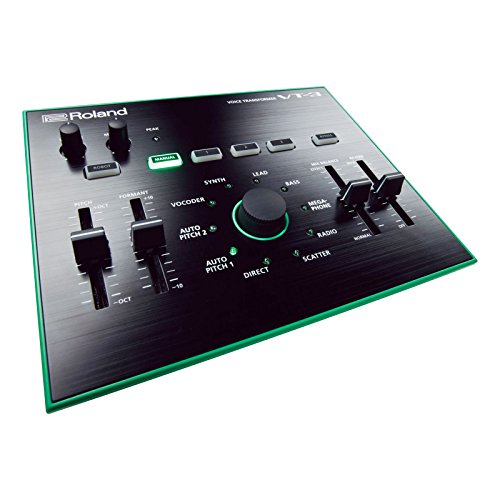
Unboxing the Roland VT-3 Vocal Effect Processor is a satisfying experience. The first thing you notice is the striking “Aira” aesthetic—black metal with vibrant green backlighting that looks incredible in a dark studio. It feels substantial at 1.5 pounds; it’s not a toy, but a professional tool. Setting it up is a breeze. I simply plugged in my XLR microphone, connected the power, and within seconds, I was hearing a transformed version of my voice. Unlike previous generations of vocal transformers that felt sluggish, the VT-3 feels immediate. To get the most out of your setup, you might want to see its full feature set and user reviews to understand how it integrates with your specific audio interface.
The interface is refreshingly simple. There are no sub-menus. Everything you need is represented by a slider, a button, or a dedicated dial. This design philosophy is a nod to Roland’s heritage of making instruments that are meant to be *played*. Compared to some of the plastic-heavy competitors, the metal build of the VT-3 gives it an edge in the “pro-gear” category. It’s small enough to be “handy” but robust enough for daily use.
Key Benefits
- Incredibly intuitive interface with dedicated sliders for Pitch and Formant.
- Robust metal construction that is built for both studio and stage use.
- Zero-latency processing ensures your performance stays perfectly in time.
- Includes a “Scatter” function for rhythmic, glitchy vocal chops.
Limitations
- Only three scene memory slots for saving your favorite presets.
- The “Auto-Pitch” can be quite aggressive, which may not suit subtle genres.
Deep Dive: Putting the Roland VT-3 Vocal Effect Processor to the Test
Tactile Control: Pitch and Formant Sliders
The heart of the Roland VT-3 Vocal Effect Processor experience lies in its two primary sliders: Pitch and Formant. In my testing, these sliders proved to be the unit’s most powerful assets. Many processors hide these settings in menus, but having them as physical faders allows for expressive, real-time performances. You can slide the pitch down for a deep, “bass growl” common in Dubstep or Glitch tracks, and simultaneously move the Formant slider to change the character of the voice from male to female (or even robotic) without changing the pitch. We found that the smoothness of these faders is exceptional—there’s no “stepping” or digital zippering sound when you move them quickly.
This level of control is a game-changer for sound designers. During a recording session, I was able to record the sound live and, through manual manipulation of the sliders, create a vocal performance that sounded like five different people were in the room. This “hand-on” approach is something you simply can’t replicate with a mouse and keyboard. If you’re looking for a device that encourages experimentation, you should definitely check the latest price and availability for this versatile unit.
Sonic Versatility: 10 Modes of Transformation
The Roland VT-3 Vocal Effect Processor features 10 distinct modes, and we spent a significant amount of time exploring each. The “Vocoder” is a standout, delivering that classic 80s synth-pop sound with impressive clarity. The “Radio” and “Mega-phone” settings are perfect for adding character to a bridge or a transition in a song. One of the most fun settings is the “Scatter” function. This isn’t just a vocal effect; it’s a rhythmic tool that chops and glimmers your voice in sync with the internal tempo or your performance. It’s the kind of feature that makes you laugh out loud when you first hear it, yet it’s musically useful for modern electronic genres.
The “Auto Pitch” modes (1 and 2) provide that “Cher” or “T-Pain” hard-tuned effect that remains a staple in top-40 production. We noted that the pitch correction is very “stiff”—it snaps to notes quickly. While this isn’t for those seeking natural pitch correction, it is perfect for the “Kero Kero” (frog voice) effect that is highly popular in certain music scenes. The addition of a high-quality, natural-sounding reverb helps to place these transformed voices into a space, preventing them from sounding too “dry” or disconnected from the mix. For those who want to dive deeper into these sonic possibilities, it’s worth taking a moment to examine the technical specifications.
Streamlined Workflow: Presets and Connectivity
In a live environment, speed is king. The Roland VT-3 Vocal Effect Processor includes three preset buttons (Scene Memory) that allow you to save your favorite slider and mode combinations. While I would have loved to see more than three slots, these are incredibly helpful for switching from a “Radio” verse to a “Vocoder” chorus instantly. The buttons are backlit and easy to hit even in a chaotic stage environment. We found this to be one of the most practical features for performers who don’t want to be constantly tweaking knobs during their set.
Connectivity is another strong suit. The unit features an XLR/TRS combo jack with phantom power, meaning you can use high-quality condenser microphones. It also functions as a USB audio interface, which is a massive benefit for home studio owners. You can route your vocals directly into your DAW through the VT-3, applying the hardware effects on the way in. This bypasses the need for separate interface inputs and ensures that the “wet” signal is captured with zero latency. It’s a feature that really sets it apart from simpler stompbox-style vocal pedals.
Build Quality and Aesthetic: The Aira Heritage
Roland’s Aira line was designed for the “performing musician,” and the VT-3 embodies this philosophy. The metal body isn’t just for show; it gives the unit a low center of gravity that prevents it from sliding around on a desk or a DJ console. The polished finish is resistant to fingerprints, and the green LEDs provide clear visual feedback on your levels via the peak LED. This input volume control is vital for optimizing signal levels before they hit the internal processors, ensuring you don’t get digital clipping.
Even the small details, like the “Mix Balance” control, show a lot of thought. This allows you to blend your dry vocal signal with the processed “wet” signal. This is crucial for maintaining intelligibility; sometimes a 100% wet Vocoder signal can be hard to understand, but blending in 20% of your natural voice brings back the clarity. This level of professional nuance is why we consider the VT-3 a serious tool for vocalists. To see how this unit can fit into your current setup, you can view more product images and detailed dimensions here.
What Other Users Are Saying
The general sentiment among users is one of genuine excitement and fun. Many users describe the Roland VT-3 Vocal Effect Processor as “absolutely easy to use” and a “truly creative device.” One user mentioned that they hadn’t even tried all the effects yet, but those they did try brought them to laughter because of how transformative they were. This “fun factor” is a recurring theme; it’s a machine that encourages you to “just connect a mic… and have some fun.”
From a technical standpoint, users appreciate the versatility for “sound design,” specifically mentioning the ability to create “deep bass growls” and “monotone robotic voices.” One Japanese user praised the “Kero Kero” (hard-tuned) effect and noted that the reverb feels “natural,” even comparing the heavy echo settings to the immersive feeling of “being in a bath.” On the downside, some users noted that while it is “handy and small,” they wished for more than three saveable settings, although they conceded that for recording purposes, these three are “very helpful.” Overall, the consensus is that the VT-3 delivers exactly what it promises: high-quality, easy-to-access vocal transformation. You can read more first-hand experiences and reviews to see how others are using it in their genres.
Comparing the Roland VT-3 to the Competition
While we are big fans of the VT-3, it’s important to see how it compares to other industry standards. Depending on your specific needs—whether it’s more presets or complex harmonies—one of these alternatives might be the better fit for you.
1. Roland VT-4 Vocal Transformer

- Roland VT-4 is an easy-to-use but incredibly effective voice transformer
- Features Modern and retro vocal effects, including delay, reverb, formant and vocoding
The Roland VT-4 is the direct successor to the VT-3. It keeps the same tactile philosophy but adds significant upgrades, including a more robust harmony engine and a MIDI input for more precise vocoding. If you are a keyboard player who wants to play chords and have your voice follow those notes perfectly, the VT-4 is the logical step up. However, the VT-3 remains a fantastic choice for those who want a simpler, more streamlined interface for basic transformation and don’t need the extra MIDI complexity.
2. Zoom V3 Vocal Effects Pedal with 3-Part Harmony

- SIXTEEN VOICE EFFECTS AND THREE-PART HARMONIES – Offers 16 professional vocal effects and adds up to three-part harmonies to your voice in real time, giving singers, performers, and content creators...
- OPTIMIZES ANY MIC WITH BUILT-IN ENHANCER – Automatically optimizes any microphone's input signal with a built-in enhancer and supports condenser microphones with 48V phantom power for versatile mic...
The Zoom V3 is a strong competitor for those who prioritize multi-part harmonies. Unlike the VT-3, which focuses on transforming a single voice, the Zoom V3 excels at creating a 3-part harmony instantly. It features 16 studio-grade effects and can be battery-powered, making it a favorite for buskers and mobile streamers. While it lacks the aggressive “Aira” aesthetic and the specific “Scatter” function of the Roland, it offers a more traditional set of vocal tools for singers who want a polished, choral sound.
3. MOOER GE1000 Guitar Multieffects Pedal with AI Equalization and 300+ Effects

- MOOER Audio Separator -- MOOER Steamlab splits mixed music into independent isolated tracks with 6 separation modes including vocals, guitar, bass, keyboard,drum and others. Compatible with most audio...
- Advanced AI Technology – Features an AI-powered auto-equalizer with fully customizable parameters. Simply select your playing style, play a musical passage, and the system automatically generates...
The MOOER GE1000 is a different beast entirely. It is primarily a guitar multieffects processor, but because of its XLR input and massive effect library, it can be used for vocals as well. With over 300 effects and a 5″ touch screen, it offers far more customization than the VT-3. This is the choice for the “power user” who wants to process their guitar and vocals through the same unit and doesn’t mind a steeper learning curve. For the pure vocalist or electronic producer, however, the specialized focus of the VT-3 usually provides a more streamlined workflow.
The Final Verdict: Is the Roland VT-3 Vocal Effect Processor Worth It?
After putting the Roland VT-3 Vocal Effect Processor through its paces, I can confidently say it is one of the most intuitive and rewarding vocal processors on the market for its price point. It excels at what it was designed to do: provide high-quality, real-time vocal transformation with a physical interface that feels like an instrument. Its strengths lie in its build quality, the smoothness of its pitch/formant sliders, and the sheer creativity it inspires. While the limitation of only three preset slots might be a drawback for complex live sets, the ease with which you can dial in a new sound manually almost makes presets unnecessary.
I would recommend the VT-3 to electronic music producers, DJs, and streamers who want to add a professional, stylized edge to their vocals without getting bogged down in software. It’s a rugged, reliable tool that delivers “wow” factor results instantly. If you’re ready to stop struggling with dry vocals and start exploring the creative potential of your voice, there’s no better time than now. I highly encourage you to order yours today and begin your sonic transformation.
Last update on 2026-09-26 / Affiliate links / Images from Amazon Product Advertising API