
Roland SPD-1P Electronic Drum Pad Review: A Professional Musician’s Verdict on Portability and Performance
As a percussionist who has spent years hauling heavy congas, multiple cowbells, and a variety of shakers to small club gigs, I know the physical toll that “the gear struggle” takes. We often find ourselves in a difficult position: we want the authentic texture of a wide array of percussion instruments, but the logistics of space, transport, and microphone setups make it nearly impossible. You might search for a solution like the Roland SPD-1P Electronic Drum Pad because you are tired of the clutter or need a way to practice quietly without sacrificing the feel of a real instrument. Solving this problem isn’t just about convenience; it’s about preserving your energy for the performance and ensuring you can deliver the right sound in any environment, from a cramped acoustic trio to a loud rock stage. Without a compact digital solution, you’re either stuck playing a limited kit or risking back pain and logistical headaches every time you load into a venue.

- Light, compact digital percussion pad that can be played with drumsticks, hands, or feet
- 22 onboard sounds, including genuine kick drum and percussion sounds
What to Consider Before Investing in Electronic Drum Pads
An electronic drum pad is more than just a piece of plastic and rubber; it’s a key solution for modern musicians who need to bridge the gap between traditional acoustic sounds and digital versatility. Whether you are a drummer looking to add a specific electronic “clap” or a guitarist needing a steady foot-tapped kick drum, these devices offer a world of sonic possibilities in a footprint that fits in a backpack. We have found that the right pad can completely revitalize a stale setlist by introducing textures that are otherwise impossible to recreate live without a full-time percussionist.
The ideal customer for this type of product is someone facing limited stage space or a need for “one-shot” sounds—like that specific cowbell in a 70s rock cover—while it might not be suitable for those who require a full-scale electronic kit for primary practice. If you are looking for a complete drumming experience with multiple cymbals and toms, you might consider a full electronic drum set instead. However, for the hybrid performer or the home hobbyist, a single-zone pad is often the most efficient tool in the shed.
Before investing, consider these crucial points in detail:
- Dimensions & Space: When you’re adding gear to an existing setup, every inch counts. You want a unit that is small enough to clamp onto a hi-hat stand or sit on a tabletop without crowding your reach. The goal is integration, not obstruction, so look for a low-profile design that doesn’t sacrifice the striking area.
- Capacity & Performance: Beyond just having built-in sounds, check for the ability to import your own samples. A pad is only as good as its library; being able to load a high-quality WAV file of your own specific instrument ensures your sound remains unique and professional rather than “stock.”
- Materials & Durability: Electronic pads take a beating, literally. High-quality rubber and a metal chassis are essential for longevity. You need a surface that offers natural rebound for sticks but is sensitive enough for finger-tapping or foot-play without wearing out after a few months of heavy use.
- Ease of Use & Maintenance: In a live setting, you don’t want to menu-dive. Simple analog-style knobs for volume, tuning, and effects are vastly superior to digital screens when you’re under stage lights. Furthermore, consider power options—battery power is a lifesaver for quick busking setups, while AC power is vital for long-term reliability.
While the Roland SPD-1P Electronic Drum Pad is an excellent choice for those seeking a balance of durability and simplicity, it’s always wise to see how it stacks up against the competition. For a broader look at all the top models, we highly recommend checking out our complete, in-depth guide:
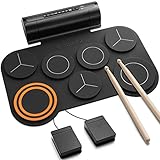
- [Fun Drum Pad Machine] DED-20 electronic drum pad 's high-quality sound source sample is taken from a real drum source, faithfully reproducing the acoustic drum's sound. 7 drum sets(1 SNARE, 1 CRASH...
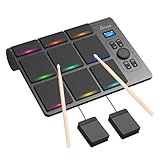
- 【Versatile Tabletop Drum Kit】The Portable Electronic Drum Kit features 9 Velocity-Sensitive Pads with LED light, hi-hat and kick bass drum pedal controller to reproduce full drum set sound with...

- Expand Your Performance - Add any sound sample to your drum or percussion setup via standard SD card

First Impressions and the Robust Design of the Roland SPD-1P Electronic Drum Pad
Unboxing the Roland SPD-1P Electronic Drum Pad immediately reveals why Roland remains a market leader in electronic percussion. At roughly 2 pounds and measuring about 10 inches by 9 inches, it feels incredibly substantial for its size. The white finish is clean and professional, while the thick rubber pad feels “ready” for impact. Unlike some cheaper alternatives that feel like toys, this unit has a metal housing that suggests it can withstand the rigors of the road. We noticed right away that the four control knobs have a satisfying resistance—they won’t move if you accidentally brush them mid-performance. To see its full feature set and user reviews, one only needs to look at the mounting hardware, which is included, allowing for easy attachment to standard drum racks or mic stands.
Key Benefits
- Highly versatile playing surface: works perfectly with drumsticks, hands, or feet.
- Onboard WAV import capability via USB for personalized sound libraries.
- Rugged, road-ready construction with a heavy-duty metal chassis.
- Simple, tactile interface with four knobs for instant sound shaping.
Limitations
- Standard package typically does not include the AC adapter (uses 4 AA batteries).
- Internal sound bank is solid but some users find the stock cymbals a bit artificial.
Deep Dive: Putting the Roland SPD-1P Electronic Drum Pad to the Test
Tactile Response and Dynamic Versatility
When we first sat down with the Roland SPD-1P Electronic Drum Pad, our primary concern was the “feel.” Many electronic pads are either too hard (killing your wrists) or too soft (lacking rebound). Roland has struck a masterful balance here. We tested the pad with a variety of implements: 5A drumsticks, bare hands, and even as a foot trigger while playing an acoustic guitar. In every scenario, the sensitivity was impressive. By adjusting the “Sens” knob on the side, we could go from delicate finger rolls that mimicked a conga to heavy stick strikes that triggered a thunderous kick drum sound. This adaptability makes it a fantastic tool for musicians of all ages; in fact, we’ve seen users as old as 76 years old using this to practice percussion without the physical strain of heavy drums. It’s also worth it to check the latest price and availability for a device that offers this level of dynamic range.
The “Threshold” setting is another hidden gem. It allows you to eliminate accidental triggers from stage vibrations. We did encounter one user report about double-triggering when mounted directly to a bass drum hoop, but in our testing, placing it on a dedicated stand or a cushioned tabletop completely resolved this. The pad is intelligent enough to distinguish between a purposeful hit and the ambient rumble of a loud stage, provided you take a moment to dial in the settings for your specific environment. It truly feels like an extension of your body rather than a detached electronic trigger.
Custom Sound Architecture and the Power of WAV Import
While the 22 onboard sounds—ranging from classic cowbells and tambourines to genuine kick drums—are high-quality, the real power of the Roland SPD-1P Electronic Drum Pad lies in its ability to handle custom samples. We used the micro-USB port to connect the unit to a computer, and the process of dragging and dropping a WAV file into one of the 12 internal banks was seamless. For the gigging pro, this is a game-changer. Imagine needing the exact snare sound from a specific studio recording; you can simply load that sample into the Roland and have it under your sticks all night. We found this to be a feature that really sets it apart from more entry-level pads that lock you into factory presets.
The onboard “Tuning” and “FX” knobs allow for further manipulation of these samples. If you import a tom sample and find it’s a bit too high-pitched for the room, a quick twist of the Tuning knob brings it down to the sweet spot. We also experimented with the built-in reverb/delay effects, which add a sense of space and “air” to the sounds, preventing them from sounding too clinical or “dry.” This level of control ensures that even if you find the factory cymbal sounds a bit artificial, you can easily replace or tweak them until they satisfy your ear. For a working musician, this flexibility is worth the investment alone.
Live Performance Reliability and Power Management
Using the Roland SPD-1P Electronic Drum Pad in a live setting highlights its “no-nonsense” design philosophy. There is no screen to squint at and no complex menus to navigate. Everything is handled by dedicated knobs. This “what-you-see-is-what-you-get” approach is vital during a frantic set where you might only have two seconds to change a sound bank. We appreciated the non-slip rubber feet on the bottom, which kept the unit firmly in place on a wooden stage even when we were using it as a foot trigger for a cajon setup. You can view the detailed technical specs here to see the exact mounting options, which are quite generous, including a mounting plate that fits most standard percussion rods.
One point of contention among some users is the power supply. The unit is designed to run on 4 AA batteries, which provides about 7 hours of continuous use. For buskers or those who hate cable clutter, this is a dream. However, we must emphasize that for permanent stage setups, you will want to purchase the optional AC adapter. We found that while the battery life is decent, the peace of mind that comes with a hardwired power source is preferable for long gigs. Just remember to turn the unit off after your set if you are relying on batteries! Despite the minor inconvenience of the adapter not being included in every box, the sheer durability and “just works” nature of the device make it a staple in our professional kits. Many pros find that they choose the Roland SPD-1P for its reliability over cheaper, more feature-bloated competitors.
Integration with Digital Workflows via USB-MIDI
Beyond the stage, the Roland SPD-1P Electronic Drum Pad serves as a potent tool in the home studio. Because it features USB-MIDI connectivity, we were able to use it as a pad controller for music software like Ableton Live and Logic Pro. This expands the “22 sounds” into an infinite library. When recording, we found the velocity sensitivity translated perfectly to our DAW, capturing the nuances of a performance that you just can’t get by drawing notes with a mouse. The compact size means it can sit right next to your computer keyboard, ready for whenever inspiration strikes. Whether you are adding a “human feel” to a programmed beat or using it to trigger loops, the SPD-1P bridges the gap between traditional performance and modern production effortlessly.
What Other Users Are Saying
The general consensus among the drumming community is overwhelmingly positive, with many users praising the Roland SPD-1P Electronic Drum Pad for its “small size but big sound.” One long-time percussionist noted that it “replaces two-piece conga drums perfectly for practice,” emphasizing that the ability to use headphones allows for silent practice at home without bothering family members. Another user, who plays cajon in an acoustic trio, mentioned that it “adds a whole new dimension” to their playing when used as a foot pedal. This sentiment is echoed by many who find the sensitivity settings easy to adjust for different playing styles.
However, it isn’t without its critics. The most common complaint centers on the power supply, with one user warning others that the listing can be confusing and they were disappointed to find no AC adapter in the box. Another musician mentioned that while the built-in sounds are “nice,” they can feel a little “artificial” compared to the real thing—though they quickly corrected this by loading their own high-quality tom samples. Despite these minor gripes, the majority of players feel that the “many sound options and durability justify the cost,” and it remains a top-tier recommendation for those needing a compact, reliable trigger pad. Many users feel that if you’re ready to upgrade your kit, you should pick up the Roland SPD-1P today.
Comparing the Roland SPD-1P Electronic Drum Pad to the Competition
1. Alesis Sample Pad 4 Compact Percussion Instrument
- Expand Your Performance - Add any sound sample to your drum or percussion setup via standard SD card
- In-Demand Sound - Built-in library of the 25 most-commonly requested percussion and electronic drum sounds mapped across 8 ready-to-play kits
The Alesis Sample Pad 4 is a strong competitor for those who need more than one striking zone. With four pads in a single unit and an SD card slot for expanded sample storage, it offers more immediate sonic variety than the single-zone Roland. However, where the Roland SPD-1P wins is in build quality and “foot-play” capability. The Alesis is primarily designed for sticks and may feel a bit cramped for hand-playing. It’s a great choice for drummers who want to add four specific samples to their kit simultaneously, but it lacks the rugged, metal-chassis feel that makes the Roland so road-worthy for touring professionals.
2. Pyle Electronic Drum Pad Set with 8 Touch Sensitive Pads

- 8 TOUCH-SENSITIVE DRUM PADS - Experience the ultimate drum set with 8 touch-sensitive pads, allowing for dynamic and expressive playing. Store up to 10 custom user kits and explore different cymbal...
- COMPLETE ELECTRIC DRUM SET - The electric drum set Includes 4x5" rubber drums, 4x3.5" rubber cymbals, (2) digital foot pedals, and (2) drumsticks. Customize your sound with built-in EQ effects, making...
The Pyle Tabletop 8-Pad set is a completely different beast, aimed more at the beginner or the tabletop hobbyist. It features 8 pads and comes with pedals, making it a “kit-in-a-box.” While it boasts 600 sounds, the quality of these sounds is generally lower than Roland’s curated library. The Pyle is fantastic for a kid’s bedroom or a casual practice session where you want a full kit experience in a small space, but it lacks the professional MIDI integration, WAV import ease, and mounting durability required for serious live performances. It’s much larger and less portable than the streamlined SPD-1P.
3. Pyle Pro Electronic Drum Kit

- COMPLETE DRUMSET SOUND: This electronic drum kit has 7 drum pad and hi-hat and kicks bass drum digital pedal controller to reproduce full drumset sound with tom-toms, hi-hat, snare, crash and ride...
- PRESET DRUM KITS: Pyle portable electric tabletop drum set machine comes packed with 55 preset plus 10 custom preloaded drum kits, 300 plus cymbal or drum sounds, and it also has a drum trainer...
This Pyle Pro model is an entry-level tabletop set that provides 7 pads and basic foot controllers. It’s an affordable way to get into electronic drumming, but it’s far removed from the professional-grade gear category. Compared to the Roland SPD-1P, the Pyle Pro feels significantly more “plastic” and doesn’t offer the same nuanced velocity sensitivity. If you are a professional looking for a reliable trigger to add to a high-end drum kit, the Pyle will likely disappoint you in terms of sound engine quality and durability. However, for a budget-conscious parent looking for a fun gift, it serves its purpose well.
Final Verdict: Is the Roland SPD-1P Electronic Drum Pad the Right Choice?
After extensive testing and comparing the Roland SPD-1P Electronic Drum Pad to its peers, we can confidently say it is one of the most reliable and versatile single-zone pads on the market. Its strengths lie in its “tank-like” build quality, its ability to be played with anything from a finger to a heavy boot, and the professional-grade WAV import feature. While the lack of an included AC adapter is a minor annoyance, and the factory cymbals might not please everyone, these are easily remedied issues. This pad is a must-have for hybrid drummers, acoustic percussionists looking to expand their palette, and even solo guitarists who need a high-quality foot percussion solution. If you value simplicity, durability, and professional sound quality, this is the tool for you. We highly recommend you check the latest price and pick one up to see how it can transform your musical performance.
Last update on 2026-09-25 / Affiliate links / Images from Amazon Product Advertising API