
Roland GO:KEYS 3 Music Creation Keyboard Review: The Ultimate Modern Portable Studio?
For many of us, the journey into music production often starts with a frustrating realization: most “beginner” keyboards feel like plastic toys, while professional workstations are as intimidating as a cockpit and cost as much as a used car. I’ve spent years navigating this middle ground, searching for an instrument that offers high-end sounds without the steep learning curve or the bulk. The struggle is real—you want to sit down and create instantly, but instead, you’re often bogged down by cable management, confusing menus, or sounds that lack any real soul. This “creative friction” is the primary reason many aspiring producers give up before they even start. Solving this is crucial because the moment of inspiration is fleeting. If you can’t capture a melody or a groove within seconds, it’s gone. That’s exactly why the Roland GO:KEYS 3 Music Creation Keyboard caught our eye; it promises to bridge the gap between “fun to play” and “professional quality.”

- Do you have a passion for music? GO:KEYS 3 makes it easy to go from being a fan to an active music creator
- This fun modern 61-note keyboard with expressive touch sensitivity unlocks a simple new approach to making music, encouraging you to explore sounds and ideas in the moment—no previous experience...

What to Consider Before Buying a Portable & Arranger Keyboard
A Portable & Arranger Keyboard is more than just an item; it’s a key solution for songwriters, hobbyists, and mobile performers who need a versatile palette of sounds in a footprint that doesn’t dominate a room. These instruments are designed to be self-contained creative ecosystems. Unlike a standard digital piano, which focuses solely on the “ivory” experience, an arranger keyboard provides a full backing band at your fingertips, making it an essential tool for those who want to hear their musical ideas fully fleshed out in real-time.
The ideal customer for this type of product is someone facing space constraints or someone who needs a “sketchpad” for musical ideas that can transition into a more serious setup. It’s perfect for the bedroom producer or the casual player who wants a vast library of sounds. However, it might not be suitable for those who are strictly classical purists seeking a heavy, triple-sensor hammer action, as these keyboards prioritize portability and variety over traditional piano weight. For those users, a dedicated digital piano with weighted keys would be a better alternative.
Before investing, consider these crucial points in detail:
- Dimensions & Space: When you are looking at a portable keyboard, “portable” should be more than just a marketing buzzword. You need to ensure the unit is slim enough to fit on a standard desk or be tucked away in a closet. Measuring your workspace is vital, but also consider the height—a keyboard that is too thick can cause wrist strain if your stand isn’t adjustable.
- Capacity/Performance: In the world of keyboards, performance is measured by polyphony and the sound engine. You want an instrument that won’t “drop” notes when you play complex chords with a sustain pedal. Furthermore, look for an engine that offers a wide variety of instrument families beyond just pianos, such as authentic synths, strings, and percussion.
- Materials & Durability: Since these items are meant to be moved, the chassis needs to be rugged. A high-quality plastic build can be both light and durable, but pay attention to the finish—some painted surfaces can scratch easily. The keybed itself should feel consistent across all 61 keys without clicking or sticking.
- Ease of Use & Maintenance: A screen is almost mandatory for navigating hundreds of sounds. Beyond that, consider the interface. Are the buttons clearly labeled? Is the software ecosystem (if any) easy to update? Long-term care usually involves little more than a dust cover, but check if the manufacturer offers firmware updates to keep the sound library fresh.
By keeping these factors in mind, you can ensure that your choice won’t just sit in a corner gathering dust. If you’re looking for a balance of all these traits, you should definitely check the latest price and availability of this specific model.
While the Roland GO:KEYS 3 Music Creation Keyboard is an excellent choice, it’s always wise to see how it stacks up against the competition. For a broader look at all the top models, we highly recommend checking out our complete, in-depth guide:

- 61 Full-sized Keys - Just the right size for beginners developing their playing technique.
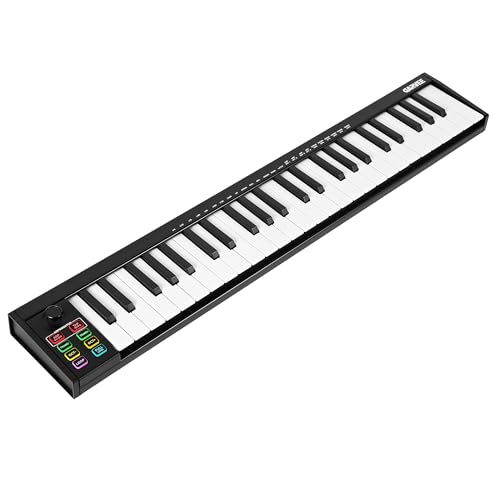
- Portable MIDI Controller for Music Creation: Compact and lightweight, this portable MIDI keyboard is ideal for creators on the go. Perfect for home studios, classrooms, rehearsals, and travel, it...

- 76 full-size Touch-sensitive keys - Add dynamics to your playing. Play lightly, and the volume is soft. Strike the keys hard, and it's loud. Enhance your skills with extended range and touch...
Unboxing a Modern Classic in Dark Red: First Impressions
Unboxing the Roland GO:KEYS 3 Music Creation Keyboard is a refreshing experience. Right away, the “Dark Red” finish strikes a balance between professional and playful. It doesn’t look like a piece of office equipment; it looks like a musical instrument designed for the 21st century. It weighs in at just under 16 pounds, making it incredibly easy to hoist out of the box. Setup is nearly instantaneous—plug in the included AC adapter, or if you’re feeling adventurous, pop in eight AA batteries and you’re ready to play in the park or on your couch.
The first thing I noticed when running my hands across the chassis was the minimalist aesthetic. Roland has opted for a clean look, though we did find that the labeling on this specific colorway can be a bit tricky in low-light conditions. However, the build feels solid and purposeful. When compared to older versions of the GO series, the GO:KEYS 3 feels more like a “grown-up” instrument, largely thanks to the inclusion of the Zen-Core engine—the same technology found in their flagship professional synthesizers. To see how this compares to other models in the lineup, you can see its full feature set and user reviews here.
Key Benefits
- Massive library of over 1000 professional Roland sounds via the Zen-Core engine.
- Incredibly lightweight and battery-powered for true “anywhere” creativity.
- Bluetooth Audio and MIDI support for seamless integration with mobile apps.
- Built-in chord sequencer with 300+ presets to kickstart your songwriting.
Limitations
- The silver-on-turquoise labeling on buttons can be difficult to read in dim lighting.
- Built-in speakers are decent but require external amplification for full bass response.
Professional Power in a Portable Chassis: A Performance Deep Dive
To truly understand why the Roland GO:KEYS 3 Music Creation Keyboard is making waves, we have to look past the pretty exterior and dive into the technical heart of the machine. We’ve spent significant time testing every facet of this keyboard, from its sound design capabilities to its mobile connectivity.
The Zen-Core Engine: A Symphony in Your Pocket
The standout feature here is, without question, the Zen-Core engine. This isn’t just a collection of MIDI samples; it’s the same synthesis architecture used in Roland’s top-tier Fantom and Jupiter-X keyboards. When we first toggled to the “Concert Piano” setting, the depth of the resonance was immediately apparent. It doesn’t have that “tinny” quality often found in budget keyboards. We spent hours improvising with the “Soft Stage EP” sound, and we found it to be incredibly expressive, responding well to the touch-sensitive keys.
With over 1000 sounds to choose from—ranging from vintage analog synths to realistic acoustic strings—the creative potential is staggering. We found that the variety encourages you to explore genres you might typically ignore. One moment I was playing a classical sonata, and the next, I was layering deep house basslines. The quality of these patches is a feature that really sets it apart from the competition, providing a professional sheen to even the simplest melodies. For those who want to hear the fidelity for themselves, you should view the full list of onboard tones.
Workflow and the Chord Sequencer: Songwriting Made Easy
songwriting can often be a lonely and laborious process, but the Roland GO:KEYS 3 Music Creation Keyboard acts as a collaborative partner. The built-in auto-accompaniment features over 200 music styles, and unlike the “cheesy” rhythms of the 90s, these are modern, professionally produced grooves. What really impressed us was the chord sequencer. It comes with over 300 ready-to-play presets, which means you can lay down a progression and focus entirely on your lead lines or melodies.
We found that this setup is perfect for “sketching.” If you have a lyric idea, you can find a style that fits, trigger a chord progression, and record your performance directly into your favorite DAW via the USB-C audio/MIDI interface. It eliminates the barrier between “I have an idea” and “I have a demo.” During our testing, the transition between different styles and chord patterns was seamless, which is essential for maintaining a creative flow. The 61-note keyboard is expressive enough to capture the nuance of your playing, though the keys do have a slightly “springy” synth action that takes a day or two to get used to.
Connectivity: A Wireless Hub for Modern Producers
In today’s world, a keyboard that doesn’t talk to your phone is a relic. The Roland GO:KEYS 3 Music Creation Keyboard excels here with its robust Bluetooth support. We found the Bluetooth Audio feature to be particularly useful; you can stream songs from your library through the keyboard’s speakers and play along. This is a game-changer for learning new tracks or just jamming for fun.
The Bluetooth MIDI support is equally impressive. We connected it to an iPad running various music production apps, and the latency was virtually non-existent. This turns the GO:KEYS 3 into a powerful wireless controller. Whether you’re using it with Roland’s own cloud services or third-party software, the integration is tight. This level of connectivity ensures that the instrument grows with you as your studio expands. To get a better idea of how this fits into a mobile studio setup, you can check out the technical specifications here.
The Hardware Interface and Portability Factor
Living with the Roland GO:KEYS 3 Music Creation Keyboard for several weeks taught us a lot about its physical design. At 15.85 pounds, it’s the kind of instrument you can grab with one hand and take to a friend’s house. The battery power option (8 x AA batteries) isn’t just a gimmick; it works well and provides several hours of playtime, which is perfect for outdoor busking or travel.
However, we must address the “elephant in the room” mentioned by several users: the labeling. On the dark red model, the silver text on the turquoise/blue control panel can be frustratingly illegible in certain lighting. We found ourselves leaning in close to see which button was which until we memorized the layout. It’s a minor aesthetic gripe but one that bears mentioning. On the plus side, the built-in stereo speakers, while small, are surprisingly clear. While they won’t fill a concert hall, they are “perfect for me” as one user noted, providing enough volume for personal practice and small room improvising. To see the different color options that might have better legibility, take a look at the available finishes.
What Other Users Are Saying
The general sentiment among users is one of pleasant surprise, though it is not without its polarizing points. Many users rave about the sound quality, with one noting, “Its Concert Piano setting is incredible,” and another highlighting the “variety of timbres” and the “elegant and minimalist” design. The Zen-Core engine clearly carries the weight of the product’s reputation, making it feel like a “great functional keyboard” for both beginners and experienced players.
On the flip side, the physical interface and the key feel have received some criticism. One user was frustrated by the “illegible program and selection keys,” specifically mentioning the silver-on-turquoise color scheme. Another user felt the keys had a “cheap springy feel,” suggesting that their expectations for key weighting might have been higher than what a portable synth-action keyboard typically provides. Some also found the maximum volume of the built-in speakers to be a bit low for their needs. However, most agree that for the price and portability, these are acceptable trade-offs. As one user summarized, it is “a great purchase without a doubt” if you prioritize sound and functionality over a traditional piano feel.
How the Roland GO:KEYS 3 Compares to Top Alternatives
While the Roland GO:KEYS 3 Music Creation Keyboard is a top-tier choice for those who want professional sounds, it’s helpful to see how it compares to more budget-oriented or “all-in-one” bundles.
1. RockJam 61-Key Keyboard Piano Set with Bench & Headphones
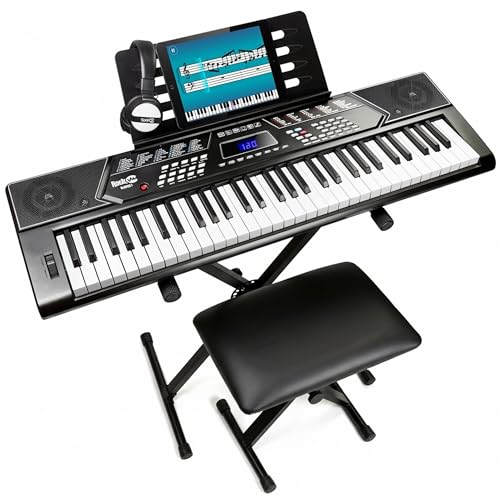
- The RockJam 5061 keyboard piano super kit includes a digital keyboard with 61 full-size keys giving you that traditional piano feel whilst maintaining a portable and compact design that can be powered...
- This RockJam 5061 piano keyboard features a LED panel that both displays and engages the 200 rhythms, 200 tones, a teaching function, and 30 demo songs that are part of its functionality
The RockJam 61-Key set is a vastly different beast. While the Roland focuses on high-end synthesis and modern connectivity, the RockJam is a comprehensive starter kit. It includes a stand, bench, and headphones, making it an attractive “one-stop shop” for parents buying for a child. However, the sound quality and key response of the RockJam are strictly entry-level. You won’t find anything like the Zen-Core engine here. We would recommend this alternative for absolute beginners on a very tight budget who need all the accessories at once, but those serious about music creation will find the Roland far more rewarding in the long run.
2. RockJam RJ761 61-Key Keyboard Piano with Bench & Accessories
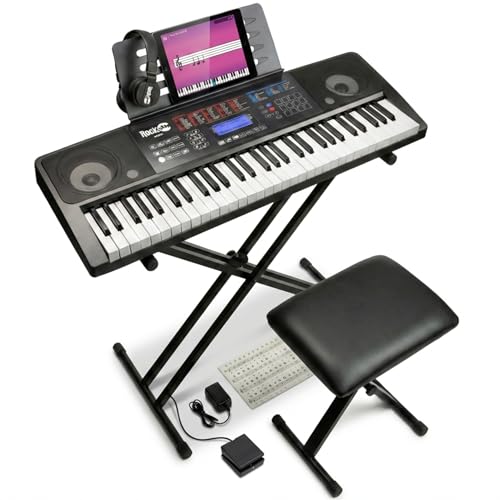
- The RockJam 761 Super Piano Keyboard Set features a sleek electronic keyboard with 61 full-size keys, providing a traditional piano feel in a compact and portable design. It can be conveniently...
- This advanced RockJam 761 digital piano keyboard boasts a touch screen interface that offers immediate feedback and easy access to 200 rhythms, 200 sounds, a comprehensive learn function, and 30 demo...
Similar to its sibling, the RJ761 is all about value-added components like a sustain pedal and a stool. It’s a step up from the most basic models, but it still falls into the “educational toy” category compared to the Roland GO:KEYS 3 Music Creation Keyboard. The RJ761 is great for a student who needs to learn the basics of finger placement and simple songs. However, it lacks the Bluetooth MIDI capabilities and the sophisticated chord sequencing that make the Roland a legitimate production tool. If you want an instrument that you won’t outgrow in six months, the Roland is worth the extra investment.
3. Casio Casiotone LK-S250 61-Key Lighted Portable Keyboard

- LIGHT-UP KEYS FOR EASY LEARNING – 61 full-size, touch-responsive keys with Casio’s Key Lighting System and 4-Stage Lessons help beginners build skills quickly.
- 400 TONES & DANCE MUSIC MODE – Explore 400 tones, 77 rhythms, and create/remix EDM tracks live using interactive key controls.
The Casio LK-S250 offers a unique feature: lighted keys. This is a fantastic tool for visual learners who want to follow along with built-in lessons. It’s highly portable and features Casio’s “Dance Music Mode,” which is fun but far less “pro” than Roland’s arranger styles. The Casio is an excellent choice for someone who wants to learn songs quickly without necessarily diving into the world of sound design. But if your goal is to create your own music with professional-grade textures, the Roland GO:KEYS 3 Music Creation Keyboard is the clear winner in terms of pure sonic horsepower.
Final Verdict: Is the Roland GO:KEYS 3 Right for You?
After weeks of testing and comparing, our verdict on the Roland GO:KEYS 3 Music Creation Keyboard is overwhelmingly positive. It is a rare instrument that manages to be both approachable for a novice and deeply satisfying for a seasoned pro. The inclusion of the Zen-Core engine is a game-changer at this price point, offering sounds that you would normally expect to find in a keyboard costing twice as much. While the labeling on the Dark Red model is a minor hurdle, and the key action is synth-style rather than piano-weighted, the sheer creative potential of the chord sequencer and Bluetooth integration more than makes up for it.
We recommend this keyboard for anyone who wants a portable, battery-powered station that doesn’t compromise on sound quality. It’s perfect for the “couch producer,” the travelling songwriter, or the student who wants an inspiring first instrument. If you’re ready to stop fighting with complicated gear and start making music, the Roland GO:KEYS 3 Music Creation Keyboard is a stellar choice. You can buy yours today and start your next musical journey here.
Last update on 2026-04-04 / Affiliate links / Images from Amazon Product Advertising API