
Roland Electronic Drum Pad Review: Bridging the Gap Between Digital and Acoustic Performance
As drummers, we have all been there. You spend thousands on a high-end electronic kit, hoping for a silent practice solution that feels just like your maple acoustic set, only to find yourself hitting what feels like a glorified Tupperware lid. The disconnect between the rebound of a plastic-rimmed pad and the organic response of an acoustic drum is more than just a nuisance; it’s a barrier to musical expression. We’ve spent years scouring the market for a trigger that doesn’t just “send a signal” but actually feels like a musical instrument. When we first laid hands on the Roland Electronic Drum Pad, we were looking for a solution to the “black-hole” effect of standard electronic toms—that lack of shell depth and the annoying “hot spot” that ruins your dynamics. If you are tired of your electronic kit looking like a science project rather than a drum set, solving the realism issue isn’t just about aesthetics; it’s about preserving your technique and enjoying the time you spend behind the kit.
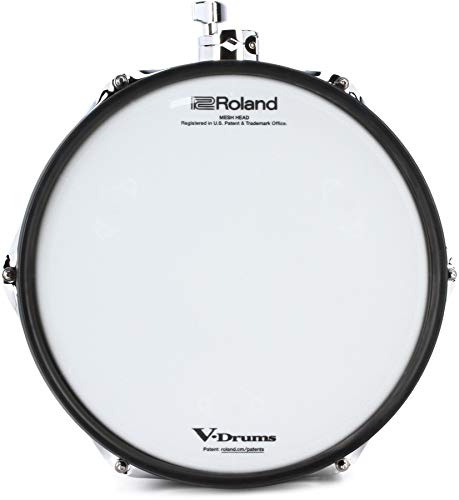
- 12“ x 4“ dual-zone tom pad with wood shell construction
- Shallow shell design provides no-compromise performance in a compact size
What to Consider Before Buying an Electronic Drum Pad
An Electronic Drum Pad is more than just an item; it’s a key solution for drummers who need to bridge the massive gap between silent practice and authentic stage presence. In the past, electronic pads were essentially rubber circles on sticks. Today, the technology has evolved to incorporate acoustic-style shells and multi-layered mesh heads, aiming to satisfy the muscle memory of traditional drummers while providing the infinite sonic possibilities of digital modules. When you invest in a high-end pad, you are buying into a system that should translate your subtlest ghost notes into the digital realm without compromise.
The ideal customer for this type of product is a serious hobbyist or a professional drummer who already owns a high-quality Roland V-Drums module (like the TD-17, TD-27, or TD-50) and wants to upgrade their rack-mounted pads to something more substantial. It’s perfect for those who perform live and want the “acoustic look” on stage. However, it might not be suitable for beginners on a tight budget or those using entry-level kits from other brands where the mounting hardware or trigger settings might not be fully compatible with a 12-inch wood shell pad. For those users, a simpler all-in-one tabletop unit might be a more logical starting point.
Before investing, consider these crucial points in detail:
- Dimensions & Space: Unlike slimline rubber pads, a 12″ x 4″ wood shell pad requires significant real estate on your drum rack or stand. You must ensure your current setup can accommodate the physical depth of the shell and that your tom arms are sturdy enough to support the 7.2-pound weight. If you’re working in a cramped studio, the “shallow shell” design here is a compromise you’ll need to evaluate carefully.
- Trigger Sensitivity & Zones: Look for pads that offer dual-zone triggering (head and rim). This allows you to assign different sounds to the rim (like a cross-stick or a cowbell) and ensures that the module can distinguish between a center hit and an edge hit. High-performance pads should also eliminate “hot spots,” where the volume jumps unexpectedly when you hit the center sensor.
- Materials & Build Quality: While plastic pads are durable and lightweight, wood shells provide a more natural resonance and weight. The Roland Electronic Drum Pad uses a real wood shell, which not only looks better under stage lights but provides a sturdiness that plastic simply cannot replicate. The quality of the mesh head—specifically the ply count—determines how long the pad will last before needing a replacement.
- Compatibility & Mounting: Always check the connector type (usually a 1/4″ jack) and the mounting bracket style. Most professional pads use a standard 10.5mm tom holder, but if you are switching brands, you may need to purchase additional clamps or arms. Maintenance is usually minimal, but you’ll want a pad where the mesh head tension can be adjusted with a standard drum key.
Understanding these factors will help you decide if a premium pad fits your workflow. While the Roland Electronic Drum Pad is an excellent choice, it’s always wise to see how it stacks up against the competition. For a broader look at all the top models, we highly recommend checking out our complete, in-depth guide:
The Ultimate Guide to the Best Portable Electronic Drum Pads for Modern Percussionists
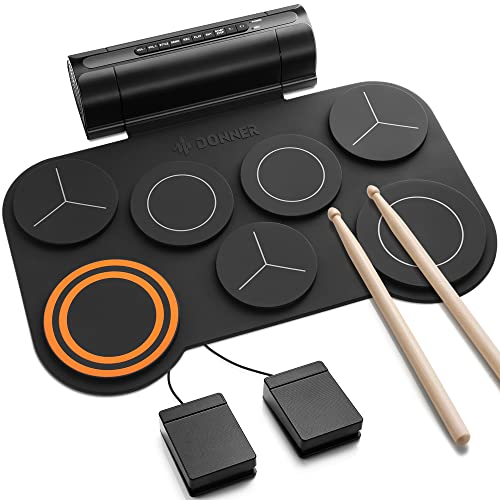
- [Fun Drum Pad Machine] DED-20 electronic drum pad 's high-quality sound source sample is taken from a real drum source, faithfully reproducing the acoustic drum's sound. 7 drum sets(1 SNARE, 1 CRASH...
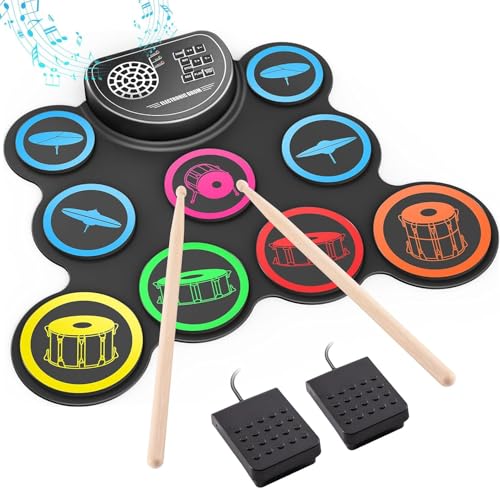
- 【Professional 9 Pads Electric Drum Pad】Sboet electronic drum set includes 3 TOMS, 2 CRASHES, 1 HI-HAT, 1 RIDE, 1 SNARE, 1 BASS and 2 Pedals, offers 7 Timbres, 10 DEMO Songs and 9 Rhythms, it...
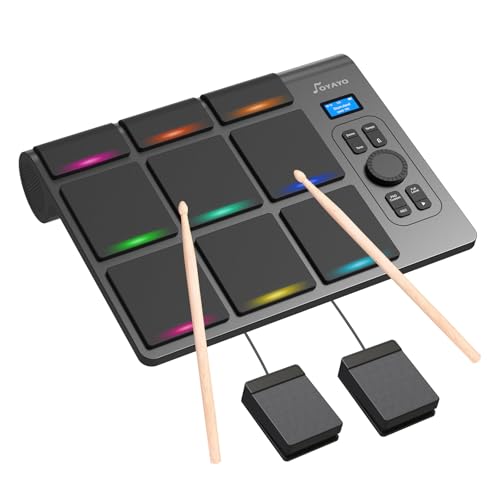
- 【Versatile Tabletop Drum Kit】The Portable Electronic Drum Kit features 9 Velocity-Sensitive Pads with LED light, hi-hat and kick bass drum pedal controller to reproduce full drum set sound with...
First Impressions: Unboxing the Roland Electronic Drum Pad
When the Roland Electronic Drum Pad first arrived at our studio, the difference in quality was immediately apparent before we even plugged it in. Pulling it out of the box, the weight of the 12-inch wood shell gives it an “instrument” feel that is often missing from electronic gear. The black finish is sleek, and the chrome hardware—including the standard tom bracket—is polished to a high mirror shine. It doesn’t look like a peripheral; it looks like a premium snare or tom from a high-end acoustic kit. Before you even strike a note, you can see its full feature set and user reviews to understand why this is a significant step up from the older PDX series.
Compared to the previous generation PDX-8 or PDX-100 pads, which relied on plastic housings and smaller playing surfaces, the PDA120L-BK feels expansive. The 12-inch diameter provides ample room for wide sticking patterns, and the 4-inch depth gives the pad enough “body” to feel stable on a tom arm. Setup was a breeze; we simply slid it onto a standard Roland tom holder and connected a single 1/4″ TRS cable. Within minutes, we were ready to dive into the performance testing, and initial taps with the sticks suggested a much more refined rebound than we’ve experienced on smaller, center-mounted sensor pads.
Key Benefits We Found
- Real wood shell construction provides an authentic acoustic look and superior stability.
- Innovative sensor placement virtually eliminates the annoying “hot spot” in the center.
- Dual-zone triggering allows for independent head and rim sounds with perfect isolation.
- Legendary Roland double-ply mesh head offers adjustable tension for a customized feel.
Drawbacks to Consider
- Higher price point compared to standard plastic electronic pads.
- The 12-inch size and 4-inch depth might be too bulky for very compact travel kits.
The Deep Dive: Performance Analysis of the Roland Electronic Drum Pad
To truly understand why the Roland Electronic Drum Pad is a game-changer, we have to look at how it handles the nuances of actual drumming. This isn’t just about whether it triggers a sound; it’s about how accurately it translates the energy of your stroke into a digital value. During our testing, we focused on three main areas: the sensor architecture, the physical rebound, and the aesthetic integration into a hybrid setup.
Eliminating the “Hot Spot”: A Technical Breakthrough
The biggest complaint drummers have with electronic pads is the “hot spot.” On most pads, the trigger sensor sits directly in the center. If you hit that exact spot, the volume jumps to 127 (maximum MIDI velocity) even if you intended a medium stroke. This ruins the dynamics of a roll or a build-up. We found that the Roland Electronic Drum Pad solves this by moving the triggers away from the dead center. During our sessions, we could play consistent eighth notes across the entire surface—from the edge to the middle—without any jarring volume spikes. This allows for a level of realistic dynamics that we previously only found on much more expensive digital snare pads. As we discovered, this sensor layout is a feature that really sets it apart from almost everything else in the Roland catalog.
In practice, this means your ghost notes stay ghost notes. We ran several tests using a TD-27 module, and the sensitivity was breathtaking. Even when playing soft press rolls, the PDA120L-BK captured every minute vibration. This is largely due to how the wood shell absorbs excess vibration, preventing “double-triggering” which often plagues lighter, plastic-based pads. When you are performing a delicate jazz piece or a complex prog-rock fill, knowing that your pad won’t betray your dynamics is worth every penny.
The Realism of Wood Shell Construction
There is a psychological element to drumming that many manufacturers overlook: if it looks like a toy, you play it like a toy. The wood shell of the Roland Electronic Drum Pad changes your approach to the kit. At 12 inches, it matches the size of a standard rack tom, which means your muscle memory from an acoustic kit transfers over perfectly. We weren’t constantly looking down to make sure we hit the small target of a 10-inch pad; the 12-inch surface felt natural and inviting. We found the wood shell provides a quality that truly justifies the investment, especially if you’re building a “V-Drums Acoustic Design” (VAD) kit.
Beyond the looks, the wood shell acts as a sturdy chassis for the mesh head. On plastic pads, you can sometimes feel the frame flex under heavy hitting. With the PDA120L-BK, the shell is rock-solid. This rigidity allows you to crank the tension on the mesh head to mimic a high-tuned snare or loosen it for a floor-tom feel. The shallow 4-inch depth is also a stroke of genius—it gives you the look of a “real” drum without the weight and positioning headaches of a full-depth 12 or 14-inch shell. It fits easily over a bass drum or on a side stand without interfering with other hardware.
Dual-Zone Triggering and Rim Response
One of the most impressive aspects of our testing was the rim response. On many dual-zone pads, hitting the rim can accidentally trigger the head sound, or vice versa (cross-talk). Roland has perfected the isolation on the Roland Electronic Drum Pad. The rim trigger is crisp and requires just the right amount of force to activate. We assigned a cross-stick sound to the rim and a deep snare sound to the head, and even during fast, aggressive playing, the two zones remained completely independent. This makes it an ideal choice not just for a tom, but also as a secondary snare or a dedicated “effects” pad.
The mesh head itself is the classic Roland double-ply design. In our experience, these are the most durable mesh heads on the market. They offer a “spongy” but firm rebound that is much easier on the wrists than rubber pads. If you are a high-volume hitter, you’ll appreciate how the Roland Electronic Drum Pad absorbs the shock of the stick, allowing for longer practice sessions without fatigue. You can check the latest price and availability to see how this fits into your current rig upgrade plan.
What Other Users Are Saying
The general consensus among the drumming community is that the Roland Electronic Drum Pad is the “missing link” for those who found the older PDX series too small and unrealistic. One user noted that the product arrived quickly and represented a massive improvement over their previous PDX-8, particularly in terms of build quality. We saw similar sentiments from professional players who were “extremely impressed with the dynamics and quality,” noting that everyone who plays on the pad is immediately struck by how natural it feels.
Perhaps the most significant feedback comes from a user who pointed out that, unlike almost all other Roland mesh-head pads, this model actually eliminates the “hot spot” in the dead center. This user mentioned that even on other 12-inch pads, it’s easy to accidentally hit that center sensor and ruin the realism of a performance, but the PDA120L-BK’s edge-biased triggers make this nearly impossible. While some users mentioned that they wished it was even cheaper, the overwhelming majority agree that the professional look and superior triggering justify the cost. You can explore the current deals and offers to see what other drummers are saying about their long-term experience.
Comparing the Roland Electronic Drum Pad to Top Alternatives
While we believe this pad is a top-tier choice for serious drummers, it’s important to see how it compares to other options on the market, especially if you are looking for a more portable or budget-friendly solution.
1. Pyle Electronic 8-Pad Tabletop Drum Set

- 8 TOUCH-SENSITIVE DRUM PADS - Experience the ultimate drum set with 8 touch-sensitive pads, allowing for dynamic and expressive playing. Store up to 10 custom user kits and explore different cymbal...
- COMPLETE ELECTRIC DRUM SET - The electric drum set Includes 4x5" rubber drums, 4x3.5" rubber cymbals, (2) digital foot pedals, and (2) drumsticks. Customize your sound with built-in EQ effects, making...

The Pyle Electronic 8-Pad Tabletop Drum Set is a completely different beast compared to the Roland. While the Roland is a single, high-fidelity trigger meant to be part of a larger kit, the Pyle is an all-in-one portable solution with 8 touch-sensitive pads and built-in sounds. It’s a great choice for beginners or someone who needs a compact, “grab-and-go” kit for a dorm room. However, it lacks the wood shell realism and the sophisticated “no-hot-spot” mesh head technology of the Roland. If you are looking for professional feel and module integration, the Roland is the clear winner, but for pure portability and 600 built-in sounds, the Pyle has its own niche.
2. Alesis Sample Pad 4 Compact Percussion Instrument
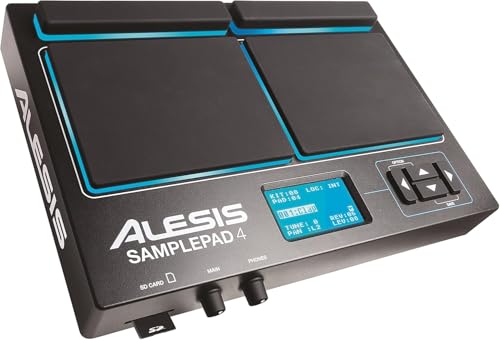
- Expand Your Performance - Add any sound sample to your drum or percussion setup via standard SD card
- In-Demand Sound - Built-in library of the 25 most-commonly requested percussion and electronic drum sounds mapped across 8 ready-to-play kits
The Alesis Sample Pad 4 is a compact percussion instrument designed for triggering samples and loops. Unlike the Roland Electronic Drum Pad, which is designed to feel like a real tom, the Alesis uses four rubber pads and is better suited for an electronic artist or a drummer who wants to add specific sound effects to their acoustic kit. It’s much smaller and has an SD card slot for custom samples. While the Alesis is fantastic for adding electronic textures, it doesn’t provide the authentic drumming experience or the mesh-head rebound that Roland offers. We recommend the Alesis as an accessory, whereas the Roland is a core component for a realistic drum set.
3. Pyle Pro Electronic Drum Kit

- COMPLETE DRUMSET SOUND: This electronic drum kit has 7 drum pad and hi-hat and kicks bass drum digital pedal controller to reproduce full drumset sound with tom-toms, hi-hat, snare, crash and ride...
- PRESET DRUM KITS: Pyle portable electric tabletop drum set machine comes packed with 55 preset plus 10 custom preloaded drum kits, 300 plus cymbal or drum sounds, and it also has a drum trainer...
The Pyle Pro Electronic Drum Kit (PTED06) is a tabletop machine that serves as a budget-friendly alternative for someone who wants to learn the basics of drumming without investing in a full-sized rig. It features 7 pads and includes pedals for the hi-hat and kick. When compared to the Roland Electronic Drum Pad, the difference in build quality is night and day. The Pyle Pro uses rubber pads that can be quite loud and offer a very different rebound than a mesh head. If you are a serious player looking to improve your technique, the Roland is the superior choice, but if you want an affordable way to play around with different drum sounds on your desk, the Pyle Pro is a fun, entry-level option.
The Final Verdict: Is the Roland Electronic Drum Pad Worth the Investment?
After weeks of testing and comparing it to both its predecessors and its competitors, we can confidently say that the Roland Electronic Drum Pad (PDA120L-BK) is one of the finest electronic toms ever produced. It successfully bridges the gap between the digital and acoustic worlds. By utilizing a 12-inch wood shell and a redesigned sensor array that eliminates “hot spots,” Roland has addressed the two biggest complaints drummers have had about electronic kits for decades. It looks professional, feels authentic, and triggers with a level of nuance that allows for true musical expression.
We recommend this pad specifically for drummers who are looking to upgrade their current V-Drums kit or those building a hybrid kit who refuse to sacrifice the look and feel of an acoustic shell. While it is an investment, the durability of the mesh head and the reliability of the Roland trigger system mean this pad will likely serve you for years to come. If you are ready to take your electronic drumming to the next level of realism, we suggest you secure yours today and experience the difference that a true wood shell can make.
Last update on 2026-09-26 / Affiliate links / Images from Amazon Product Advertising API