
Roland CY-12C-T Thin Crash Cymbal Pad Review: The New Gold Standard for Electronic Expressiveness?
As a drummer who has spent decades moving between heavy acoustic kits and high-end electronic setups, I’ve always found one major sticking point: the cymbals. For years, electronic crash pads felt like hitting a practice pad—stiff, thick, and lacking that organic “swing” that defines a real crash. When you’re deep in a groove and go for a big accent, you want the cymbal to give way, to move with the strike, and to vibrate naturally. The older, thicker pads often felt like they were fighting back against the stick. This lack of physical realism doesn’t just hurt the “vibe”; it actually affects your technique, making swells and delicate accents much harder to pull off. This is exactly where the Roland CY-12C-T Thin Crash Cymbal Pad enters the frame. We’ve spent considerable time testing this new “thin” generation to see if it truly bridges the gap between the digital and acoustic worlds.
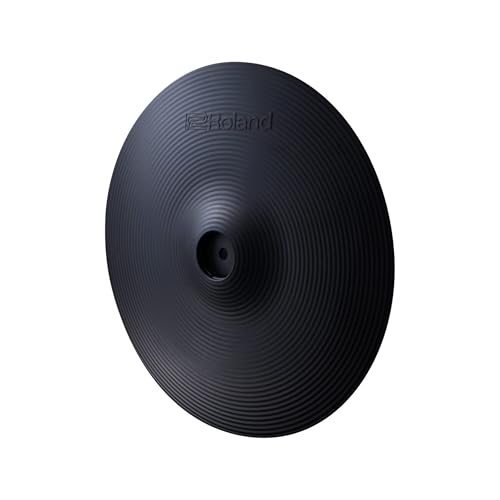
- Advanced 12-inch crash cymbal pad with a thinner profile than previous generations
- Natural looks and playability with improved feel and swinging motion
What to Consider Before Investing in a Professional Crash Cymbal Pad
A Crash Cymbals is more than just an item; it’s a key solution for drummers looking to maximize their dynamic range and physical comfort during a performance. Whether you are practicing in a bedroom or performing on a world tour, the way your crash responds to your touch dictates how you express yourself. A high-quality crash pad needs to solve the problem of “triggering latency” and “unnatural rebound.” If a pad is too heavy, it stays stationary, which can lead to wrist fatigue over long sessions because the energy of the stick isn’t being dissipated by the motion of the cymbal. By choosing a pad with advanced motion characteristics, you are investing in your long-term playing health and your musicality.
The ideal customer for this type of product is someone facing the limitations of entry-level kits or older electronic hardware, specifically those who find their current pads “clunky” or unresponsive. It’s perfect for the intermediate to professional player who demands a kit that looks and feels like an acoustic set on stage. However, it might not be suitable for those who are strictly budget-oriented and don’t mind the feel of basic rubber pads, nor for those who have a very old module that might not support the nuance of dual-triggering. For those individuals, basic pads might suffice, but they will miss out on the organic motion that defines this model. You can check the latest price and availability to see how it fits into your current gear budget.
Before investing, consider these crucial points in detail:
- Dimensions & Space: The 12-inch diameter of the Roland CY-12C-T Thin Crash Cymbal Pad is a “sweet spot” for many. It’s large enough to provide a realistic target for fast transitions but compact enough to fit into tight “V-Drum” rack configurations without crowding your toms.
- Triggering Precision: Look for dual-trigger capabilities. This allows for independent bow and edge sounds, which is essential for realistic performances. If a cymbal only has one trigger zone, your playing will sound flat and one-dimensional.
- Materials & Durability: While traditional cymbals are metal, electronic pads use specialized rubber and textured composites. The “Thin” series from Roland uses a refined material that is 40% thinner than previous models, which significantly improves the weight distribution and swinging motion.
- Ease of Use & Maintenance: Consider the connector type and mounting hardware. A standard cymbal mount compatibility is key. You want a pad that integrates seamlessly with your existing stands and uses a reliable connection, like the USB Type B or standard trigger cables found here.
Transitioning from a standard pad to a specialized thin pad requires a bit of an adjustment in your module settings, but the physical benefits are immediate. While the Roland CY-12C-T Thin Crash Cymbal Pad is an excellent choice, it’s always wise to see how it stacks up against the competition. For a broader look at all the top models, we highly recommend checking out our complete, in-depth guide:

- Nice Percussive Sound: The cymbal will have a short, thick sound, and the accent effect will give you a better performance.

- UPGRADE FROM STOCK CYMBALS: replaces the flimsy cymbals most entry-level kits include—Meinl HCS sounds real and feels solid

First Impressions: A Sleeker, More Authentic Aesthetic
When we first unboxed the Roland CY-12C-T Thin Crash Cymbal Pad, the difference was immediately visible. Comparing it to the previous generation CY-12C, the profile is noticeably slimmer. It doesn’t have that “chunky rubber” look that has characterized e-drums for years. Instead, it has an elegant, textured design that projects a much more authentic acoustic look on stage. It weighs in at about 4 pounds, which gives it enough heft to feel substantial but enough lightness to allow for a free-swinging motion on the cymbal felt. Setting it up was a breeze; it mounted perfectly on our standard Roland cymbal boom arm, and the textured surface felt great under the stick right away. To truly appreciate the visual upgrade, you should see its full feature set and user reviews online.
Key Benefits
- Significantly thinner profile (40% less) for a natural swinging motion.
- Incredible stick response that makes cymbal swells feel remarkably acoustic.
- Dual-trigger sensors provide clear, independent sounds for the bow and the edge.
- Support for choking by simply grabbing the edge of the cymbal.
Limitations
- Requires a modern module to fully exploit the sensitive trigger dynamics.
- At 12 inches, some heavy hitters might prefer a larger 14 or 16-inch crash.
Mastering the Motion: A Deep Dive Into the Roland CY-12C-T Thin Crash Cymbal Pad’s Performance
The true test of any drum component is how it behaves under the heat of a performance. We took the Roland CY-12C-T Thin Crash Cymbal Pad through its paces in both a studio environment and a live rehearsal setting. The results were, frankly, transformative for our electronic kit’s playability.
The “Thin” Advantage: Organic Motion and Feel
The most striking feature of the Roland CY-12C-T Thin Crash Cymbal Pad is its physical movement. Because Roland reduced the thickness of the rubber and the internal structure, the center of gravity has shifted. When you strike the edge, the cymbal swings exactly like a thin-weight acoustic crash. We found that this “swing” is more than just a visual flourish; it provides crucial tactile feedback to the drummer. When the cymbal moves away from your stick, it mimics the resistance of metal, allowing for a more natural follow-through on your stroke. We found this particularly beneficial during high-tempo tracks where you need to hit the crash and return to the hi-hat or snare immediately. The energy of the hit is absorbed by the motion, rather than vibrating back into your hand. This is a feature that really sets it apart from the older, stiffer pads that often felt like hitting a brick wall.
Precision Dual-Triggering and Edge Sensitivity
Triggering has always been Roland’s strong suit, but with the Roland CY-12C-T Thin Crash Cymbal Pad, they’ve refined the sensitivity to a point of extreme precision. The pad features independent sensors for the bow (the top surface) and the edge. During our testing, we noticed that the “crossover” point—where the module decides if you’ve hit the edge or the bow—is much more predictable than on previous models. This is vital for drummers who like to use their crash for light riding or “washy” accents on the bow, followed by a sharp accent on the edge. Furthermore, the choke functionality is incredibly responsive. We found that you don’t need to “strangle” the pad to get it to stop; a light, natural grab on the edge silences the note instantly. This level of nuance allows for much more expressive “stop-start” sections in modern rock and gospel drumming styles.
Acoustic Stick Response and Texture
The texture on the surface of the Roland CY-12C-T Thin Crash Cymbal Pad isn’t just for looks. It actually changes the way the stick tip interacts with the pad. On smooth rubber pads, the stick can sometimes “skate” or slide, especially during fast swells. The textured finish on this model provides just enough friction to keep the stick planted where you want it. When performing cymbal swells (rolls) with mallets or the tips of sticks, the response was incredibly smooth. We didn’t experience any of the “machine-gunning” effect (where the sound triggers unnaturally fast and identical) because the pad’s sensitivity allows the module to interpret the slight variations in our roll. It’s an authentic stick response that makes it easier to play cymbal swells and rides with confidence. You can explore more about the textured design and how it aids performance in the official specifications.
Integration and Stage Presence
Finally, we have to talk about how this pad looks on a kit. One of the complaints about electronic drums is that they can look “toy-like” under stage lights. The Roland CY-12C-T Thin Crash Cymbal Pad has a matte, professional finish that doesn’t reflect glare in a distracting way. Its thin profile makes it look much more like a high-end “K-series” or “A-series” acoustic cymbal from a distance. In terms of compatibility, it worked flawlessly with our TD-27 and TD-50X modules. While it is compatible with all V-Drums modules, we found that the newer modules really allow the “Thin” series to shine by providing more granular control over the trigger curves. If you are looking to upgrade your stage presence while improving your feel, this is an investment that pays off every time you sit behind the kit.
What Other Users Are Saying
The consensus among the drumming community confirms our own findings. One user noted that the item was exactly what they expected and “works great,” highlighting the reliability that Roland is known for. Another drummer shared that the quality is “exactly what I expected from Roland,” specifically praising how it “triggered beautifully” on their electric kit and noting the efficiency of the shipping process. A third reviewer pointed out its versatility, stating it “works great live or studio.”
Generally, the sentiment is overwhelmingly positive, with users emphasizing the plug-and-play nature of the pad. We did find that a few users mentioned the price point being higher than generic brands, but they quickly followed up by saying the build quality and triggering accuracy justified the cost. It’s clear that for those who value performance over “budget” specs, the Roland CY-12C-T Thin Crash Cymbal Pad is the preferred choice for a seamless drumming experience. It’s a professional-grade tool that solves the problem of “clunky” pads once and for all.
Comparing the Roland CY-12C-T Thin Crash Cymbal Pad to Market Alternatives
While the Roland CY-12C-T is a top-tier electronic pad, many drummers often consider whether they should stick with a hybrid setup or go fully acoustic for their crash needs. Here is how it stacks up against some popular acoustic alternatives that are often used in similar price brackets or for practice setups.
1. Zildjian ILH20CR 20″ Crash Ride Cymbal
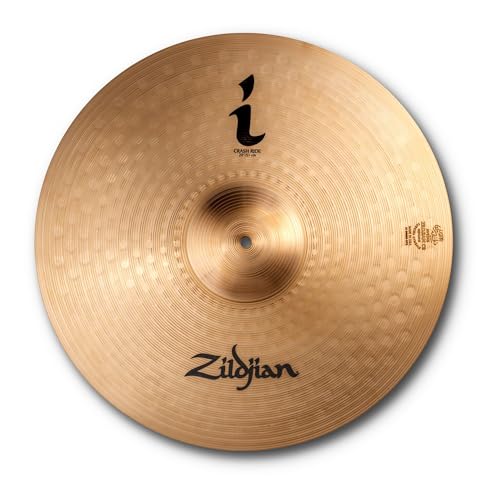
- Taking its name from Ilham – the Turkish word for inspiration
- Crafted from B8 alloy
The Zildjian ILH20CR is a traditional acoustic cymbal that offers a massive 20-inch surface. Unlike the Roland CY-12C-T Thin Crash Cymbal Pad, this is a real metal cymbal, which means it is significantly louder and not suitable for quiet home practice. However, for a drummer building a hybrid kit, this Zildjian offers a dual-purpose crash/ride functionality that no 12-inch pad can truly mimic in terms of sheer surface area. If you need a “real” metal sound for live performances and don’t care about volume control, this is a solid entry-level acoustic choice, but for electronic integration, the Roland wins on versatility and silence.
2. Meinl Percussion HCS 18″ Trash Crash Cymbal

- UPGRADE FROM STOCK CYMBALS: replaces the flimsy cymbals most entry-level kits include—Meinl HCS sounds real and feels solid
- WHY IT MATTERS: better sound makes practice more fun—and durable brass stands up to regular playing
The Meinl HCS Trash Crash is an 18-inch effects cymbal with holes designed to provide a fast, “trashy” decay. Comparing this to the Roland CY-12C-T Thin Crash Cymbal Pad is interesting because they both aim for a specific “feel.” The Meinl is purely for accentuation and has a very short sustain, much like the digital “trash crash” samples you might trigger on the Roland. However, the Meinl is an acoustic instrument made of brass. It’s a great addition for a drummer who wants a specific “low-fi” sound physically on their kit, but it lack the multi-zone triggering and module-based sound swapping that the Roland pad offers. We’d recommend the Meinl for those who want a physical “effects” cymbal on a budget.
3. Zildjian ZP16C Planet Z Crash Cymbal
- Redesigned for 2020 the NEW Planet Z range of cymbals are a great introduction for beginners and intermediate players to the Zildjian world of cymbals
- Proudly made in the USA crafted from Brass the NEW Planet Z cymabls offer bright cutting tones with more control and a focussed sound
The Zildjian Planet Z 16-inch crash is a classic beginner’s acoustic cymbal. It’s bright, cutting, and very affordable. Compared to the Roland CY-12C-T Thin Crash Cymbal Pad, the Planet Z is much more “one-note.” While it is a real metal cymbal, it doesn’t offer the dynamic range or the “choke” sensitivity that the Roland pad provides through a high-end module. For someone practicing in an apartment, the Planet Z would be far too loud, whereas the Roland provides the same 12-inch target size with none of the noise complaints. If you are strictly an acoustic player on a tight budget, the Planet Z is a staple, but for the modern electronic drummer, the Roland is the superior technology.
Final Verdict: Should You Upgrade to the Roland CY-12C-T Thin Crash Cymbal Pad?
After extensive testing, it’s clear that the Roland CY-12C-T Thin Crash Cymbal Pad is not just a minor update; it’s a significant leap forward in the physical design of electronic percussion. By reducing the thickness and refining the sensor balance, Roland has created a pad that finally moves and breathes like a real cymbal. Its strengths lie in its organic swinging motion, its incredibly accurate bow/edge triggering, and its elegant, professional aesthetic that looks great in any setting. While it might be a bit of an investment for those used to entry-level gear, the improvement in “playability” and “hand-feel” is worth every penny.
We recommend this pad to any V-Drums user looking to add more expression to their kit, or for those building a high-end hybrid setup. It bridges the gap between the digital world and the acoustic feel we all crave. If you’re ready to take your drumming to the next level of realism, you should definitely check the latest price and see why this is a top-rated choice for pros worldwide. Don’t settle for stiff, clunky pads when you can have the organic motion of the Roland Thin series.
Last update on 2026-10-16 / Affiliate links / Images from Amazon Product Advertising API