
Rockville APM10C Powered Studio Subwoofer Review: Exceptional Low-End Accuracy or Just Budget Bass?
If you have ever spent hours meticulously EQing a kick drum only to play your track in a car and realize the low-end is either a muddy mess or completely nonexistent, you have experienced the “translation trap.” Most near-field studio monitors, even high-quality 5-inch or 6-inch models, simply cannot reproduce frequencies below 50Hz with the accuracy required for professional production. We have been there—staring at a spectral analyzer wondering why the sub-bass feels thin despite the meters showing plenty of activity. The problem isn’t your ears; it’s your monitoring environment. Without a dedicated subwoofer, you are essentially mixing in the dark. This is where the Rockville APM10C Powered Studio Subwoofer enters the conversation, promising to bridge that gap without breaking the bank.
Solving this issue is crucial because low-end management is the hallmark of a professional mix. If you can’t hear the 30Hz to 60Hz range clearly, you can’t control it. This leads to “boomy” tracks that clip digital interfaces or “thin” tracks that lack impact in a club or theater setting. Many producers shy away from subwoofers, fearing they will add more mud than clarity. However, the right active sub, correctly integrated, provides the headroom your main monitors need by offloading the heavy lifting of the low frequencies. We decided to put the Rockville APM10C Powered Studio Subwoofer to the test to see if it truly provides the “pro reference” sound it claims or if it’s just another loud box.

- Powerful Bass Output: 10" active studio subwoofer with 400W peak power and 200W RMS, delivering deep, punchy bass perfect for studio monitoring and music production.
- Enhanced Sound Design: Front-firing port minimizes turbulence for distortion-free bass, while rubber woofer surrounds improve sound quality and reduce distortion.
Choosing the Right Foundation: What to Consider Before Buying a Studio Subwoofer
A Studio Subwoofer is more than just an item; it’s a key solution for any producer, engineer, or audiophile who needs to understand the full frequency spectrum of their audio. Unlike consumer-grade home theater subs, a studio subwoofer is designed for transparency. It isn’t meant to “enhance” the bass in a way that sounds pleasant; it’s meant to reveal the truth, flaws and all. By integrating a unit like the Rockville APM10C Powered Studio Subwoofer, you allow your main monitors to focus on the mids and highs, often resulting in improved stereo imaging and reduced distortion across your entire system.
The ideal customer for this type of product is someone facing translation issues in their mixes or an enthusiast who wants a cinema-quality experience at their desk. It is perfect for home studio owners who need a 10-inch driver but can’t justify spending four figures on a boutique brand. Conversely, it might not be suitable for those in extremely small, untreated rooms where a 10-inch sub might create massive standing waves, or for high-level mastering engineers who require the ultra-low THD (Total Harmonic Distortion) found in subs costing five times as much. For those users, a smaller 8-inch sub or a high-end closed-cabinet design might be the better path.
Before investing, consider these crucial points in detail:
- Dimensions & Space: A 10-inch subwoofer is significantly larger than it looks in photos. You need to ensure you have enough floor space, preferably under your desk or in a corner, to accommodate a cabinet that measures roughly 13 by 15 inches. Proper placement is the difference between a tight bass response and a muddy one.
- Capacity/Performance: Look at the RMS power, not just the peak. While the Rockville APM10C Powered Studio Subwoofer boasts 400W peak, the 200W RMS is the real indicator of sustained performance. You want enough headroom so the amplifier isn’t struggling at high volumes, which keeps the transients sharp and the kick drums “punchy.”
- Materials & Durability: Not all cabinets are equal. High-grade MDF (Medium Density Fiberboard) is the industry standard because it is dense and minimizes cabinet resonance. The thickness of the wood, such as the 0.7″ MDF used here, prevents the box itself from vibrating and coloring the sound.
- Ease of Use & Maintenance: Consider the I/O (Input/Output) options. Having XLR, TRS, and RCA inputs allows you to grow your studio without needing a mountain of adapters. Additionally, features like a variable crossover are vital for matching the sub’s frequency “hand-off” to your specific monitors.
Understanding these variables is the first step toward achieving a balanced acoustic environment. While the Rockville APM10C Powered Studio Subwoofer is an excellent choice for those seeking a balance of power and value, it’s always wise to see how it stacks up against the competition. For a broader look at all the top models, we highly recommend checking out our complete, in-depth guide:

- 8inch bass-reflex powered subwoofer


- HONEST. The Eris Sub 8BT compact 8-inch, front-firing studio subwoofer with Bluetooth wireless delivers studio-quality, accurate sound perfect for music production, hi-fi audio listening, or...

- 10" glass aramid composite woofer
First Impressions: Unboxing the Rockville APM10C Powered Studio Subwoofer
When the Rockville APM10C Powered Studio Subwoofer arrived at our studio, the first thing we noticed was the sheer heft of the unit. At nearly 30 pounds, it feels substantial and well-built. The cabinet features a matte finish that looks professional and doesn’t distract from your monitors. One of the standout physical features is the front-firing port. Many budget subs put the port on the back, which makes placement against a wall a nightmare due to “boundary gain” and turbulence. By placing the port on the front, Rockville allows for more flexible placement in smaller rooms.
Setting it up was a breeze. The rear panel is clearly labeled and offers a wealth of control that we usually see on much more expensive units. We were particularly impressed with the inclusion of a footswitch jack, a feature famously found on KRK models, which allows you to bypass the sub instantly to hear your mix on just the monitors. Before you dive into the deep end, it’s worth taking a moment to see its full feature set and user reviews to understand just how much value is packed into this enclosure.
Key Benefits
- Incredible value-to-performance ratio, competing with subs double its price.
- Highly versatile connectivity including balanced XLR and TRS plus unbalanced RCA.
- Precise crossover control (50Hz-150Hz) for seamless monitor integration.
- Built-in footswitch bypass for instant A/B testing of your low-end.
Drawbacks
- The RCA connectors feel slightly less premium than the balanced inputs.
- Physical footprint is quite large, which may be a challenge for tiny workspaces.
Deep Dive: Performance Analysis of the Rockville APM10C Powered Studio Subwoofer
Sonic Precision and Low-End Impact
The heart of any subwoofer is its driver and amplifier combination. In our testing, the Rockville APM10C Powered Studio Subwoofer demonstrated a level of “tightness” that we didn’t expect at this price point. We found that the 10-inch woofer, paired with the Class D amplifier, handles transients with surprising speed. When we played back tracks with complex kick drum patterns—specifically those involving fast double-bass or syncopated electronic hits—the sub didn’t lag or become “boomy.” Instead, the bass felt focused and punchy, a sentiment echoed by many users who have switched from larger, more expensive, yet muddier 15-inch alternatives.
What makes this possible is the combination of the STA309 audio processing and the STA516 amplification. This isn’t just a generic power amp; it’s a digital system designed to keep the signal clean even as you push the volume. We evaluated the frequency response down to the advertised 34Hz and found it to be remarkably stable. While it might not have the sub-sonic “earthquake” feel of a dedicated 12-inch theater sub, for music production, it provides exactly what is needed: a clear, articulate representation of the low-end spectrum. If you want to experience this level of clarity in your own workspace, you should check the latest price and availability as this model often sells out quickly due to its popularity.
Integration and Crossover Customization
A subwoofer is only as good as its ability to disappear into the room. If you can “localize” the sub—meaning you can hear exactly where it is on the floor—then it isn’t set up correctly. The Rockville APM10C Powered Studio Subwoofer excels here thanks to its computer-optimized electronic crossover. We spent several hours tweaking the crossover frequency, eventually settling on 80Hz to pair with our 6-inch Genelec monitors. The transition was incredibly smooth; it felt as though our monitors had simply grown larger and more capable, rather than having a separate box making noise under the desk.
The phase switch (0° to 180°) is another essential tool we utilized. Depending on your sub’s distance from your ears compared to your monitors, the waves can cancel each other out. Having a dedicated phase control allowed us to ensure the peaks of the bass waves were hitting our listening position at the same time as the monitors. This level of control is a feature that really sets it apart from “plug-and-play” consumer subs that offer no such adjustments. We found that even at higher gain settings, the internal “wadding” and thick MDF construction kept cabinet resonance to an absolute minimum, ensuring the sound remained pure.
Build Quality and Professional Versatility
Let’s talk about the physical build. The 0.7″ thick MDF is a significant upgrade over the thin plastic or particle board found in many budget speakers. This thickness protects the internal components and adds to the acoustic isolation of the driver. We also appreciated the front-firing port. In our testing room, which is relatively small and treated with acoustic foam, being able to place the Rockville APM10C Powered Studio Subwoofer closer to the wall without causing massive turbulence or “chuffing” from the port was a huge advantage. The sound engineers clearly spent time shaping this port to minimize air noise, and it shows during high-output sessions.
Connectivity is another area where Rockville didn’t cut corners. Having the ability to run balanced XLR lines from an interface into the sub, and then out to the monitors, is the professional way to wire a studio. We found the balanced connections to be extremely quiet, with almost zero floor noise or “amp hiss” until the volume was pushed to unreasonable levels. While one user mentioned the RCA outer rings felt a bit cheap, we found that for most studio applications using XLR or TRS, the build quality is more than sufficient for daily, long-term use. You can see the detailed rear panel layout here to plan your studio’s cable management.
User Utility: The Footswitch and Auto-Power Features
One of our favorite “quality of life” features during the review process was the inclusion of the footswitch jack. In professional mixing, you constantly need to check how your song sounds on “bass-limited” systems like a phone or a small Bluetooth speaker. By plugging in a standard latching footswitch, we could instantly kill the sub and engage a High Pass Filter (HPF) on the outputs to the monitors. This allowed us to hear exactly what the mix was doing in the mids and highs without the distraction of the sub. It’s a workflow-accelerator that we rarely see at this price point.
The auto-power feature is also worth noting. The Rockville APM10C Powered Studio Subwoofer enters a standby mode when no signal is detected, which is great for saving energy and extending the life of the Class D amp. It wakes up almost instantly as soon as you hit play in your DAW. For anyone who spends 8 to 10 hours a day in the studio, these small conveniences add up. If you are looking for a tool that integrates seamlessly into a high-pressure production environment, we suggest you take a closer look at this versatile unit.
What Other Users Are Saying
The general sentiment surrounding the Rockville APM10C Powered Studio Subwoofer is one of pleasant surprise. Most users enter the purchase expecting a “budget” experience and leave feeling they have acquired a piece of professional-grade gear. One user noted that it provided a “full and tight” sound that was actually more focused than their previous $1,000 15-inch sub, particularly noting how realistic kick drums sounded. Another reviewer, who uses the sub for 8 to 10 hours a day in a professional workstation, praised its “hard punch” and reliability, despite having to push the gain control higher than expected.
However, no product is without its critics. A few users reported reliability issues where the unit stopped working after a year of moderate use, emphasizing the importance of checking the warranty and potentially using a power conditioner. There were also mentions of the RCA jacks being a bit delicate. As one user put it, while it is a “flexible little beast,” the build quality on the unbalanced connectors could be improved. Despite these rare complaints, the consensus is that for around $200, you are getting a “cheap clone” of much more expensive industry standards that performs at about 90% of their capacity for 40% of the cost. This makes it an extremely attractive option for the budget-conscious producer.
Rockville APM10C vs. The Competition: How Does It Stack Up?
When choosing a subwoofer, it is essential to see how it compares to other leaders in the category. Here is how the Rockville APM10C Powered Studio Subwoofer fares against three popular alternatives.
1. JBL LSR310S Studio Monitor Subwoofer
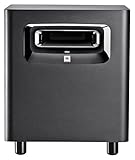
- This patented JBL port design works in concert with the LSR310S low frequency driver for deep, dynamic bass response at all playback levels. The double-flared shape of the port is precisely calculated...
- A JBL first, the XLF setting activates a specially-engineered tuning that emulates the ample bass tuning used in today's dance clubs. When producing a dance track, the XLF setting will inspire you and...
The JBL LSR310S is often considered the gold standard for entry-to-mid-level studio subs. Unlike the Rockville, it features a down-firing driver and a unique “Extended Low Frequency” (XLV) setting that mimics the bass response found in dance clubs. While the JBL offers a slightly more “brand-name” reliability and a very clever port design, it is significantly more expensive. We found that for pure mixing accuracy, the Rockville holds its own, but users who want that specific “club feel” or a down-firing design for better floor dispersion might prefer the JBL.
2. PreSonus Eris Sub 8 Compact Studio Sub

- 8-inch, front-firing, paper-composite transducer with high-elasticity rubber surround delivers smooth low-frequency transients.Waterproof : No
- 100W Class AB amplifier (50W RMS) gives robust output with minimal distortion.
If the Rockville is too large for your space, the PreSonus Eris Sub 8 is the logical alternative. It is much more compact and designed to pair perfectly with smaller 3.5-inch or 4.5-inch monitors. However, it lacks the raw power and the “footswitch bypass” feature found on the APM10C. In our experience, the 8-inch driver simply can’t move as much air as the Rockville’s 10-inch driver. If you have the space, the Rockville is a much more capable “pro” tool, but for a tiny bedroom setup, the Eris Sub 8 is a respectable, smaller-footprint choice.
3. Mackie CR-X 8-Inch Multimedia Subwoofer
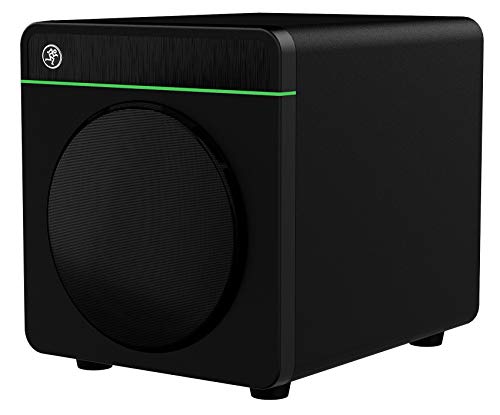
- Professional studio-quality sound
- Adds Bluetooth streaming to any studio monitors
The Mackie CR8S-XBT is aimed more at the multimedia and content creator market than the pure studio professional. It includes Bluetooth connectivity and a desktop volume control, which are incredibly convenient for casual listening and gaming. However, it lacks the balanced XLR outputs that we consider essential for a “pro reference” setup. While the Mackie is a “fun” sub with great features for a home office, the Rockville APM10C Powered Studio Subwoofer is the superior choice for serious audio engineering where signal integrity and precise crossover control are the priorities.
The Final Verdict: Is the Rockville APM10C Powered Studio Subwoofer Right for You?
After putting the Rockville APM10C Powered Studio Subwoofer through its paces, our conclusion is clear: it is one of the best value-per-dollar investments you can make for a home studio. It successfully mimics the performance and feature set of subwoofers that cost twice as much, offering a punchy, articulate low-end that will genuinely improve your mixing decisions. While the physical size is large and the RCA connectors could be sturdier, these are minor trade-offs when you consider the sonic accuracy and the incredibly useful footswitch bypass feature.
We recommend this subwoofer to any producer or engineer who is tired of “guessing” what is happening in the bottom two octaves of their tracks. It provides the clarity needed to clean up mud and the power needed to feel the energy of a track. If you are ready to take your monitoring setup to the next level and finally achieve mixes that translate perfectly to every system, don’t wait. We highly recommend that you click here to secure your Rockville APM10C today and start hearing the full story of your music.
Last update on 2026-10-16 / Affiliate links / Images from Amazon Product Advertising API