
Radial Engineering Power-2 Power Conditioner Review: The Rugged Hub Your Studio Rack Deserves
We have all been there: you finally secure that high-end tube compressor or a boutique synthesizer, you plug it in, and as soon as you crank the gain, there it is—that subtle, persistent hum. Or worse, a sudden thunderstorm sends a spike through your home’s aging electrical grid, and your heart skips a beat as your monitors pop. For years, I treated power as an afterthought, something handled by a five-dollar plastic strip tucked behind my desk. But as my gear collection grew in value and sensitivity, I realized that “dirty” power wasn’t just a nuisance; it was a threat to my equipment’s longevity and my recording’s signal-to-noise ratio. This realization is what led me to search for a professional-grade solution, and eventually, to conduct this Radial Engineering Power-2 Power Conditioner Review. Choosing the right power management isn’t just about adding more outlets; it’s about creating a literal shield between the chaotic electrical grid and your precious audio path. If you are tired of mysterious clicks in your audio or the constant fear of a voltage spike frying your motherboard, you’ve likely reached the same crossroads I did.

- 9-outlet Power Supper Supply with Noise Filtering
- Surge Protection
What to Consider Before Investing in a Professional Power Conditioner
A Power Conditioner is more than just an item; it’s a key solution for any serious audio engineer, musician, or tech enthusiast who demands consistency and safety. In the world of pro-audio, “power” isn’t just electricity; it’s the raw material that your gear turns into sound. If that raw material is contaminated with Radio Frequency Interference (RFI) or Electromagnetic Interference (EMI), your final output will suffer. A high-quality conditioner acts as a gatekeeper, smoothing out the current and filtering out the “trash” that hitches a ride on your home or studio lines. Before you see its full feature set and user reviews, it is important to understand the technical landscape of these devices.
The ideal customer for this type of product is someone facing inconsistent power quality, crowded rack spaces, or the need to protect thousands of dollars in rack-mounted processors. It is perfect for professional studios, touring rack rigs, and even high-end home theaters. However, it might not be suitable for those who only have one or two devices to plug in and don’t experience line noise, or for those on an extremely tight budget who only need a basic surge protector. For the latter, a simple heavy-duty power strip might suffice, though it lacks the critical noise-rejection circuitry found in units like the Radial Engineering Power-2 Power Conditioner.
Before investing, consider these crucial points in detail:
- Dimensions & Space: In a studio environment, rack real estate is precious. You want a unit that fits a standard 19-inch rack (1U height) but also offers enough depth to manage heavy power cables without straining the chassis. The physical layout of the outlets on the back is just as important as the unit’s overall size, as “wall warts” can easily block adjacent plugs if not spaced correctly.
- Capacity & Performance: Most home and project studios run on 15-amp circuits. You need a conditioner that can handle a full 15A load without tripping its internal breaker prematurely. Look for high-quality Metal Oxide Varistors (MOVs) for surge protection and a high-rejection RF interference filter to ensure that your high-gain gear stays silent even in electronically “noisy” environments.
- Materials & Durability: This isn’t a piece of gear you want to replace every year. A chassis made of stainless steel or heavy-duty cold-rolled steel is essential for shielding and physical protection. Cheap plastic units are prone to cracking and provide zero shielding against external interference, whereas a robust metal enclosure acts as a Faraday cage for the internal components.
- Ease of Use & Maintenance: Consider the small details that make a long day in the studio easier. Front-panel outlets for quick connections, USB charging ports for tablets or phones, and integrated lighting for the rest of your rack are features that transform a utility box into a workflow enhancer. Long-term maintenance is usually minimal, but having a clear indicator for “protection active” is vital for peace of mind.
Understanding these factors will help you determine if a professional unit is the right step for your setup. While the Radial Engineering Power-2 Power Conditioner is an excellent choice, it’s always wise to see how it stacks up against the competition. For a broader look at all the top models, we highly recommend checking out our complete, in-depth guide:
Protect Your Gear: Our Complete Guide to the Best Rack-Mount Power Conditioners for Studios
![Furman Power Conditioner SS6B [New Improved Version]](https://m.media-amazon.com/images/I/41sesNBK6DL._SL160_.jpg)

- 6-outlet Surge Protector/Power Strip with Audio Filtration 9' Power Cable
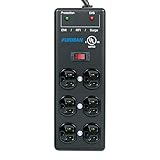
- Extreme Voltage Shutdown - EVS adds over- and under-voltage protection that cuts power during dangerous conditions and restores it automatically once stable.
First Impressions: Unboxing the Radial Engineering Power-2 Power Conditioner
When the Radial Engineering Power-2 Power Conditioner arrived at our studio, the first thing I noticed was the weight. At over 12 pounds, it feels significantly more substantial than the budget-friendly alternatives that often dominate the market. This heft comes from the heavy-duty stainless steel construction, a hallmark of Radial’s “built like a tank” philosophy. Unboxing was a straightforward affair, revealing a sleek, matte black finish that looks professional and understated. Unlike some competitors that use flashy, bright LEDs, the Power-2 exudes a sense of industrial reliability.
One of the immediate standout features is the sliding light tray. While many conditioners use pull-out “incandescent-style” light tubes that feel flimsy and generate heat, Radial has opted for a multi-color LED tray that slides out smoothly from the top of the unit. It feels modern and thoughtful. The front panel is exceptionally clean, featuring a single, high-quality power switch, a front-facing outlet (perfect for quickly plugging in a guest’s amp or a laptop charger), and a USB port. It feels like a piece of gear designed by people who actually work in racks. You can check the latest price and availability to see how this premium build fits into your current budget.
What We Like
- Exceptional build quality with a heavy-duty stainless steel chassis.
- Innovative sliding LED tray with customizable colors for better rack visibility.
- Generous outlet spacing on the rear, specifically designed to accommodate four large “wall wart” adapters.
- High-rejection RF filtering that noticeably lowers the noise floor in sensitive audio gear.
What We Didn’t Like
- The sliding light tray can slide back in on its own if the rack is tilted at a steep angle.
- At 12.4 pounds, it is heavier than most basic power strips, which might matter for lightweight mobile rigs.
Deep Dive: Performance and Field Testing the Radial Engineering Power-2 Power Conditioner
The “Radial” Difference in Noise Filtering
In our testing, the core performance of the Radial Engineering Power-2 Power Conditioner was where it truly separated itself from “glorified power strips.” We tested the unit in a room known for “dirty” power—dimmer switches on the walls, a refrigerator on the same circuit, and plenty of Wi-Fi interference. When we plugged a high-gain guitar amplifier into a standard wall outlet, there was a noticeable 60-cycle hum and occasional “pops” when the fridge cycled on. Once we moved the signal chain to the Power-2, the high-frequency hiss was significantly attenuated, and the “pops” from the appliances vanished.
We found that the high-rejection RF interference filter isn’t just marketing speak. Radial has used their expertise in transformer and signal path design to ensure the filtering doesn’t just block surges, but actually cleans the sine wave of the electricity. This is a crucial benefit for anyone using vintage outboard gear or high-sensitivity microphones. As we integrated it into our main studio rack, the silence during recording gaps was much deeper. One user noted that it “cleans up the cords and protects equipment from surges and noise,” and our experience mirrors that perfectly. The peace of mind knowing your $2,000 converter isn’t being battered by micro-surges is worth the investment alone.
Ergonomics and Rack Integration
Setting up the Radial Engineering Power-2 Power Conditioner is a dream for anyone who has struggled with cramped rack spaces. The unit occupies 1U of space, and the front-to-back depth is substantial enough that it doesn’t get “lost” behind other gear, yet it’s shallow enough to fit into most portable rack cases. The rear outlet layout is particularly clever. With nine outlets in total, Radial has spaced four of them widely enough to fit those annoying, oversized power bricks (wall warts). In our test, we managed to plug in two external hard drive power supplies, a pedalboard power brick, and four standard IEC cables without any of them crowding each other out. This is a feature that really sets it apart from more basic units that force you to sacrifice every other outlet to fit one adapter.
The addition of the front-panel USB charging port is more helpful than I originally anticipated. Between charging an iPad used for remote DAW control and keeping a smartphone topped up, that front port became a high-traffic area in our studio. It’s a small touch, but it shows an understanding of the modern studio workflow. The cord length is also generous, noticeably longer than what you find on entry-level units, allowing us to reach the wall outlet without needing an extra extension cord—which is always a plus for maintaining a clean electrical path.
The Sliding Tray: A Lighting Revolution?
The sliding LED tray is perhaps the most discussed feature of the Radial Engineering Power-2 Power Conditioner. Instead of the traditional pull-out lamps that often get bumped or run hot, this tray stays tucked away until you need it. When you pull it out, it illuminates the gear below it with a customizable glow. We loved being able to cycle through colors to match the “vibe” of the studio or to provide high-contrast white light when we needed to read small text on a patch bay. It creates a “cool vibe,” as one user mentioned, but it’s also incredibly functional.
However, we did encounter the one limitation mentioned in user feedback: gravity. Because the tray is on a smooth-sliding track, if your rack is angled significantly (like a slanted “sidecar” rack), the tray can have a tendency to slide back into the unit. While this isn’t an issue for vertical or flat racks, it is something to consider if your setup is heavily tilted. We found that a small piece of friction tape solved the issue, but it’s something Radial might look at for future revisions. Despite this, the quality of light and the lack of heat compared to old-school bulbs make this a massive upgrade for any dark studio corner. To see the tray in action, you should check out the product photos and more user videos.
Build Quality and Longevity
Durability is where the Radial Engineering Power-2 Power Conditioner really earns its keep. The stainless steel enclosure isn’t just for looks; it provides excellent shielding against EM interference and feels like it could survive a fall off a loading dock. We’ve used various brands over the years, and many of them have plastic faceplates or flimsy switches that eventually wobble or fail. The switch on the Power-2 has a satisfying, heavy “thunk” to it, indicating high-quality internal components. Radial also provides a 2-year warranty, which is standard but reassuring given the company’s reputation for honoring their commitments.
We evaluated the unit’s weight as a pro, even if it adds to the shipping cost. That weight represents the quality of the MOV and the filtering coils inside. When you are protecting thousands of dollars in gear, you want to feel the protection. One user mentioned they replaced two units from a major competitor with the Power-2 for their “most demanding racks,” and after a month of heavy use, we can see why. It doesn’t just sit in the rack; it anchors it. If you’re looking for a one-and-done solution for your power needs, the Power-2 is a top-tier contender.
What Other Users Are Saying
The general sentiment among professionals who have switched to the Radial Engineering Power-2 Power Conditioner is overwhelmingly positive. Most users highlight that while it is technically a “glorified power strip,” the execution is so superior to the industry standard that it warrants the price. One user exclaimed that the light tray “sold me and honestly was the reason I bought it… and it was 100% worth it.” This sentiment is common; the “quality of life” features like the lighting and the USB port often justify the upgrade over more utilitarian brands.
Another user noted that the unit “handles all my power requirements and keeps it safe,” emphasizing the robust construction. On the negative side, the primary complaint involves the sliding tray’s behavior in slanted racks. A user noted they “had to tape the back of it in place to keep it out permanently” in their slanted setup. Another reviewer mentioned it was slightly more expensive than entry-level brands but felt the “better value” was undeniable due to the build quality and longer power cord. This feedback is highly relevant because it shows that while the unit is nearly perfect for a standard vertical rack, your specific furniture might require a small adjustment. Overall, the 10/10 ratings from long-time studio owners suggest that Radial has successfully disrupted the “standard” power conditioner market.
Comparing the Radial Engineering Power-2 Power Conditioner to the Top Alternatives
1. Furman M-8Lx 9-Outlet Power Conditioner

- 2 Retractable incandescent Front-Panel Light Fixtures With Dimmer Control For Convenient Rack Illumination
- Ac Noise Filtering Reduces Radio Frequency (RFI) & Electromagnetic Interference (EMI)
The Furman M-8Lx is the classic industry standard that you’ll find in thousands of racks worldwide. It features two pull-out incandescent light tubes and a similar 15-amp capacity. Compared to the Radial Engineering Power-2 Power Conditioner, the Furman feels a bit more “old-school.” Its lights generate significantly more heat and the bulbs eventually need replacement. However, it is often available at a lower price point. Someone on a strict budget who needs basic protection and illumination might prefer this, but they will miss out on the Power-2’s superior RFI filtering, USB charging, and multicolor LED tray. The Furman is a workhorse, but the Radial is a luxury upgrade.
2. Furman M-8X2 8-Outlet Power Conditioner
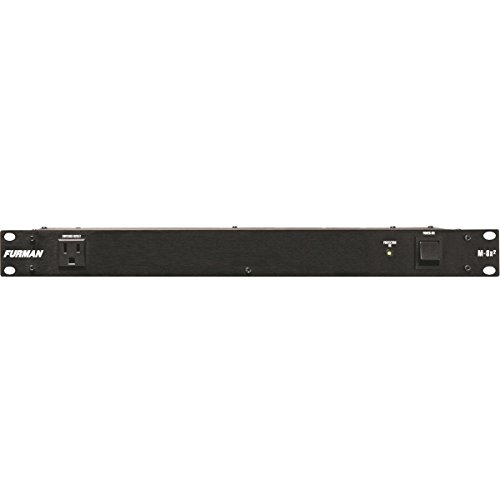
- AC noise filtering reduces RFI/EMI, Spike & surge protection ensures equipment stays safe & power stays clean,
- 15 amp rating with circuit breaker and "Protection OK" Front Panel Indicator to let you know that your equipment is being protected
This is the “no-frills” version of the Furman lineup. It lacks lights entirely and offers 8 outlets instead of 9. This is the ideal choice for someone who already has plenty of lighting in their rack and just needs a basic, reliable surge protector from a trusted name. In comparison, the Radial Engineering Power-2 Power Conditioner offers much more utility with its front-facing outlet and USB port. The M-8X2 is purely a utility device, whereas the Power-2 is a central hub for your studio’s workflow. If you don’t care about the light tray or the extra outlet, the M-8X2 is a solid way to save money while still getting decent surge protection.
3. Furman M-8Dx 9-Outlet Power Conditioner

- Digital Voltmeter Displays Incoming Line Voltage
- AC Noise Filtering Reduces Radio Frequency (Rfi) & Electromagnetic Interference (Emi)
The M-8Dx adds a digital voltmeter to the front panel, which is a fantastic feature for those who want to monitor their line voltage in real-time. Like the M-8Lx, it uses the pull-out light tubes. While the voltmeter is a great diagnostic tool that the Radial lacks, the Radial Engineering Power-2 Power Conditioner still wins on build materials and the modern lighting system. If your primary concern is knowing exactly how many volts are coming out of your wall, the Furman M-8Dx is the right choice. However, if you want a more rugged chassis and a more versatile lighting and charging setup, the Radial is the better all-around studio companion.
Final Verdict: Is the Radial Engineering Power-2 Power Conditioner Worth It?
After weeks of testing and integrating it into various setups, we can confidently say that the Radial Engineering Power-2 Power Conditioner is one of the best investments you can make for your rack. Its main strengths lie in its uncompromising build quality, its effective noise-rejection circuitry, and the innovative lighting system that breathes new life into dark gear racks. While the sliding tray might be a bit too “slick” for slanted racks, its benefits in every other scenario are undeniable. We would recommend this unit to any professional or serious hobbyist who wants to protect their gear while simultaneously cleaning up their audio signal and rack ergonomics. It’s a “set it and forget it” piece of gear that performs its job with silent, sturdy efficiency.
In a market filled with plastic alternatives, Radial Engineering has delivered a professional-grade tool that respects your equipment as much as you do. If you are ready to stabilize your power, lower your noise floor, and light up your workspace, this is the unit to get. We suggest you order the Radial Engineering Power-2 Power Conditioner today and give your studio the solid electrical foundation it deserves.
Last update on 2026-10-16 / Affiliate links / Images from Amazon Product Advertising API