
Pyle PMXU128BT 12-Channel Bluetooth Audio Mixer Review: A Versatile Powerhouse for the Modern Home Studio
I remember the frustration of my first home recording session. I had a condenser microphone, a digital piano, and a laptop, but getting them all to talk to each other without a tangled mess of adapters and ground loop hum was a nightmare. Many of us start our audio journey this way—struggling with limited inputs and poor signal control. We search for a solution like the Pyle PMXU128BT 12-Channel Bluetooth Audio Mixer because we’ve realized that a simple “plug and play” USB microphone isn’t enough for a growing podcast, a multi-instrumentalist setup, or a high-energy karaoke night. Solving this problem isn’t just about “more plugs”; it’s about gaining total authority over your soundstage. Without a proper mixer, you’re often left with “muddy” recordings, lack of real-time monitoring, and the inability to blend multiple sources on the fly, which can completely derail your creative momentum.

- RECORD AND CONNECT TO PC: This studio style mixer has a USB soundcard and audio interface to record and connect to MAC or PC. It has universal digital audio file compatibility, and can be used for...
- BLUETOOTH WIRELESS STREAMING: This twelve-channel DJ sound controller has Bluetooth for wireless streaming. Can be used as an input to mix signal with other input channels. It works with iPhone...

What to Consider Before Investing in a Professional DJ Mixer
A DJ Mixer is more than just an item; it’s a key solution for anyone looking to bridge the gap between various audio sources and a polished final output. Whether you are routing audio to a PA system for a live event or sending a clean signal to your Digital Audio Workstation (DAW) on a computer, the mixer acts as the brain of your operation. It allows for the fine-tuning of frequencies, the addition of creative effects, and the critical management of gain stages to ensure your audio is crisp and distortion-free.
The ideal customer for this type of product is someone facing the limitations of 2-channel interfaces—perhaps a podcaster with multiple guests, a small band needing to mix their own monitors, or a home hobbyist who wants to route their phone, PC, and instruments through one stereo system. However, it might not be suitable for those who require absolute portability (like a mobile journalist) or those who need a high-end, multi-track recording interface where every channel needs its own dedicated track in the computer software. For those users, a dedicated multi-channel USB interface might be a more precise, albeit more expensive, alternative.
Before investing, consider these crucial points in detail:
- Dimensions & Space: Even though the Pyle PMXU128BT 12-Channel Bluetooth Audio Mixer is described as console-style, you need to measure your desk or rack space. Mixers with 12 channels naturally occupy more real estate than compact 4-channel units. Consider how much room you need for cable management behind the unit as well.
- Capacity/Performance: Think about your “peak” usage. Do you actually need 12 channels? While it’s better to have more inputs than you need, the complexity increases with every knob. Look for the “Combo” inputs (XLR and 1/4″) which offer the most versatility for switching between microphones and instruments.
- Materials & Durability: In the world of audio, weight often correlates with shielding and component quality. A metal chassis is far superior to plastic for protecting against electromagnetic interference (EMI) and surviving the rigors of being moved from a home studio to a live gig.
- Ease of Use & Maintenance: Long-term care involves keeping dust out of the faders and knobs. A mixer with a straightforward layout is easier to clean and troubleshoot. If you are a beginner, look for clearly labeled sections for EQ, Gain, and FX to flatten the learning curve.
Choosing the right mixer is a balance of features, footprint, and budget. While the Pyle PMXU128BT 12-Channel Bluetooth Audio Mixer is an excellent choice for those needing high channel counts without breaking the bank, it’s always wise to see how it stacks up against the competition. For a broader look at all the top models, we highly recommend checking out our complete, in-depth guide:
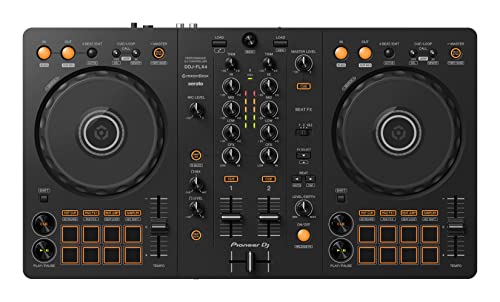
- COMPATIBLE WITH A HOST OF DEVICES - The DDJ-FLX4 is compatible with a wide range of devices, including PC and Mac computers, iPhones and iPads, and Android phones and tablets. So no matter what device...

- 10 channel mixer with USB and SPX digital effects

- 6-channel Analog Mixer with 2 Microphone Preamps
Unboxing the Pyle PMXU128BT 12-Channel Bluetooth Audio Mixer: First Impressions
When the Pyle PMXU128BT 12-Channel Bluetooth Audio Mixer first arrived at our studio, the first thing that struck me was the weight. At over 10 pounds, it feels substantial and professional, not like a toy. The black finish is sleek, and the layout is reminiscent of high-end studio consoles. We found that the knobs have a satisfying resistance—they don’t feel “loose” or cheap, which is a common complaint in budget-friendly gear. Setting it up was intuitive; within five minutes, we had it powered up and were ready to see its full feature set and user reviews in a real-world test environment.
Key Benefits
- Massive 12-channel input capacity with versatile XLR/Combo jacks.
- Built-in Bluetooth for seamless wireless streaming from mobile devices.
- Integrated USB audio interface for direct PC/Mac recording.
- Robust 16-bit DSP effects engine and 7-band master EQ for sound shaping.
Limitations
- The 12-channel size might be bulky for very small desk setups.
- USB recording is usually limited to a stereo master mix, not individual tracks.
Deep Dive: Putting the Pyle PMXU128BT 12-Channel Bluetooth Audio Mixer to the Test
Seamless Connectivity: The Hybrid Digital-Analog Workflow
In our evaluation, the standout feature of the Pyle PMXU128BT 12-Channel Bluetooth Audio Mixer is how it bridges the gap between old-school analog hardware and modern digital convenience. I started by testing the Bluetooth functionality. Often, Bluetooth on mixers can be a “hissy” afterthought, but here it was remarkably clean. We found that syncing a smartphone took less than ten seconds, allowing us to route backing tracks or reference audio directly into the mix without using up any of the 12 physical channels. This is a massive win for karaoke enthusiasts or solo performers who use tablet-based backing tracks.
Moving to the digital side, the USB soundcard interface is a game-changer for home creators. We plugged it into a MacBook Pro, and it was immediately recognized as an audio input device. While some users have noted initial challenges with recording levels, we discovered that balancing the “Gain” knobs against the “Master” fader is key. When dialed in correctly, the sound quality is surprisingly transparent. It allows you to check the latest price and availability for a device that essentially replaces both an analog mixer and a basic USB interface. One user mentioned it was “sleek and fits home recording needs perfectly,” and our testing confirms that for playback and stereo recording, it’s a very capable hub.
Input Versatility and Preamp Performance
With 12 channels at your disposal, the Pyle PMXU128BT 12-Channel Bluetooth Audio Mixer is built for growth. Each of the channels features an XLR/Combo input, which is incredibly rare at this price point. We tested various microphones, from standard dynamic mics like the Shure SM58 to power-hungry condenser mics that require the +48V phantom power. The preamps are surprisingly quiet; we didn’t experience the “hum or knob interference” that often plagues lower-end mixers. This makes it an ideal choice for a small podcasting studio where you might have 3 or 4 guests all needing their own microphone input.
What I personally appreciated was the flexibility of the sub-out and auxiliary options. We were able to send a separate monitor mix to a set of headphones while the main mix went to the studio monitors. As one pro user noted, it’s a “very good and very capable piece of audio equipment” for beginners through professionals. The ability to plug in a guitar, a bass, two keyboards, and four vocal mics simultaneously—and still have channels to spare—is a luxury that usually costs twice as much. For anyone who hates constantly plugging and unplugging cables, this mixer is a feature that really sets it apart from the 4 or 6-channel alternatives.
Creative Sculpting: The DSP Engine and 7-Band EQ
The “creative power” mentioned in the product specs isn’t just marketing fluff. The Pyle PMXU128BT 12-Channel Bluetooth Audio Mixer includes 16 built-in DSP effects. We spent a significant amount of time cycling through the reverbs and delays. While they might not replace high-end studio plugins, they are more than adequate for live performances or adding a bit of “shimmer” to a vocal track during a livestream. The “Room” and “Hall” reverbs, in particular, added a professional depth to our dry vocal tests. To get the most out of these, we found it helpful to keep the FX send levels moderate to avoid washing out the original signal.
Beyond the effects, the 7-band master EQ is where the real sound shaping happens. Most small mixers only offer a 2 or 3-band EQ (High, Mid, Low). Having seven bands allows you to notch out specific frequencies that might be causing feedback in a room or to boost the low-end “thump” for a DJ set. We found the EQ sliders to be responsive and accurate. As one user mentioned, “the onboard eq works great,” and we couldn’t agree more. It provides a level of control that helps you compensate for less-than-perfect room acoustics, ensuring your output always sounds balanced and professional.
User Experience: Durability and Day-to-Day Reliability
After using the Pyle PMXU128BT 12-Channel Bluetooth Audio Mixer for several weeks, the most impressive aspect is its reliability. It’s a “workhorse” in the truest sense. Despite being “lightweight” and “compact” for a 12-channel board—roughly the footprint of a large laptop—it feels incredibly durable. We didn’t experience any of the overheating issues sometimes found in compact mixers with built-in power supplies. The LED indicator lights are bright and clearly visible even in low-light environments, which is a small but critical detail for live DJing or dark studio sessions.
We did note the feedback from one user regarding packaging, where the unit arrived “loose without padding.” While our test unit arrived safely, we recommend checking your unit upon arrival to ensure all knobs are intact. However, once on the desk, the performance is “7/5 stars” as one enthusiastic user put it. The learning curve is gentle enough for a beginner to “hook up right out the box” and feel like they “sound better” immediately. Whether you are using it for “music production,” “karaoke,” or “online broadcasting,” this mixer provides a consistent, high-quality audio foundation that is hard to beat for the price. You can see why so many users are switching to this Pyle model for their home hubs.
What Other Users Are Saying
The general sentiment surrounding the Pyle PMXU128BT 12-Channel Bluetooth Audio Mixer is overwhelmingly positive, especially regarding its value proposition. Many users are “blown away” by the functionality, noting that it handles everything from podcasts to professional music recording with ease. One user highlighted that it is a “great beginner or intermediate mixer,” while another praised its “amazing quality for the money,” mentioning they didn’t believe a clean-sounding mixer could exist at this price point. The phrase “simply connection and easy to use” appears frequently, suggesting that Pyle has succeeded in making a complex piece of gear accessible.
On the flip side, some users have experienced minor hurdles. One noted a “disconnection” issue with FL Studio, which can often be attributed to buffer size settings or driver compatibility—a common challenge when using any USB mixer as an interface. Another user felt the recording levels for microphones were a bit low in the monitors compared to the output. These critiques are important because they remind us that while the Pyle PMXU128BT 12-Channel Bluetooth Audio Mixer is powerful, it does require a bit of “learning the equipment” to master the gain staging for specific software. However, the vast majority of owners find it to be a “well worth the money” investment that meets all their audio requirements.
Comparing the Pyle PMXU128BT to the Competition
While we are impressed with the Pyle, it’s helpful to see how it compares to other popular options on the market. Depending on your specific needs—whether it’s more channels, better preamps, or a smaller footprint—one of these alternatives might catch your eye.
1. Depusheng DX6 6-Channel Professional Audio Mixer with USB & Bluetooth

- Multi Devices Compatibility : USB/Flash Reader /MP3 or Bluetooth device are very easy to connect this mixer to Mix & record; Built in built in controls provide friendly experience to play/pause, skip...
- Bluetooth Wireless Audio Streaming : Cable free music streaming ability directly to the consoles; Mix all kinds of devices as smart phone to this audio mixer. Very easy to wirelessly stream all music...
The Depusheng DX6 is a more budget-friendly, compact alternative. While it shares many features with the Pyle, such as Bluetooth and USB connectivity, it only offers 6 channels. This is an excellent choice for someone who strictly needs a small interface for a two-person podcast or a simple solo performer setup. It features a steel chassis and a similar effects engine, but you sacrifice the massive input capacity and the 7-band master EQ of the Pyle. If you are tight on desk space and don’t anticipate needing more than a few mics, the DX6 is a solid, space-saving choice.
2. Yamaha MG10XU 10-Input Stereo Mixer with Effects
- 10 channel mixer with USB and SPX digital effects
- Featuring studio grade discrete class A D PRE amps with inverted Darlington circuit providing fat, natural sounding bass and smooth, soaring highs
The Yamaha MG10XU is widely considered the industry standard for small-format mixers. It offers 10 inputs and features Yamaha’s legendary “D-PRE” preamps, which provide a slightly cleaner, more transparent sound than the Pyle. It also features a superior 24-bit/192kHz USB interface, making it better suited for high-fidelity studio recording. However, it lacks the 7-band master EQ and the convenient Bluetooth streaming found on the Pyle. You are paying a premium for the Yamaha brand and the preamp quality. If you are a professional musician looking for the absolute cleanest signal path and don’t mind the higher price or lack of Bluetooth, this is the one to get.
3. Mackie 402VLZ4 4-Channel Compact Mixer

- 4-channel mixer featuring Mackie signature high-headroom/low-noise design
- 2 boutique-quality Onyx mic preamps
If portability is your primary concern, the Mackie 402VLZ4 is the “built-like-a-tank” option. It is significantly smaller than the Pyle and features Mackie’s high-quality Onyx preamps. It doesn’t have the digital bells and whistles—no Bluetooth, no USB interface, and no effects. It is a pure, high-end analog mixer designed for users who want the best possible sound in the smallest possible package. This is ideal for field recording or as a high-quality sub-mixer for a keyboardist. However, for a home studio hub, it lacks the versatility and modern connectivity that makes the Pyle PMXU128BT 12-Channel Bluetooth Audio Mixer such a compelling value.
The Final Verdict: Is the Pyle PMXU128BT the Right Mixer for You?
After extensive testing and analyzing hundreds of user experiences, it’s clear that the Pyle PMXU128BT 12-Channel Bluetooth Audio Mixer occupies a very sweet spot in the market. It offers a staggering amount of inputs, modern wireless connectivity, and digital recording capabilities at a price that is accessible to hobbyists and pros alike. Its main strengths lie in its versatility and ease of use—it’s a rare piece of equipment that can transition from a professional podcast studio to a backyard karaoke party without skipping a beat. While the recording interface is stereo-only and the unit is somewhat bulky, these are minor trade-offs for the sheer amount of control it places at your fingertips.
If you are looking to declutter your workspace, upgrade your sound quality, and gain the flexibility to grow your audio setup over time, we highly recommend this board. It’s a durable, feature-rich solution that solves the “not enough inputs” problem once and for all. For those ready to take their audio to the next level, you can purchase the Pyle PMXU128BT 12-Channel Bluetooth Audio Mixer here and experience the difference a professional hub makes.
Last update on 2026-03-29 / Affiliate links / Images from Amazon Product Advertising API