
ProTec Baritone Saxophone Case Review: The Ultimate Balance of Protection and Portability
If you have ever had to haul a baritone saxophone across a parking lot, up a flight of stairs, or into the cramped back seat of a car, you know the struggle intimately. The “bari” is a magnificent beast, but it is also a logistical nightmare. For years, I struggled with an original vintage “coffin” case that weighed nearly as much as the instrument itself. It was sturdy, yes, but it lacked modern ergonomics and, frankly, it smelled like fifty years of basement humidity. The fear of dropping a five-thousand-dollar instrument because a vintage latch failed is a stress no musician needs. When we began looking for a modern alternative, we weren’t just looking for a box; we were looking for a piece of engineering that could handle the rigors of daily gigging without requiring a chiropractor on speed dial. This is where our journey with the ProTec Baritone Saxophone Case began. Solving the transport problem is crucial because a damaged bari isn’t just an expensive repair—it’s a heartbreak that can sideline your musical career for weeks.

- Responsibly made: All materials tested to be free of Lead, DEHP, PAHS8, DBP, and BBP.
- Weather-resistant exterior and wood frame: Made of extremely durable 1680 ballistic nylon and reinforced with zig-zag stitching with a lightweight shock absorbing wood frame.

What to Consider Before Investing in a Professional Saxophone Case
A saxophone bag or case is more than just an item; it’s a key solution for safeguarding one of the most mechanically complex instruments in the woodwind family. Unlike a trumpet or a flute, a saxophone—especially the baritone—has a vast network of rods, keys, and pads that can easily be knocked out of alignment by the slightest impact. A high-quality case acts as a shock absorber, a climate barrier, and a mobile workstation. It ensures that when you arrive at the gig, your low A speaks clearly and your bell hasn’t been crushed into an oval. Without proper protection, you are essentially gambling with your instrument’s longevity every time you leave the house.
The ideal customer for this type of product is the active gigging professional, the dedicated college student, or the high school band member who needs to transport their horn in a trailer or bus. It is perfect for those who find traditional wood cases too heavy but aren’t willing to risk the “glorified sock” protection of a cheap gig bag. However, it might not be suitable for those who frequently travel by international air and intend to check their instrument as baggage; for those extreme scenarios, a heavy-duty flight case with TSA-approved latches might be the only safe (albeit much more expensive) bet. Before you commit, you can see its full feature set and user reviews to determine if it meets your specific travel needs.
Before investing, consider these crucial points in detail:
- Dimensions & Space: Baritone saxophones come in two primary varieties: Low Bb and Low A. The ProTec Baritone Saxophone Case is uniquely designed to accommodate both, which is a rare feat. You must ensure the internal dimensions allow for a snug fit without putting pressure on the side keys or the delicate pigtail at the top of the horn.
- Capacity/Performance: Look for a case that offers more than just instrument storage. A professional needs space for sheet music, reeds, a neck strap, and perhaps even a water bottle. The performance of the case is measured by its “frame strength”—the ability to resist crushing forces while remaining lightweight enough to carry.
- Materials & Durability: Not all nylon is created equal. High-denier counts, like 1680 ballistic nylon, offer superior tear resistance and weatherproofing. Metal hardware and reinforced stitching are non-negotiable for an instrument as heavy as a bari.
- Ease of Use & Maintenance: Consider how you will actually carry the case. Does it have backpack strap options? Are the handles padded? Maintenance involves checking the zippers and ensuring the interior velvet remains clean and non-abrasive to the lacquer of your horn over many years.
While the ProTec Baritone Saxophone Case is an excellent choice, it’s always wise to see how it stacks up against the competition. For a broader look at all the top models, we highly recommend checking out our complete, in-depth guide:
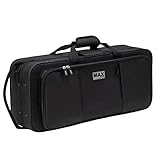
- The MX304 alto saxophone case is designed to fit most modern alto saxophones with standard key placement and bell size. It is not suitable for vintage models with bell keys on the opposite side...

- Responsibly made: All materials tested to be free of Lead, DEHP, PAHS8, DBP, and BBP.

- Features 15mm Soft Internal Foam Cotton Padding to Protect Your Saxophone from Bumps During Transport and Carrying
First Impressions and Feature Analysis of the ProTec PB311CT
Unboxing the ProTec Baritone Saxophone Case is an experience in realizing that “lightweight” does not have to mean “flimsy.” At 13.5 pounds, it feels significantly more manageable than a standard plywood case, yet the internal wood frame provides a rigidity that you simply won’t find in foam-based cases. The initial look is sleek and professional, featuring a deep black ballistic nylon finish that looks right at home in a concert hall or a jazz club. One of the first things I noticed was the QuickLock mechanism—a simple but brilliant addition that allows you to secure the case shut with a velcro-reinforced wrap without having to zip it all the way up. This is a lifesaver during rehearsal breaks when you need to quickly close the case to protect the horn from tripping hazards.
The interior is a lush, non-abrasive velvet that feels premium to the touch. It’s designed to be a “contoured” fit, which helps reduce the instrument’s movement during transit. We also found that the hardware—the clips, the rings for the shoulder strap, and the zippers—are all heavy-duty metal. In a world where many manufacturers are moving toward plastic to save costs, ProTec has stayed the course with rugged materials. You can check the latest price and availability to see how this value-to-build ratio compares to other models on the market.
Key Benefits
- Highly versatile fit for both Low A and Low Bb models, including vintage horns like Conn and Bundy.
- Hybrid construction combining a protective wood frame with a lightweight nylon exterior.
- Excellent storage capacity with a massive gusseted exterior pocket for sheet music and accessories.
- Reinforced hardware and 1680 ballistic nylon ensure long-term durability under heavy gigging conditions.
Limitations
- Not recommended for checked airline luggage due to the soft-sided exterior components.
- The “in-bell” storage pouch for the neck can be polarizing for those who prefer dedicated internal compartments.
Deep Dive Performance Analysis: Why the ProTec PB311CT Stands Out
The Hybrid Frame: The Secret to Serious Protection
The most impressive feat of the ProTec Baritone Saxophone Case is its internal skeleton. Most cases in this price bracket use EPS (expanded polystyrene) foam, which is essentially the same material as a cheap cooler. While foam is light, it can crack under focused pressure. ProTec uses a lightweight wood frame that provides a “crush zone” similar to a car’s safety cell. During our testing, we felt much more confident stacking this case in a van or a trailer than we ever would with a foam gig bag. We found that the wood frame absorbs impacts rather than transferring that energy directly to the instrument’s delicate keywork.
This structural integrity is bolstered by 1680 ballistic nylon. For those unfamiliar with textile specs, this is a high-tenacity fabric originally developed for military flak jackets. It is water-resistant and incredibly difficult to puncture or tear. We’ve seen these cases dragged through rainy streets and tossed into band buses, and they hold up remarkably well. As one user noted, the case protected their horn perfectly during the chaos of marching band season, surviving being shoved into trailers every Saturday without a single dent to the instrument. This is a feature that really sets it apart from the “budget” options that prioritize weight over actual structural safety.
Interior Versatility: The Low A vs. Low Bb Solution
One of the biggest headaches for baritone players is finding a case that fits their specific horn. If you have an older Low Bb Martin or Conn, modern cases are often too long. If you have a modern Yamaha or Selmer Low A, vintage cases are too short. The ProTec Baritone Saxophone Case handles both with a clever contoured design. When testing with a Low A Keilwerth SX-90, the fit was snug and secure. When we tried a vintage Low Bb model, there was a small amount of extra space at the bottom, but the internal padding and the weight of the horn kept it from sliding around excessively.
We found that for players who find a tiny bit of “wiggle,” adding a small piece of foam or even a polishing cloth at the bottom solves the issue instantly. This versatility makes it an “evergreen” investment; if you decide to upgrade from a student Bb horn to a professional Low A horn, you won’t need to buy a new case. The interior velvet lining is also breathable, which is critical for preventing the “mildew smell” that plagues so many older wood cases. By allowing a small amount of airflow while still protecting against temperature spikes, ProTec has designed an interior that actually helps maintain the health of your pads over time.
Ergonomics and Storage: Designed for the Real-World Musician
The storage capabilities of the ProTec Baritone Saxophone Case are frankly legendary among saxophonists. The large gusseted pocket on the exterior is actually big enough to hold a full-sized orchestral folder without bending the corners of your sheet music. Inside that pocket, you’ll find an organizer for pens, reeds, and small tools. We were able to fit a neck strap, three boxes of reeds, a bottle of key oil, and a tablet with room to spare. This eliminates the need to carry a separate “gig bag” for your accessories, which is a massive relief when you’re already carrying a baritone sax.
Furthermore, the carrying options are top-tier. The main handles are reinforced with rope and wrapped in a padded grip, making the “suitcase carry” much less painful on the palms. For those who walk long distances, the case is compatible with the ProTec Backpack Strap (model #BPSTRAP). We highly recommend adding these; when worn as a backpack, the weight is distributed across the shoulders and hips, making the 13.5-pound case feel significantly lighter. This ergonomic focus is why so many technicians, as mentioned in user feedback, recommend this specific model to their clients. It’s a practical, “blue-collar” case that just works. To get the most out of your gear, you should definitely see its full feature set and user reviews regarding the backpack strap compatibility.
Safety and Compliance: A Cleaner Way to Play
An often-overlooked aspect of instrument cases is the chemical composition of the materials. Because you spend hours with your face near the saxophone, you are also in close proximity to the case. The ProTec Baritone Saxophone Case is tested to be free of Lead, DEHP, PAHS8, DBP, and BBP. In an era where cheap imports often use high-VOC glues and plastics that outgas “industrial” smells, ProTec’s commitment to safety standards is refreshing. We found that the case had almost no chemical odor upon arrival, which is a major win for those of us with sensitivities.
Additionally, the zippers are custom-designed with lock holes. While it won’t stop a determined thief with a bolt cutter, it allows you to use a small luggage lock to prevent casual “looky-loos” from opening your case at a gig or in a shared practice room. This level of detail—from the zig-zag stitching to the safety-tested fabrics—demonstrates that ProTec understands the professional musician’s lifestyle. It’s not just about the horn; it’s about the peace of mind that comes with knowing every part of your setup is high-quality and safe. You can check the latest price and availability to invest in this professional-grade security.
What Other Users Are Saying
The general sentiment among the music community regarding this case is overwhelmingly positive, particularly concerning its value-for-money. Many users transitioned from heavy, decaying wood cases and described the ProTec Baritone Saxophone Case as a “revelation.” One gigging professional noted that they were hesitant at first due to the soft-sided appearance but found the zipper-and-velcro system much safer than traditional latches, which can accidentally pop open. Another user highlighted its compact footprint, mentioning it was the only case they found that could fit into the small trunk of a BMW 135i—a specific but important detail for urban musicians who drive smaller cars.
On the critical side, some users mentioned that the interior fit for certain Yamaha models was a bit “loose” at the neck area, necessitating a small amount of extra foam for a perfect fit. Others found the “in-bell” pouch for the neck and mouthpiece to be a bit unusual, as they preferred a dedicated cutout in the case itself. However, most agreed that these are minor trade-offs for a case that costs hundreds of dollars less than a fiberglass flight case. Overall, the consensus is that for local gigging, school use, and car travel, this is the gold standard for baritone saxophone protection.
Comparing the ProTec Baritone Saxophone Case to Top Alternatives
1. ProTec MX304CT Alto Saxophone MAX Case
- Responsibly made: All materials tested to be free of Lead, DEHP, PAHS8, DBP, and BBP.
- Tough exterior: Made of rugged 600D nylon. EPS foam frame is lightweight, rigid, and shock resistant for excellent protection. Main and subway handles made of durable rope with reinforced stitching...
If you are a multi-instrumentalist looking to match your baritone setup with your alto, the MX304CT is the lighter, more budget-conscious cousin of the PRO PAC series. While the Baritone case uses a full wood frame, the MAX series utilizes a more rigid EPS foam. It is incredibly light and perfect for students who need basic protection for their alto. However, it lacks the extreme “ballistic” durability of the ProTec Baritone Saxophone Case. We recommend this for younger players or those who need a secondary case for a backup alto horn.
2. Jim Dunlop Derek Trucks Glass Slide

- Based on Derek trucks' Own slide
- Delivers a fluid and vocal style
While a guitar slide might seem out of place in a saxophone review, many saxophonists are increasingly exploring doubling or experimental electronic wind instruments (EWI) that integrate bluesy, slide-like aesthetics. This Jim Dunlop slide is a masterpiece of glasswork, offering the same high-quality manufacturing standards that ProTec brings to their cases. It’s an essential tool for the experimental musician’s gear bag. If you’re looking to expand your sonic palette beyond the bari, this is a small but mighty addition to your accessory pocket.
3. ProTec Alto Saxophone Case MX304
- The MX304 alto saxophone case is designed to fit most modern alto saxophones with standard key placement and bell size. It is not suitable for vintage models with bell keys on the opposite side...
- Tough exterior: Made of rugged 600D nylon. EPS foam frame is lightweight, rigid, and shock resistant for excellent protection. Main and subway handles made of durable rope with reinforced stitching...
The MX304 is the rectangular version of the Alto MAX case. Unlike the contoured ProTec Baritone Saxophone Case, this rectangular design provides significantly more interior storage for accessories. It’s an “old-school” shape that offers great stackability in a tour van. If you find the contoured bari case is a bit tight for your extra gear, this rectangular alto case shows how ProTec utilizes internal space for maximum utility. It’s a great choice for musicians who prioritize “trunk space” and organization over the sleek, contoured look.
Final Verdict: Is the ProTec PB311CT the Right Choice for You?
The ProTec Baritone Saxophone Case is arguably the most practical and high-value case on the market for the modern baritone saxophonist. It solves the triple threat of weight, protection, and storage with an engineering grace that few other brands manage to replicate. While it isn’t a replacement for a $1,000 flight case if you are touring the world by air, it is the absolute perfect companion for 95% of playing scenarios. Whether you are navigating a high school hallway, a college rehearsal room, or a dimly lit jazz club, this case provides the security your instrument deserves without the back-breaking weight of the past.
In our expert estimation, the combination of the 1680 ballistic nylon, the wood frame, and the massive accessory pocket makes this a “one-and-done” purchase. If you want to protect your investment and make your life as a musician significantly easier, we can’t recommend this model enough. Stop struggling with that old, smelly wood case and give your bari the home it deserves. You can purchase the ProTec Baritone Saxophone Case here and experience the difference that professional-grade design makes for your instrument today!
Last update on 2026-10-19 / Affiliate links / Images from Amazon Product Advertising API