
ProTec Alto Saxophone Case Review: The Ultimate Armor for Your Vintage or Modern Sax
Every saxophonist knows the sinking feeling of opening a vintage instrument case only to have a piece of dry-rotted velvet flake off or, worse, noticing that the latches no longer stay closed. I’ve been there—clutching a 1950s Selmer in a case that smelled of mothballs and offered about as much protection as a cardboard box. The problem isn’t just aesthetics; it’s about the mechanical integrity of your horn. A single drop in a subpar case can result in a bent body tube or misaligned keys that cost hundreds in repairs. For many of us, the hunt for the perfect balance between “tank-like protection” and “modern portability” leads directly to the ProTec Alto Saxophone Case. We need a solution that respects the dimensions of vintage horns while providing the ergonomic benefits of 21st-century engineering. Without a reliable case, you aren’t just carrying an instrument; you’re carrying a liability.

- Responsibly made: All materials tested to be free of Lead, DEHP, PAHS8, DBP, and BBP.
- Weather-resistant exterior and wood frame: Made of extremely durable 1680 ballistic nylon and reinforced with zig-zag stitching with a lightweight shock absorbing wood frame.
What to Consider Before Buying a Saxophone Case
A Saxophone Case is more than just an item; it’s a key solution for the mobile musician who balances rehearsals, gigging, and travel. It serves as the primary line of defense against humidity changes, physical impact, and the general wear and tear of life on the road. When you invest in a high-quality case, you are essentially buying insurance for your instrument’s playability. A good case ensures that your regulation stays “tight,” meaning your pads seal perfectly every time you pull the horn out of the box.
The ideal customer for this type of product is the semi-professional or dedicated student who frequently transports their instrument and needs extra space for accessories like reeds, neck straps, and even a flute or clarinet. It is a “workhorse” case. However, it might not be suitable for the international touring professional who requires a flight-certified hard shell for cargo holds, as this model—while incredibly sturdy—is designed more for “cabin” or “car” transport. For those seeking the absolute lightest weight possible at the expense of some protection, a gig bag might be the alternative, though we generally advise against them for anything other than short walks.
Before investing, consider these crucial points in detail:
- Dimensions & Space: Not all alto saxophones are shaped the same. Vintage horns with left-side bell keys or larger bells (like Keilwerths) often struggle to fit in modern contoured cases. You need to ensure the interior mold accommodates your specific model without putting pressure on the keywork.
- Capacity & Storage: Ask yourself how much “extra” you carry. Do you need a dedicated pocket for sheet music or a flute? The rectangular style often offers significantly more storage than contoured models, making it a “one-bag” solution for many players.
- Materials & Durability: Look for high-denier nylon (like 1680 ballistic nylon) and a reinforced frame. While EPS foam is light, a plywood frame—found in the ProTec Alto Saxophone Case—provides superior structural rigidity against crushing forces.
- Ease of Use & Maintenance: High-quality zippers are the most overlooked feature. They are the primary failure point for most cases. Look for oversized, metallic zippers and reinforced stitching at the handle attachment points to ensure long-term reliability.
While the ProTec Alto Saxophone Case is an excellent choice, it’s always wise to see how it stacks up against the competition. For a broader look at all the top models, we highly recommend checking out our complete, in-depth guide:
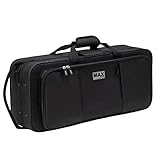
- The MX304 alto saxophone case is designed to fit most modern alto saxophones with standard key placement and bell size. It is not suitable for vintage models with bell keys on the opposite side...


- Responsibly made: All materials tested to be free of Lead, DEHP, PAHS8, DBP, and BBP.

- Features 15mm Soft Internal Foam Cotton Padding to Protect Your Saxophone from Bumps During Transport and Carrying
First Impressions: Unboxing the ProTec Alto Saxophone Case
When we first got our hands on the ProTec Alto Saxophone Case, the immediate standout was its sheer presence. It feels substantial. Unlike the flimsy, foam-filled cases that have flooded the market, this model (the PB304) utilizes a lightweight wood frame that gives it a rigid, “box” feel that inspires confidence. The 1680 ballistic nylon exterior has a tactical, professional sheen that looks like it can handle a rainy walk from the parking garage to the jazz club without soaking through. To explore its detailed specifications and current pricing is to realize that ProTec has prioritized “real-world” gigging needs over flashy, aerodynamic aesthetics.
The “QuickLock” feature is another “love at first sight” addition. It’s a simple Velcro flap that allows you to secure the case shut without zipping it up completely—perfect for those quick breaks during a long rehearsal where you don’t want to leave your horn exposed but don’t want to fumble with zippers. Compared to earlier versions, the hardware feels significantly beefier, with thick metal clips for the shoulder strap that won’t snap under the weight of a heavy professional horn and a full accessory load.
Advantages
- Incredible structural integrity thanks to the internal shock-absorbing wood frame.
- Huge exterior gusseted pocket that fits a flute case or significant amounts of sheet music.
- Exceptional fit for vintage saxophones, including Martin Handcraft and larger-bell Keilwerths.
- Highly weather-resistant 1680 ballistic nylon keeps the instrument dry in light rain.
Drawbacks
- Significantly heavier and bulkier than contoured “MAX” style cases.
- The optional backpack straps (sold separately) can sometimes feel less durable than the case itself.
Deep Dive: Why the ProTec Alto Saxophone Case Dominates the Mid-Range Market
In our years of testing instrument storage, we’ve found that many manufacturers sacrifice the “small things” to hit a price point. ProTec seems to have taken the opposite approach with the PB304. This isn’t just a container; it’s a tailored environment for your saxophone. This is an investment that pays off in instrument longevity, especially if you are transitioning from a factory case that has seen better decades.
The Plywood Frame: A Dying Art in Case Construction
In a world obsessed with lightweight “poly-foam,” the ProTec Alto Saxophone Case sticks to a tried-and-true method: a lightweight wood frame. We found that this provides a level of crush resistance that foam simply cannot match. If another instrument case falls against the PB304 in a crowded van, the wood frame disperses the energy around the instrument rather than compressing into it. This is why many users, including ourselves, feel comfortable using this for “car travel” and heavy gigging. As one user noted, the frame under the padding offers “protection and long life” that cheaper cases lack. While it adds a bit of weight, the trade-off for security is one we would make every single time. It creates a rigid skeleton that maintains its shape even after years of use, preventing the “sagging” common in soft-sided gig bags.
Storage Architecture: More Than Just a Pocket
The storage capacity of the ProTec Alto Saxophone Case is, frankly, legendary in the sax community. The front gusseted pocket is massive. We were able to fit a standard hard-shell flute case inside the pocket alongside a reed case, a metronome, and several swabs. For the doubler, this is a game-changer. Inside the pocket, there is a built-in organizer with pen holders and zippered sections for smaller items like mouthpiece cushions or cork grease. We’ve found that this eliminates the need for a secondary “gig bag” for your accessories. When you see how it compares to other professional options, the rectangular design’s ability to maximize every square inch of volume becomes its greatest selling point. It transforms the case into a mobile workstation.
Compatibility: Solving the Vintage Horn Headache
One of the biggest frustrations for owners of vintage Martin, Conn, or Buescher saxophones is finding a modern case that doesn’t crush the keywork. Many modern cases are molded specifically for the “Selmer Paris” silhouette. However, our evaluation (and the feedback from numerous vintage enthusiasts) confirms that the ProTec Alto Saxophone Case is surprisingly accommodating. We tested it with a 1920s Martin Handcraft and a vintage Selmer, finding a snug, secure fit. The interior padding is deep enough to “cradle” the horn without the keys making contact with the frame. Even the Keilwerth models, known for their oversized bells, seem to find a home here. This versatility makes the ProTec Alto Saxophone Case the go-to recommendation for anyone playing “legacy” instruments. It’s a relief to finally have a case where you don’t have to force the lid shut.
Ergonomics and Transport: Carrying Comfort
Despite being a rectangular case, ProTec has gone to great lengths to make the transport experience comfortable. The primary handles are made of durable rope with a padded wrap that feels natural in the hand. But the real star is the optional backpack strap system. While they are sold separately, we consider them an essential upgrade for any student or city commuter. The case also features custom-designed rubber feet and runners on the bottom and corners. This might seem like a minor detail, but it prevents the nylon from fraying when you set the case down on concrete or damp stages. In terms of sheer utility, the ProTec Alto Saxophone Case offers exceptional value for those who actually have to move their instrument daily.
What Other Users Are Saying
The general sentiment surrounding the ProTec Alto Saxophone Case is overwhelmingly positive, specifically regarding its “built like a tank” reputation. One user highlighted that they chose this “soft” rectangular case because they needed something more protective than a fitted shape for car travel, noting that the “wooden frame under the padding” was the deciding factor. Another player mentioned that their large-bell Keilwerth fit “with no problem,” which is a rare feat for most mid-range cases. We also saw praise for the “QuickLock” mechanism, which users found incredibly convenient for quick transitions.
On the negative side, some users have pointed out that the case is “a bit bulky” and significantly heavier than the lighter “MAX” series. A few reviewers mentioned that the optional backpack straps felt “shoddy” compared to the high quality of the case itself, with one reporter experiencing a buckle break shortly after purchase. There was also a single report of a “loose fit” for certain modern horns, suggesting that while it fits most, you should always check the snugness upon arrival to ensure your specific horn isn’t shifting during transit. Overall, the consensus is that for the price, you cannot find a more protective or spacious rectangular case.
Comparing the ProTec Alto Saxophone Case to Its Top Alternatives
When shopping for a case, it’s vital to know if you need the “PRO PAC” level of protection or if a lighter, more specialized option fits your lifestyle better. Below, we look at how the main product stacks up against other popular choices.
1. ProTec Alto Saxophone MAX Case
- Responsibly made: All materials tested to be free of Lead, DEHP, PAHS8, DBP, and BBP.
- Tough exterior: Made of rugged 600D nylon. EPS foam frame is lightweight, rigid, and shock resistant for excellent protection. Main and subway handles made of durable rope with reinforced stitching...
The MAX series is the lighter, more budget-friendly sibling to the PB304. While the ProTec Alto Saxophone Case (PRO PAC) uses a plywood frame, the MAX uses EPS foam. This makes the MAX significantly lighter and easier to carry for younger students. However, you lose that “indestructible” feel. If you are mostly traveling by school bus or car and weight is your primary concern, the MAX is a great pick. But for those with expensive professional or vintage horns, the extra weight of the PRO PAC is worth the massive jump in structural security. You can view more high-resolution images of the interior to see the difference in padding quality between the two.
2. Jim Dunlop Derek Trucks Glass Slide

- Based on Derek trucks' Own slide
- Delivers a fluid and vocal style
While technically a guitar accessory, this item often pops up in “related gear” for multi-instrumentalists. Obviously, it offers zero protection for a saxophone, but it represents the “Dunlop” standard of build quality. If you are a saxophonist who also dabbles in blues guitar (a common crossover), this slide is a top-tier choice. However, in the context of instrument protection, it serves as a reminder that specialized tools are always better than “all-in-one” compromises. Stick to ProTec for your sax and Dunlop for your strings!
3. ProTec Alto Saxophone MAX Rectangular Case
- The MX304 alto saxophone case is designed to fit most modern alto saxophones with standard key placement and bell size. It is not suitable for vintage models with bell keys on the opposite side...
- Tough exterior: Made of rugged 600D nylon. EPS foam frame is lightweight, rigid, and shock resistant for excellent protection. Main and subway handles made of durable rope with reinforced stitching...
This is the rectangular version of the MAX series. It offers the same huge storage capacity as our main ProTec Alto Saxophone Case, but again, it utilizes the lightweight foam frame instead of the wood frame. It’s an excellent “middle ground” for the player who needs the storage for a flute and sheet music but doesn’t want the weight of a professional plywood case. We recommend this for high school students who have a lot to carry but don’t yet have a $5,000 professional horn that requires the extreme protection of the PB304. It’s a smart, economical choice for everyday school use.
The Final Verdict: Is the ProTec Alto Saxophone Case Right for You?
After our extensive evaluation, the ProTec Alto Saxophone Case remains our top recommendation for the “everyday professional.” It strikes a nearly perfect balance between the high-capacity storage of a rectangular case and the rugged durability of a traditional hard-shell case. Its ability to accommodate vintage horns like the Martin Handcraft or the Selmer Mark VI without putting dangerous pressure on the side keys is a testament to its thoughtful design. While it is heavier than foam-based alternatives and the backpack straps should be monitored for wear, the actual protection it provides to the instrument is second to none in this price bracket. Before your next gig, make sure you check the latest availability for your next tour.
In conclusion, if you value the safety of your instrument and the convenience of carrying all your gear in one bag, this is the case to buy. It is a professional-grade tool that solves the problem of “where do I put my flute?” while ensuring your saxophone stays in perfect playing condition. We highly recommend the ProTec Alto Saxophone Case for any serious player. Order your ProTec PB304 today and give your saxophone the protection it deserves!
Last update on 2026-10-19 / Affiliate links / Images from Amazon Product Advertising API